
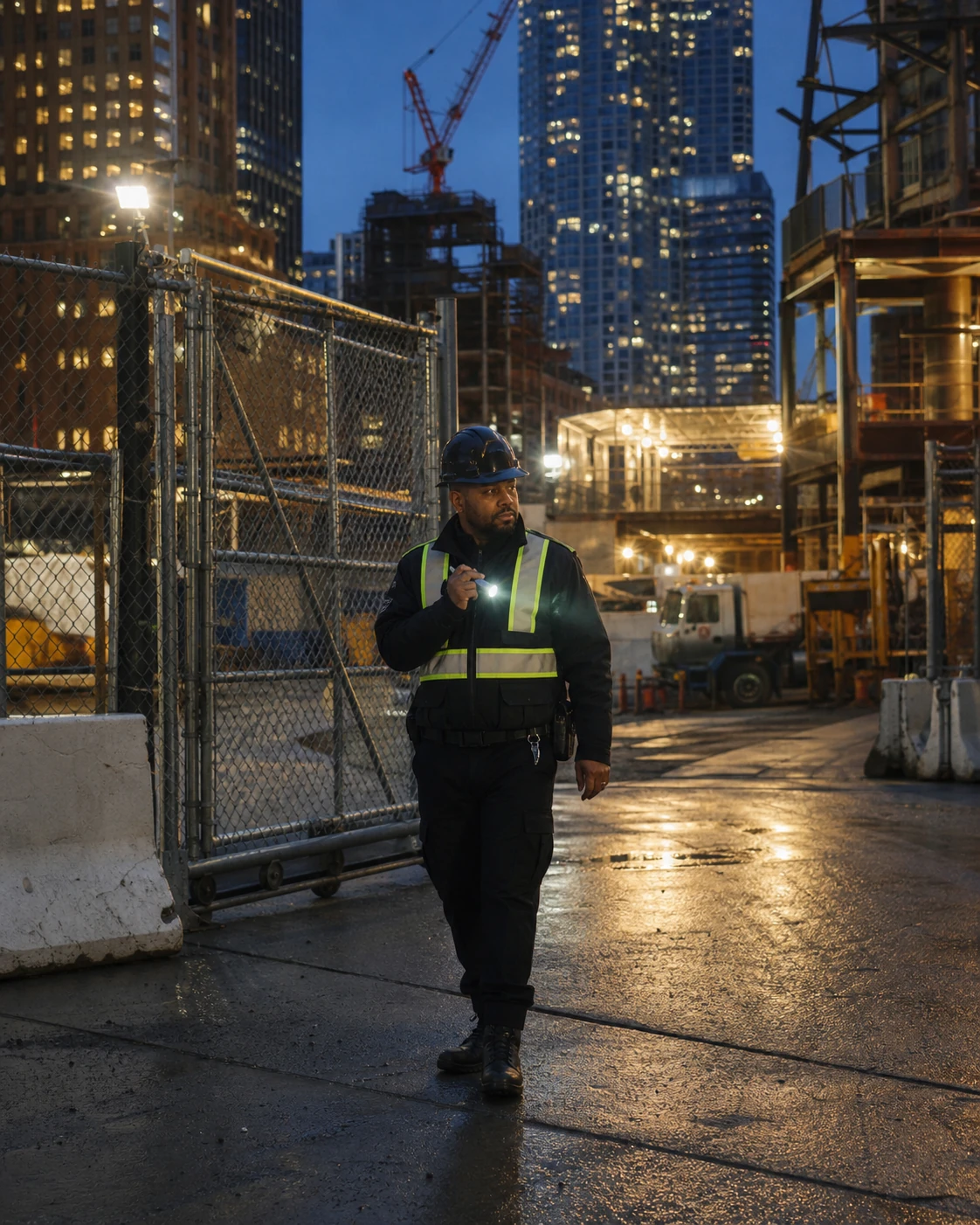
Construction sites in New York City face changing access points, valuable materials, temporary life-safety systems, and a steady flow of workers and deliveries. A patrol program must account for these conditions without obstructing operations or assigning security personnel responsibilities outside their training.
Effective security patrol procedures for construction sites in NYC begin with a site-specific plan. That plan should define what guards inspect, when they patrol, how they document conditions, and whom they contact when something is wrong.
Why Construction Site Patrols Require a Site-Specific Plan
No two construction projects have the same risks. A Manhattan interior renovation may share elevators and loading areas with occupied tenants, while a ground-up development may have multiple floors, sidewalk sheds, temporary fencing, and exposed utilities.
Before coverage begins, the security provider and site leadership should review:
- Site boundaries, gates, entrances, and emergency exits
- Active work areas and restricted zones
- Material, equipment, and tool-storage locations
- Temporary lighting, fencing, cameras, and alarm systems
- Delivery schedules and approved access hours
- Fire protection or life-safety system impairments reported by management
- Escalation contacts for the general contractor, superintendent, property manager, and emergency services
The resulting post orders should be clear enough for a guard to follow during every shift and flexible enough to reflect changing site conditions.
Core Security Patrol Procedures
1. Conduct a Structured Shift Handover
Each shift should begin with a documented handover. The incoming guard should receive information about open incidents, expected contractors, recent access changes, equipment deliveries, and hazards identified during the previous shift.
Guards should also verify that required equipment is available, such as a charged communication device, flashlight, log system, keys or access credentials, and current emergency contacts.
2. Follow Defined but Varied Patrol Routes
Patrol routes should cover priority areas while avoiding an entirely predictable pattern. Depending on the site, checkpoints may include:
- Perimeter fencing and vehicle gates
- Pedestrian entrances and turnstiles
- Loading docks and sidewalk sheds
- Material and equipment storage areas
- Mechanical, electrical, and utility rooms
- Elevators, stairwells, and roof-access points
- Vacant floors and temporary site offices
- Shared areas adjoining occupied spaces
Routes must reflect actual site access. Guards should not enter areas that require specialized protective equipment or training unless those conditions have been addressed by site management.
3. Inspect the Perimeter and Access Points
During each round, guards should look for signs of forced entry, damaged locks, gaps in fencing, unsecured gates, obstructed exits, and doors that have been propped open. They should also note lighting failures or camera obstructions that reduce visibility.
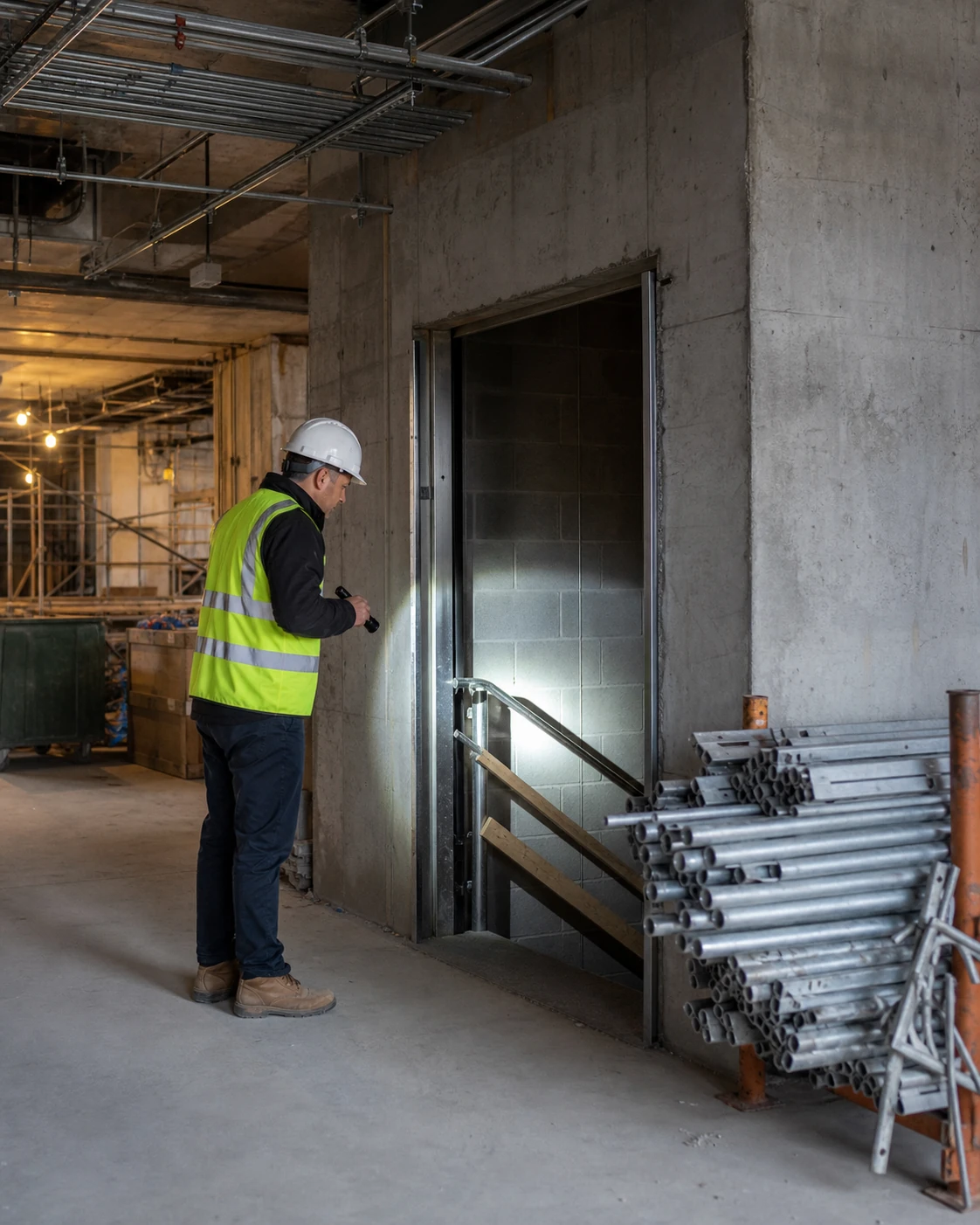
An observed vulnerability should be reported promptly rather than left for the next shift. Temporary measures, such as assigning a fixed post near a damaged gate, should be authorized by site leadership and documented.
4. Monitor People, Vehicles, and Deliveries
Access procedures should identify who may enter, what credentials are acceptable, and how exceptions are approved. Guards may be tasked with checking approved lists, recording visitors, contacting an authorized site representative, and directing deliveries to designated areas.
Security personnel should not guess when a person lacks proper authorization. The post orders should provide a clear escalation process for denied, disputed, or after-hours access.
5. Observe and Report Unsafe or Unusual Conditions
A patrol guard is not a substitute for a superintendent, safety manager, electrician, or fire protection professional. However, guards can provide valuable early notice of visible issues, including:
- Water leaks or unusual odors
- Smoke, sparks, or signs of overheating
- Open or damaged fencing
- Unsecured tools and machinery
- Blocked paths or emergency exits
- Unidentified people in restricted areas
- Evidence of vandalism, theft, or trespassing
The guard’s role is generally to observe, maintain personal safety, notify the appropriate contact, preserve relevant information, and follow the site’s emergency procedures.
Patrol Documentation and Incident Reporting
Patrol records create accountability and help management identify recurring problems. Entries should be timely, factual, and specific. A useful patrol log records:
- Guard name and shift
- Patrol start and completion times
- Areas or checkpoints inspected
- Conditions observed
- People notified and instructions received
- Corrective steps authorized by management
- Incident report or reference numbers, when applicable
Reports should distinguish observations from assumptions. For example, “north gate padlock found open at 11:42 p.m.” is more useful than “someone broke into the site” when forced entry has not been confirmed.
Serious incidents should be communicated immediately under the escalation plan rather than waiting for a routine report. Relevant video, access records, photographs, and notes should be preserved according to site policy.
Overnight, Weekend, and Emergency Coverage
Construction sites often become more vulnerable after workers leave. Overnight and weekend procedures may require additional perimeter rounds, verification that nonessential access points are secured, monitoring of late deliveries, and attention to areas hidden from street view.
Before an anticipated storm, utility interruption, demonstration, or building emergency, management should reassess staffing and patrol priorities. Emergency security coverage can also help when an alarm fails, a gate is damaged, or regular coverage becomes unavailable.
Security Guards and Fire Guards Have Different Functions
Security patrols and fire watch activities should not be treated as interchangeable. Security guards generally focus on access control, property protection, observation, and incident reporting. A fire guard may be required under particular site conditions, permits, operations, or fire protection system impairments.
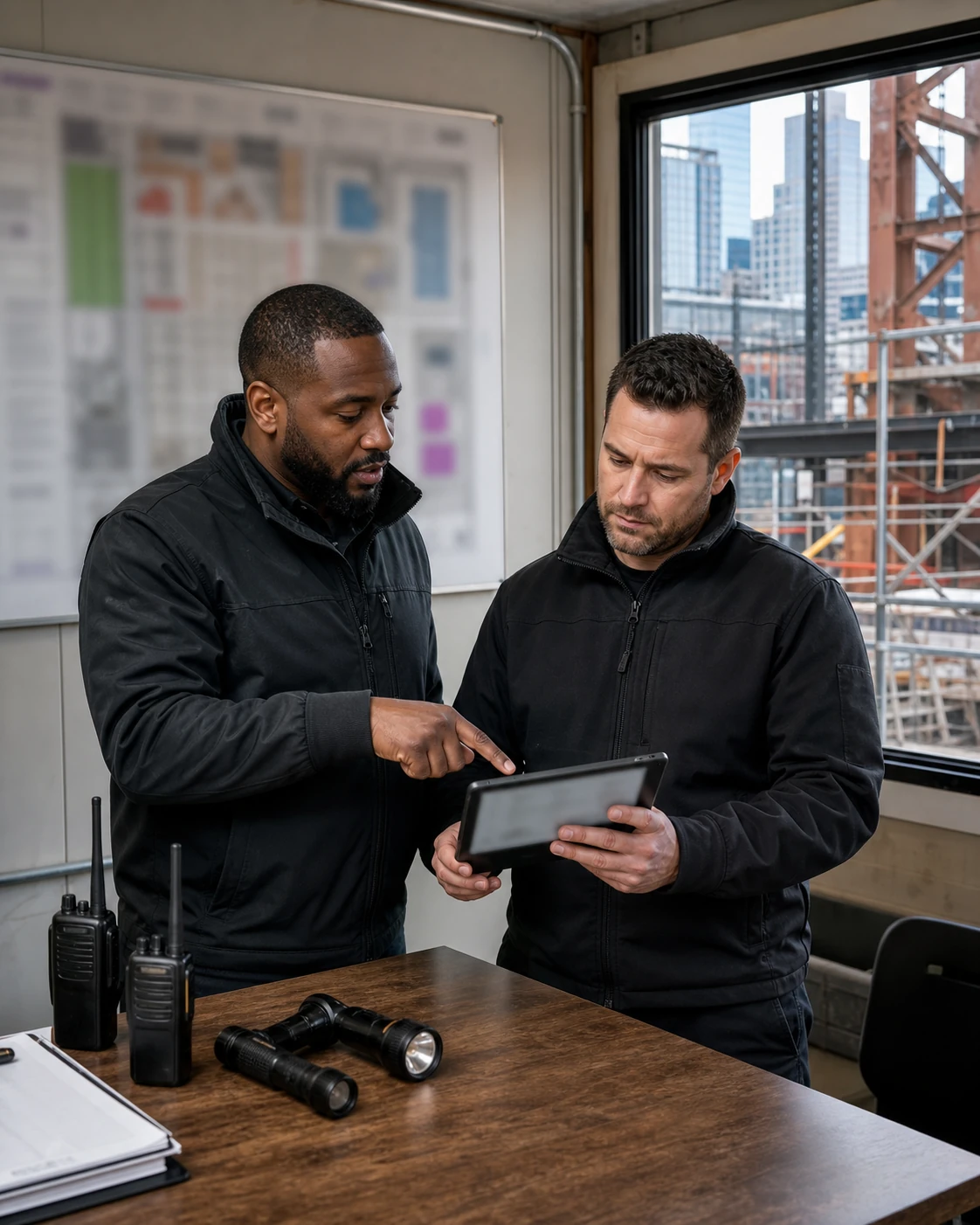
Property managers and contractors should confirm current requirements with the appropriate NYC authorities and use personnel holding the credentials required for the assigned role. When a fire watch is needed, establish separate post orders, patrol requirements, logs, communication procedures, and escalation instructions. Learn more about Guardian’s NYC fire guard services.
How to Build a Reliable Patrol Program
A practical construction security plan should be reviewed whenever the project enters a new phase. Openings move, floors become accessible, valuable equipment arrives, and occupied areas may be turned over while construction continues elsewhere.
Before selecting coverage, ask whether the provider can:
- Complete a site assessment before deployment
- Develop clear, property-specific post orders
- Supply guards appropriate for the assignment
- Maintain dependable supervision and shift handovers
- Provide usable patrol and incident records
- Adjust staffing as the project changes
- Coordinate with site management without disrupting trades
Guardian ISI supports construction site security and related guard coverage for commercial properties in New York City.
Request Construction Site Coverage
A well-designed patrol program can improve visibility, strengthen access control, and help site leadership respond faster when conditions change.
To discuss security coverage for an NYC construction project, call or text Guardian ISI at (212) 602-1695 or request coverage online. Be prepared to share the site address, project phase, operating hours, access points, current concerns, and requested start date.
Related Guardian services
Review Construction Site Security for project staffing and access coverage. Where a separate fire watch is required, discuss Fire Guard Services.
Frequently asked questions
How often should a guard patrol an NYC construction site?
Frequency should be based on the site layout, risk profile, operating hours, and post orders. High-priority areas may require more frequent checks, while timing should avoid becoming completely predictable.
What should a construction patrol log include?
It should record the guard and shift, patrol times, locations checked, factual observations, notifications made, instructions received, and any related incident report numbers.
Can a security guard perform a fire watch?
Not automatically. Fire watch duties may require specific credentials and procedures. Site management should confirm current requirements and assign appropriately qualified personnel.
What areas should construction guards patrol?
Typical areas include gates, fencing, loading zones, storage areas, temporary offices, stairwells, vacant floors, utility-room approaches, and access points adjoining occupied spaces.
Should patrol routes follow the same schedule every night?
Routes should consistently cover all required checkpoints, but timing can be varied when appropriate so the patrol pattern is not entirely predictable.
When should an incident be reported immediately?
Suspected intrusion, fire or smoke, medical emergencies, serious leaks, damaged access controls, violence, and other urgent threats should be escalated immediately under the site’s emergency plan.