
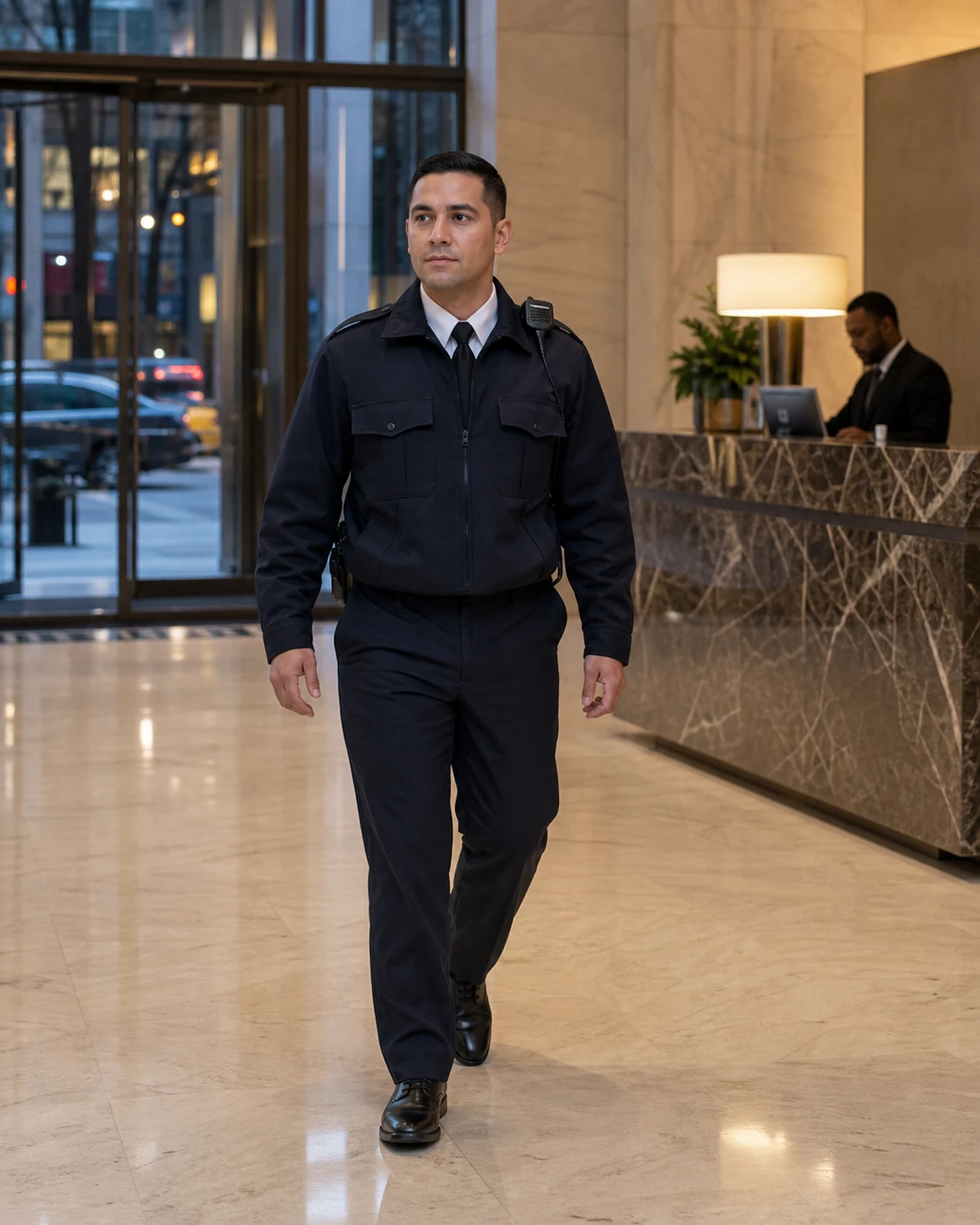
A residential security patrol should do more than place a visible uniform in the lobby. Effective patrol procedures tell security personnel where to go, what to observe, how to document conditions, and when to escalate a concern.
For Manhattan property managers, boards, owners, and managing agents, the right patrol plan depends on the building’s layout, occupancy, operating hours, amenities, access systems, and history of incidents. A luxury condominium with multiple entrances requires a different approach from a walk-up, rental tower, mixed-use property, or building undergoing renovation.
What Is a Residential Security Patrol Procedure?
A patrol procedure is a written, site-specific set of instructions for conducting security rounds. It usually forms part of the property’s post orders and should define:
- Areas included in each patrol
- Patrol frequency or approved time windows
- Conditions the officer should check
- Required documentation
- Communication and escalation steps
- Procedures for emergencies and unusual conditions
- Tasks that are outside the officer’s role
Procedures should be detailed enough to produce consistent coverage without making every round predictable. Management should review them after significant incidents, property alterations, access-control changes, or changes in building operations.
Areas to Include in Apartment Building Patrols
A useful patrol route covers vulnerable and high-traffic locations while accounting for areas where residents expect privacy. Depending on the property, the route may include the following.
Lobby and Building Entrances
Officers can check whether entrance doors close and latch properly, look for signs of tampering, observe unauthorized tailgating, and identify packages or objects left in inappropriate locations. Patrol procedures should explain how lobby coverage will be maintained while an officer is making rounds.
Residential Floors and Stairwells
Hallway and stairwell patrols can identify propped doors, blocked paths, damaged lighting, unusual noise, water leaks, vandalism, or unauthorized activity. Officers should not enter apartments unless authorized under a clearly defined emergency or management procedure.
Service Areas and Secondary Access Points
Loading areas, service corridors, freight-elevator landings, refuse rooms, bicycle rooms, laundry rooms, and basement entrances may receive less routine attention than the main lobby. They should be included when relevant to the property’s risk profile.
Roof, Garage, and Mechanical-Area Access
A patrol may verify that doors to restricted areas are secured and report signs of unauthorized access. Security personnel should generally observe and report equipment-related conditions rather than operate, repair, or reset building systems unless expressly trained and authorized.
Amenity Spaces
Gyms, lounges, pools, terraces, playrooms, and package rooms may require checks at opening, closing, and peak-use periods. Post orders should address access rules, after-hours occupancy, guest policies, and how officers should handle disputes without unnecessary confrontation.
Exterior Perimeter
Exterior rounds can cover sidewalk-facing doors, alleys, courtyards, parking entrances, sidewalk sheds, construction fencing, and street-level retail interfaces. In Manhattan, patrol planning should also account for deliveries, food couriers, move-ins, contractors, and periods of heavy pedestrian traffic.
A Practical Patrol Sequence
Although every building needs site-specific post orders, a typical round can follow a consistent process.
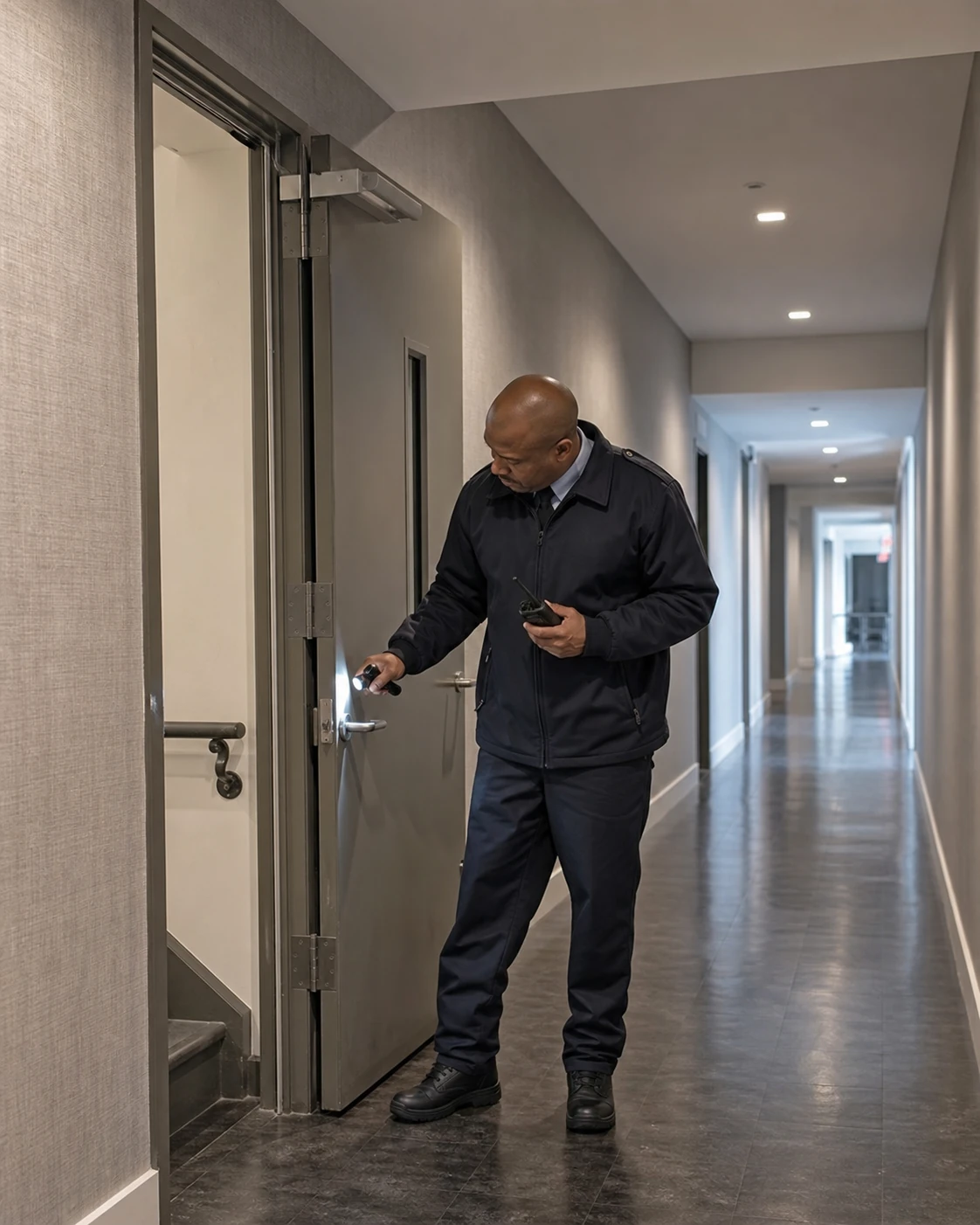
- Prepare before leaving the post. Review open incidents, equipment concerns, expected contractors, and areas requiring additional attention. Confirm how the lobby or front desk will be covered.
- Carry required communications equipment. Verify that the radio, phone, flashlight, keys, or approved access credentials are working and accounted for.
- Follow the assigned route. Visit designated checkpoints while remaining alert to activity between them. Avoid shortcuts that leave floors or secondary doors unchecked.
- Observe systematically. Look, listen, and note odors or environmental changes that may indicate smoke, water intrusion, damaged equipment, or unauthorized activity.
- Address only appropriate conditions. A routine issue may be documented for management; an immediate threat may require contacting emergency services and following the building’s emergency procedures.
- Record the patrol promptly. Document the time, areas covered, exceptions found, notifications made, and actions taken.
- Complete follow-up. Confirm that unresolved issues are transferred to the next officer, supervisor, superintendent, or property manager.
How Often Should Patrols Be Conducted?
There is no single interval suitable for every apartment building. Frequency should be based on a documented assessment of the property and may vary by time of day.
Factors to consider include:
- Number and location of entrances
- Building size and number of floors
- Lobby staffing levels
- Incident and trespassing history
- Package and delivery volume
- Active construction or renovation
- Garage, courtyard, roof, or amenity access
- Overnight activity and late-night resident traffic
- Known blind spots or recurring door problems
Rounds should provide meaningful coverage without becoming so predictable that someone can easily anticipate when an area will be unattended. At the same time, randomization should not eliminate accountability; management should still establish acceptable patrol windows and required checkpoints.
Documentation That Helps Management Act
A patrol log should create a usable operational record, not simply show that an officer scanned checkpoints. Whether the building uses paper logs, a mobile platform, or an electronic tour system, entries should be factual and specific.
Useful entries may include:
- Patrol start and completion times
- Locations visited
- Doors found open, damaged, or unsecured
- Lighting, leak, elevator, or housekeeping concerns
- Unauthorized persons or policy violations observed
- Photos when permitted by building policy
- People notified and notification times
- Emergency-service reference information, if applicable
- Status of required follow-up
Officers should avoid speculation, emotional wording, and unnecessary personal details. Documentation practices should align with the building’s privacy, record-retention, and incident-reporting policies.
Incident Escalation and Officer Safety
Post orders should distinguish among routine maintenance concerns, security incidents, medical emergencies, fire or smoke conditions, and suspected criminal activity. The instructions should identify who to contact and in what order, while making clear that emergency services should not be delayed when there is an immediate threat to life or safety.
Management should also establish check-in procedures for officers entering isolated areas. Security personnel should not be expected to pursue a fleeing person, physically intervene in every dispute, enter a hazardous environment, or perform specialized fire-life-safety duties outside their training and assignment.

When an officer encounters smoke, an alarm, a possible gas odor, a medical emergency, or another urgent condition, the priority is to follow the site’s emergency procedures, contact the appropriate responders, communicate accurate information, and protect occupants without exceeding the officer’s training.
Common Patrol Problems to Avoid
Leaving the Lobby Unmanaged
A patrol plan can create a new vulnerability if the sole officer leaves the entrance without an approved coverage procedure. Routes and staffing should account for front-desk responsibilities.
Repeating the Exact Same Pattern
Identical patrol times can make coverage easy to predict. Use controlled variation while retaining required time windows and documentation.
Treating Checkpoints as the Objective
Scanning a tag does not prove that an officer assessed the area. Training and supervision should emphasize observation, reporting, and appropriate follow-up.
Using Generic Post Orders
Instructions copied from another property may overlook unique doors, shared commercial spaces, renovation areas, resident policies, or emergency contacts.
Failing to Close the Loop
Repeatedly documenting a broken lock or propped door is not enough. Management needs a process for assigning, tracking, and resolving reported deficiencies.
Building a Better Residential Patrol Program
Start with a physical walkthrough involving property management and the security provider. Map the route, identify checkpoints, test communications, estimate realistic round times, and determine what happens to lobby coverage during patrols. Then create written post orders and train assigned personnel at the actual property.
Supervisors should periodically review logs, inspect posts, verify that routes remain practical, and look for recurring conditions. Resident complaints, renovation projects, seasonal activity, and access-system changes may all justify an adjustment.
Guardian ISI provides residential security services and security guards for New York City properties, including planned assignments and emergency security coverage. Coverage can be structured around the building’s actual entrances, operating conditions, and patrol needs rather than a generic route.
Request Residential Security Coverage
Need help planning or staffing apartment building patrols in Manhattan? Call or text (212) 602-1695, contact Guardian ISI, or request coverage online. Share the property type, location, requested schedule, and any immediate access or patrol concerns so the team can evaluate the assignment.
Related Guardian services
Explore Residential Security for building patrol and access coverage. Concierge Security addresses the front-desk responsibilities that must remain coordinated with rounds.
Frequently asked questions
What should an apartment building security patrol check?
Patrols may check entrances, residential floors, stairwells, service areas, amenities, garages, restricted-area doors, and the exterior perimeter. The exact route should be based on the building’s layout and risks.
How often should a residential security guard conduct rounds?
There is no universal interval. Management should set patrol windows based on building size, staffing, entrances, incident history, delivery volume, amenities, and overnight activity.
Should apartment building patrol times be random?
Controlled variation can make rounds less predictable, but officers should still follow required patrol windows, checkpoints, documentation, and lobby-coverage procedures.
What belongs in a security patrol log?
A useful log records times, locations visited, unusual conditions, notifications, actions taken, and unresolved follow-up. Entries should be factual, specific, and consistent with property policy.
Can one lobby guard also patrol the entire building?
Possibly, but management must consider what happens to the entrance while the officer is away. Large or busy properties may need relief coverage, adjusted routes, or additional personnel.