
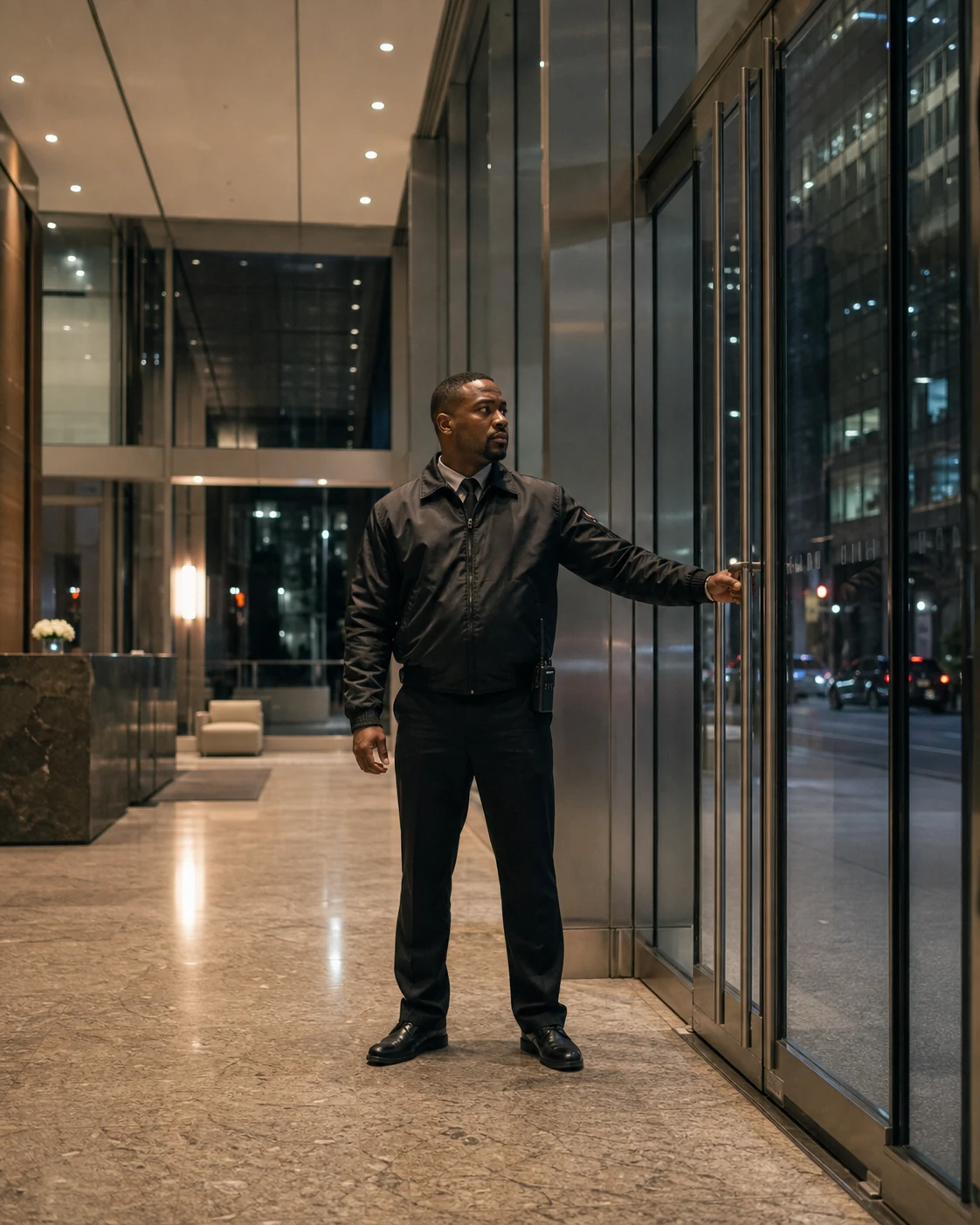
A security guard who remains at the lobby desk can monitor access, but that fixed post does not reveal what is happening in stairwells, loading areas, mechanical floors, garages, or vacant tenant spaces. Regular patrols help a Manhattan commercial building identify unauthorized activity, unsafe conditions, open doors, water leaks, and other problems that might otherwise go unnoticed.
There is no single patrol interval that fits every property. The right security patrol frequency in NYC depends on the building's layout, occupancy, operating hours, recent incidents, and the duties assigned to each guard. A useful patrol plan balances timely observation with dependable lobby and access-control coverage.
Is There a Standard Security Patrol Frequency for NYC Buildings?
For general security rounds, there is not one universal interval that every New York City commercial building must follow. Patrol frequency should be established through a site assessment and documented in the property's post orders.
As an operational starting point—not a legal standard—many properties consider a full patrol approximately every 30 to 60 minutes during lower-occupancy periods. Higher-risk areas or changing conditions may justify more frequent checks. A large or complex building may instead divide patrols into zones so that important locations are observed more often than a complete top-to-bottom tour would allow.
Any patrol connected to a required fire watch, impairment plan, or other regulated function must follow the instructions and requirements applicable to that situation. An ordinary security round should not be treated as a substitute for required fire guard coverage.
Factors That Should Determine Patrol Frequency
Building size and patrol duration
A 12-story office building and a multi-tower commercial complex cannot use the same schedule without considering walking time. Management should first determine how long a thorough round takes, including elevator delays, door checks, and documentation.
If one round takes 45 minutes, requiring that same officer to start another full round every 30 minutes is not realistic. The property may need zoned patrols, a second officer, or a revised assignment structure.
Occupancy and operating hours
A busy office lobby may require a guard to remain at the desk during morning arrivals and evening departures. Patrols can be concentrated during quieter periods or performed by a separate roving officer.
After-hours rounds often deserve greater emphasis because fewer employees are present to report unusual activity. Properties with late-working tenants, cleaners, contractors, or overnight deliveries should align patrols with those schedules.
Access points and vulnerable areas
Not every part of a building has the same risk. Areas that may need additional attention include:
- Loading docks and service entrances
- Emergency exits and stairwells
- Garages, bicycle rooms, and package areas
- Roof and mechanical-area access points
- Vacant floors and unoccupied tenant suites
- Shared amenity spaces
- Exterior doors, alleys, and sidewalk-facing areas
- Locations with repeated alarms, complaints, or unauthorized access
A risk-based plan may call for a complete building round every hour while checking the loading dock or garage every 20 to 30 minutes.
Incident history and current conditions
Patrol schedules should respond to what is happening at the property. Door-propping, theft, vandalism, trespassing, workplace concerns, nearby construction, or repeated after-hours alarms can justify temporary or permanent changes.
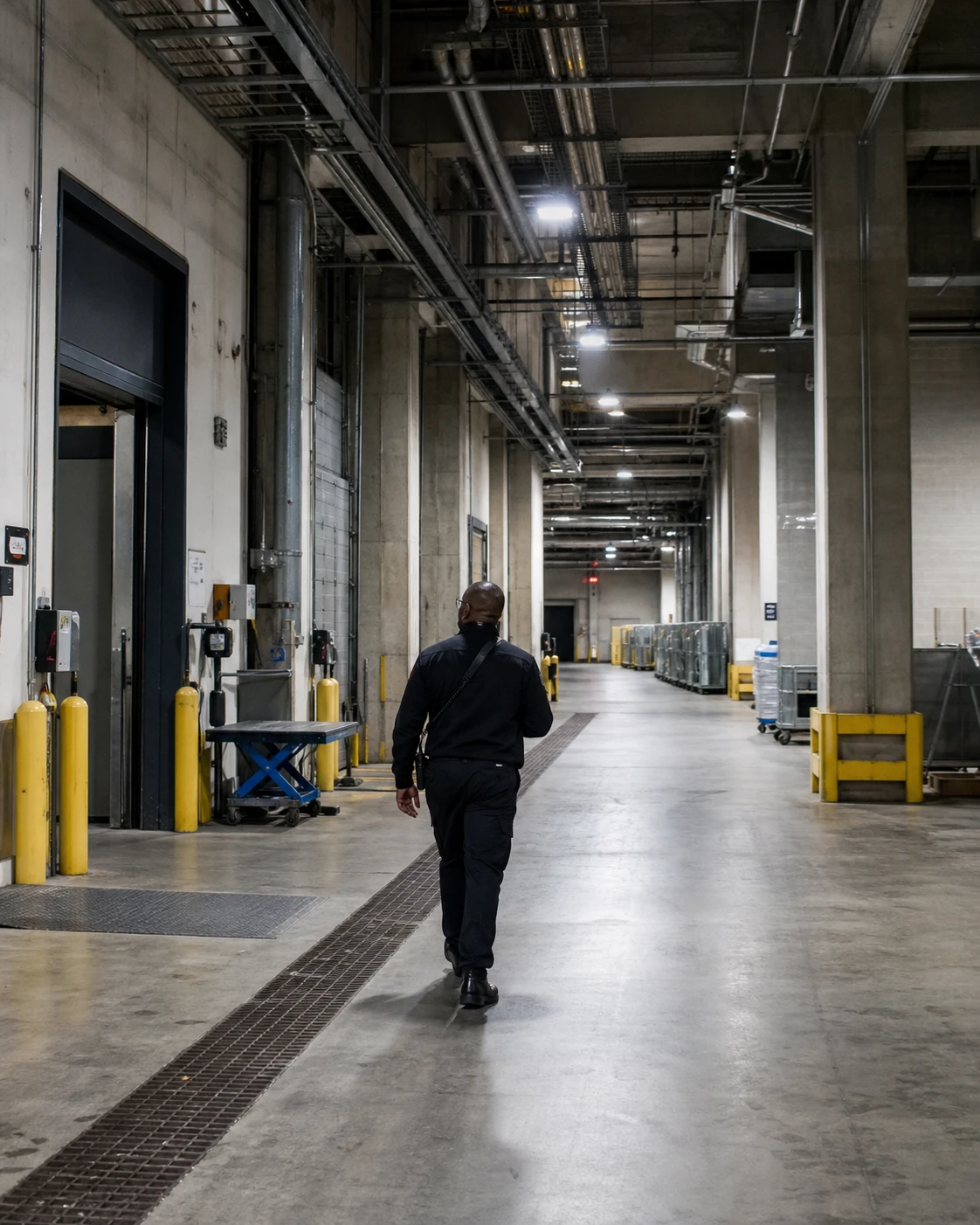
Frequency may also increase during tenant move-ins, major deliveries, special events, severe weather, system outages, or an active building incident. When a sudden gap arises, management can arrange emergency security coverage rather than leaving critical posts unattended.
Available technology
Cameras, access-control systems, alarms, and electronic tour checkpoints can improve visibility and verify that rounds occurred. They do not eliminate the value of a trained guard physically observing conditions.
Technology should help determine where the guard needs to go. For example, a forced-door alert may trigger an immediate targeted response instead of waiting for the next scheduled patrol.
Practical Patrol Intervals to Consider
The following ranges are planning examples, not mandatory NYC rules:
| Building condition | Possible starting approach |
|---|---|
| Occupied office hours | Maintain lobby coverage and conduct scheduled or event-driven zone checks |
| Routine after-hours operations | Complete or zoned rounds approximately every 30–60 minutes |
| Loading dock, garage, or repeated-problem area | Targeted checks approximately every 20–30 minutes |
| Tenant move, event, or unusual activity | Increase patrols for the duration of the condition |
| Alarm, open door, or active concern | Respond promptly under the property's escalation procedures |
Managers should test whether these intervals are achievable. A rushed patrol that overlooks doors or hazards is less useful than a realistic schedule supported by sufficient staffing.
Should Patrol Times Be Randomized?
Predictable rounds can create gaps that someone familiar with the schedule may exploit. A better approach is often to set a maximum time between observations while allowing patrol starts to vary within that window.
For example, instead of directing a guard to enter the garage at exactly the top of every hour, post orders might set a maximum interval between garage checks while allowing exact visit times to vary. A per-hour count alone does not control the longest gap between checks. Some locations, however, need checks at fixed times because of deliveries, openings, closings, or tenant procedures. The schedule should combine consistency with appropriate unpredictability.
Randomization should never mean poor accountability. Supervisors still need to know what areas must be visited and the longest acceptable interval between checks.
What Should a Guard Check During Each Round?
A patrol should have defined observation points rather than simply requiring the officer to walk the property. Depending on the site, guards may be instructed to check for:
- Unsecured or propped doors
- Unauthorized people in restricted areas
- Evidence of forced entry, vandalism, or property damage
- Obstructed corridors or exits
- Unusual odors, visible smoke, or signs of water intrusion
- Lighting failures and unsafe walking conditions
- Elevator or access-control problems
- Activity in vacant spaces
- Contractors working outside approved areas or hours
- Conditions requiring immediate notification or escalation
Guards should report observations accurately without attempting repairs or technical work outside their role. Post orders should explain whom to contact, what requires immediate escalation, and when emergency services should be called.
Documenting and Reviewing Patrols
Patrol records create useful operational information. Documentation may include electronic checkpoints, time-stamped activity logs, incident reports, supervisor inspections, and dispatch communications.

Property management should periodically review the records to answer practical questions:
- Are all required areas being reached?
- Do rounds occur at useful times rather than in a predictable pattern?
- Are patrols being interrupted by lobby, delivery, or tenant demands?
- Which locations generate the most incidents or exceptions?
- Does the assigned officer have enough time to perform each round properly?
A meaningful review looks beyond whether a checkpoint was scanned. It evaluates what the guard observed, how the issue was handled, and whether the patrol plan should change.
Matching Staffing to the Patrol Plan
Patrol expectations must reflect the number of guards on duty. A single officer cannot continuously control the lobby, screen visitors, manage deliveries, respond to tenant calls, and patrol a large building at the same time.
For many Manhattan properties, the solution is a combination of fixed-post and roving coverage. The fixed officer maintains access control while a second officer completes interior and perimeter rounds. Smaller buildings may use carefully scheduled patrol windows, provided the lobby has an approved coverage procedure.
Guardian ISI can assess site conditions and develop commercial office security coverage around a building's access points, operating schedule, and patrol needs. For broader information about officer services, visit our security guard services page.
Build a Patrol Schedule Around Your Property
The right security patrol frequency is the one that gives management timely visibility without leaving another essential post unprotected. Start with the building's risks, map the time required for each route, define priority checkpoints, and review the results after incidents or operational changes.
To discuss patrol coverage for a Manhattan commercial property, call or text Guardian ISI at [(212) 602-1695](tel:2126021695). You can also request security coverage online.
Related Guardian services
Review Security Guard Services and Commercial Office Security to connect these procedures with the appropriate staffing and site responsibilities.
Frequently asked questions
How often should a security guard patrol an NYC commercial building?
There is no universal interval for every building. As an operational starting point, some properties consider complete or zoned rounds every 30 to 60 minutes after hours, with more frequent checks for garages, loading docks, or problem areas.
Should security patrols happen at fixed or random times?
A combination often works best. Set a maximum interval between required checks, but vary patrol start times when possible so the routine is not easily predictable. Time-sensitive operations may still require fixed checks.
Can one lobby guard also patrol the entire building?
Only if the route and lobby coverage procedure make that assignment realistic. Large buildings, active lobbies, and frequent deliveries may require separate fixed-post and roving officers.
Do cameras replace physical security patrols?
No. Cameras and access-control alerts improve visibility, but a guard can inspect doors, observe conditions outside camera views, communicate with occupants, and respond according to site procedures.
What should be included in security patrol post orders?
Post orders should identify routes, priority areas, maximum patrol intervals, required documentation, lobby-relief procedures, prohibited actions, and clear notification and escalation steps.
Is a routine security patrol the same as a fire watch?
No. A required fire watch or fire guard assignment may have specific qualifications, duties, and procedures. General security rounds should not be presented as a substitute for applicable fire-safety coverage.