
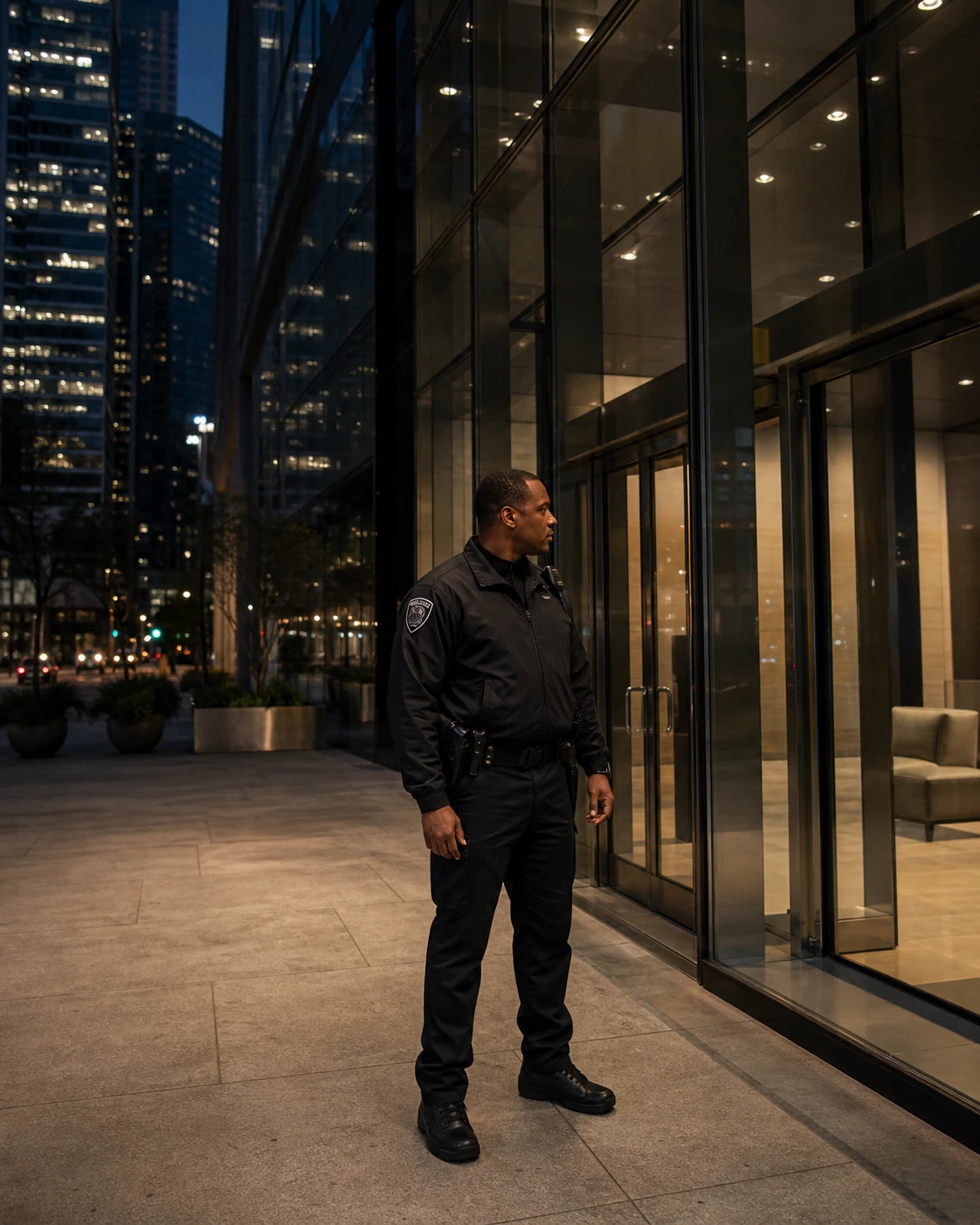
A security patrol is more than a walk through the property. For a Manhattan commercial building, it is a repeatable process for identifying unauthorized access, unsafe conditions, damaged equipment, and operational problems before they escalate.
This security patrol checklist for commercial buildings can help property managers, owners, and facility teams set clear expectations for officers. It should be adapted to the building’s layout, occupancy, operating hours, post orders, emergency procedures, and known risks.
What a Commercial Building Patrol Should Accomplish
An effective patrol program should support four basic objectives:
- Deter unwanted activity through visible, unpredictable officer movement
- Identify irregular conditions such as unsecured doors, leaks, obstructions, or suspicious behavior
- Document observations with accurate times, locations, photographs, and follow-up actions
- Escalate urgent issues to building management, emergency responders, or the appropriate vendor
Patrols should complement—not replace—access control, functioning cameras, alarms, maintenance inspections, and established fire-life-safety procedures.
Before the Patrol Begins
Officers should start each shift or patrol cycle with current information. A short briefing can prevent missed areas and inconsistent responses.
Pre-patrol checklist
- Review post orders and property-specific procedures
- Receive a briefing from the outgoing officer or supervisor
- Check for open incidents, work orders, and unresolved access issues
- Review scheduled visitors, contractors, deliveries, and after-hours tenants
- Confirm restricted areas and any temporary closures
- Test the assigned radio, phone, flashlight, and patrol reporting device
- Verify that keys, access cards, and other controlled property are accounted for
- Note special conditions such as construction, events, severe weather, or elevator work
- Confirm emergency contacts and escalation instructions
If the property needs a broader staffing plan, review Guardian ISI’s commercial office security services and security guard coverage.
Exterior and Perimeter Patrol Checklist
The exterior patrol creates visibility while helping the officer spot conditions that may affect the building, occupants, or public-facing entrances.
- Inspect main entrances, side doors, service doors, and emergency exits from the exterior
- Check whether doors close and latch as intended without defeating required egress
- Look for signs of forced entry, tampering, vandalism, or damaged locks
- Observe loading docks, delivery zones, parking entrances, and bicycle storage areas
- Inspect accessible gates, fences, bollards, and perimeter barriers for visible damage
- Check exterior lighting and report dark or malfunctioning areas
- Observe sidewalk sheds, scaffolding, temporary fencing, and construction access points
- Look for unattended packages, abandoned property, or unusual activity
- Note blocked entrances, exterior exit discharge areas, or access routes
- Record water leaks, ice, debris, broken glass, or other apparent hazards
Officers should not handle an unknown or suspicious item. They should isolate the area when safe to do so, follow site procedures, and contact the appropriate authorities.
Lobby and Access-Control Checklist
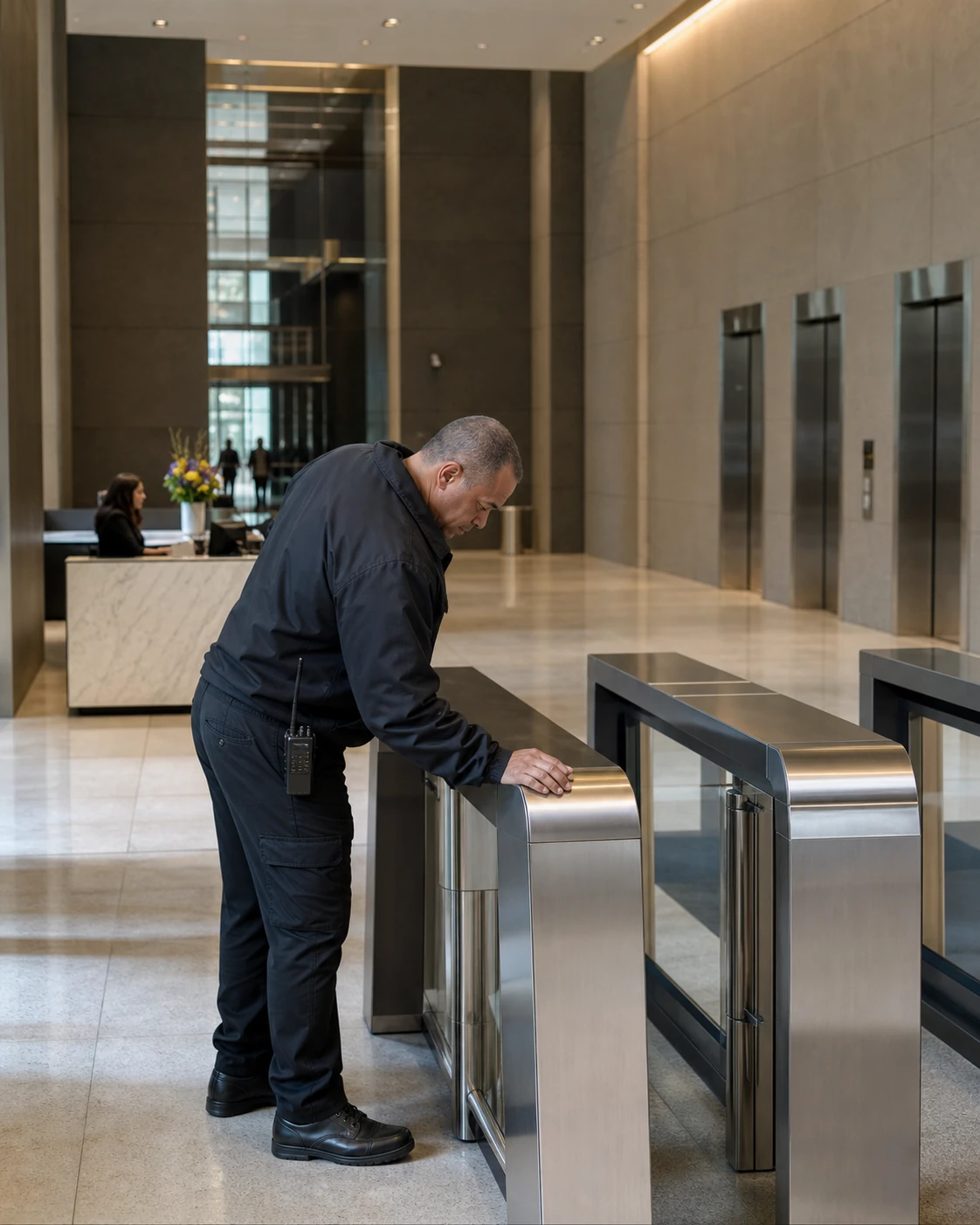
In many Manhattan buildings, the lobby is simultaneously a reception area, security post, tenant checkpoint, and delivery hub. Patrol observations should verify that the access process is working in practice.
- Confirm that required lobby and security posts are staffed
- Observe whether employees and visitors follow the property’s entry procedures
- Verify that visitor credentials are issued and recovered according to policy
- Check turnstiles, card readers, intercoms, and visitor systems for obvious faults
- Look for doors being propped open or individuals attempting to follow authorized users inside
- Confirm that keys, access cards, and temporary credentials are controlled
- Review the handling of deliveries, messengers, and food couriers
- Check package holding areas for crowding or unsecured items
- Ensure the lobby desk has current contact and escalation information
- Report camera views that appear blocked, misaligned, or unavailable
An officer should record access-control failures rather than relying on an informal verbal handoff. Repeated issues may indicate that procedures, staffing, equipment, or tenant communication need to change.
Interior Patrol Checklist
Interior rounds should cover more than occupied tenant floors. Routes may include shared corridors, stairwells, restrooms, amenity areas, vacant spaces, mechanical levels, and back-of-house rooms when the officer is authorized to enter them.
Common areas and tenant floors
- Check corridors, elevator lobbies, shared spaces, and restrooms
- Look for unauthorized persons or activity inconsistent with building policy
- Check vacant suites and temporarily unoccupied areas included in the patrol route
- Report unusual odors, sounds, temperature changes, smoke, or visible water intrusion
- Note damaged ceilings, flooring, handrails, glass, or fixtures
- Identify objects that appear to obstruct corridors, stairs, or doors
- Verify that restricted rooms remain secured
- Check for unauthorized sleeping, smoking, or storage where prohibited by property policy
Stairwells and exit areas
- Check stairwell doors and landings for visible obstructions or damage
- Verify that doors are not being improperly held open
- Look for stored materials in stairs or exit routes
- Report missing, damaged, or unlit signs to building management
- Note evidence of roof, street, or floor access that conflicts with site procedures
Officers should report apparent fire-protection or egress concerns promptly, but they should not adjust, silence, reset, or repair building systems unless specifically trained, authorized, and directed under the property’s procedures.
Loading Dock and Back-of-House Checklist
Loading areas often present a different risk profile from the main lobby because they combine vehicles, vendors, freight movement, keys, and open service entrances.
- Confirm scheduled deliveries and contractor arrivals
- Verify credentials and destination before granting access
- Monitor open dock doors and service entrances
- Check freight elevator controls and waiting areas
- Look for unattended packages, tools, or valuable materials
- Confirm that restricted storage and utility rooms remain secured
- Record vehicle information when required by property policy
- Check that delivery activity does not create apparent access or exit obstructions
- Ensure vendors leave or return credentials as required
- Report spills, leaks, damaged equipment, or unsafe loading conditions
Buildings undergoing renovations may also need dedicated construction security to monitor temporary entrances, materials, contractors, and off-hours activity.
Roof, Mechanical, and Critical-Area Checks
Only authorized personnel should enter roof, mechanical, electrical, telecommunications, or other controlled areas. Patrol instructions should clearly state which spaces officers may access and which require an engineer, superintendent, or vendor.
Where authorized, the checklist may include:
- Confirm doors and hatches are secured according to building procedures
- Look for signs of unauthorized entry or tampering
- Report unusual alarms, odors, sounds, vibration, heat, or visible leaks
- Check for standing water or weather-related damage
- Observe whether required clearance around equipment appears compromised
- Verify that contractors working in controlled areas have authorization
- Document conditions without touching unfamiliar controls or equipment
Fire-Life-Safety Observations During Patrols
Security patrols can help identify visible conditions that require attention, but they are not a substitute for inspections, testing, maintenance, or duties assigned to qualified fire-life-safety personnel.
Officers should know how to report:
- Obstructed exit paths or stair landings
- Doors that appear damaged or improperly secured
- Visible damage to alarm, detection, sprinkler, or standpipe components
- Missing or damaged extinguishers, where included in the patrol scope
- Unusual smoke, burning odors, heat, or signs of fire
- Impaired systems or out-of-service equipment communicated by management
Any suspected fire, smoke condition, or immediate threat should be handled according to the building’s emergency plan, including contacting 911 when appropriate. Properties with designated staffing needs can learn more about fire guards and fire and life safety directors.
How Often Should Security Patrols Occur?
There is no single patrol frequency that fits every commercial property. The schedule should reflect the building’s risk assessment, hours, occupancy, contractual requirements, insurer guidance, site procedures, and current conditions.
Patrol frequency may increase during:
- Nights, weekends, and holidays
- Tenant move-ins or move-outs
- Construction and renovation work
- Special events or executive visits
- Access-control or camera outages
- Severe weather and extended power disruptions
- Periods of vacancy or reduced occupancy
- Recent incidents or recurring unauthorized access
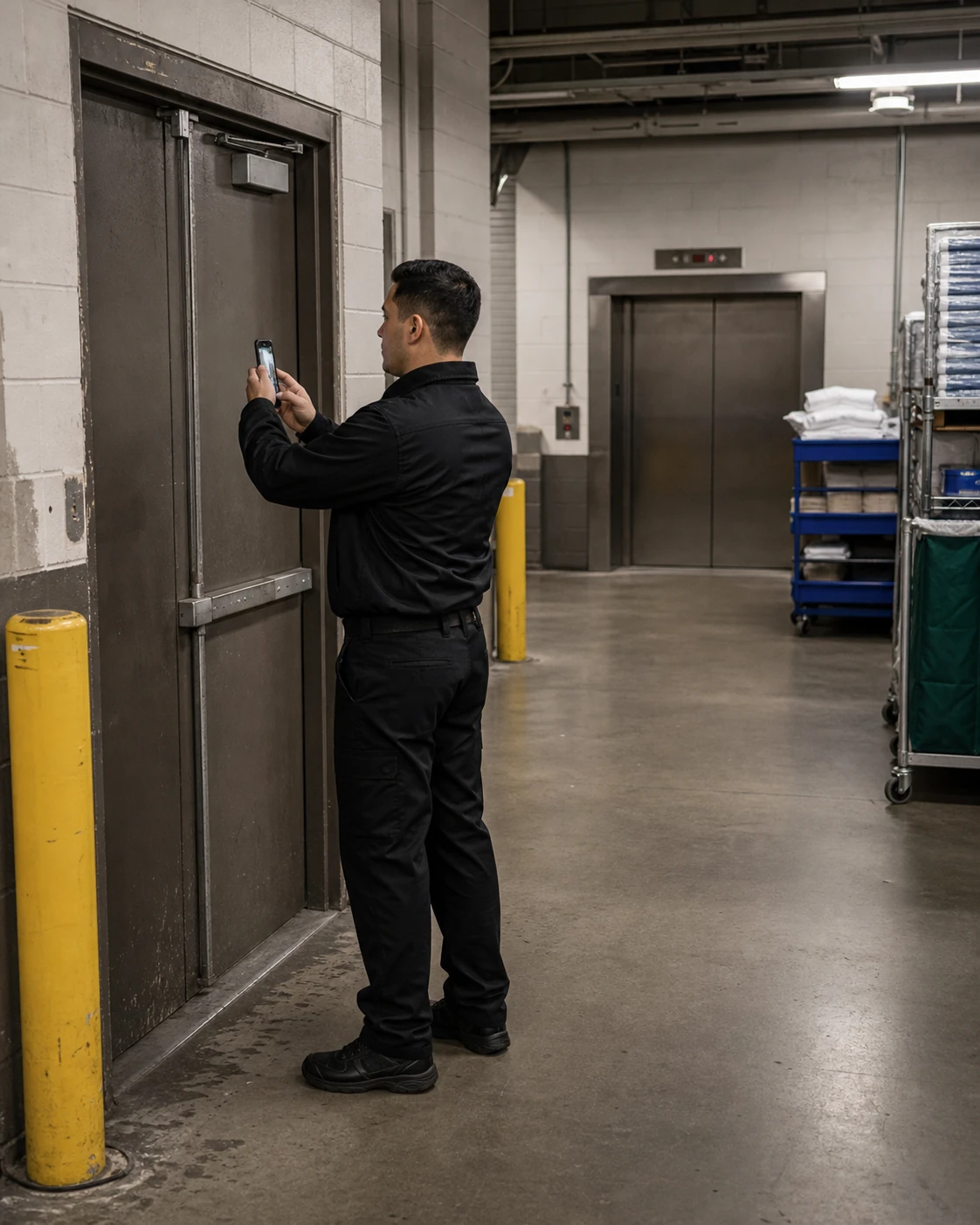
Avoid making every patrol perfectly predictable. Varying the timing and direction of rounds can improve deterrence, provided all required checkpoints and responsibilities are completed.
What Every Patrol Report Should Include
A patrol is only as useful as its documentation. Reports should be factual, specific, and written as soon as practical.
Include:
- Date and time: When the patrol began, ended, and reached key locations
- Officer identification: The person completing the round
- Areas checked: Floors, doors, rooms, or checkpoints included
- Observed condition: What the officer directly saw, heard, or smelled
- Action taken: Notifications, access restrictions, photographs, or other response
- People notified: Names, roles, and notification times when available
- Follow-up needed: Repair, management review, vendor service, or supervisor action
Reports should avoid speculation. For example, “east service door did not latch after three closing attempts” is more useful than “door is broken.” If an officer did not witness how damage occurred, the report should not assign blame.
Sample Patrol Exception Log
| Time | Location | Observation | Immediate action | Follow-up |
|---|---|---|---|---|
| 8:15 p.m. | East service entrance | Door failed to latch after closing | Maintained observation and notified supervisor | Building engineer to inspect |
| 9:40 p.m. | Floor 12 corridor | Water visible near tenant doorway | Restricted access and contacted management | Investigate source and document cleanup |
| 11:05 p.m. | Loading dock | Unscheduled delivery arrived | Held access pending verification | Confirm vendor schedule |
The goal is not to generate long reports for routine conditions. It is to make exceptions easy to understand, assign, and resolve.
Turning the Checklist Into a Building-Specific Patrol Plan
A generic checklist becomes more effective when management maps it to the actual property. Walk the site with security, property management, engineering, and fire-life-safety stakeholders to identify:
- Required posts and patrol zones
- High-risk or frequently accessed doors
- Tenant and visitor traffic patterns
- Areas with valuable equipment or sensitive information
- Known blind spots and recurring incidents
- Authorized and prohibited officer actions
- Notification priorities for different incident types
- Documentation and supervisory review standards
Update the checklist after major tenant changes, construction, system upgrades, incidents, or changes to building operations. Supervisors should also review patrol records to identify repeated conditions rather than treating each report as an isolated event.
Strengthen Patrol Coverage at Your Manhattan Property
Guardian ISI can help commercial properties plan dependable security staffing, patrol responsibilities, post orders, and emergency coverage. Whether you need ongoing service or support for an unexpected staffing gap, call or text (212) 602-1695 or request coverage online.
For urgent short-term needs, explore emergency security coverage.
Related Guardian services
Build the staffing and reporting plan around Commercial Office Security. Review Security Guard Services for the wider assignment and supervision requirements.
Frequently asked questions
What should a commercial building security patrol check?
A patrol should check exterior access points, lobbies, common areas, stairwells, loading docks, restricted rooms, and other authorized locations. Officers should document irregular access, hazards, damage, suspicious activity, and required follow-up.
How often should security officers patrol a commercial building?
Frequency should be based on the property’s layout, occupancy, risk assessment, operating hours, post orders, and current conditions. Many buildings vary patrol times while ensuring all required areas and checkpoints are covered.
Should security officers inspect fire-safety equipment?
Officers may observe and report visible problems within their assigned scope. They should not test, reset, repair, or manipulate fire-protection systems unless they are properly trained, authorized, and directed to do so.
What belongs in a security patrol report?
Include the date, time, officer, locations checked, specific observations, actions taken, people notified, and any follow-up required. Reports should distinguish direct observations from assumptions.
How can property managers prevent missed patrols?
Use clear post orders, defined routes, checkpoint or reporting tools, shift handoffs, exception logs, and regular supervisory review. The process should also account for temporarily closed or inaccessible areas.