

High security guard turnover can create real problems for a Manhattan property. New guards need time to learn the building, understand post orders, recognize tenants, and become familiar with access-control procedures. When officers frequently leave, service becomes less consistent and managers spend more time addressing vacancies, training needs, and coverage gaps.
Pay is an important part of the problem, but it is not the only reason guards leave. Working conditions—especially posts that require someone to stand in one place for an entire shift—can have a greater effect on retention than many property managers realize.
Understanding why guards leave is the first step toward building a more stable security team.
Pay Is a Major Factor in Security Guard Turnover
A common reason guards leave is straightforward: they find another position that pays more. Even a modest hourly increase can be meaningful to someone working full-time, commuting into Manhattan, or managing an unpredictable schedule.
The practical market value of a security position is ultimately influenced by whether qualified people are willing to accept and remain in the job at the offered wage. If a property repeatedly struggles to fill a post—or if guards accept it and quickly leave—the compensation may not match the position’s demands.
When no suitable candidates are willing to do the work at the offered rate, the property and its security provider may need to raise the pay until the position attracts dependable applicants. This is especially important for jobs involving difficult hours, substantial responsibilities, challenging interactions, or demanding physical conditions.
However, increasing pay without examining the work environment may only address part of the problem.
Working Conditions Matter More Than Many People Realize
Two security jobs offering the same hourly pay can provide very different employee experiences. One officer may work at a professional lobby desk with a chair, reliable breaks, clear procedures, and access to a restroom. Another may be expected to stand in one spot for eight hours with limited relief and unclear expectations.
Those differences should be considered when reviewing turnover at a particular post.
Some guards will even move to a lower-paying job if it offers a chair, more reasonable physical expectations, a better schedule, or a more respectful environment. For an employee who spends every shift on their feet, a small difference in pay may not outweigh the value of being able to sit when duties permit.
Static Standing Posts Are Particularly Difficult to Retain
Continuous static standing is a working condition worth investigating when officers report discomfort or leave an assignment. Static standing can be more frustrating than active patrol because the officer remains in one place without the movement or variety that comes with making rounds.
Some officers may continue looking for another job if a standing-only assignment is unsuitable for them. They may stay temporarily because they need immediate income, but leave as soon as they find a role with better conditions or higher pay.
This does not mean every security post should be seated. Some assignments require an officer to greet visitors, maintain visibility, patrol an area, respond quickly, or observe activity from a specific location. The goal is to determine whether continuous standing is actually necessary for the security function—or whether it has simply become an unquestioned building expectation.

Other Common Causes of Guard Turnover
Unpredictable or Inconvenient Schedules
Frequent schedule changes make it difficult for officers to plan transportation, childcare, second jobs, and personal responsibilities. Overnight, weekend, and rotating assignments can also be harder to fill and may require higher compensation or more consistent scheduling.
Delayed Breaks and Inadequate Relief
A guard cannot simply walk away from an active post. If relief officers are late or unavailable, scheduled breaks can become inconsistent. Over time, unreliable meal and restroom relief can make an otherwise manageable job undesirable.
Unclear Post Orders
Officers are more likely to become frustrated when responsibilities are vague or change depending on which manager is present. Written post orders should clearly explain access procedures, patrol expectations, emergency contacts, prohibited activities, escalation steps, and the limits of the guard’s responsibilities.
Duties That Keep Expanding
Turnover can rise when a security position gradually becomes a combination of security, concierge service, package handling, tenant assistance, maintenance reporting, and administrative work—without an adjustment in staffing, training, or compensation.
Security officers can support building operations, but their primary security responsibilities should remain clear.
Poor Treatment at the Property
Guards regularly interact with property managers, tenants, residents, contractors, delivery personnel, and members of the public. A workplace where officers are routinely ignored, disrespected, or blamed for matters outside their control will have difficulty retaining good people.
Professional treatment costs nothing, but it can make a meaningful difference in whether an officer wants to remain at a site.
Difficult Commutes and Site Logistics
A post may be less attractive if reporting times do not align with public transportation, there is no appropriate place to store personal belongings, or basic facilities are difficult to access. These details may seem minor from a management perspective, but they affect the guard during every shift.
The Operational Cost of Constant Turnover
The impact of turnover goes beyond replacing one employee. A revolving security team can lead to:
- Repeated orientation and site training
- Inconsistent enforcement of building procedures
- More last-minute schedule changes
- Reduced familiarity with tenants and authorized vendors
- Greater dependence on overtime or temporary coverage
- More management time spent correcting avoidable mistakes
- Lower morale among the officers who remain
A stable team develops site knowledge that cannot be created through written instructions alone. Experienced officers learn normal traffic patterns, understand the property’s priorities, and are more likely to notice when something is unusual.
How NYC Properties Can Improve Guard Retention
Review Whether Standing Is Operationally Necessary
Walk each post and evaluate what the officer actually needs to accomplish. If continuous standing is not essential, consider providing a suitable chair or stool that preserves sightlines and allows the guard to stand immediately when needed.
Another option is to alternate between lobby observation, controlled patrols, and seated administrative tasks. A post that includes purposeful movement may be easier to sustain than standing motionless in one location.
Any changes should support the property’s security objectives and account for individual workplace needs without obstructing entrances, emergency paths, or visibility.
Match Pay to the Real Demands of the Position
Compensation should reflect more than the job title. Consider the schedule, physical requirements, required experience, public interaction, workload, commute, dress standards, and level of responsibility.
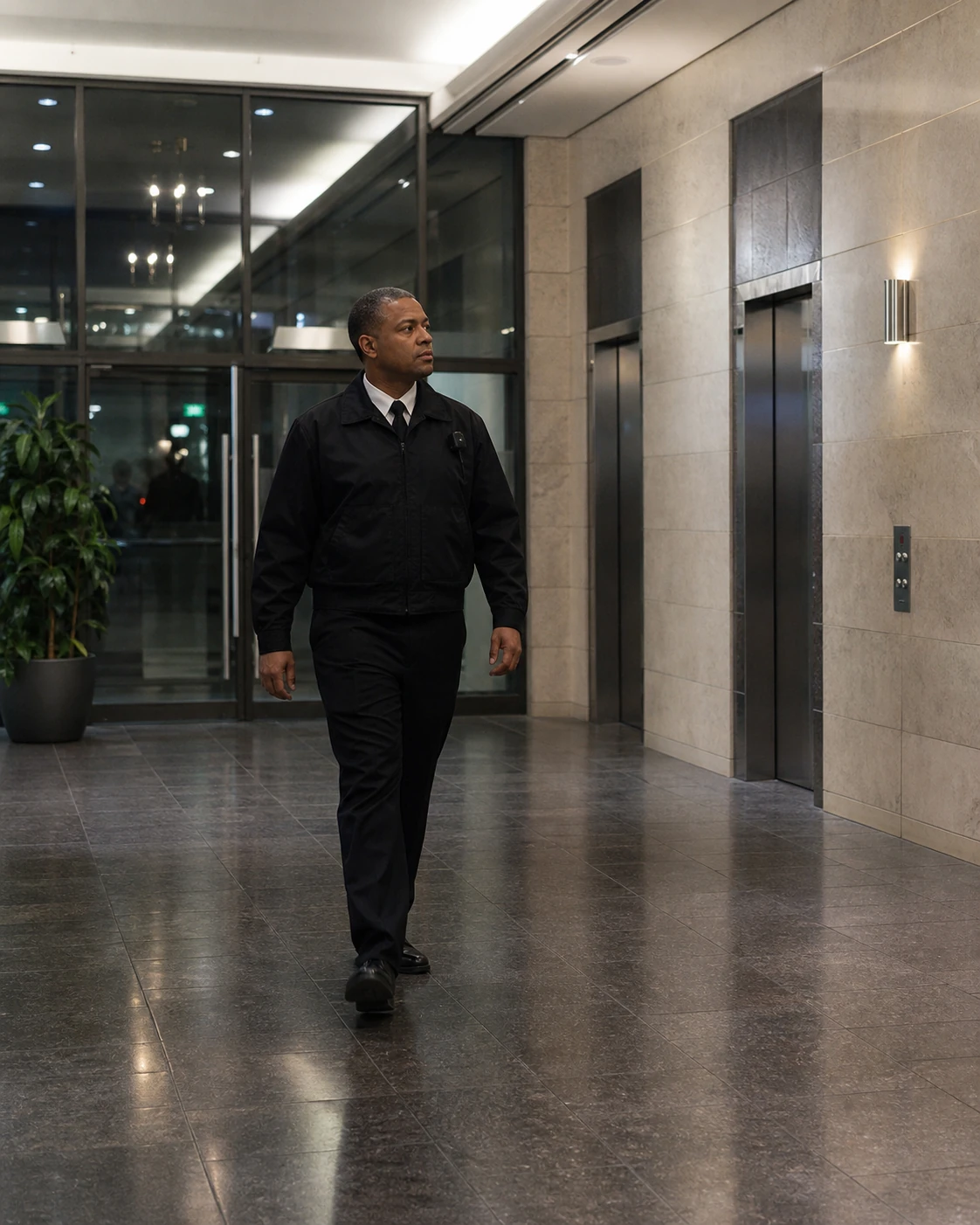
If candidates repeatedly reject the position or newly assigned officers quickly leave for better-paying work, that is useful market feedback. Raising the wage may be more cost-effective than continually recruiting and training replacements.
Build Reliable Break Coverage
Plan who will cover the post for meals, restroom use, and scheduled breaks. Officers should not have to choose between abandoning a post and waiting indefinitely for relief.
Keep Expectations Clear and Consistent
Property management and the security provider should agree on the officer’s responsibilities before staffing begins. When expectations change, post orders and training should be updated rather than relying on informal verbal instructions.
Ask Guards Why They Leave
Exit feedback can reveal patterns that are not visible from the management office. If multiple officers mention standing requirements, delayed relief, a particular supervisor, or an unstable schedule, the site likely has a structural retention problem rather than a series of unrelated resignations.
Recognize Site Knowledge and Dependability
Simple recognition helps reinforce that security officers are part of the property’s operations. Respectful communication, constructive feedback, dependable scheduling, and acknowledgment of strong performance can improve the work environment without weakening accountability.
Better Retention Starts With a Better-Designed Post
Security guard turnover is not always a recruiting problem. Sometimes it is a position-design problem.
Pay matters, and guards commonly leave because another employer offers more. But working conditions can be equally important—and, in some cases, more important. An officer may accept lower pay for a job that provides a seat, predictable breaks, consistent hours, and respectful treatment.
Manhattan properties should evaluate the entire assignment rather than focusing only on the hourly wage. A competitive rate combined with realistic physical requirements, clear post orders, reliable relief, and professional treatment is more likely to produce stable coverage.
Guardian ISI can help commercial properties evaluate their security needs and arrange professional security guard coverage, including support for urgent staffing gaps. Call or text (212) 602-1695, or request coverage online.
Turn retention feedback into an action plan
- Ask departing and current officers about the actual assignment.
- Compare recurring themes with schedules, relief records, and post orders.
- Agree on practical changes with management and the security provider.
- Review subsequent feedback and staffing stability before judging the result.
Related Guardian services
Discuss post responsibilities and supervision with Security Guard Services. For an immediate staffing gap, Emergency Security Coverage provides a separate route to discuss availability.
Official references
Frequently asked questions
Why is security guard turnover so high?
Common causes include better-paying job offers, continuous standing, inconsistent schedules, unreliable breaks, unclear duties, difficult commutes, and poor treatment at the assigned property.
Does higher pay reduce security guard turnover?
Competitive pay can improve recruiting and retention, especially for difficult shifts or demanding posts. However, higher pay may not solve problems caused by poor working conditions or unrealistic expectations.
Do standing-only security posts cause guards to leave?
They can. Guards assigned to stand in one location for an entire shift may continue searching for work that offers seating, varied duties, better breaks, or higher compensation.
Can a security guard sit while on duty?
That depends on the post’s security responsibilities and property layout. When continuous standing is unnecessary, a properly positioned chair or stool may improve working conditions without reducing visibility or readiness.
How can a property reduce security guard turnover?
Review pay, standing requirements, schedules, break coverage, post orders, workload, site facilities, and how officers are treated. Exit feedback can help identify recurring site-specific problems.