An emergency in a Manhattan building can escalate quickly. Crowded sidewalks, vertical evacuation routes, multiple tenants, active construction, service vendors, and restricted access points can all complicate the response.
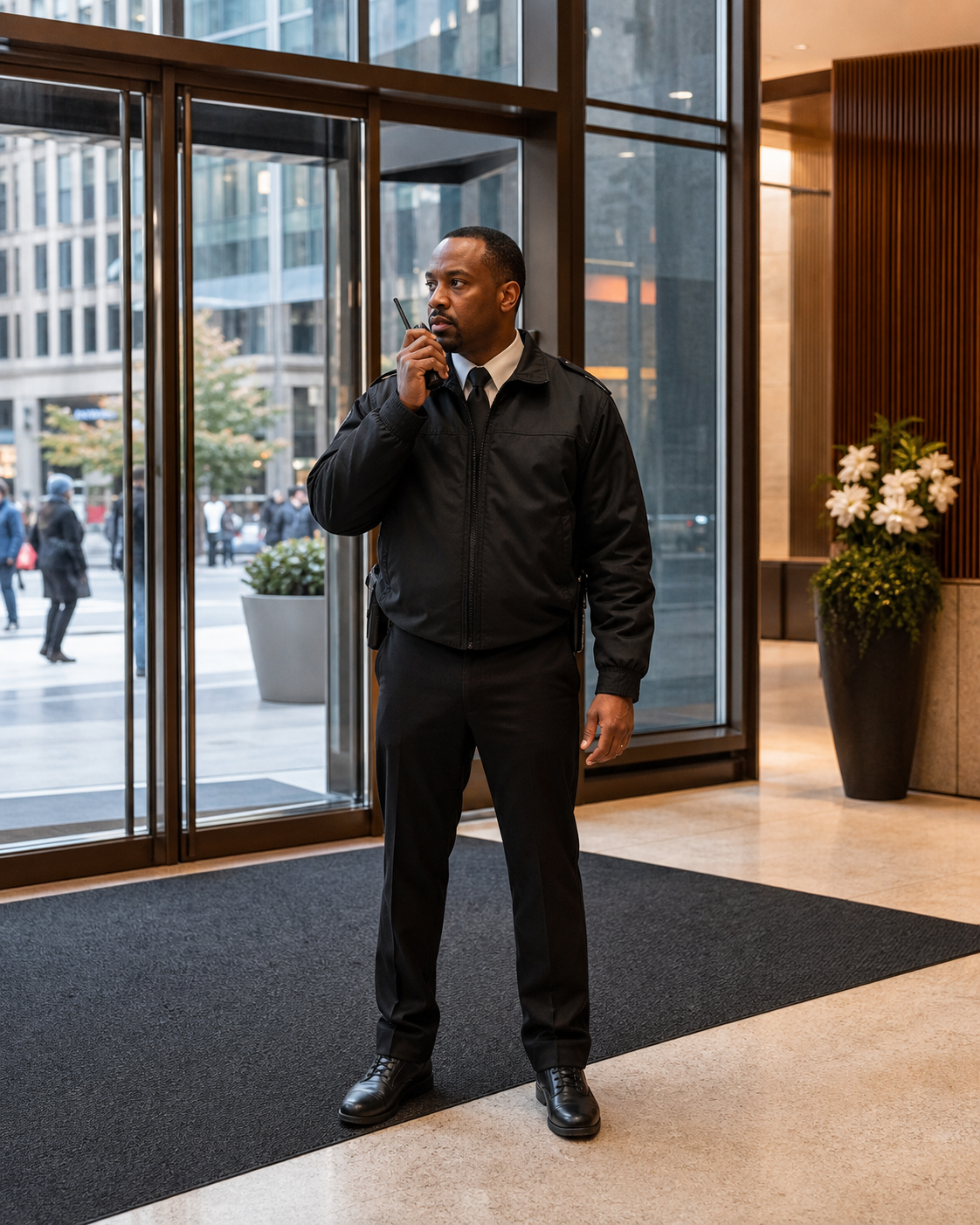
Security guards are often among the first people to notice a problem or receive a report. Their job is not to replace police officers, firefighters, emergency medical personnel, or building engineers. It is to recognize the situation, contact the appropriate responders, follow the property’s emergency plan and post orders, protect occupants without taking unnecessary risks, and communicate accurate information.
The strongest security guard emergency response procedures for NYC properties are site-specific, practiced, and coordinated with property management and the building’s fire-life-safety personnel.
The Core Priorities in an Emergency
Although every incident is different, guards generally need to work through five priorities.
1. Assess from a safe position
The responding guard should quickly determine:
- What is happening?
- Where is it happening?
- Is anyone injured or in immediate danger?
- Is the hazard spreading?
- Is it safe to approach?
Guards should not enter smoke, confront a person believed to have a weapon, handle a suspicious object, or attempt a technical rescue outside their training and assigned duties.
2. Contact emergency services
For an immediate threat to life, active fire, serious medical emergency, suspected gas leak, crime in progress, or other urgent danger, call 911 without delay. The caller should provide the property address, the exact location within the building, the nature of the emergency, known hazards, and a callback number.
In a large Manhattan property, saying “the 17th-floor west mechanical room” is substantially more useful than saying only “upstairs.”
3. Start internal notifications
After emergency services have been contacted—or simultaneously when staffing permits—the guard should notify the people identified in the post orders. Depending on the building, that may include:
- The security supervisor
- Property or facilities management
- Engineering personnel
- The designated fire-life-safety team
- Tenant representatives
- A security operations center or off-site manager
The notification chain should never create a delay in calling 911 when urgent public-safety assistance is needed.
4. Support life safety and responder access
A guard may be assigned to control access, direct occupants to appropriate routes, keep people away from the hazard, meet responders, recall critical building information, or open designated entrances. These duties must follow the property’s emergency action plan, fire-safety plan, post orders, and instructions from public-safety officials.
5. Document the incident
Once immediate life-safety needs are under control, the security team should create an objective incident report. It should distinguish observed facts from statements made by witnesses and include relevant times, notifications, actions, and responder arrivals.
Procedures for Common NYC Property Emergencies
Fire, smoke, or an alarm activation
A guard who discovers smoke or fire should follow the building’s fire procedures, initiate required notifications, and call 911. Guards should not silence or reset an alarm unless they are specifically authorized to do so under the site procedure.
Important response tasks may include:
- Giving dispatchers the exact floor and area involved
- Keeping occupants away from affected spaces
- Directing FDNY personnel to the fire command center or designated entrance
- Providing keys, access cards, floor plans, or impairment information
- Following the directions of qualified fire-life-safety personnel and FDNY
- Preventing unauthorized use of elevators or reentry into restricted areas
Guards should not improvise evacuation instructions. NYC buildings can have different fire-protection systems, occupancies, and approved plans. Staff must follow the procedure established for that specific property.
If a required fire-protection system is out of service, a property may need specially qualified personnel and additional precautions based on the circumstances and direction of the responsible parties. Guardian provides fire guard services for planned and emergency needs, but property management should confirm the applicable requirements for each impairment.
Medical emergencies
The guard receiving the report should call 911, obtain the patient’s precise location, and send another team member to meet EMS when staffing allows. Clear elevator and entrance access can save valuable time in a high-rise building.
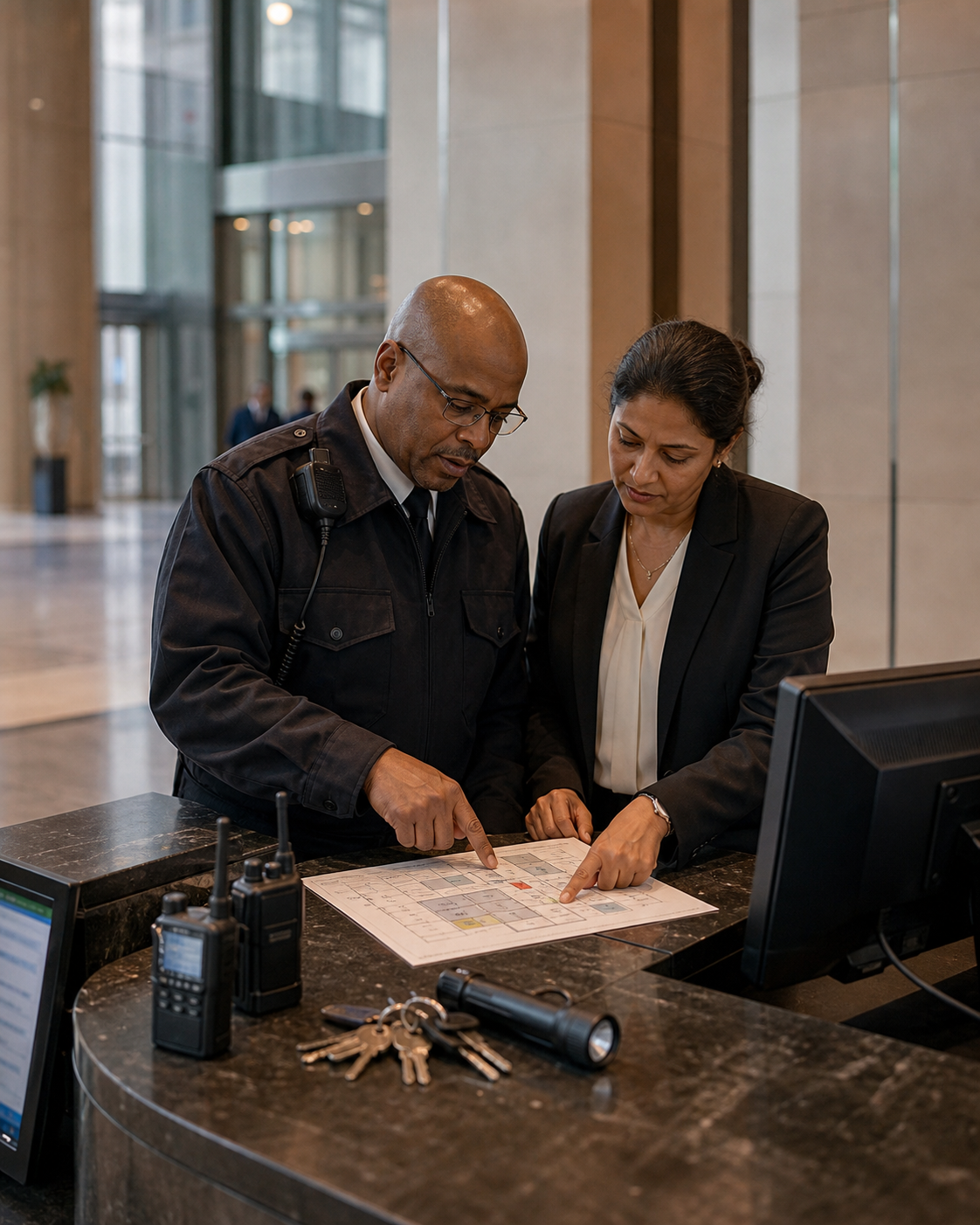
A guard should provide first aid, CPR, or AED assistance only within the guard’s training, certification, site procedures, and ability. Other priorities include crowd control, protecting the patient’s privacy, and documenting facts without recording unnecessary medical details.
Violence, weapons, or threatening behavior
If violence is occurring or a weapon is suspected, the guard should immediately contact 911 and communicate what was observed, where the person was last seen, a description, and the direction of travel. Guards should avoid unnecessary physical confrontation and should not pursue a potentially armed person beyond their training or post orders.
“Lockdown” is not a universal procedure for every NYC property. A hotel, residential tower, office building, and retail location may each require a different response. The correct actions should be established in advance with management and reflected in site instructions.
Suspicious packages and bomb threats
A suspicious item should not be touched, moved, opened, or covered. The guard should keep people away, notify 911, and follow instructions from law enforcement and the building’s emergency plan.
When a threat arrives by phone, email, or message, staff should preserve the communication and record details as accurately as possible. Employees should not independently decide that a threat is harmless based only on appearance or wording.
Gas odors, utility failures, and water leaks
A suspected gas leak requires immediate caution. Staff should move away from the affected area, avoid actions that could create an ignition source, call 911 from a safe location, and make the internal notifications specified by the property.
During electrical failures or flooding, guards may need to close affected areas, keep occupants away from elevators or standing water, and coordinate with engineering. Security personnel should not operate unfamiliar valves, electrical equipment, or building systems unless trained and authorized.
Elevator entrapments
A guard should confirm the elevator location, establish communication with the occupants when possible, and contact the elevator service provider and emergency responders according to the site procedure and circumstances. Any reported fire, smoke, medical distress, or immediate danger should be communicated to 911.
Guards should never force elevator doors or attempt an unauthorized rescue. Their role is to reassure occupants, keep communication open, control the surrounding area, and support trained responders.
How Post Orders Turn a General Plan Into Action
Generic emergency instructions are not enough for a complex Manhattan property. Post orders should tell each guard what to do at that particular assignment.
Effective orders address:
- Who calls 911 and what information to provide
- Who staffs the lobby, command post, loading dock, or fire command center
- Where responders should enter
- Who has access to keys, cards, floor plans, and emergency contacts
- How to cover a post when a guard is sent to another floor
- Which stairs, assembly locations, and restricted areas apply
- How guards communicate if radios or mobile phones fail
- Who may issue emergency instructions to occupants
- How overnight, weekend, construction, and special-event conditions differ
Post orders should be reviewed whenever staffing, access routes, tenants, construction conditions, building systems, or management contacts change.
Coordinate Security With Fire-Life-Safety Roles
A security guard, fire guard, and Fire and Life Safety Director are not interchangeable positions. Each may have different qualifications, responsibilities, and authority depending on the property and conditions.
Managers should clearly identify who is assigned to each role and avoid asking an employee to perform duties for which that person is not qualified. Properties that require designated fire-life-safety leadership can learn more about Guardian’s Fire and Life Safety Director services.
During an incident, the security team may support the designated emergency organization by controlling entrances, relaying information, managing crowds, and meeting responders. Public-safety officials take control of their respective emergency operations when they arrive.
Build a Practical Emergency Readiness Program
Written instructions matter, but guards also need practical preparation.
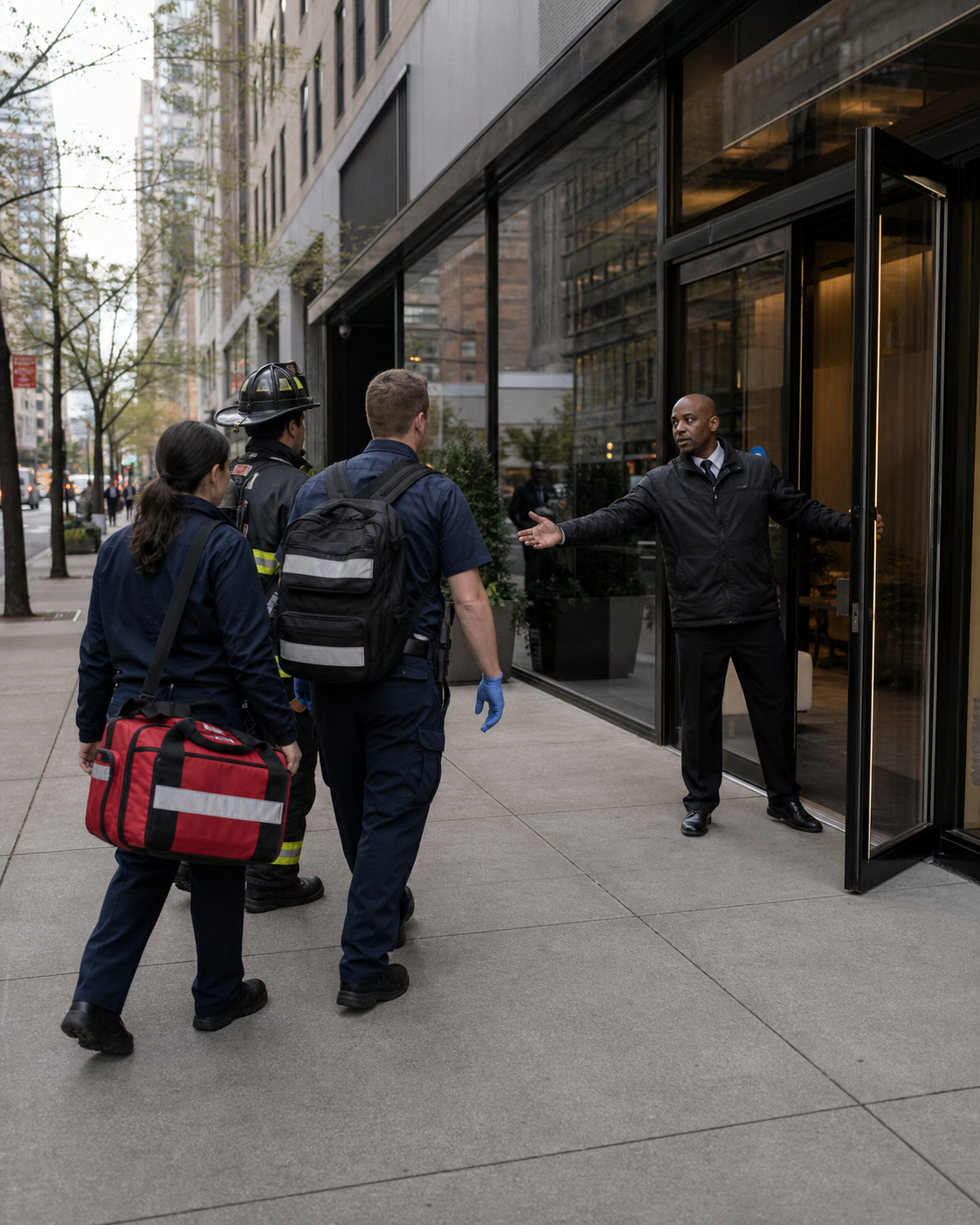
Conduct site orientations
Every assigned guard should know the building’s primary and alternate entrances, stair locations, alarm-reporting points, emergency equipment locations, loading dock, utility areas, management offices, and responder meeting point.
Test communications
Radio dead zones are common in basements, stairwells, mechanical areas, and high-rise elevator banks. Test devices throughout the property and establish a backup communication method.
Use scenario-based drills
Short tabletop exercises can expose gaps without disrupting the building. Ask the team how it would handle a medical emergency during lunch rush, smoke during overnight construction, an aggressive visitor in the lobby, or a flood affecting an elevator bank.
Audit emergency resources
Regularly verify that emergency contact lists, access credentials, keys, flashlights, radios, chargers, floor plans, and incident-report forms are available and current. Any fire or medical equipment checks should be handled by the responsible qualified personnel.
Plan for staffing disruptions
Emergencies do not always happen when the full management team is present. Overnight, weekend, holiday, and last-minute callout procedures should define who can make decisions and how critical posts will remain covered.
If a property suddenly needs additional personnel, Guardian offers emergency security coverage for urgent staffing situations.
Common Response Mistakes to Avoid
Property managers can reduce risk by training against several recurring mistakes:
- Calling a supervisor before 911 during an immediate threat to life
- Giving responders an incomplete address or vague interior location
- Leaving the main responder entrance unattended
- Sending every guard toward the incident and abandoning critical posts
- Resetting an alarm before the cause is confirmed and authorization is given
- Sharing unverified information with occupants or bystanders
- Allowing unauthorized people to photograph, enter, or interfere with the scene
- Writing incident reports that contain opinions instead of observable facts
- Failing to update procedures after construction or operational changes
Strengthen Your Property’s Emergency Coverage
Emergency response depends on more than placing a guard at the front desk. NYC properties need properly assigned personnel, clear post orders, reliable communications, building-specific procedures, and supervisors who understand how security supports fire, police, EMS, management, and engineering teams.
Guardian ISI provides security guard services, fire guards, fire-life-safety personnel, and urgent coverage for commercial properties across New York City. To discuss your property’s needs, call or text (212) 602-1695 or request coverage online.
Check readiness before the next shift
- Verify emergency contacts and the exact responder entrance.
- Confirm the guard’s assigned role and limits under the site plan.
- Test routine communications and the backup method through approved procedures.
Frequently asked questions
Should a security guard call 911 or the property manager first?
For an immediate threat to life, active fire, serious medical emergency, suspected gas leak, or crime in progress, the guard should call 911 without delay. Internal notifications can follow or occur simultaneously when staffing permits.
Can a security guard order an evacuation in an NYC building?
Guards should follow the building’s approved emergency procedures, post orders, and directions from designated fire-life-safety personnel or public-safety officials. They should not improvise building-wide instructions unless an immediate danger and their assigned procedures require action.
What information should guards give emergency dispatchers?
Provide the complete street address, exact location inside the property, type of emergency, known injuries or hazards, suspect details when relevant, and a callback number. A guard should be positioned to meet responders when possible.
Can security guards provide CPR or use an AED?
A guard may assist within the limits of the guard’s training, certification, site procedures, and ability. Calling 911 promptly and directing EMS to the patient remain essential.
How often should emergency post orders be reviewed?
Review them regularly and whenever staffing, access routes, tenants, construction conditions, building systems, emergency contacts, or property operations change. Drills and actual incidents should also trigger a review.
Are security guards and fire guards the same?
No. Security guards, fire guards, and Fire and Life Safety Directors can have different qualifications and assigned duties. Property management should verify which roles are needed for the building and current conditions.