

Security performance can erode through exceptions that appear manageable in isolation: a late relief officer, a loading-dock complaint, a broken radio, an incomplete log, a missed tenant notification, or a supervisor who promises to follow up later.
The problem is not that exceptions occur. The problem is allowing them to remain scattered across emails, text messages, logbooks, and informal conversations.
An exception brief gives the property manager, security consultant, and field supervisor one current view of what departed from the expected operation, what was done, and what still requires a decision.
What Counts as a Security Exception?
An exception is a condition that differs from the approved staffing plan, post orders, service level, or client expectation.
Common examples include:
- An officer calls out or arrives late
- A relief guard lacks site-specific orientation
- A required post is combined with another post
- A patrol, inspection, or opening procedure is missed
- A key, radio, phone, scanner, or access-control device is unavailable
- A tenant or employee reports discourteous or inconsistent service
- An incident report is incomplete
- A supervisor cannot verify that a correction occurred
- The same minor problem reappears across several shifts
Not every exception is an emergency. Each one should nevertheless have an owner and a disposition.
Separate Immediate Stabilization From Final Correction
When an exception occurs, the first objective is to stabilize the site. The permanent fix may require additional review.
For example, if an officer calls out at 6 a.m., immediate actions might include:
- Confirming which post is affected
- Assigning qualified temporary coverage
- Briefing the relief officer on critical duties
- Notifying the client of the operational impact
- Sending a supervisor to verify the site condition
Final correction may involve examining attendance patterns, relief staffing, scheduling lead time, training records, or whether the account’s staffing model is realistic.
Calling the site “covered” closes only the immediate staffing gap. It does not necessarily close the exception.
Use Daily Site Visits to Verify the Highest-Risk Exceptions
A daily supervisory visit should not become a ceremonial signature in the logbook. The visitor should arrive with a reason for the visit based on current site information.
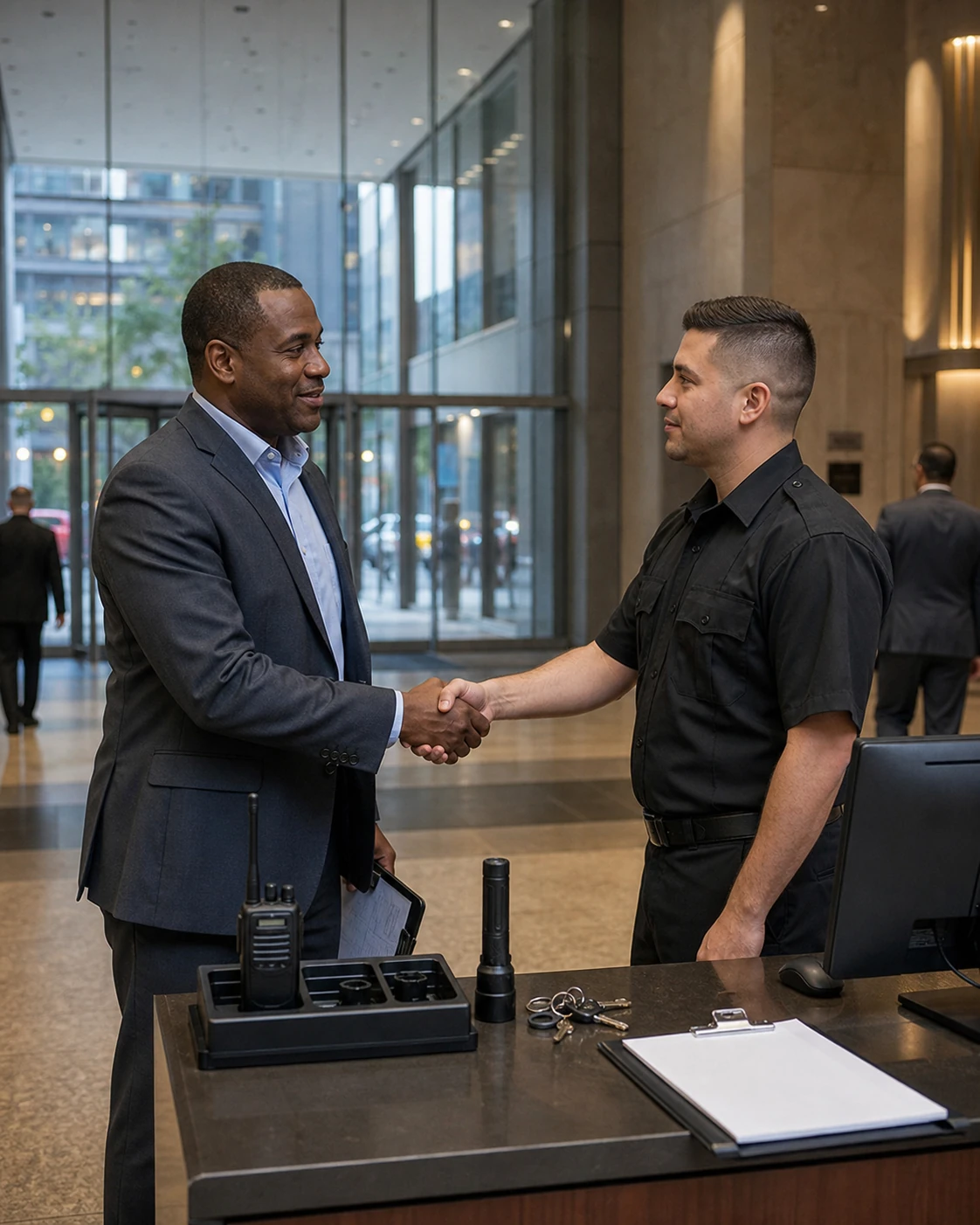
If the exception involves a new relief guard, verify:
- Identity and required credentials
- Uniform and equipment
- Understanding of emergency contacts
- Knowledge of entrances, exits, keys, and restricted areas
- Ability to explain the post’s most important duties
- Completion of a documented site briefing
If the exception involves a complaint, observe the relevant process directly. A lobby-access complaint should lead to an access-control observation—not a general conversation in the back office.
Keep the Brief Short Enough to Use
A practical exception brief can be maintained as a simple table:
| Field | Purpose |
|---|---|
| Date and time | Establishes when the issue began |
| Site and post | Identifies the affected operation |
| Exception | Describes the departure from expectations |
| Immediate action | Shows how the site was stabilized |
| Operational impact | Records any gap, delay, or affected task |
| Owner | Names the person responsible for follow-up |
| Due time | Prevents open-ended promises |
| Verification | Records how correction was confirmed |
| Client update | Shows when and how management was informed |
Avoid vague entries such as “handled,” “spoke to guard,” or “monitoring.” State what changed and how it was verified.
Escalate Patterns, Not Just Severe Incidents
Three small exceptions may reveal one larger weakness.
Examples include:
- Repeated late arrivals at the same shift change
- Different guards misunderstanding the same visitor rule
- Multiple incomplete reports from one post
- Radios repeatedly failing in one section of the property
- Weekend officers consistently missing a tenant procedure
- Supervisors closing items without evidence
A consultant or account manager should review exceptions by category, post, shift, and recurrence. The objective is to identify whether the root issue involves staffing, training, equipment, unclear instructions, supervision, or an unrealistic process.
Communicate Before the Client Has to Ask
Continuous communication does not mean sending a stream of unfiltered messages. It means delivering the right update at the right stage.
A useful communication sequence is:
Initial notice
Explain what happened, whether coverage or safety is affected, and what immediate action is underway.
Stabilization update
Confirm who is on site, which duties were preserved, and whether any temporary limitations remain.

Corrective-action update
Describe the underlying issue, assigned correction, and verification deadline.
Closure
State what was confirmed and whether further monitoring is required.
This approach lets the property manager make informed decisions without chasing several people for fragments of the story.
Give Each Exception a Clear Closing Standard
An exception is not closed because a message was sent. Closure should require evidence appropriate to the issue.
Examples include:
- Supervisor observation
- Timekeeping confirmation
- Signed site orientation
- Corrected incident report
- Equipment replacement and field test
- Revised instruction acknowledged by affected officers
- Client confirmation that the service issue stopped
- Follow-up review showing no recurrence during a defined period
The closing standard should be established when the exception is assigned, not invented afterward.
Use Consulting to Improve the System Behind the Guard Force
Security consulting adds value when it connects field observations, staffing decisions, post instructions, client priorities, and corrective action. The goal is not simply to identify individual mistakes. It is to reduce the conditions that allow the same mistakes to return.
Guardian ISI combines hands-on site supervision with ongoing communication and practical operational review for New York City properties.
Call or text (212) 602-1695, or request coverage or consulting support.
Related Guardian services
Review supervision, relief arrangements, and reporting through Security Guard Services. Discuss Emergency Security Coverage when a staffing exception requires temporary support.
Frequently asked questions
What is a security exception brief?
It is a current record of staffing, performance, equipment, reporting, or service conditions that departed from the approved security operation, along with actions, owners, deadlines, and verification.
Is an officer call-out automatically a service failure?
Not necessarily. The key questions are how quickly qualified coverage was arranged, what duties were affected, how the relief officer was briefed, and whether the client received an accurate update.
Why are daily supervisory visits important?
They allow the provider to verify actual field conditions, coach personnel, test corrective actions, and confirm that reported solutions work at the property.
When should a minor issue be escalated?
Escalate when it affects a critical task, remains unresolved, creates client or safety concerns, or repeats in a way that suggests a larger staffing, training, equipment, or procedural weakness.
What does continuous client communication mean?
It means providing timely, decision-useful updates from initial notice through verified closure—not overwhelming the client with every internal message.