

A renovation or tenant transition changes more than the appearance of a property. Temporary doors, construction crews, after-hours work, disabled systems, new delivery routes, changing credentials, and unfinished life-safety features can create risks that did not exist during normal operations.
Bring Security Into the Project Early
Security should be included before layouts, entrances, reception areas, loading routes, camera locations, and access-control decisions are finalized. Early review is usually less expensive than correcting a blind spot or workflow problem after construction.
Control Temporary Access
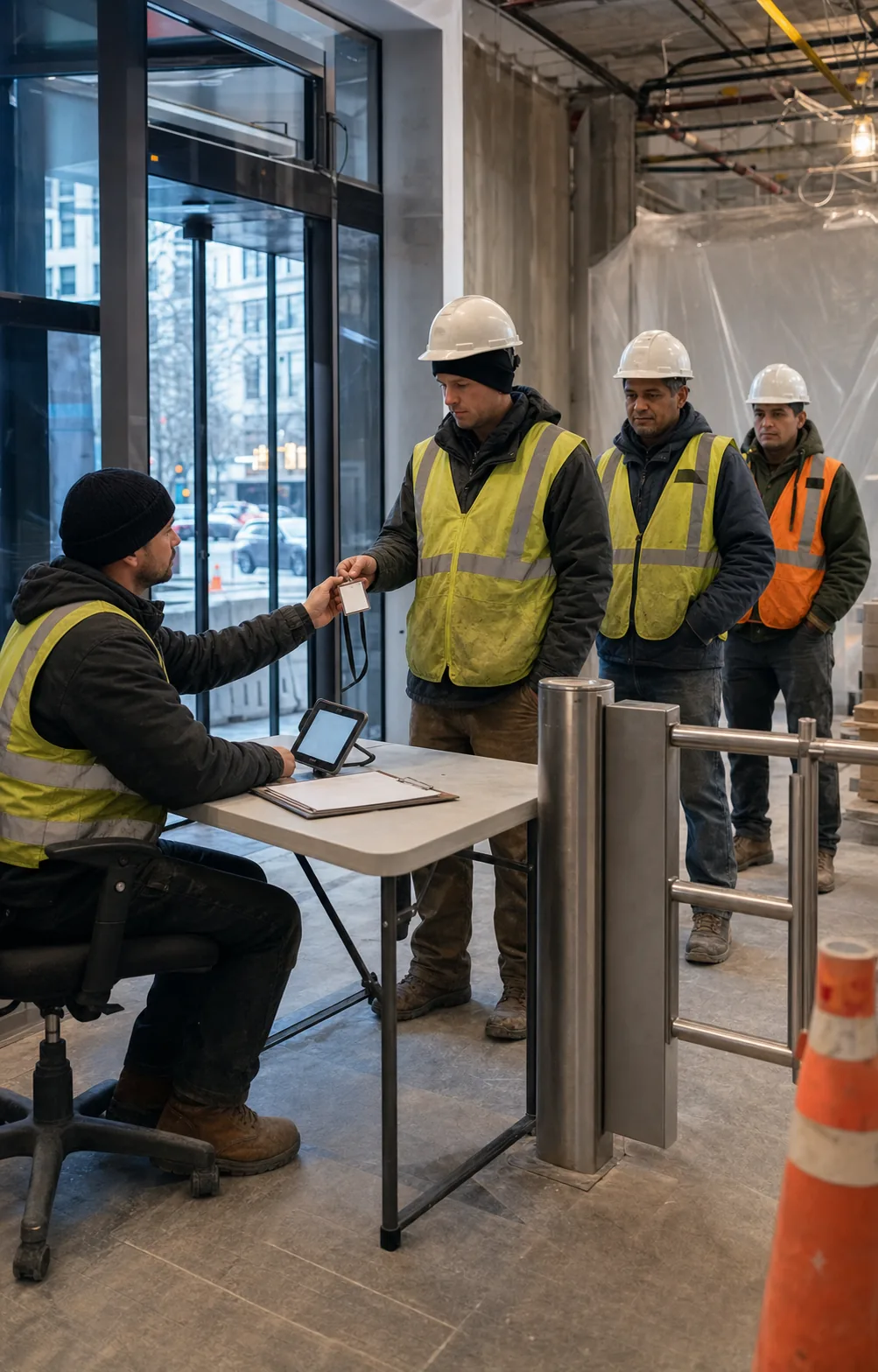
Projects bring contractors, subcontractors, vendors, inspectors, and delivery personnel into the property. Management should define identification requirements, approved work hours, entrances, escort rules, restricted areas, credential expiration, and responsibility for daily access lists.
Protect Keys and Credentials
Temporary workers may require keys, badges, elevator access, or entry to sensitive areas. Every item should be issued to a named person, limited to necessary areas and times, and returned or disabled promptly.
Review Camera Coverage Before Walls Are Closed
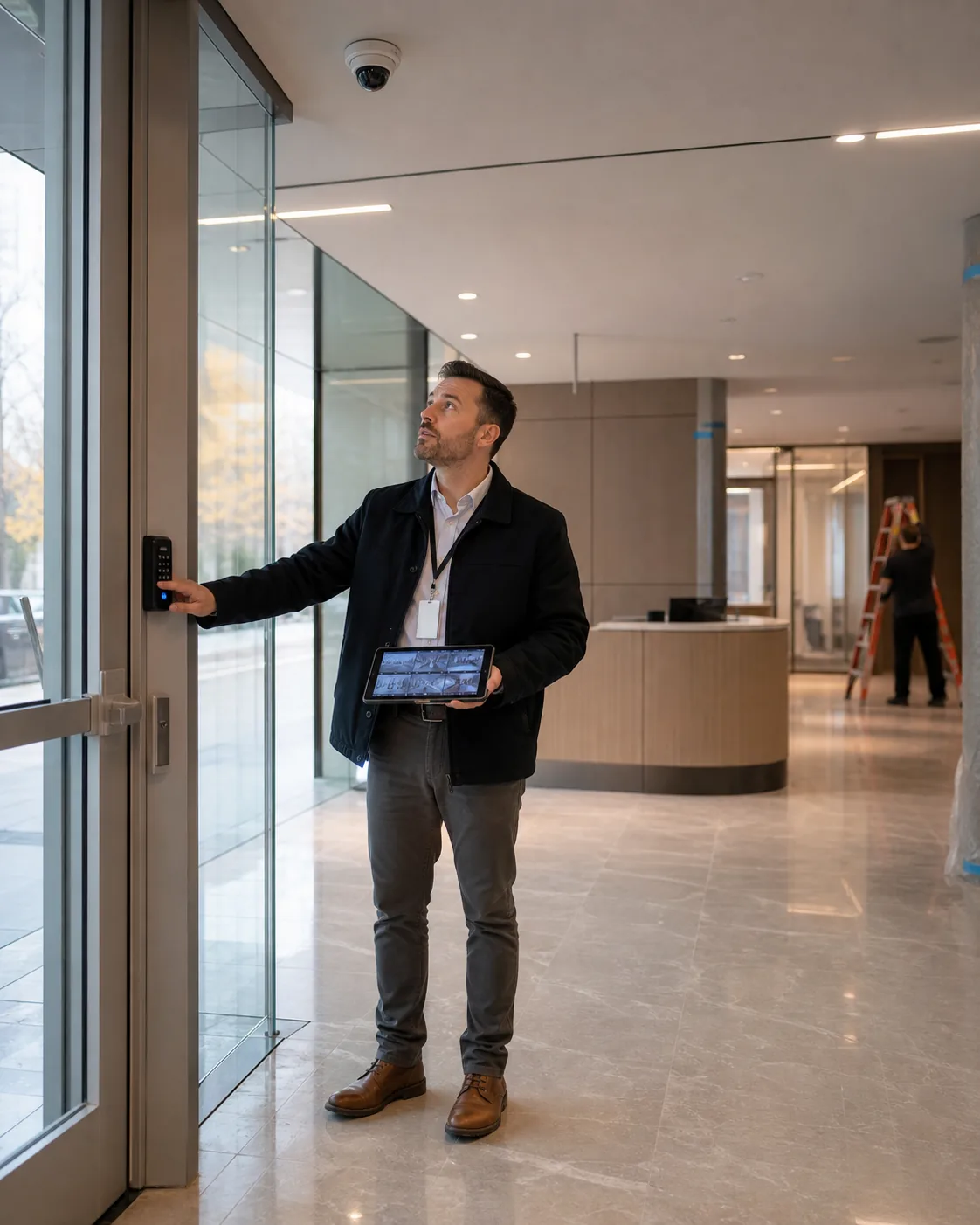
Camera placement should consider entrances, transaction points, loading areas, elevator zones, corridors, critical equipment, lighting, privacy, storage, and investigation needs. Reviewing sightlines during design prevents expensive rework.
Plan for Disabled or Impaired Systems
Construction may affect fire alarms, sprinklers, doors, intercoms, cameras, elevators, or emergency exits. The property should have temporary protective measures, required fire-watch arrangements, notification procedures, and clear authority for approving impairments.
Prepare the Opening-Day Security Plan
Before occupancy, verify post locations, schedules, uniforms, equipment, contact lists, visitor procedures, delivery routing, patrol zones, emergency actions, and reporting. Officers should receive a site orientation before they are expected to manage live activity.
Project handover checklist
| Stage | What to confirm |
|---|---|
| Design | Entrances, sightlines, access routes, and security responsibilities |
| Construction | Temporary credentials, restricted areas, and escalation contacts |
| Before occupancy | Tested systems, staffed posts, and site orientation |
| After opening | Review actual visitor, delivery, and alarm patterns |
Test the Building as a System
Walk through normal and emergency scenarios. Can a visitor reach the correct desk? Can staff secure an entrance? Can management communicate during a power loss? Do responders have access? Do cameras capture useful views? Testing reveals gaps that drawings may not show.
Continue Reviewing After Occupancy
Actual behavior often differs from plans. Conduct a follow-up after the property has operated long enough to observe visitor volume, delivery pressure, tenant habits, alarm activity, and patrol needs.
Build Security Into the Project
Guardian ISI supports New York renovations, openings, and operational transitions with site reviews, procedures, staffing plans, and implementation guidance. Contact Guardian, call or text (212) 602-1695, or request coverage.
Related Guardian ISI services
For on-site coverage and operational support discussed in this article, review Construction Security and Fire Guard Services. Contact Guardian ISI to discuss the property, duties, and availability.
Frequently asked questions
When should a security consultant join a renovation project?
Before major entrance, lobby, loading, camera, access-control, or operational decisions become difficult to change.
What should happen to contractor credentials after work ends?
They should expire automatically or be disabled immediately, and all issued keys should be reconciled.
Does construction ever require fire-watch coverage?
Certain impairments or conditions may require approved fire-watch measures. Confirm requirements for the specific property and work.
Why conduct a post-opening review?
It compares design assumptions with actual building activity and identifies practical adjustments.