A security assessment should do more than identify problems. New York property owners and executives need clear priorities, practical recommendations, responsible parties, and a way to measure whether improvements actually work.
Begin With the Organization's Objectives
The consultant should understand what the property must protect, how it operates, who uses it, which incidents have occurred, and what management considers unacceptable disruption. A building designed for hospitality may need a different balance of access and screening than a corporate office or construction site.
Examine the Entire Operating Environment
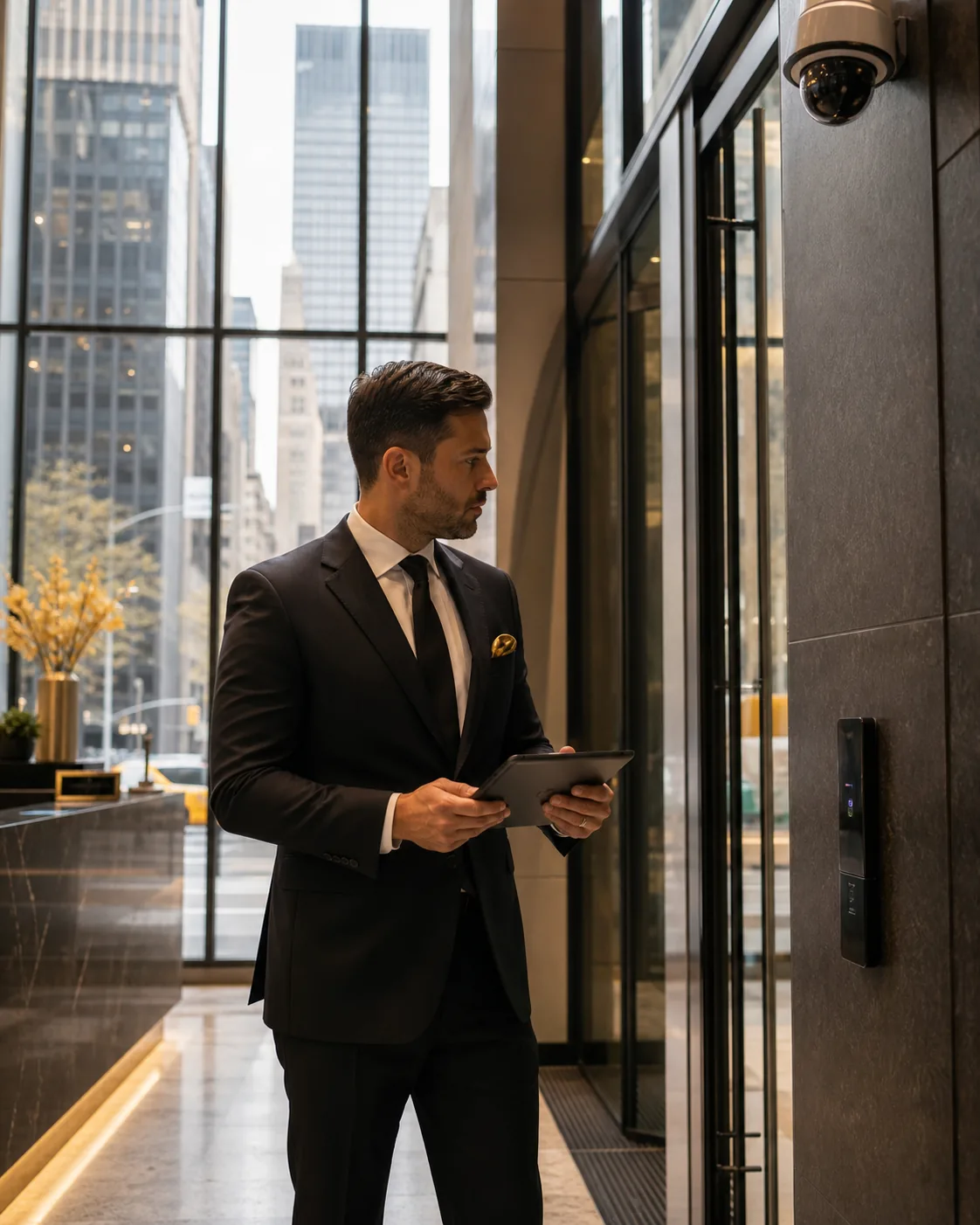
The review may include entrances, perimeter conditions, loading areas, garages, rooftops, vacant spaces, cameras, alarms, credentials, keys, visitor management, staffing, patrols, reports, emergency procedures, and supervision.
Compare Written Policy With Actual Practice
An impressive policy has little value if officers, tenants, vendors, and managers follow a different process. Interviews, observation, records, and site walks help identify the gap between intended and actual operation.

Use Incident Data to Find Patterns
Several small incidents may reveal more than one dramatic event. Repeated door alarms, missing keys, unauthorized deliveries, or disputes at the same entrance can point to a predictable weakness.
Prioritize Recommendations
Not every improvement can happen at once. A useful report separates immediate corrections, near-term improvements, and longer-term investments. It explains risk, operational impact, estimated effort, and dependencies.
Turn the report into assigned work
| Field | What to record |
|---|---|
| Finding | Observed condition and supporting evidence |
| Priority | Why this action should happen now or later |
| Owner | Person authorized to arrange the correction |
| Verification | How management will check the result |
Balance People, Procedures, and Technology
Adding guards is not always the only solution. Better post orders, revised schedules, stronger supervision, adjusted doors, credential cleanup, improved lighting, or targeted technology may provide greater value.
Support Implementation
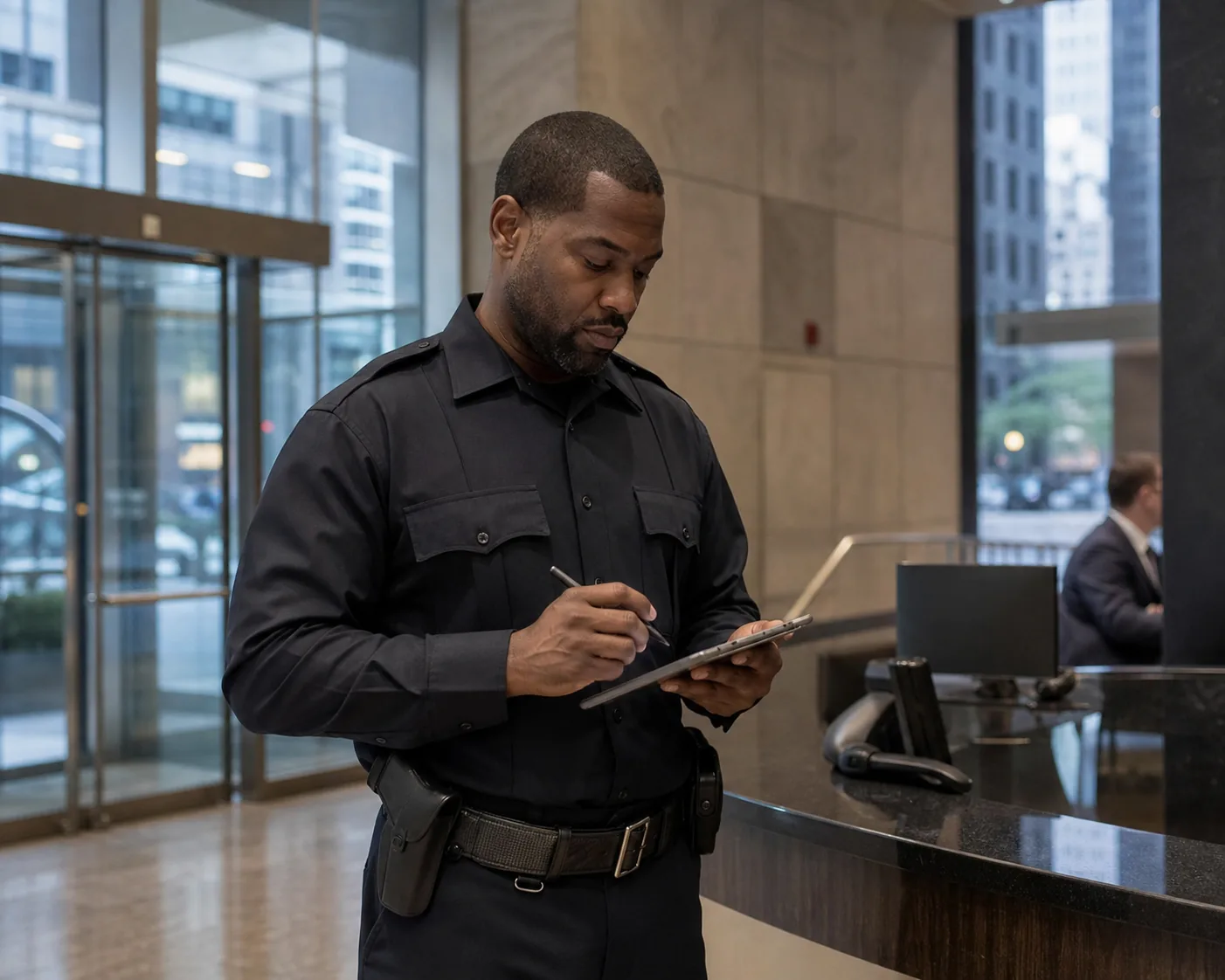
The consultant should help management convert recommendations into assignments, deadlines, vendor scopes, training, and verification. A follow-up review can confirm whether the risk was actually reduced.
Guardian ISI provides security consulting and risk assessments for New York organizations. Call or text (212) 602-1695 or contact Guardian to discuss your goals.
Related Guardian ISI services
For on-site coverage and operational support discussed in this article, review Commercial Office Security and Security Guard Services. Contact Guardian ISI to discuss the property, duties, and availability.
Frequently asked questions
Is consulting only for properties without guards?
No. Consulting can design a new program or evaluate an existing guard force, technology system, and set of procedures.
Will an assessment recommend more officers?
Only when supported by the property's risks and operations. Some findings may be addressed through procedures, supervision, or technology.
What should the final report include?
Findings, risk explanations, priorities, recommended actions, responsible parties, and an implementation path.
How often should an assessment be updated?
After major incidents or operational changes and periodically as the property, occupants, threats, and systems evolve.