

Security consulting should help an organization make better decisions. In New York, that means translating a complex operating environment into practical priorities for staffing, access control, patrols, emergency response, reporting, supervision, and technology.
A Site Review Should Begin With Operations
A consultant should learn how the property functions before recommending changes. Important questions include who enters the building, when activity peaks, how deliveries are handled, where contractors report, what happens after hours, which areas contain critical assets, and how tenants or employees communicate concerns.
Physical Conditions Must Be Examined in Context
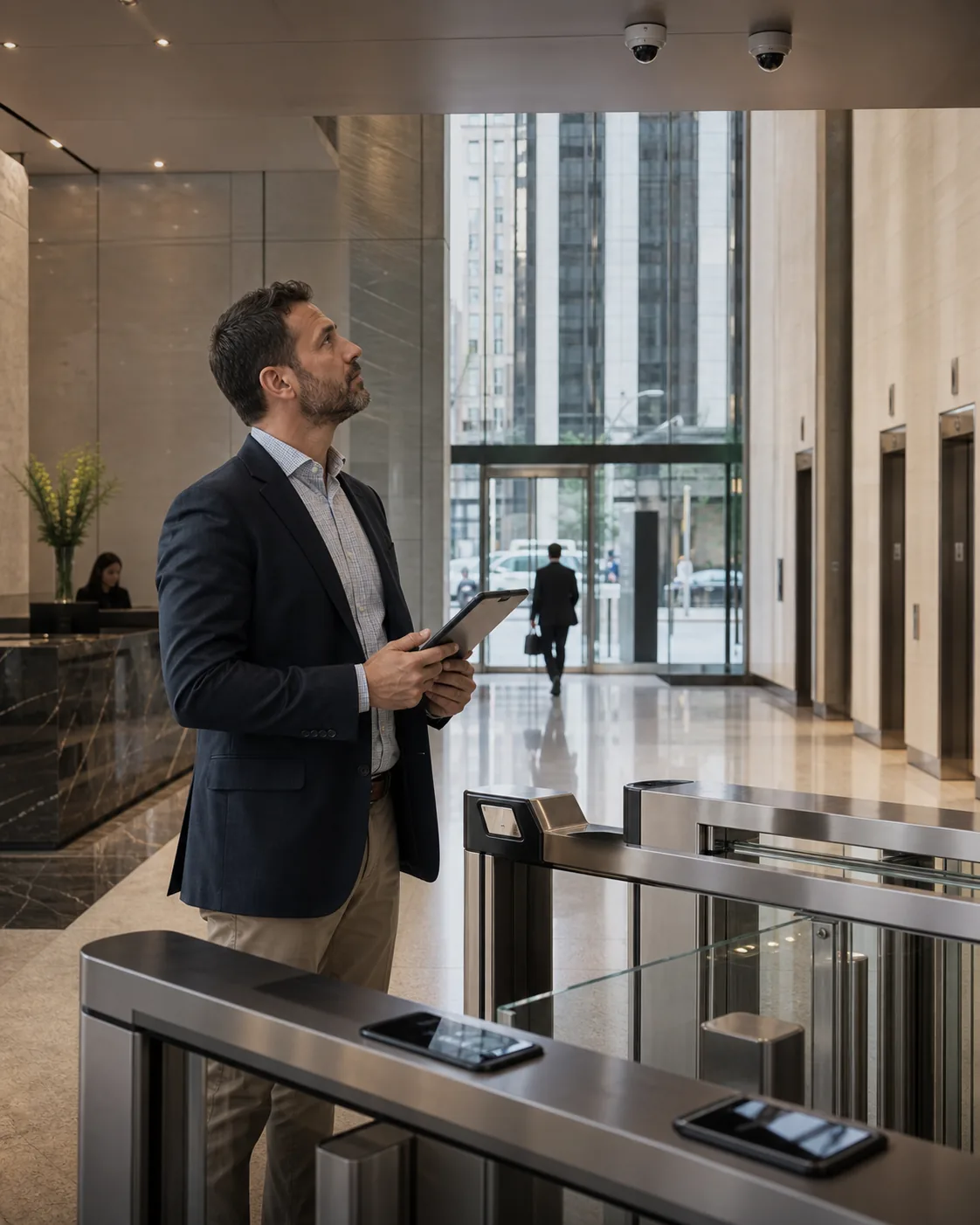
Doors, locks, lighting, cameras, alarms, intercoms, barriers, elevators, stairwells, loading docks, and perimeter conditions should be reviewed as one system. A camera does not correct a weak visitor process, and an officer cannot compensate for every poorly controlled entrance.
Incident History Should Shape Priorities
Past incidents provide direct evidence about exposure. Review security reports, complaints, access-control exceptions, property damage, emergency calls, workplace conflicts, theft, and recurring rule violations. Near misses can reveal where controls are regularly bypassed.
Staffing Recommendations Need a Clear Basis
Recommendations for officers, supervisors, fire guards, or front-desk personnel should connect to specific duties and coverage periods. The assessment should explain what each position accomplishes, where the post should be located, and how relief or emergency coverage will be handled.
Post Orders Should Be Actionable
Good post orders cover access control, patrol zones, required reports, communications, prohibited activity, key contacts, escalation rules, and site-specific emergency procedures. Vague instructions create inconsistent results.
What a decision-ready report contains
| Deliverable | Why it matters |
|---|---|
| Scope and limits | Shows what was reviewed and what needs another specialist |
| Evidence and findings | Explains the observed condition and its significance |
| Prioritized recommendations | Supports practical operational and budget choices |
| Owners and verification | Turns recommendations into completed improvements |
Findings Should Be Prioritized
A useful report separates immediate life-safety concerns, short-term operational improvements, and longer-term capital projects. It should identify low-cost improvements that can be implemented quickly while larger work is planned.

End With an Implementation Plan
Management should receive a roadmap with responsible parties, target dates, expected outcomes, and a method for verifying completion. Follow-up reviews help confirm that changes work as intended.
Choose a Consultant Who Understands Operations
Ask how evidence is gathered, how procedures are tested, whether recommendations are vendor-neutral, and what the final deliverables include. Contact Guardian ISI for a site-specific New York security review, call or text (212) 602-1695, or request coverage.
Related Guardian ISI services
For on-site coverage and operational support discussed in this article, review Security Guard Services and Commercial Office Security. Contact Guardian ISI to discuss the property, duties, and availability.
Frequently asked questions
What is included in a physical security assessment?
It normally reviews operations, access control, patrols, staffing, technology, incident history, emergency procedures, and reporting.
Should recommendations be prioritized?
Yes. Management should know what requires immediate action, what can be completed quickly, and what needs capital planning.
Does an assessment always recommend more guards?
No. The correct solution may involve staffing, procedures, training, technology, physical changes, or a combination.
What makes the final report useful?
Clear evidence, practical recommendations, responsible parties, target dates, and a verification plan.