
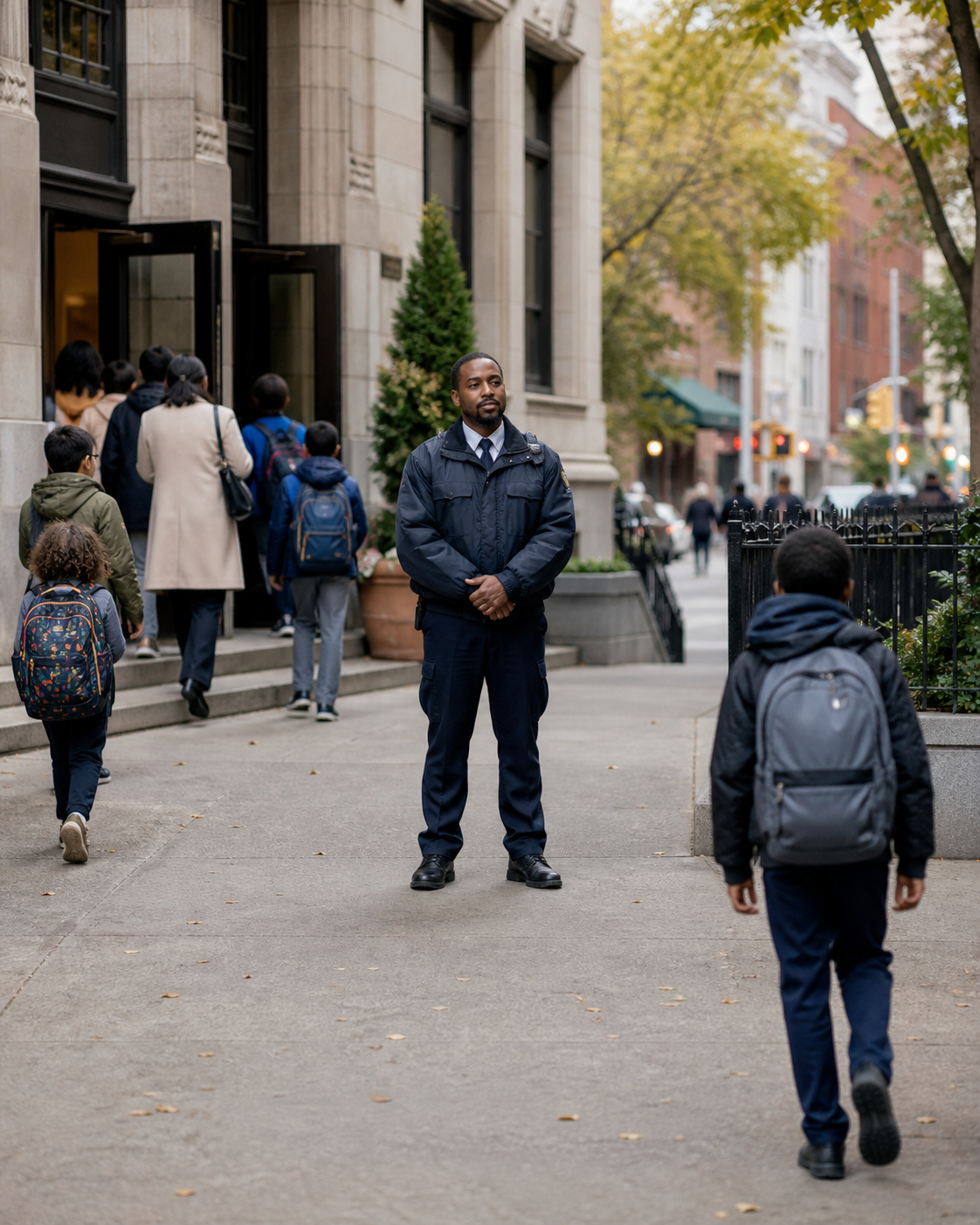
School safety in Manhattan requires more than a locked front door. Schools operate in dense neighborhoods, share sidewalks with heavy pedestrian traffic, welcome numerous visitors, and may occupy multi-story or mixed-use buildings. Arrival, dismissal, after-school programs, special events, deliveries, and construction can each create different risks.
A useful safety plan combines trained people, clear procedures, appropriate technology, and regular coordination. The goal is not to make a school feel unwelcoming. It is to create an environment where students, families, faculty, and authorized visitors can move through the building safely and confidently.
Start With a School-Specific Risk Assessment
Every Manhattan campus has a different operating environment. A street-level private school may face challenges that are very different from those of a multi-floor school inside a shared commercial property.
A practical assessment should examine:
- Entrances, exits, stairwells, elevators, and accessible routes
- Sidewalk congestion during arrival and dismissal
- Visitor check-in and identity-verification procedures
- Deliveries, vendors, contractors, and maintenance access
- After-school activities and evening building use
- Playground, courtyard, rooftop, and gym access
- Shared lobbies or common areas in mixed-use buildings
- Camera coverage, intercoms, radios, alarms, and door hardware
- Fire and emergency procedures
- Recent incidents, recurring concerns, and near misses
The assessment should consider how the campus actually operates throughout the day. A main entrance that is orderly at 10 a.m. may become difficult to supervise when hundreds of students arrive at once.
Build Security Around Daily School Operations
Control Entry Without Creating Confusion
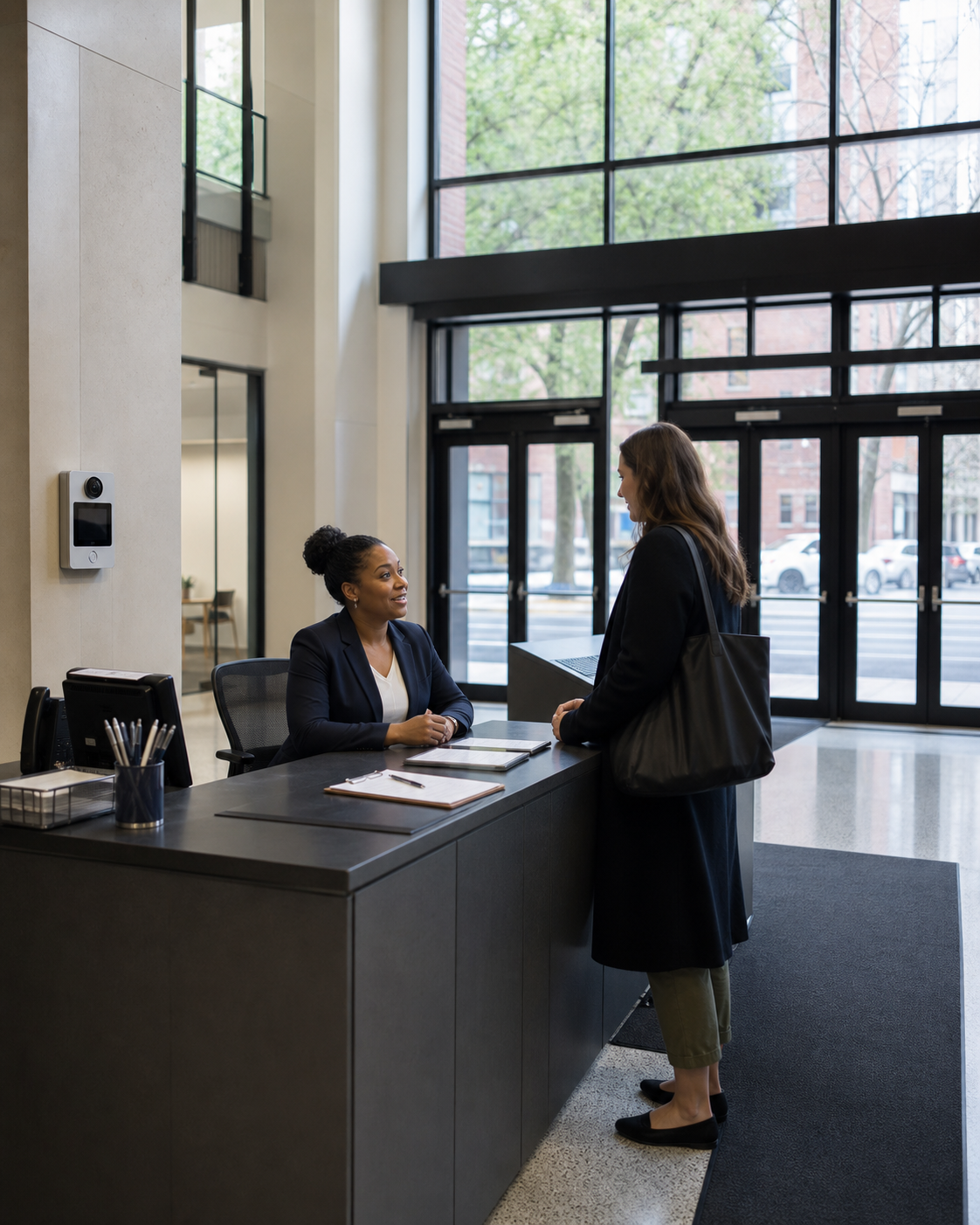
The main entrance should provide a consistent process for students, employees, families, vendors, and visitors. Staff should know who may enter, what credentials are accepted, where visitors wait, and how an unexpected or agitated person should be handled.
Depending on the campus, useful measures may include:
- A staffed reception or security position
- A video intercom or remote-release system
- Visitor identification and sign-in procedures
- Temporary visitor passes
- Advance notice for vendors and scheduled guests
- Locked secondary entrances with monitored emergency egress
- Clear procedures for forgotten credentials and early pickup
Technology can support access control, but it should not replace attentive staffing. A camera records activity; a trained person can identify unusual behavior, ask questions, and escalate a concern.
Plan Carefully for Arrival and Dismissal
Arrival and dismissal are often the most exposed parts of the school day. Sidewalk crowding, double-parked vehicles, bicycles, delivery traffic, caregivers, and students moving in multiple directions can create confusion.
Schools can reduce risk by assigning specific responsibilities for:
- Monitoring designated doors and sidewalk areas
- Keeping emergency exits and neighboring entrances clear
- Directing students to approved pickup points
- Managing late arrivals and early dismissals
- Identifying adults authorized for pickup
- Responding when an unfamiliar person approaches students
- Communicating about traffic, protests, police activity, or nearby incidents
Assignments should be documented rather than assumed. Employees and security personnel need to know where they should stand, what they are watching for, and whom to contact when plans change.
Define the Role of School Security Personnel
A school security officer should be selected for the setting, not simply placed at the door. The role may require a calm demeanor, professional communication, situational awareness, and the ability to interact appropriately with children, families, educators, and building personnel.
Typical responsibilities can include:
- Monitoring entrances and common areas
- Supporting visitor-management procedures
- Observing arrival and dismissal
- Conducting documented patrols
- Responding to access-control alarms or open doors
- Reporting hazards, suspicious behavior, and policy violations
- Assisting administrators during incidents and special events
- Coordinating with building management and first responders when directed
Security personnel should receive site-specific post orders. These instructions should define duties, prohibited activities, communication channels, emergency contacts, escalation procedures, and documentation expectations. School administrators should also clarify where the officer’s authority ends and when an issue must be transferred to school leadership or emergency services.
Guardian ISI can help schools evaluate options for professional security guard coverage, including planned assignments and short-notice needs.
Coordinate Emergency and Fire-Life-Safety Planning
Security planning should connect with the school’s broader emergency procedures. Administrators should consider how staff will respond to a fire alarm, medical emergency, utility problem, severe weather event, nearby police activity, threatening behavior, or another situation that affects normal operations.
Plans should address:
- Who receives and verifies incident information
- Who is authorized to make emergency decisions
- How instructions reach classrooms, offices, common areas, and off-site groups
- How the school accounts for students, employees, and visitors
- How staff assist people who may need additional support
- Where first responders will enter and who will meet them
- How families receive timely, accurate updates
- How the school documents and reviews the incident afterward
Schools should use the procedures appropriate to their building, population, and applicable agency requirements. Fire and life-safety responsibilities can vary based on occupancy, building configuration, fire-protection systems, and other factors. Administrators should confirm requirements with qualified professionals and the authorities having jurisdiction rather than assuming that another property’s plan applies to their campus.
When a required fire-protection system is impaired or another urgent condition arises, the property may need specialized action. Learn more about fire guard services and emergency security coverage.
Prepare for Events, Contractors, and Changing Conditions
School safety plans must account for activities outside the normal class schedule. Performances, open houses, athletic events, parent conferences, elections, and community programs can bring unfamiliar visitors into the building and keep the campus open later than usual.
For each event, determine:
- Which entrance will be used
- Whether guests are registered or admitted at the door
- Which areas are open or restricted
- Who will monitor corridors, stairwells, and exits
- How maximum attendance and emergency access will be managed
- Who has responsibility for closing and securing the building
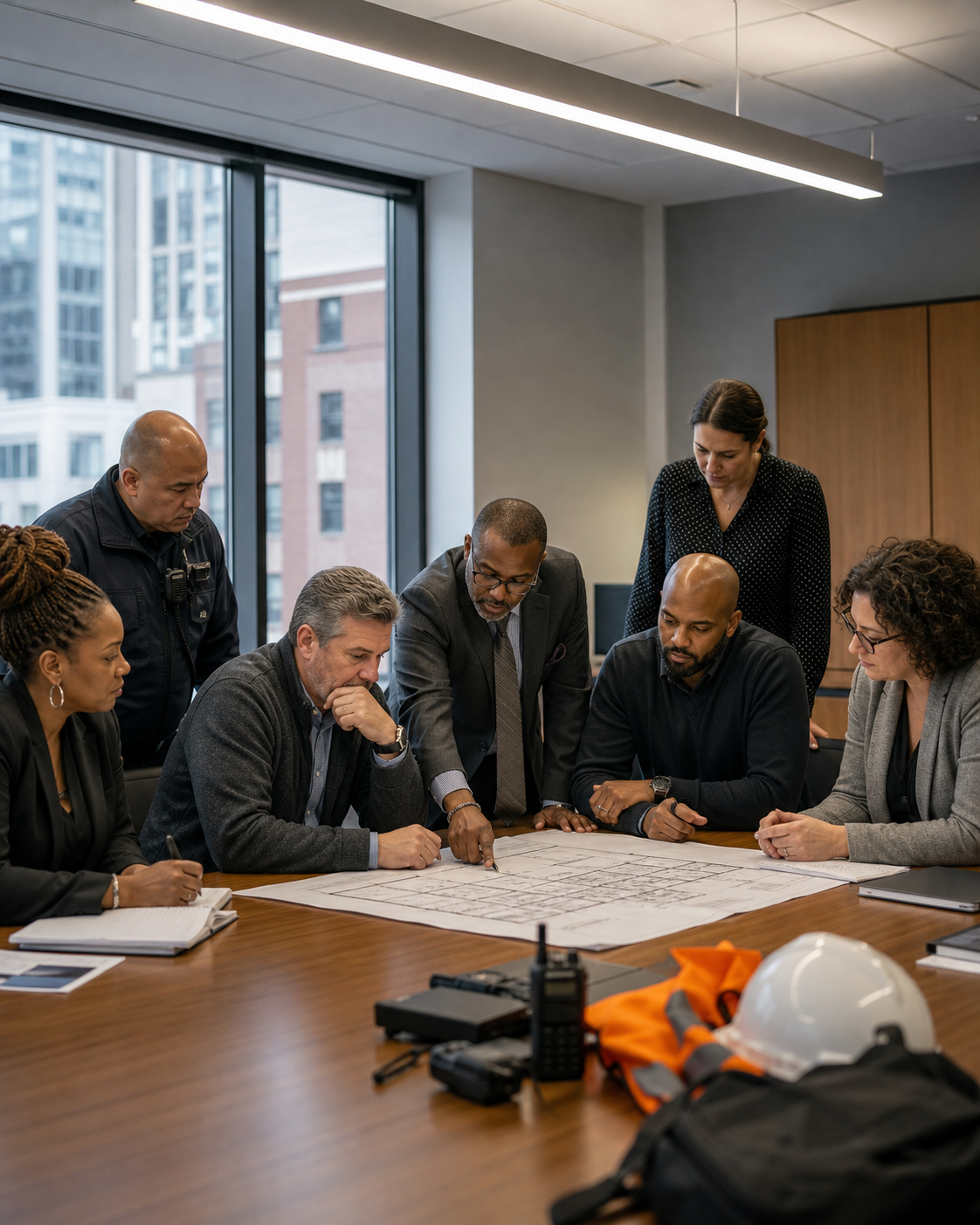
Construction and renovation require separate attention. Temporary walls, propped doors, contractor access, disabled systems, dust, noise, and changing exit routes can undermine normal procedures. The school, property manager, general contractor, and security team should review changes before work begins and whenever conditions shift. For active projects, Guardian also provides construction security services.
Train, Document, and Improve
A plan is effective only when people understand it. Training should be appropriate to each person’s role and should cover everyday procedures as well as emergencies. Reception staff may need detailed visitor protocols, while teachers may need simple instructions for reporting concerns and receiving emergency directions.
Useful readiness practices include:
- Reviewing post orders and emergency contact lists
- Testing radios, intercoms, panic devices, and notification systems
- Practicing applicable emergency procedures
- Checking that substitute and after-school staff receive instructions
- Recording incidents, hazards, and corrective actions
- Debriefing after drills and real events
- Reviewing the plan when staffing, construction, or building use changes
Incident reports should be factual and objective. They can help administrators identify patterns, such as repeated door alarms, unauthorized pickups, recurring sidewalk conflicts, or areas where supervision is unclear.
Create a Safer Campus Without Losing a Welcoming Atmosphere
Effective school security does not depend on aggressive presentation. Consistency, attentiveness, communication, and sound judgment are usually more valuable than visible intensity. A professional officer can greet families, support school procedures, recognize unusual activity, and respond calmly when a situation becomes difficult.
Guardian ISI works with Manhattan organizations to develop dependable security coverage based on the building, schedule, and operating environment. To discuss school safety staffing, call or text 212-602-1695 or request coverage online.
Official references
Frequently asked questions
What should a Manhattan school safety assessment include?
It should review entrances, exits, visitor procedures, arrival and dismissal, shared building areas, deliveries, after-school use, security technology, emergency communications, and fire-life-safety procedures.
Can a security guard help with school arrival and dismissal?
Yes. With clear post orders, an officer can monitor assigned doors or sidewalk areas, observe unfamiliar activity, support pickup procedures, and report concerns to school leadership.
Should a school rely only on cameras and access-control systems?
No. Technology is valuable, but it works best alongside trained personnel and documented procedures. Cameras may show an incident, while attentive staff can identify and address a developing concern.
How often should a school review its safety plan?
Review it regularly and whenever there is a significant change in staffing, building use, construction, access points, technology, or neighborhood conditions. Drills and incidents should also trigger a debrief.
Can schools request temporary security for events or emergencies?
Yes. Temporary coverage may support open houses, performances, parent events, construction, staffing gaps, or unexpected conditions. Availability and the appropriate assignment should be discussed in advance whenever possible.
Do all Manhattan schools have the same fire and security requirements?
No. Responsibilities can vary with the school type, building configuration, occupancy, fire-protection systems, and applicable agency requirements. Schools should confirm their obligations with qualified professionals and relevant authorities.