
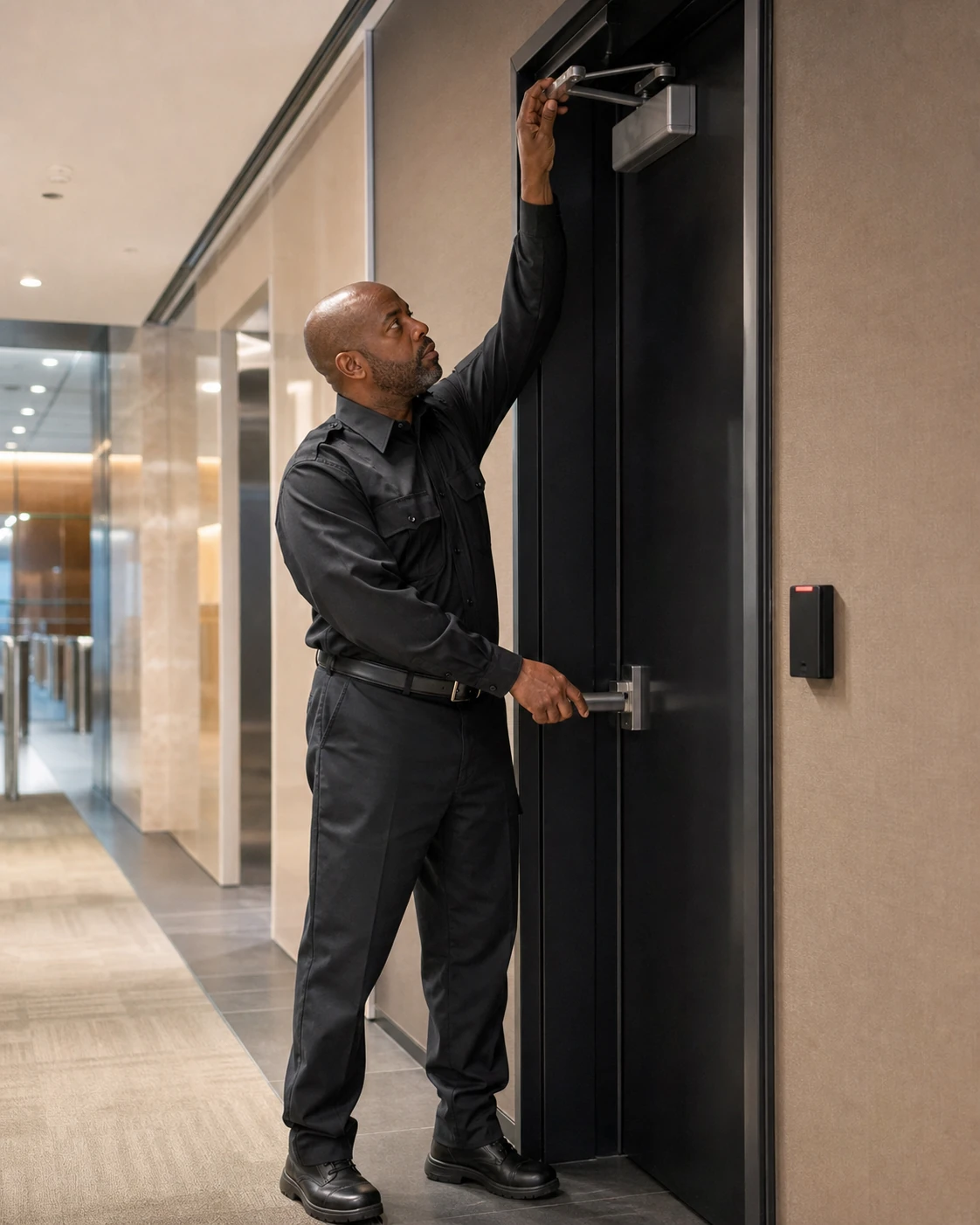
A single door alarm may result from an authorized delivery, a slow-closing door, or an employee holding the door for a coworker. When the same alarm appears repeatedly, however, the issue should no longer be treated as three unrelated events.
Repeated alarms can indicate a mechanical defect, improper use, a bad sensor, a tenant procedure problem, or an access point that is not being effectively controlled. The patrol officer’s job is not to diagnose or repair the system. It is to verify the physical condition, protect the opening, escalate the defect, and create a record that helps management solve it.
Treat Repetition as an Operational Pattern
If the same door generates multiple alerts in one shift, security should review what connects them:
- Exact door and floor
- Time of each alarm
- Whether the door was open, closed, or latched when checked
- People or deliveries observed nearby
- Related camera activity
- Weather, construction, or pressure conditions affecting the door
- Prior work orders or officer reports
The pattern matters. Three alarms during a scheduled tenant move suggest a different problem than three alarms from a locked mechanical room overnight.
Step 1: Acknowledge and Verify the Alarm
The officer monitoring the system should acknowledge the alert according to site procedure and dispatch a patrol officer when required. The responding officer should receive the precise door location, alarm type, activation time, and any available camera observations.
At the scene, the officer should approach attentively and look for:
- A person attempting to enter or leave
- A door held open by an object
- Damage to the lock, frame, hinges, closer, or reader
- A latch that appears closed but has not engaged
- Deliveries, maintenance work, or tenant activity
- Signs that the opening may have been forced
The officer should not clear the alarm merely because the corridor appears quiet.
Step 2: Test Only What the Post Orders Allow
Security may be authorized to close the door, remove an obvious obstruction, and confirm whether it latches. Officers should not dismantle hardware, reset unfamiliar equipment, or perform repairs unless those duties are specifically assigned and the individual is qualified.
A simple verification can include:
- Observe the door’s position and surrounding area.
- Check for visible damage or obstructions.
- Close the door without forcing it.
- Confirm whether the latch engages.
- Ask the control desk whether the alarm clears.
- Report the physical and electronic results separately.
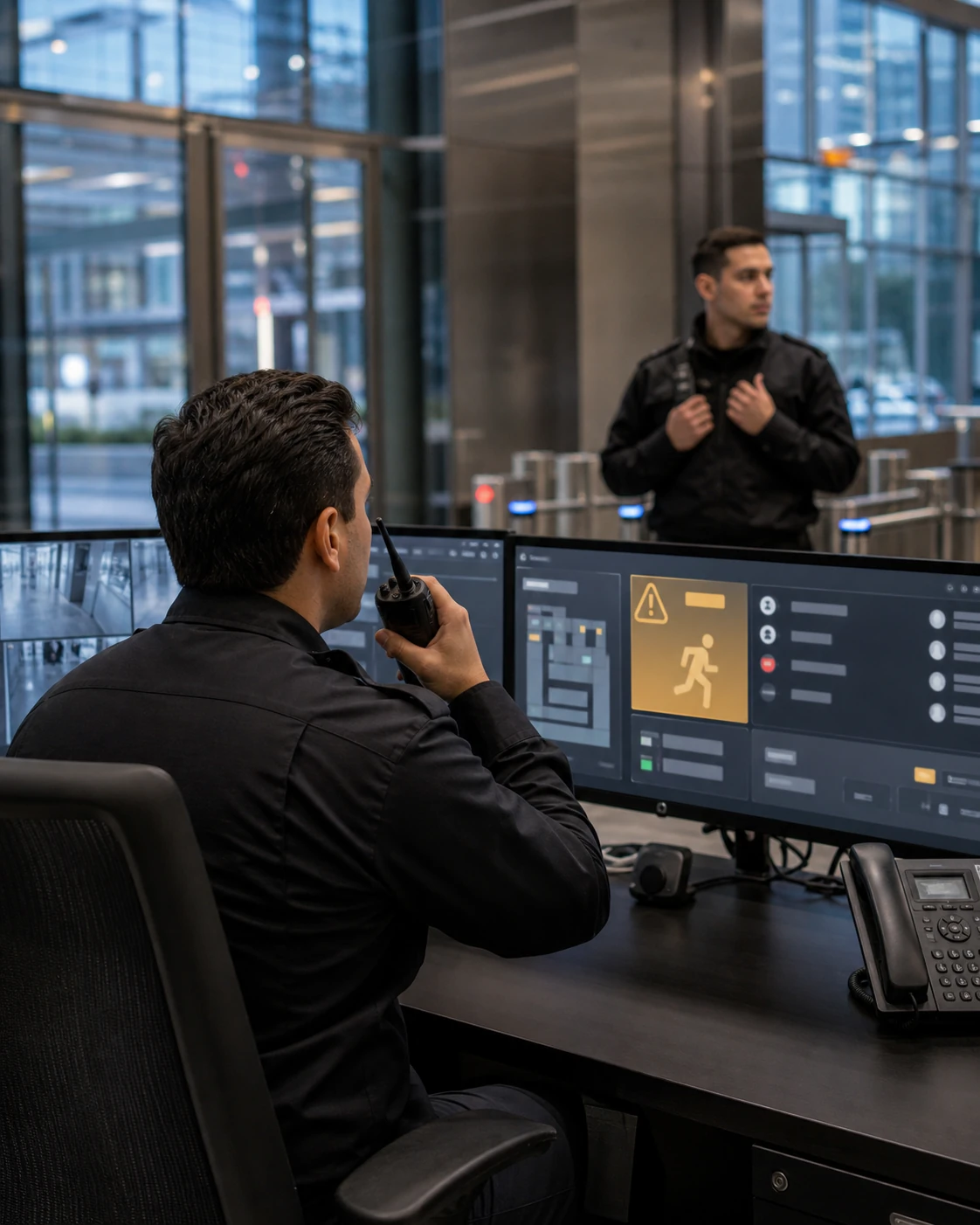
“Door closed” and “alarm cleared” are not always the same result. Both should be documented.
Step 3: Determine Whether the Opening Is Secure
The key decision is whether the door can continue functioning as intended.
If the Door Closes and Secures
The officer can report that the opening is physically secure, but recurring activation still requires follow-up. Management or the system vendor may need to inspect the sensor, timing, closer, or alarm configuration.
If the Door Will Not Secure
The opening should be treated as a temporary access-control deficiency. Depending on the property and location, management may direct security to:
- Maintain a fixed post nearby
- Increase patrol frequency
- Restrict use of the door
- Redirect authorized users to another entrance
- Contact engineering, a locksmith, or the access-control vendor
- Review nearby camera activity
Security should not block a required exit or make a physical modification without approval from appropriate building personnel.
Step 4: Escalate Based on Risk, Not Annoyance
Frequent alarms can create fatigue. Officers may begin assuming that the next alert is another malfunction. That is precisely why escalation is important.
The response level should consider:
- Whether the door protects a public, tenant, roof, garage, loading, or critical building area
- Whether the property is occupied
- Whether people have used the opening during the alarms
- Whether the lock or frame appears damaged
- Whether the camera view is available
- Whether a temporary control has already failed
A recurring alarm at an exterior service door deserves faster escalation than a known sensor issue on an interior administrative closet, although both still require resolution.
Step 5: Create One Consolidated Incident Record
Separate log entries may show that officers responded each time, but a consolidated report helps management see the larger problem.
Include:
- Door name, number, and location
- Timeline of every activation
- Officer response times
- Physical conditions observed
- Images or camera references when authorized
- Names of people interviewed or contacted
- Temporary controls established
- Maintenance or vendor notification
- Whether the issue remained open at shift change
Use objective descriptions. Write “lower latch did not engage after three closing attempts,” not “door is completely broken,” unless a qualified person has confirmed that conclusion.
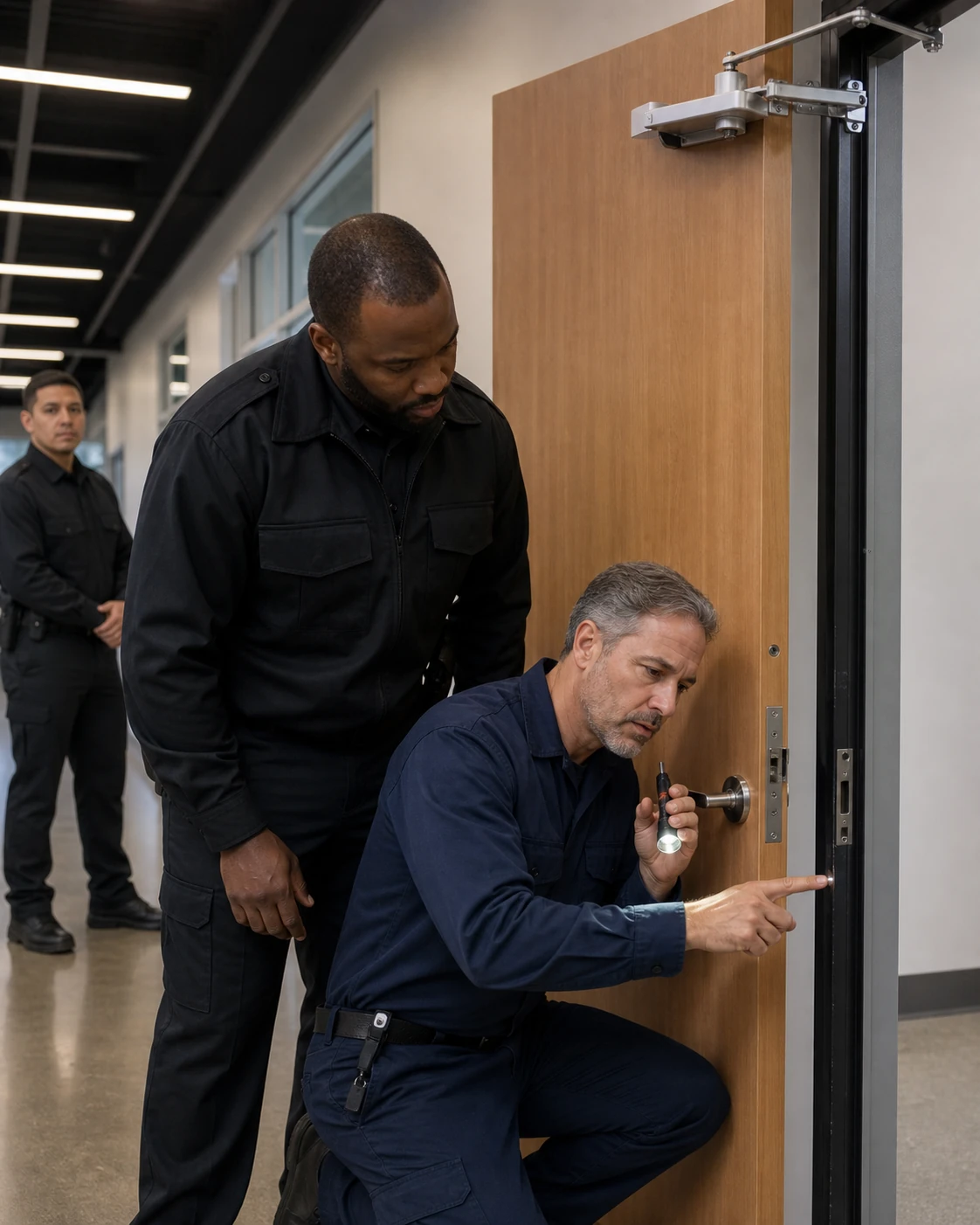
Step 6: Carry the Issue Across Shifts
An unresolved access-control problem must be included in the shift handoff. The incoming team should know:
- Which door is affected
- Whether it can be used
- What temporary control is in place
- Who has been notified
- Whether a technician is expected
- Which tenant or contractor activity may affect the door
- What event allows the temporary post or extra patrols to end
Without a clear handoff, the next officer may remove a necessary temporary control or assume someone else completed the follow-up.
What Supervisors Should Review
A field supervisor should verify more than the existence of a report. The supervisor should confirm that the door is physically controlled, the client has been notified at the required level, and the officer understands the temporary procedure.
Repeated door alarms can also reveal broader issues, including unclear post orders, weak tenant communication, poor contractor coordination, or an alarm system generating too many low-value alerts.
Strengthen Patrol Response and Follow-Through
Guardian ISI helps NYC properties build practical patrol, alarm-response, escalation, and reporting procedures around the way each building actually operates.
Call or text (212) 602-1695, or request coverage for planned, supplemental, or emergency security needs.
Related Guardian services
For officers assigned to observe, report, and escalate these conditions, explore Commercial Office Security. If temporary staffing is needed while a repair is arranged, discuss Emergency Security Coverage.
Frequently asked questions
Should every door alarm receive a physical response?
Follow the property’s post orders and alarm procedures. Exterior, restricted, or otherwise sensitive openings commonly require physical verification rather than relying only on the monitoring screen.
Can a security officer repair a malfunctioning access-control door?
Security should generally verify, secure, report, and escalate the condition. Repairs should be handled by authorized building staff or qualified vendors unless the officer has been specifically assigned and trained for a permitted task.
What if the door is closed but the alarm remains active?
Report the physical condition and electronic condition separately. A sensor, contact, wiring, or system issue may exist even though the opening appears physically secure.
When is a fixed security post appropriate?
Management may establish a temporary post when a sensitive door cannot be secured and the risk cannot be adequately controlled through closure, restricted use, cameras, or increased patrols.
When can extra patrols or a temporary post end?
The property should identify who can confirm restoration and authorize stand-down. An officer should not end the temporary control solely because the alarm has been quiet for a period.