

Security patrols are most effective when they are both accountable and difficult to anticipate. Scheduled patrols give New York building managers a dependable operating structure, while randomized patrol timing reduces the risk that problematic activity will simply shift to known gaps.
For many Manhattan commercial, residential, retail, and mixed-use properties, the better choice is not one method over the other. It is a documented combination: required patrols at defined intervals, supplemented by varied timing, routes, and targeted checks based on the building’s actual risks.
What Is a Scheduled Security Patrol?
A scheduled patrol requires a security officer to inspect designated areas at specific times or within defined time windows. Depending on the property, a patrol may cover entrances, loading areas, stairwells, mechanical-room doors, amenity spaces, vacant floors, rooftops, garages, or the building perimeter.
Scheduled patrols are useful because they provide:
- Accountability: Managers can verify whether required rounds occurred.
- Consistent coverage: High-priority areas are less likely to be overlooked.
- Clear post orders: Officers know which locations must be inspected and what conditions to report.
- Operational coordination: Patrols can align with deliveries, closing procedures, tenant arrivals, contractor access, and shift changes.
- Reviewable records: Time-stamped activity reports can help management identify recurring conditions and service gaps.
A fixed schedule can be especially valuable for opening and closing checks, door inspections, vacant-space checks, and other tasks that must happen consistently.
The Limitation of a Fully Predictable Schedule
If every patrol follows the same route at exactly the same time, the pattern may become easy to observe. Someone who knows that an officer reaches the loading dock at 10:15 p.m. each night may wait until the officer leaves.
Repetition can also encourage rushed, checklist-style patrols. A record that shows a round occurred is helpful, but it does not prove that the officer carefully observed conditions or responded appropriately.
What Is a Random Security Patrol?
A random patrol varies the exact time, route, direction, or emphasis of an officer’s rounds. The goal is not to patrol without a plan. It is to make the officer’s presence less predictable while preserving minimum coverage requirements.
Randomized activity can include:
- Varying patrol times within an approved window
- Reversing or rotating the usual route
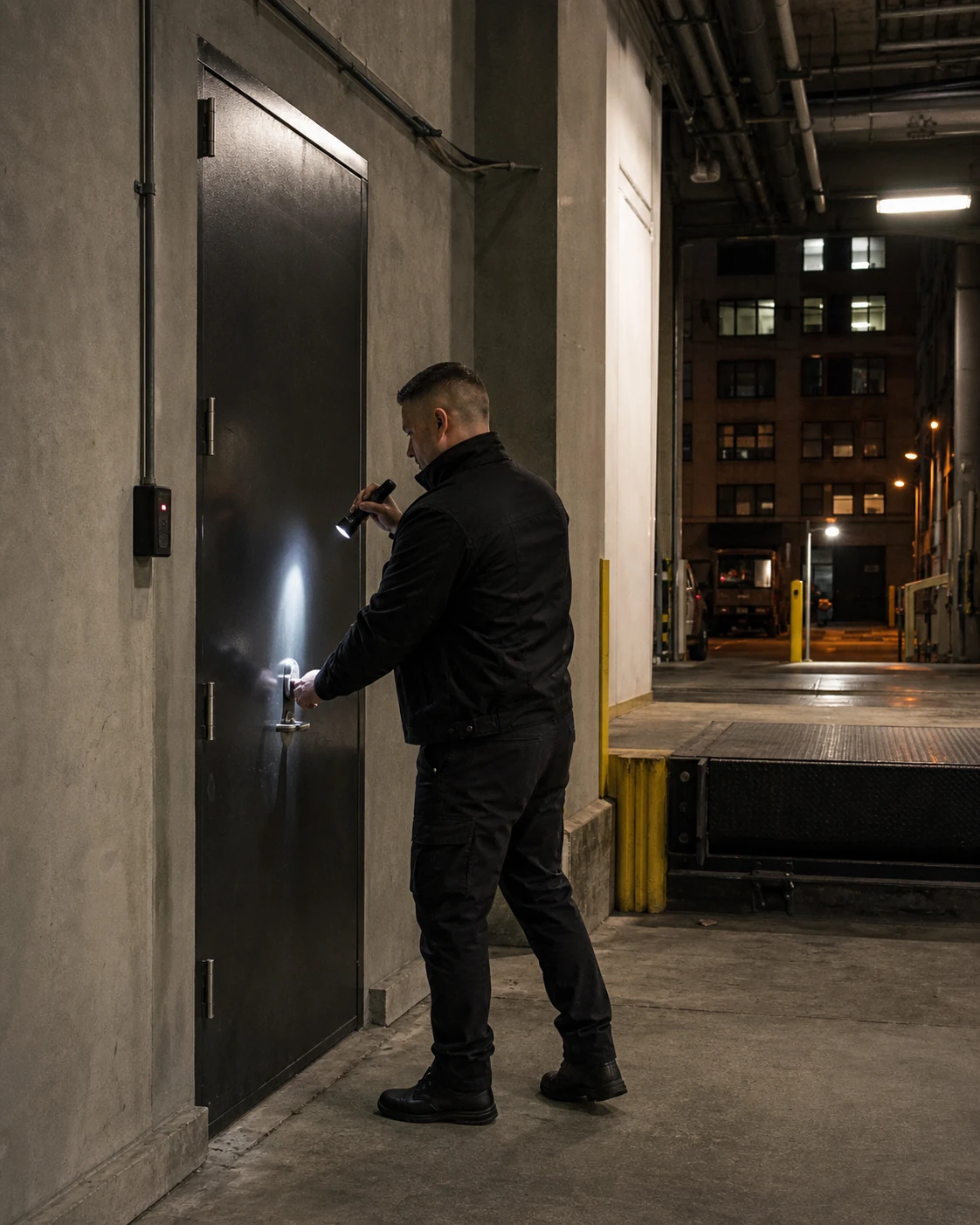
- Adding spot checks at vulnerable doors or low-traffic areas
- Changing the order in which floors or zones are inspected
- Conducting extra rounds after unusual activity or a reported concern
- Adjusting attention based on deliveries, events, vacancies, or construction work
This unpredictability may improve deterrence because unauthorized occupants, trespassers, or other bad actors cannot easily identify a reliable gap in coverage.
The Limitation of Patrols That Are Too Random
“Random” should never mean undocumented or optional. Without minimum frequencies, designated checkpoints, and supervisory review, important areas may receive inconsistent attention. Property managers may also have difficulty determining whether the security plan is being followed.
Random patrols work best when they operate inside a defined framework.
Why a Documented Hybrid Approach Usually Works Better
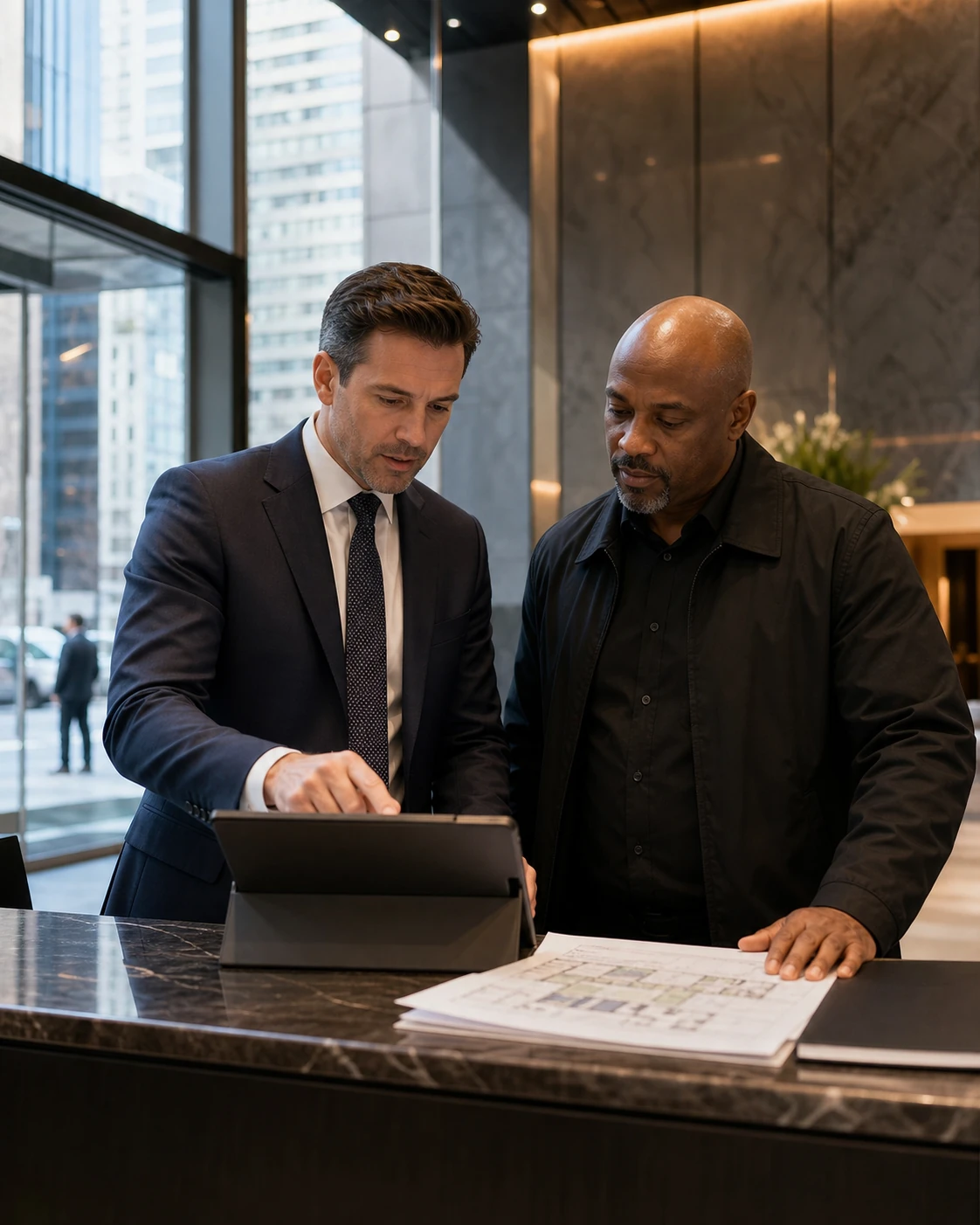
For most New York buildings, a hybrid patrol plan balances accountability with unpredictability. The plan establishes required coverage but gives officers controlled flexibility in how and when some rounds occur.
A practical structure might include:
- Fixed operational checks: Assign specific times for duties tied to building operations, such as opening, closing, shift turnover, or loading-area procedures.
- Patrol windows: Require a round within a time range rather than at the same minute each day.
- Priority checkpoints: Identify locations that must be visited during every applicable round.
- Random supplemental checks: Add varied visits to locations associated with after-hours access, repeated door alarms, unauthorized entry, theft, or tenant concerns.
- Documented exceptions: Require officers to explain delayed, interrupted, or incomplete rounds.
- Supervisor review: Regularly review reports, missed checkpoints, incident patterns, and the quality of observations.
For example, a commercial office property might require one complete patrol between 8:00 and 9:00 p.m., another between 10:00 and 11:30 p.m., and additional randomized checks of the loading dock and vacant floors. Exact frequency should be based on the site, operating hours, staffing level, incident history, and management priorities—not copied from another property.
What Should a Patrol Plan Document?
An effective plan should tell officers what to inspect, what to record, and what to do when they find a problem. Useful components include:
Patrol Zones and Checkpoints
List priority doors, floors, stairwells, corridors, exterior areas, and restricted spaces. Avoid creating a route so rigid that officers cannot respond to changing conditions.
Minimum Frequency and Timing Windows
Define how often critical areas must be checked. Use exact times where operations require them and flexible windows where unpredictability is beneficial.
Observation Standards
Officers should record meaningful conditions rather than generic statements such as “all clear.” Reports may note unsecured doors, obstructed exits, water leaks, lighting failures, suspicious activity, property damage, or unauthorized occupants, as applicable to the assignment.
Escalation Procedures
Post orders should explain who to contact, when to notify property management, and when emergency services should be called. Officers should also understand which situations require them to preserve the area and avoid unnecessary intervention.
Documentation Method
Depending on the property, patrols may be recorded through an electronic checkpoint system, time-stamped activity log, incident report, or another management-approved process. Technology can support verification, but it should not replace attentive observation or supervision.
Adapting Patrols to Manhattan Building Conditions
Patrol needs can change throughout the day. A Midtown office tower may focus on lobby traffic and deliveries during business hours, then shift attention to vacant floors and perimeter doors overnight. A residential property may prioritize package areas, amenity spaces, garages, and late-night access. Retail sites may need added presence around opening, closing, high-value merchandise, or delivery activity.
Renovation and construction can introduce temporary doors, changing access routes, contractors, material storage, and partially occupied spaces. A construction security plan should be updated as the project progresses rather than treated as static.
Likewise, routine security patrols should not be presented as a substitute for required fire-life-safety staffing, inspections, or building-system maintenance. If a property needs dedicated fire watch or related coverage, management should evaluate the circumstances separately and use appropriately qualified personnel. Learn more about fire guard services.
How to Measure Whether Patrols Are Working
Patrol performance should be evaluated by more than the number of rounds completed. Management can review:
- Completion of required checkpoints and timing windows
- Quality and specificity of officer reports
- Repeated unsecured-door or access-control issues
- Response and escalation times
- Locations and times associated with recurring incidents
- Missed, unusually short, or identical patrol patterns
- Tenant, staff, and visitor concerns
- Follow-up on maintenance or management issues discovered during rounds
Patterns in the records can guide adjustments. If incidents repeatedly occur shortly after a scheduled round, timing may need more variation. If randomized rounds consistently miss a critical location, clearer checkpoint requirements may be necessary.
Choosing the Right Patrol Structure
Scheduled patrols offer the strongest framework for consistency and verification. Randomized patrols make security activity harder to anticipate. Used together—and supported by clear post orders, useful reports, and active supervision—they create a more practical strategy for many New York properties.
The right balance depends on your building’s layout, hours, occupancy, access points, incident history, and operating requirements. Guardian ISI can help evaluate your property and arrange security guard coverage tailored to the assignment.
To discuss patrol coverage for a New York building, call or text Guardian ISI at [(212) 602-1695](tel:+12126021695) or [request coverage online](/contact).
Related Guardian services
Review Security Guard Services and Residential Security to connect these procedures with the appropriate staffing and site responsibilities.
Frequently asked questions
Are random patrols better than scheduled patrols?
Neither method is universally better. Scheduled patrols support accountability and consistent coverage, while randomized timing makes officer activity less predictable. Many buildings benefit from using both.
How can a patrol be random and still documented?
Management can set required checkpoints and minimum frequencies while allowing officers to vary exact times, route order, or supplemental checks. Each round should still be recorded and reviewable.
Should every security patrol follow the same route?
Usually not. Critical locations should always be covered, but changing the route order or direction can reduce predictability and help officers observe the property from different perspectives.
What should security officers record during a patrol?
Reports should note patrol times, areas checked, unusual conditions, actions taken, notifications made, and any incomplete checkpoints. Entries should be specific enough for management to understand what occurred.
How often should a New York building be patrolled?
There is no single frequency appropriate for every property. Timing should reflect the building’s layout, occupancy, hours, access points, incident history, staffing, and management priorities.
Can security patrols replace fire watch coverage?
No. Routine security patrols should not be treated as a substitute for any required fire watch, fire-life-safety staffing, inspections, or system maintenance. Those needs should be evaluated separately.