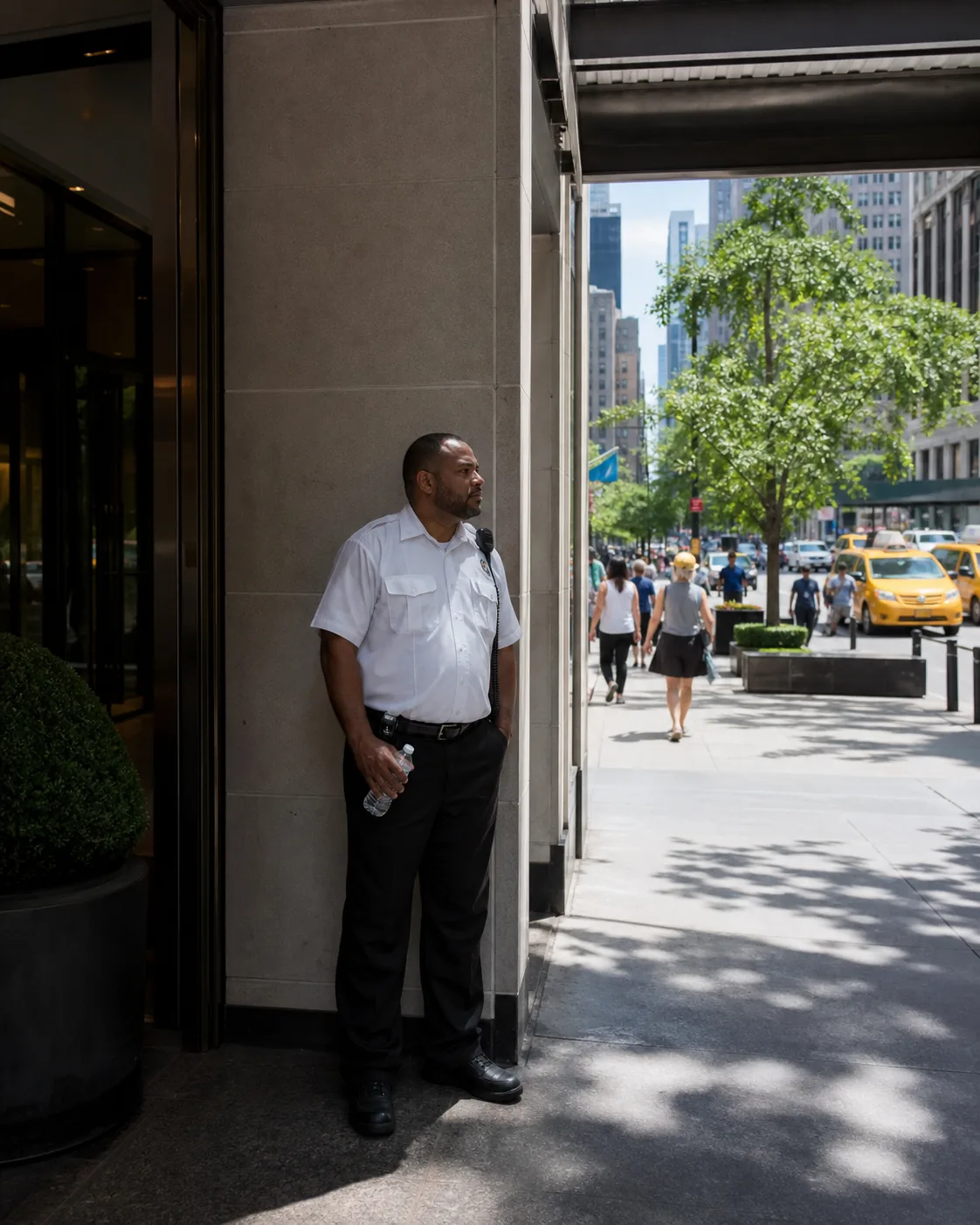
Extreme heat can turn a routine outdoor security assignment into a serious safety risk. Guards stationed at building entrances, loading docks, construction gates, parking areas, and event perimeters may face prolonged sun exposure, reflected heat from pavement, humidity, and limited air movement.
Manhattan property managers and security leaders should address these conditions before the temperature rises. A practical heat plan combines reliable access to water, scheduled relief, cooler recovery areas, appropriate uniforms, active supervision, and clear emergency procedures. It should also preserve continuous security coverage so guards do not feel pressured to remain at a post when they are becoming ill.
Assess Each Outdoor Security Post
Heat exposure can vary significantly between posts at the same property. Review every outdoor or partially enclosed assignment rather than relying only on the citywide forecast.
Consider:
- Whether the post receives direct sunlight and at what times
- Heat reflected from sidewalks, streets, glass façades, or construction materials
- Humidity and air movement
- Access to shade or an air-conditioned interior
- The amount of standing, walking, or equipment handling required
- Uniform weight and required protective equipment
- Shift length and overtime
- Whether a guard is working alone
- How quickly a relief officer or supervisor can reach the post
Newly assigned guards and employees returning after time away may be less accustomed to hot conditions. Supervisors should plan gradual acclimatization and closer monitoring for new or returning workers, following current occupational-safety guidance.
Keep Drinking Water Accessible
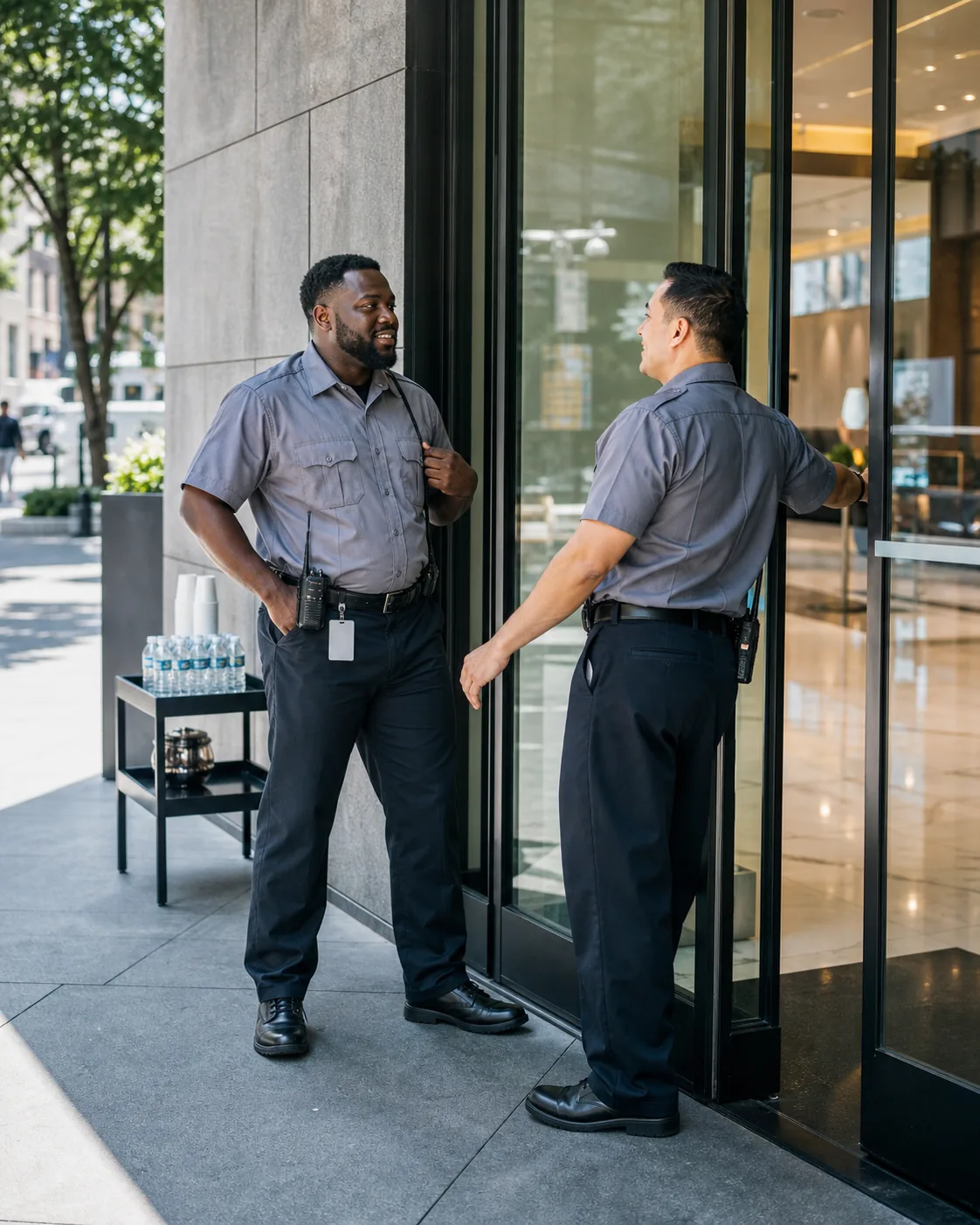
Guards should have convenient access to cool potable water throughout the shift. A water source located far from the post is less useful if leaving would interrupt access control or perimeter coverage.
Property and security managers should determine:
- Who supplies and replenishes water
- Where water will be stored
- How guards can drink without leaving a critical post unattended
- Whether sealed bottles, a cooler, or a nearby dispenser is most practical
- How supplies will be maintained during overnight and weekend shifts
Encourage guards to drink regularly rather than waiting until they feel intensely thirsty. Alcohol, excessive caffeine, and heavily sugared drinks should not replace water. Electrolyte beverages may be appropriate during prolonged sweating, but salt tablets should not be used unless directed by a qualified medical professional.
Schedule Relief Before It Is Needed
Relief periods should be planned according to the heat, humidity, workload, sun exposure, and individual circumstances. Waiting for a guard to request help can be dangerous because heat illness may impair judgment.
A workable relief plan identifies:
- The expected rotation schedule for exposed posts
- The person authorized to adjust that schedule as conditions change
- The guard who will maintain coverage during each break
- The designated recovery location
- A backup plan for callouts, late arrivals, or unusually heavy activity
A security officer should not have to choose between protecting a post and protecting their health. If relief is late, the guard must know whom to contact and supervisors must have authority to deploy backup coverage. Illness requires immediate action: a guard should stop heat exposure and get help without waiting for a replacement.
Properties with unpredictable staffing needs can also plan for emergency security coverage before an extreme-heat event.
Provide Shade or a Cooler Recovery Area
Shade can reduce direct solar exposure, but an air-conditioned indoor recovery area is generally more effective when available. The location should be close enough for scheduled rotations without creating a coverage gap.
Depending on the site, options may include:
- A shaded security booth with ventilation
- A canopy positioned without obstructing sightlines or pedestrian flow
- A nearby lobby, guard room, trailer, or building office
- A fan where it can be used safely and effectively
- A climate-controlled vehicle used according to site policy
Do not assume that a small metal or glass booth is protective. An enclosed post without adequate cooling or ventilation may become hotter than the surrounding outdoor area. Site managers should evaluate actual post conditions during the hottest part of the day.
Teach Guards and Supervisors to Recognize Symptoms
Everyone assigned to the site should know the early warning signs of heat-related illness. Guards may first show subtle changes in behavior or performance.
Possible signs of heat exhaustion
- Heavy sweating
- Headache or dizziness
- Weakness or unusual fatigue
- Nausea or vomiting
- Muscle cramps
- Irritability
- Cool, pale, or clammy skin
- Difficulty concentrating
A guard experiencing these symptoms should stop strenuous activity, move to a cooler area, begin cooling measures, and be evaluated according to the site’s emergency plan. The person should not be left alone or immediately sent back to the post. Do not attempt to diagnose the condition on site. If there is doubt about its severity, call 911 and begin cooling.
Heat-stroke warning signs
Confusion, collapse, loss of consciousness, seizures, severely altered behavior, or an inability to drink safely may indicate a life-threatening emergency. Hot skin is another possible sign, although a person with heat stroke may still be sweating.
Call 911 immediately when heat stroke is suspected. Move the person to a cooler place and begin rapid cooling while waiting for emergency responders, using the methods available and following dispatcher instructions. Do not give fluids to someone who is unconscious, confused, vomiting, or unable to swallow safely.
Review Uniform and Equipment Requirements
Security uniforms support identification, authority, and professionalism, but unnecessary layers can increase heat strain. Management should review seasonal uniform standards without compromising site safety or required protective equipment.
Potential adjustments include:
- Lightweight, breathable uniform materials
- Short-sleeved options where assignment rules permit
- Properly fitted, breathable headwear
- Light-colored outer garments where appropriate
- Moisture-wicking undershirts
- Reduced nonessential equipment weight
- Cooling towels or similar items that do not interfere with duties
Never remove required high-visibility garments or other protective equipment simply to reduce heat. Instead, consider lighter compliant alternatives, more frequent relief, and relocation of duties where possible. Any appearance changes should be approved so guards remain clearly identifiable.
Make Supervisor Check-Ins Meaningful
A check-in should be more than asking whether everything is fine. Guards may minimize symptoms because they do not want to appear unable to perform their assignment.
Supervisors should ask specific questions, such as:
- Have you had water recently?
- Have you experienced dizziness, nausea, cramps, or a headache?
- Has relief arrived on schedule?
- Is the post becoming hotter because the sun has shifted?
- Do you need to recover in a cooler location?
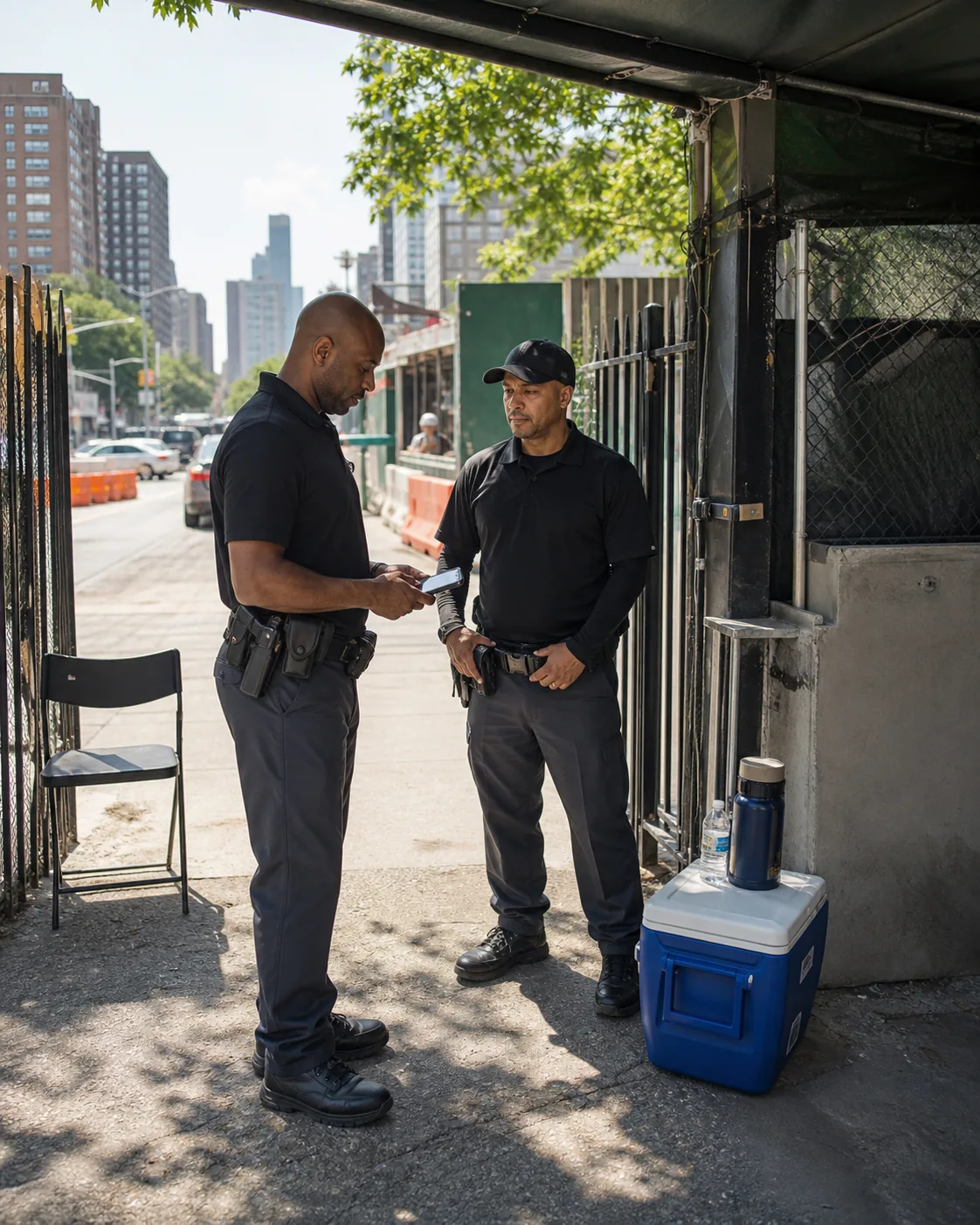
Check-ins can occur in person, by radio, or by phone, but higher-risk posts and guards working alone may require direct observation. Supervisors should document significant concerns, missed relief, first-aid responses, and staffing adjustments under the property’s established procedures.
Establish a Clear Emergency Escalation Process
Every guard should know what to do if they or a coworker become ill. The post orders or heat-response plan should clearly identify:
- When to notify the site supervisor
- When to call 911 without waiting for additional approval
- The property’s exact address and best EMS entrance
- Who will meet and direct emergency responders
- Who will maintain the affected security post
- Where first-aid and cooling supplies are located
- How the event will be documented and reported internally
Heat illness can progress quickly. Emergency procedures should never require a guard to work through dangerous symptoms while waiting for routine relief.
Use a Pre-Shift Extreme-Heat Checklist
Before an exposed shift begins, confirm that:
- Water is present and accessible
- Relief officers are assigned
- A shaded or cooled recovery location is available
- Radios and phones are functioning
- Supervisors have current contact information
- Guards understand symptoms and escalation procedures
- Uniform adjustments have been approved
- EMS access points are unobstructed
- Backup staffing is available if conditions worsen
Site plans should be reviewed with the security provider, building management, and relevant safety professionals. Appropriate measures depend on the property, assignment, workforce, and current official guidance; a general checklist is not a substitute for a site-specific occupational safety review.
Strengthen Outdoor Security Coverage
Guardian ISI helps Manhattan properties plan and staff professional security guard coverage, including assignments with outdoor posts and changing operational demands. We also support construction security for gates, deliveries, site access, and perimeter needs.
To discuss scheduled or urgent coverage, call or text (212) 602-1695 or request coverage online.
Official references
Frequently asked questions
How often should outdoor security guards receive heat relief?
There is no single interval appropriate for every post. Relief frequency should reflect temperature, humidity, direct sun, workload, uniform weight, shift length, and access to cooling. Supervisors should shorten exposure when conditions or symptoms warrant it.
Is shade enough during extreme heat?
Shade helps reduce direct sun exposure, but it may not provide adequate cooling during high heat and humidity. When possible, use an air-conditioned recovery location and evaluate enclosed booths for trapped heat.
What should a supervisor do if a guard reports dizziness or nausea?
Remove the guard from heat and exertion, move them to a cooler area, begin appropriate cooling, and follow the site’s medical escalation plan. Do not leave the guard alone or return them to duty while symptoms continue.
When should someone call 911 for heat illness?
Call 911 immediately for confusion, collapse, seizures, loss of consciousness, severely altered behavior, or other suspected heat-stroke signs. Begin cooling while waiting and follow the dispatcher’s instructions.
Can security uniform requirements be relaxed during hot weather?
Management may approve lighter seasonal options when they preserve identification, professionalism, visibility, and required protection. Guards should not independently remove mandatory high-visibility garments or protective equipment.
How can a property maintain security while giving guards more breaks?
Plan relief and backup coverage before the shift. If illness occurs, stop heat exposure and get help immediately; the supervisor must arrange coverage without delaying treatment.