
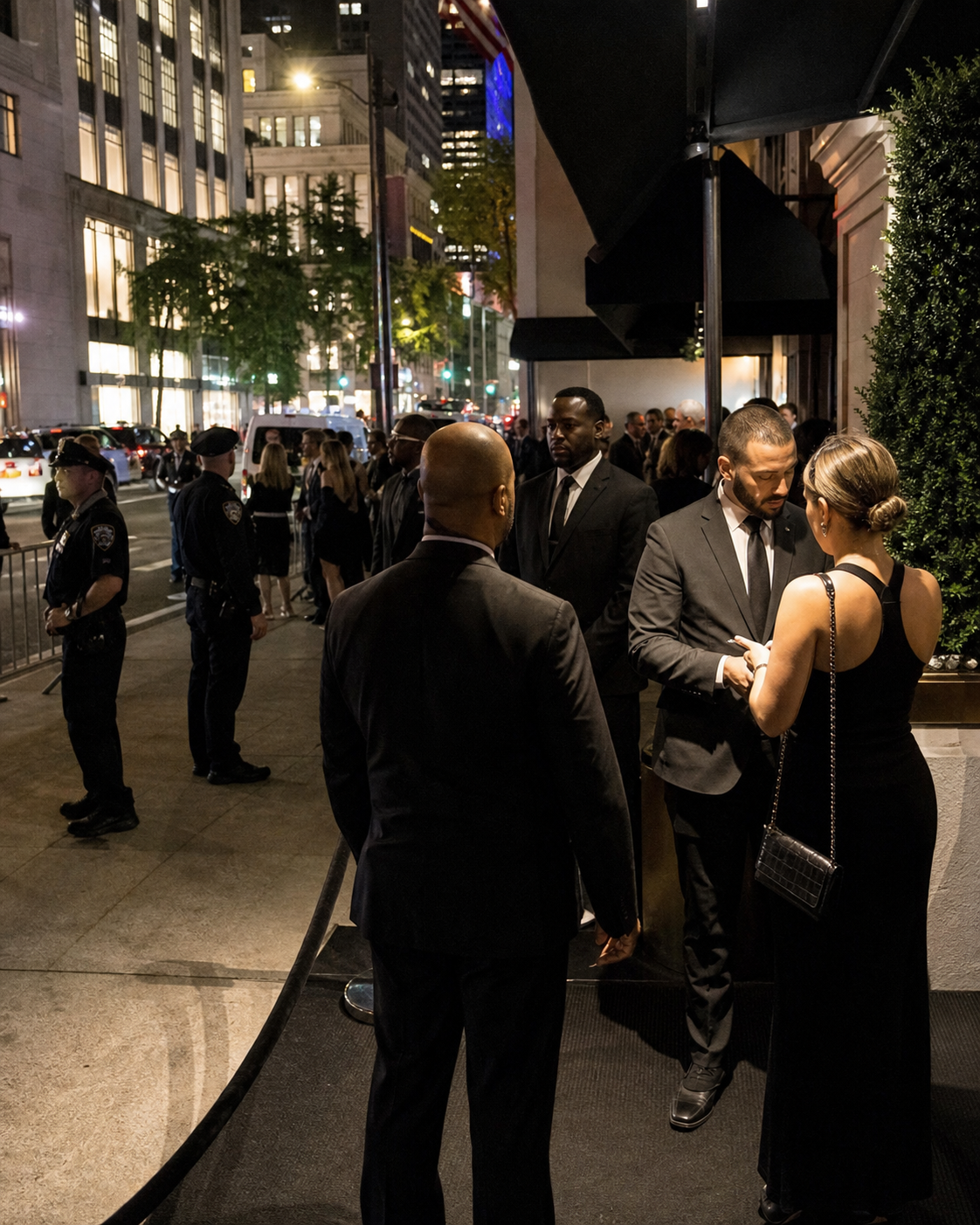
A visible police presence can reassure guests, employees, and organizers at a New York City event. It can also create a dangerous assumption: that uniformed officers outside the venue have taken over every security function inside it.
They have not.
Police generally focus on public safety, law enforcement, traffic or crowd conditions, and threats affecting the broader area. Private security remains responsible for the client’s security plan and assigned posts—including doors, credentials, restricted areas, property, employees, and internal incident reporting.
Understanding that division of responsibility helps Manhattan event organizers avoid uncovered entrances, unclear escalation procedures, and incidents that fall between teams.
Police Presence and Private Security Serve Different Purposes
Police officers and private security personnel may work near one another, but they are not interchangeable. Their responsibilities, authority, reporting structures, and operational priorities are different.
At a major event, police may be positioned on surrounding streets, near pedestrian areas, or at transportation and crowd-control points. Officers may respond to suspected crimes, violence, public disturbances, suspicious activity, or emergencies that require law-enforcement authority.
Private guards work on behalf of the property owner, venue, event producer, employer, or other client. Their duties are determined by the security plan, post orders, venue procedures, and instructions from authorized client representatives.
A larger police deployment does not automatically provide coverage for a private loading dock, staff entrance, backstage corridor, executive holding room, or credential checkpoint.
What Police Typically Handle
The exact police operation varies by event, location, threat environment, and agency direction. In general, law enforcement may address:
- Public safety conditions on streets, sidewalks, and other public areas
- Suspected criminal conduct and threats of violence
- Traffic, pedestrian, or crowd issues within the police operation
- Emergency response requiring law-enforcement authority
- Arrests, criminal investigations, and evidence handling
- Coordination with other public agencies when necessary
Event organizers should not assume that officers assigned to the surrounding area are available for routine venue tasks. Police resources can be redeployed as conditions change, and their priorities may extend beyond a single property or event.
Private security should know how to contact the appropriate police liaison when one has been designated, while still using 911 for immediate emergencies.
What Private Security Is Still Responsible For
Private security provides site-specific attention that a public police deployment is not designed to replace. For most events, the following responsibilities remain with the client and its security team.
Doors and Entry Points
Every active door needs a defined purpose and an assigned procedure. Guards may be responsible for:
- Monitoring guest, employee, vendor, and service entrances
- Keeping exit-only or closed doors from becoming unauthorized entry points
- Following opening, closing, and reentry procedures
- Watching for tailgating or door propping
- Directing people to the correct entrance without abandoning a post
A police vehicle outside the building does not prevent someone from entering through an unattended side door.
Credentials and Guest Access
Police do not ordinarily administer a client’s invitation list, staff badge system, ticketing rules, or backstage credentials. Private personnel may need to:
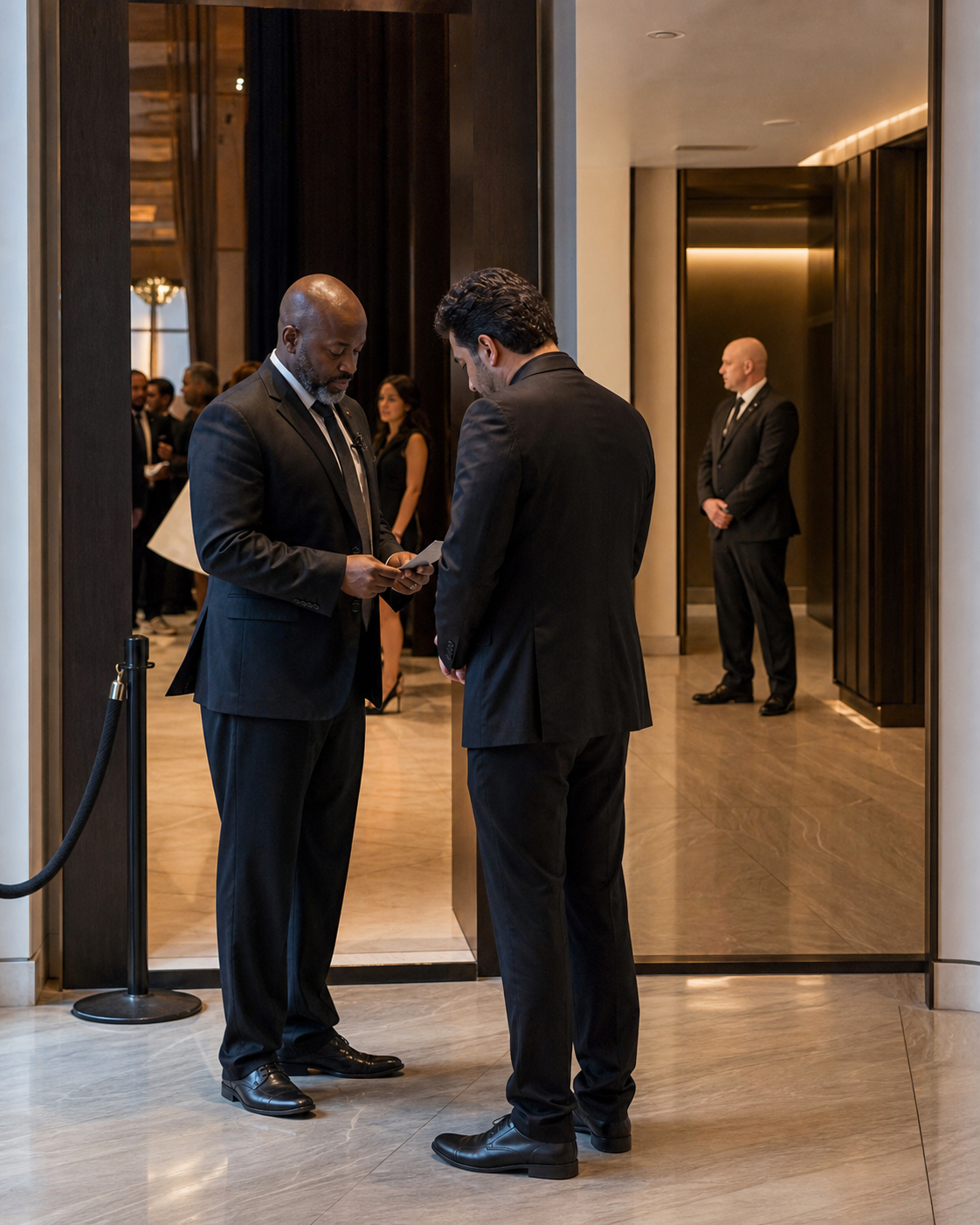
- Check credentials against current access rules
- Distinguish among guests, staff, vendors, media, and VIPs
- Refer missing, altered, or disputed credentials to a supervisor
- Enforce reentry and escort requirements consistently
- Prevent verbal pressure or familiarity from overriding the process
Organizers should define who can approve exceptions. Guards should not have to improvise when an executive arrives with an unlisted guest or a vendor requests access to a restricted floor.
Restricted and Sensitive Areas
Many event risks exist beyond the public-facing entrance. Private guards may protect:
- Backstage rooms and talent areas
- Production offices and control rooms
- Storage spaces and coat-check areas
- Loading docks and freight elevators
- Mechanical or building-service areas
- Executive rooms, staff-only floors, and sensitive workspaces
These areas require clear access lists, boundaries, and escalation contacts. The event security plan should also account for temporary changes caused by deliveries, setup, breakdown, or schedule delays.
Property, Equipment, and Deliveries
Private security often serves as the client’s eyes and ears around property that police are not assigned to watch. That can include audiovisual equipment, merchandise, personal belongings, temporary infrastructure, and delivered materials.
Guards may document arrivals, direct vendors, monitor loading activity, and report property damage or suspicious removal. The client should establish who is authorized to release equipment and what documentation is required.
Employees, Contractors, and Guests
A security plan should protect people as well as space. Guards can help employees and guests reach the right location, identify developing conflicts, request medical assistance, and notify supervisors about concerning behavior.
Private guards should operate within their training, assigned duties, and lawful authority. Suspected crimes, weapons, violence, or immediate threats should be escalated promptly to 911 and on-site law enforcement when available.
Internal Incident Reporting
Police reports and private incident reports serve different purposes. Even when police respond, the client still needs an internal record of what its security team observed and did.
A useful private incident report may document:
- Date, time, and exact location
- People involved and available witness information
- Objective observations rather than assumptions
- Notifications made and when they occurred
- Actions taken by guards, supervisors, venue personnel, or responders
- Relevant property damage, access issues, or operational effects
- Report numbers or responding agencies when provided
Reports should follow the client’s procedures and protect sensitive information. Guards should never delay an emergency call simply to complete documentation.
A Practical Division-of-Responsibility Checklist
Before doors open, the organizer, venue, and security provider should confirm who owns each task.
| Operational need | Typical primary responsibility |
|---|---|
| Public-street safety and law enforcement | Police |
| Criminal investigation or arrest | Police |
| Guest entrance and credential checks | Private security or designated event staff |
| Staff, vendor, and loading access | Private security or venue security |
| Backstage and restricted-area control | Private security |
| Protection of client property and equipment | Private security |
| Internal security incident reporting | Private security |
| Immediate emergency response | 911 and appropriate public responders, supported by on-site staff |
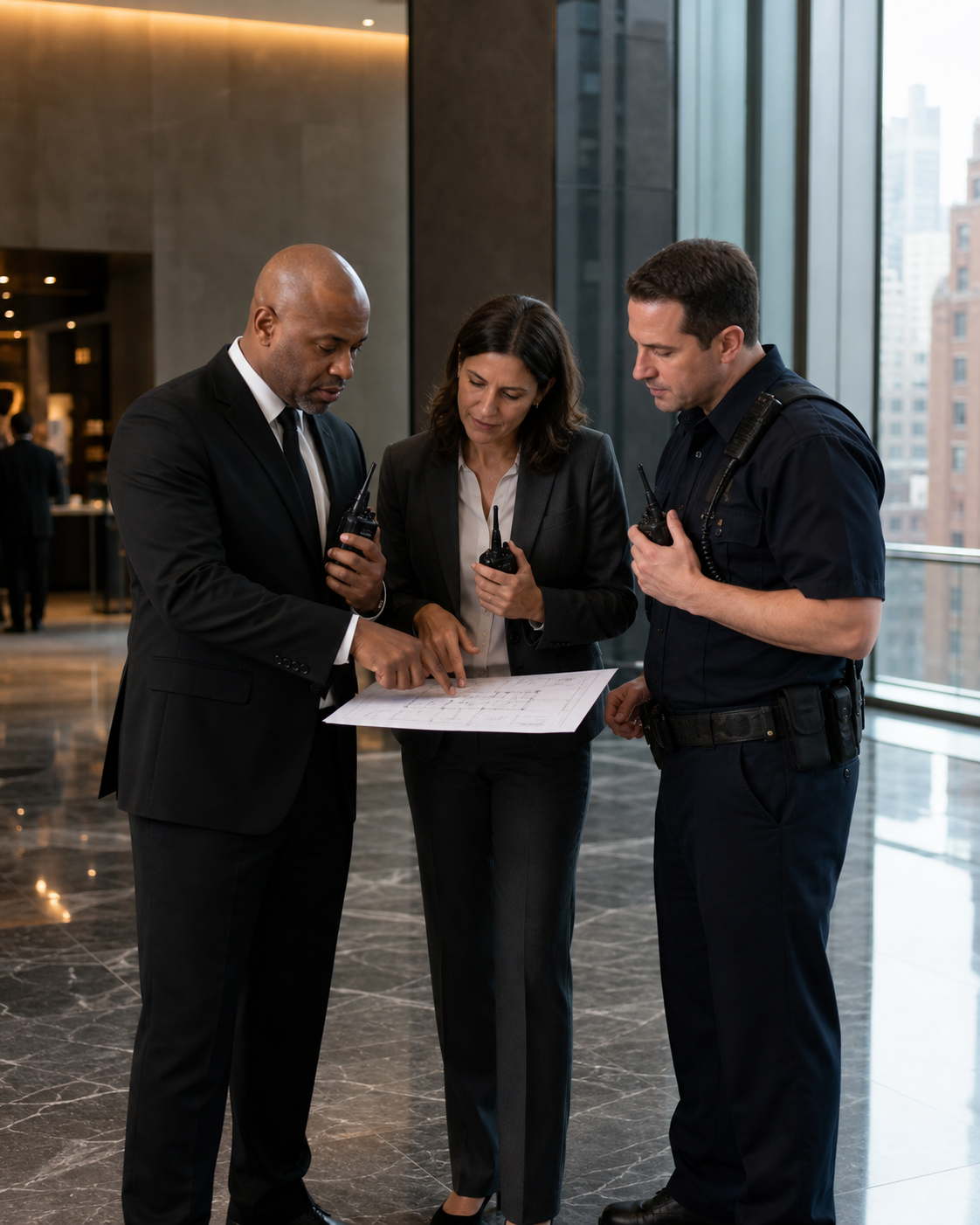
This table is a planning guide, not a substitute for event-specific direction. Responsibilities should be confirmed with the venue, security provider, event leadership, and public agencies involved.
How to Coordinate Without Creating Gaps
Establish a Clear Command Structure
Name the client decision-maker, private security supervisor, venue contact, and—if provided—the police liaison. Guards should know whom to contact for access exceptions, operational concerns, medical issues, and emergency escalation.
Use Written Post Orders
Post orders should identify the location, hours, access rules, prohibited areas, communication method, relief procedure, and escalation path for each assignment. Brief instructions such as “watch the door” are not enough for a busy Manhattan event.
Walk the Site Before Opening
A pre-event walkthrough can reveal unsecured side doors, shared elevator banks, hidden corridors, delivery conflicts, and areas where a police perimeter does not overlap with the venue’s private security needs.
Plan for Setup and Breakdown
Risk does not begin when guests arrive or end when they leave. Equipment, open service doors, temporary workers, and reduced staffing can make load-in and load-out especially vulnerable. Coverage hours should reflect the full operational schedule.
Brief Guards on Escalation, Not Assumptions
Guards should know when to contact a supervisor, venue management, on-site police, or 911. They should not assume that “police are nearby” means someone else has already reported an incident.
Build Event Coverage Around the Property, Not the Optics
An expanded police presence can strengthen public safety around a high-profile NYC event, but it does not eliminate the client’s site-specific responsibilities. Doors still need coverage. Credentials still need verification. Restricted spaces, employees, guests, and property still need protection. Incidents still need to be documented internally.
Guardian ISI can help Manhattan organizers and property teams assess posts, schedules, access points, and escalation procedures for planned events or urgent needs. Explore our security guard services and emergency security coverage.
For event security coverage, call or text (212) 602-1695 or request coverage online.
Official references
Frequently asked questions
Does an increased NYPD presence replace private event security?
No. Police generally focus on public safety and law enforcement. Private security remains responsible for the client’s assigned doors, credentials, restricted areas, property protection, and internal reporting.
Who should check event credentials and guest lists?
Credential checks are typically handled by private security or designated event staff under the client’s access rules. The organizer should identify who can approve exceptions before the event begins.
Should private guards call the police if officers are already nearby?
Guards should follow the event’s communication plan and contact an identified police liaison when appropriate. For an immediate threat or emergency, they should call 911 rather than assume nearby officers already know about it.
Do private guards still need to write a report after police respond?
Usually, yes. A private incident report records what the security team observed, which notifications were made, and what actions affected the client or property. It is separate from any police report.
When should event security coverage begin and end?
Coverage should reflect load-in, setup, guest arrival, the event itself, departure, and breakdown. Open service doors, deliveries, equipment, and temporary workers can create risks outside public event hours.