
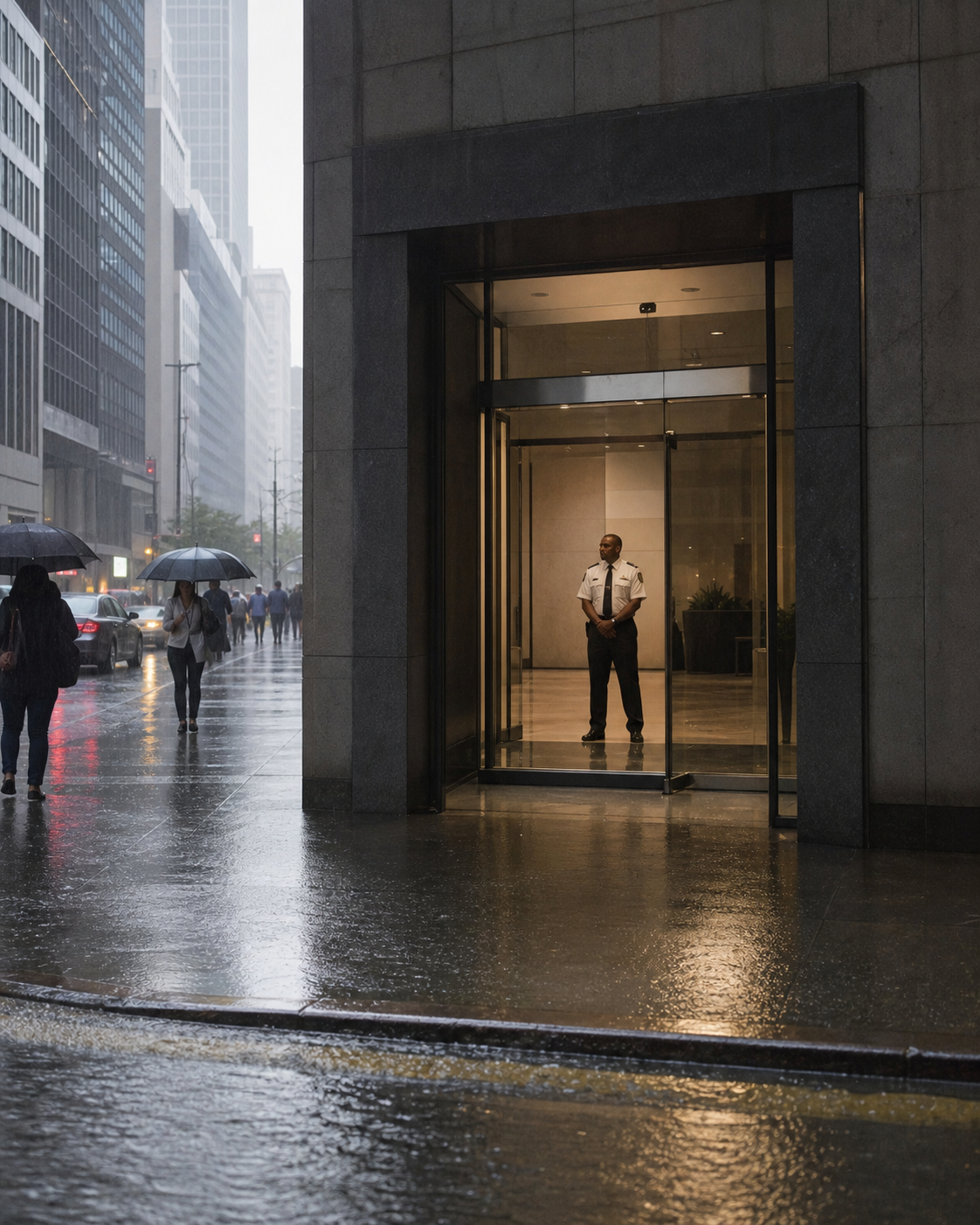
Extreme heat and flash flooding can create overlapping risks for Manhattan properties: employee illness, water entering below-grade spaces, transit disruptions, power problems, blocked entrances, and delayed emergency response. Security teams are often among the first people to notice these conditions and communicate them to building management.
When New York City activates emergency plans or issues weather guidance, property leaders should verify current instructions through official sources such as Notify NYC, NYC Emergency Management, and the National Weather Service. A site-specific response plan can then turn those alerts into clear actions for guards, supervisors, engineers, and property managers.
Why heat and flash flooding require a coordinated response
Heat and flooding present different hazards, but they can occur during the same weather pattern. A hot, humid day may be followed by intense thunderstorms capable of overwhelming street drainage. Properties must therefore prepare for changing conditions rather than treating each risk in isolation.
Potential operational effects include:
- Staff shortages caused by transit delays or service changes
- Heat stress among guards assigned outdoors or in poorly cooled posts
- Water intrusion at cellar doors, loading docks, ramps, and sidewalk vaults
- Elevator, fire alarm, access-control, or communications disruptions
- Crowding near sheltered entrances and lobbies
- Delivery delays and unsafe loading-zone conditions
- Increased slip-and-fall hazards in public and back-of-house areas
- Contractors or tenants attempting to enter restricted or affected spaces
Security personnel can support the response by observing conditions, controlling access, documenting incidents, and escalating hazards. They should not enter floodwater, perform electrical work, or take on duties for which they are not trained or equipped.
Actions to take before severe weather arrives
Monitor official alerts and define escalation triggers
Assign responsibility for monitoring official weather and emergency notifications throughout the event. Avoid relying exclusively on social media or a single weather app.
The written plan should identify who has authority to:
- Increase or extend security coverage
- Close an entrance, loading dock, plaza, or other exposed area
- Contact building engineering or property management
- Notify tenants, contractors, and vendors
- Request emergency services
- Start relocation, sheltering, or evacuation procedures under the property’s emergency plan
Conditions can vary significantly by block and building. A citywide alert should prompt closer local observation, not automatic assumptions about a specific property.
Inspect vulnerable parts of the property
Before heavy rain, conduct a documented walk-through with engineering or facilities personnel. Pay particular attention to:
- Below-grade doors and windows
- Cellars, basements, and parking areas
- Loading docks and vehicle ramps
- Roof and terrace access points
- Street-level drains and low spots
- Temporary construction barriers
- Emergency exits and exterior stairs
- Areas containing electrical, communications, or life-safety equipment
Security staff can report visible obstructions or damage, but drain clearing, pumping, electrical isolation, and equipment repair should be handled by qualified personnel.
Prepare staffing and communications
Severe weather may prevent the next shift from arriving on time. Confirm relief arrangements, supervisor availability, call-out procedures, and limits on overtime before conditions deteriorate.
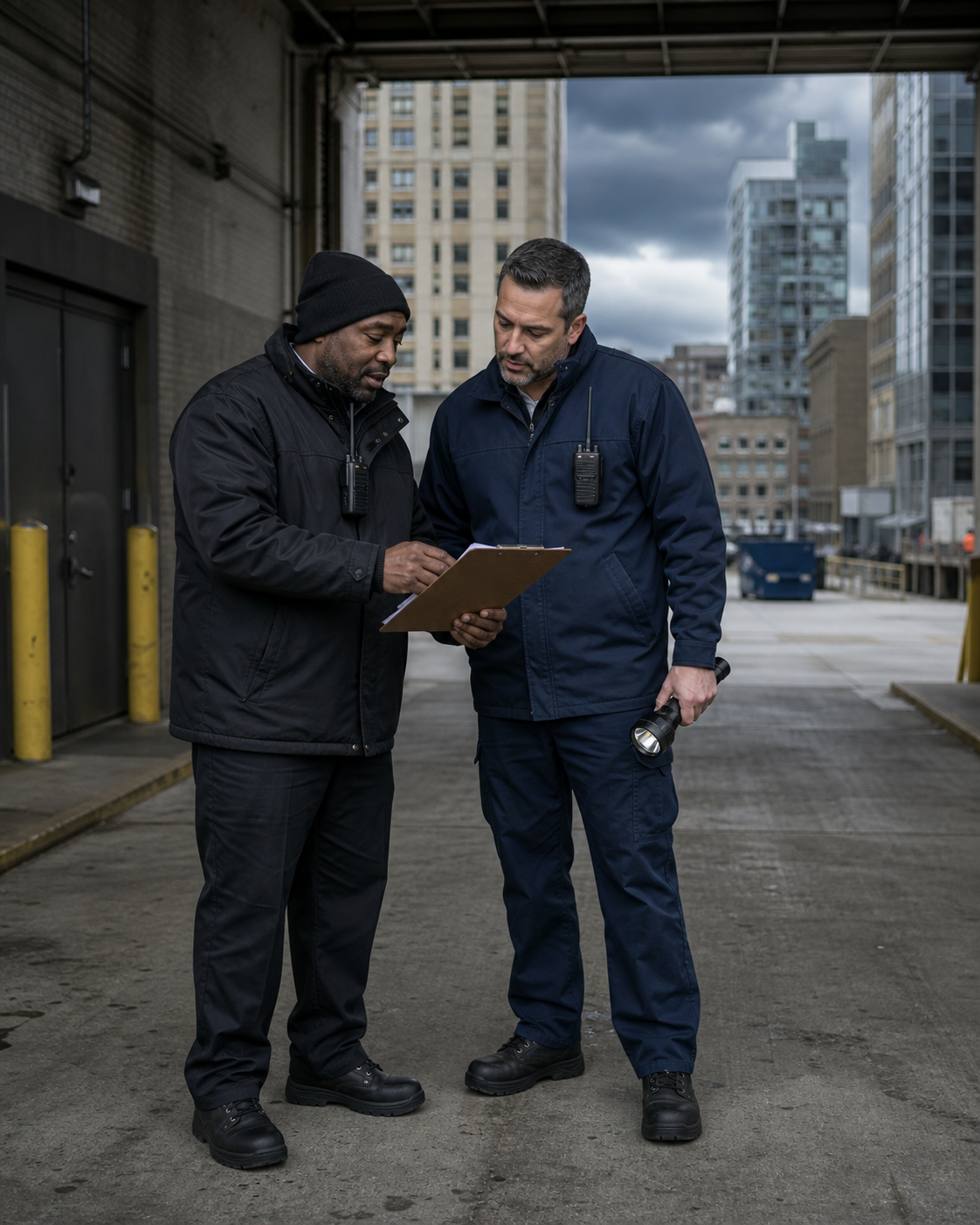
Each post should have an updated contact list and at least one dependable way to reach supervision. Where practical, prepare backup radios, charged batteries, flashlights, paper incident logs, and printed emergency contacts in case normal systems fail.
Properties facing an immediate staffing gap may need emergency security coverage. Requests should be made as early as possible because transportation problems can affect guard availability across the city.
Protect security personnel during extreme heat
Outdoor posts, sidewalk patrols, loading docks, gatehouses, and unconditioned construction areas can expose guards to significant heat. Employers and site managers should review current occupational-safety guidance and tailor controls to working conditions.
A practical heat plan may include:
- Ready access to drinking water
- Rest breaks in a cooler or shaded location
- Rotation or adjustment of exposed posts
- Closer supervision of new or returning personnel who are not acclimatized
- A buddy system for recognizing signs of illness
- A reliable method for summoning medical help
Possible warning signs of heat illness include headache, nausea, dizziness, weakness, heavy sweating, confusion, or loss of consciousness. Confusion, collapse, or altered behavior may indicate a medical emergency. Staff should contact 911 when emergency assistance is needed and provide aid only within their training.
Uniform decisions should balance professional identification with weather conditions and site requirements. Any modification should be approved by the employer and property rather than improvised at the post.
Security procedures during a flash-flood warning
Flash flooding can develop quickly. Guards should follow the building’s emergency plan and instructions from authorized site leadership and public officials.
Keep people away from floodwater
Do not allow staff, tenants, visitors, or drivers to enter visibly flooded areas. Water depth and movement can be difficult to judge, and floodwater may conceal open utility covers, debris, contamination, or electrical hazards.
Security personnel should never enter moving water to retrieve property or test its depth. Use barriers and safe observation points where available, and immediately report anyone in danger to 911.
Control entrances without obstructing emergency egress
A flooded entrance may need to be restricted while another entrance remains available. Coordinate any closure with property management and the personnel responsible for the building’s fire and life-safety procedures.
Avoid placing improvised barriers where they could block required exits or emergency access. If the safe path of entry changes, station staff where they can redirect occupants clearly and calmly.
For office towers, a coordinated commercial office security plan can help align lobby control, tenant communication, loading-dock procedures, and after-hours access.
Watch below-grade and mechanical areas from a safe position
Basements and cellars can become dangerous before flooding is visible from the lobby. Guards should know which conditions require an immediate call to engineering, management, or emergency services.
Warning signs can include:
- Water flowing under a door or down a ramp
- Unusual electrical sounds, sparks, or burning odors
- Elevator faults or water near an elevator landing
- Loss of lighting, cameras, alarms, or access-control functions
- Rising water near equipment rooms
- Structural movement or displaced construction materials
Do not reset equipment, open energized cabinets, operate pumps, or enter a compromised area unless that work is assigned to trained and authorized personnel.
Maintain access control during outages and system failures
Severe weather can disrupt card readers, cameras, intercoms, elevators, turnstiles, and visitor-management systems. Every property should have written fallback procedures that explain:
- How occupants and authorized contractors will be verified
- Which doors may be manually controlled
- Who holds physical keys and override authority
- How denied or unusual access attempts will be recorded
- How patrols will cover areas affected by camera loss
- When a system failure must be escalated to management or a vendor
A system outage is not a reason to abandon access control. It is a reason to shift to an approved manual process and increase documentation. Guards should not prop secure doors open or bypass life-safety functions for convenience.
Special considerations for construction sites
Construction sites may contain unsecured materials, temporary power, open excavations, scaffolding, sidewalk sheds, and incomplete drainage. Wind and heavy rain can alter site conditions rapidly.
Before the storm, the general contractor or designated site leader should identify restricted areas and communicate shutdown or access instructions. Construction security personnel can help enforce those restrictions, record contractor arrivals, monitor gates, and report visible changes from safe locations.
After heavy rain, workers should not be admitted into a restricted area merely because the weather has cleared. Reopening decisions should come from the authorized site representative after appropriate inspections.
Document conditions and decisions throughout the event
Accurate reporting helps management understand what happened and supports a better response to the next event. Incident logs should be objective and time-specific.
Record details such as:
- Time an official alert or management instruction was received
- Weather and site conditions observed
- Entrances or areas restricted
- Names or roles of people notified
- Equipment or system failures reported
- Emergency-service calls and reference numbers, when available
- Staff relief delays or post changes
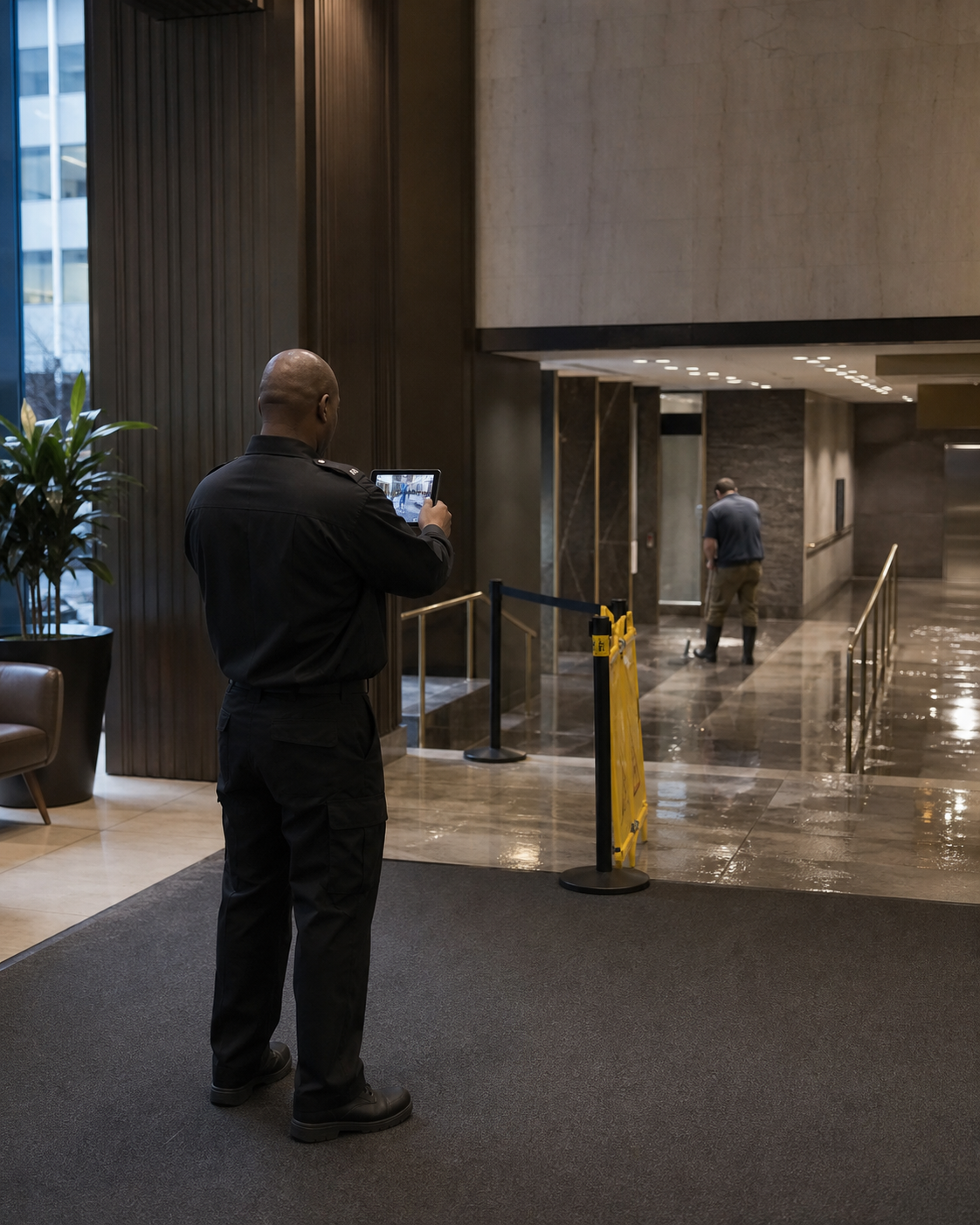
- Photographs taken under site policy and from a safe location
- Time restrictions were lifted and who authorized reopening
Avoid speculation. State what was observed, what action was taken, and who was informed.
Recovery after the weather passes
The end of a warning does not necessarily mean the property is ready to resume normal operations. Standing water, wet electrical equipment, damaged doors, mold-prone materials, and unstable temporary structures may remain hazardous.
Before returning to routine procedures:
- Obtain authorization before reopening closed spaces
- Confirm that emergency exits and access routes are usable
- Test security systems through approved procedures
- Replace damaged logs, radios, flashlights, or supplies
- Preserve relevant video and incident records according to site policy
- Conduct a short debrief with security, management, and engineering
- Update post orders based on identified gaps
Fire and life-safety responsibilities must also remain clearly assigned during disruptions. Properties that require qualified coverage can review Guardian’s fire and life safety director services or fire guard coverage. The appropriate role depends on the building, the condition involved, and direction from the property’s responsible professionals or authorities.
Build the plan before the next alert
A useful severe-weather plan is specific enough for a guard to follow at 2 a.m. It identifies vulnerable locations, authorized decision-makers, backup communication methods, manual access procedures, relief arrangements, and clear limits on guard duties.
Guardian ISI can help Manhattan property managers, construction leaders, and building operators plan security staffing or request short-notice coverage. Call or text [(212) 602-1695](tel:2126021695) or request coverage online. For an immediate threat to life or safety, call 911.
Official references
Frequently asked questions
What should an NYC security guard do during a flash-flood warning?
Follow site post orders and authorized instructions, keep people away from floodwater, monitor vulnerable areas from a safe location, document conditions, and escalate hazards promptly. Guards should not enter floodwater or perform electrical, pumping, or rescue work beyond their training.
How should a building prepare for weather-related staffing delays?
Confirm relief procedures, supervisor contacts, overtime limits, backup transportation considerations, and emergency coverage options before conditions worsen. Keep updated contact lists at each post and request replacement coverage as early as possible.
Can security close a flooded building entrance?
Only under the property's established procedures or direction from authorized management or emergency personnel. Any closure should preserve required emergency egress and provide a safe alternative route where applicable.
What should guards record in a severe-weather incident report?
Record times, observed conditions, affected areas, instructions received, people notified, access restrictions, system failures, emergency calls, actions taken, and the authority that approved reopening. Reports should be factual and avoid speculation.
How can properties protect guards working in extreme heat?
Consider water, cooler or shaded recovery areas, appropriate breaks, post rotation, acclimatization, active supervision, and a clear medical-response process. Review current occupational-safety guidance and account for the actual temperature, humidity, workload, clothing, and post conditions.
When should normal building access resume after flooding?
Access should resume only after authorized property personnel determine that routes and affected areas are safe. Security should verify its systems through approved procedures and retain restrictions until management formally lifts them.