
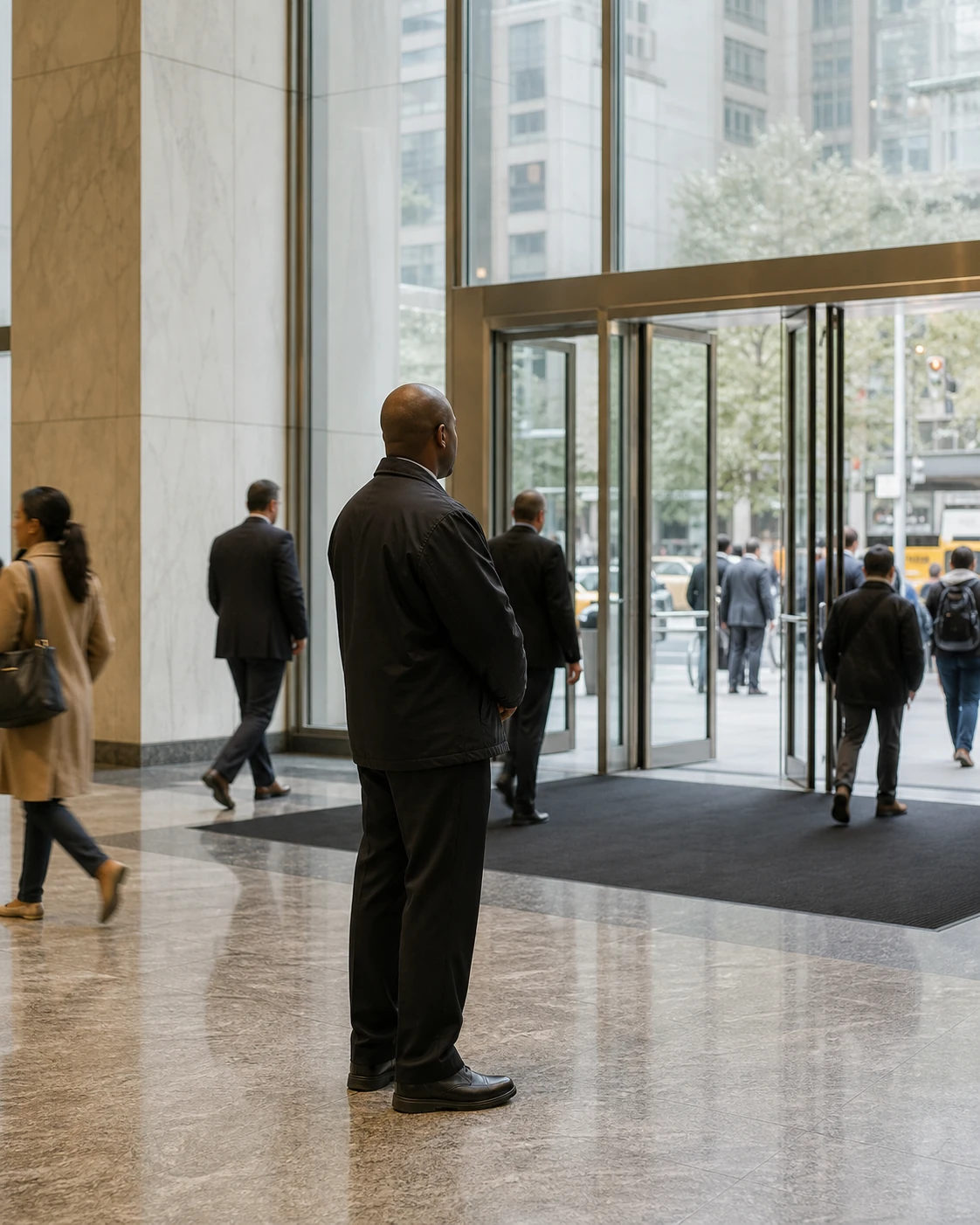
Public events, demonstrations, street closures, transit delays, and large gatherings can change conditions around a Manhattan property with little notice. Even when a building is not directly involved, shifting pedestrian traffic and limited curb access can affect entrances, deliveries, employees, tenants, and security staffing.
The right response is not to assume every public gathering presents a threat. It is to prepare proportionately, monitor reliable information, and give on-site personnel clear instructions before conditions change.
Start with the Property’s Actual Exposure
A building’s plan should reflect its location and operations rather than a generic citywide risk assessment. Management and security leaders should consider:
- Proximity to government buildings, consulates, transportation hubs, plazas, and event venues
- The number and location of public entrances
- Shared loading areas, setbacks, arcades, and privately owned public spaces
- Expected tenant, visitor, and contractor activity
- Delivery schedules and curbside dependencies
- Whether nearby closures could delay relief officers or emergency responders
This assessment should identify credible operational consequences without making assumptions about the intentions of demonstrators or members of the public.
Establish a Reliable Monitoring Process
Properties should designate someone to monitor official alerts, transportation notices, property-management communications, and verified information from relevant public agencies. Social media can provide situational awareness, but unverified posts should not be treated as confirmed instructions.
Create a short escalation process that answers three questions:
- Who reviews incoming information?
- Who can change access or staffing procedures?
- How will updated instructions reach officers, tenants, vendors, and building leadership?
Decision authority should be clear before a disruption begins. An officer at the lobby desk should not have to improvise a building-wide response based on incomplete information.
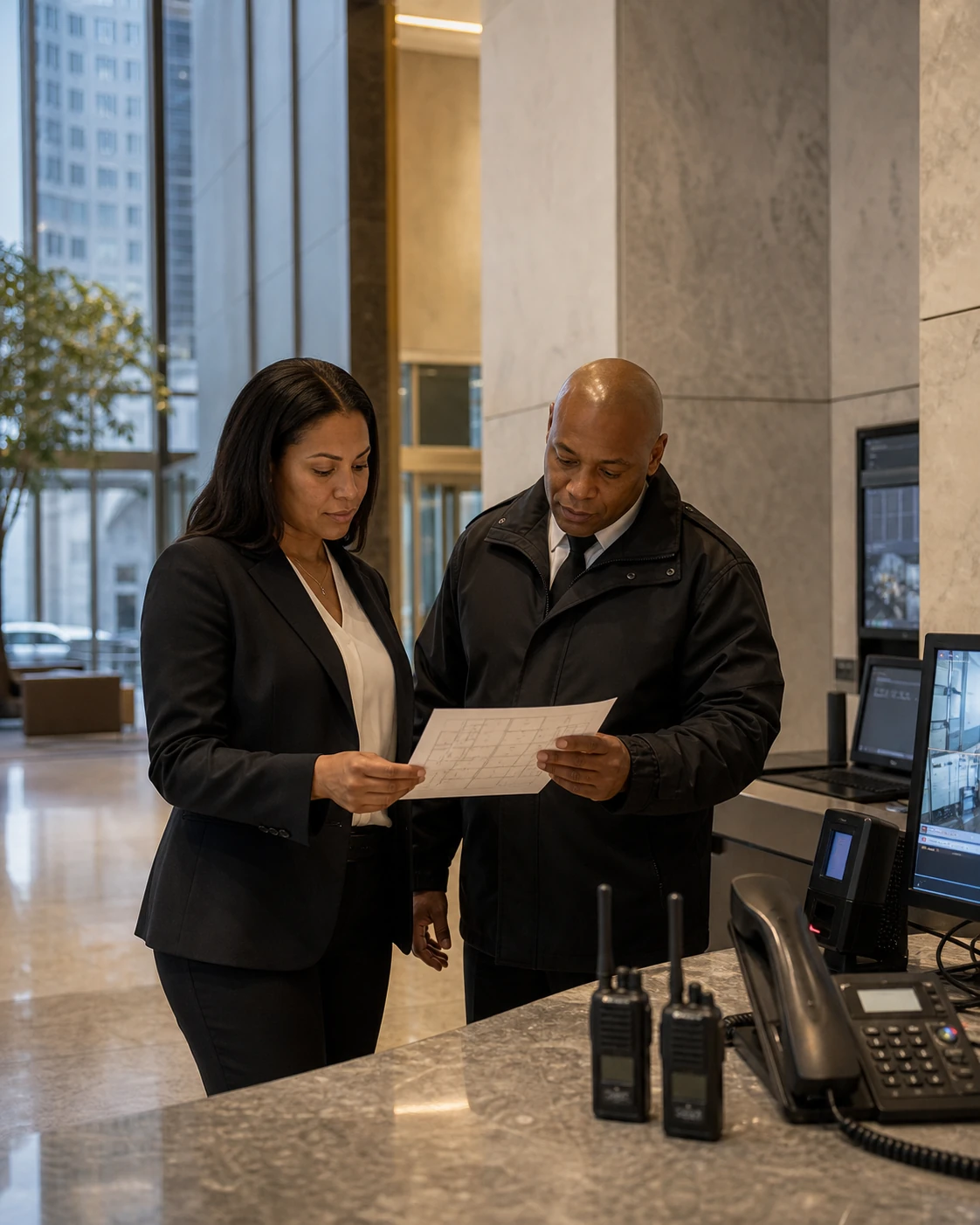
Protect Access Without Creating Unnecessary Conflict
Review entrances and credentials
Confirm which doors will remain open, how visitors will be processed, and who may authorize exceptions. If management decides to consolidate access, maintain required egress and coordinate the change with fire-life-safety personnel.
Security officers should receive written instructions covering:
- Employee and tenant credentials
- Visitor verification
- Vendor and delivery handling
- After-hours access
- Package drop-off locations
- Elevator and loading-dock controls
Keep interactions professional and neutral
Officers should focus on conduct and property rules, not viewpoints, affiliations, or appearance. Post orders should emphasize calm communication, observation, documentation, and timely requests for supervisory or emergency assistance.
Unless an immediate life-safety issue exists, personnel should avoid actions likely to escalate a street-level encounter. Building management should define when public-agency assistance is appropriate and who makes that call.
Prepare for Staffing and Delivery Problems
Transit disruptions may affect the next shift even when activity never reaches the property. Supervisors should confirm officer availability, relief timing, and contingency coverage early.
Management should also communicate with cleaning teams, engineering staff, tenants, and critical vendors. Consider adjusting nonessential deliveries while preserving access for emergency services and essential building operations.
If regular coverage cannot be maintained, Guardian can help evaluate emergency security coverage based on current site conditions and available personnel.
Brief the Team Before Conditions Change
A useful pre-event briefing can be completed quickly. It should cover:
- Known conditions and the source of that information
- Changes to entrances, loading areas, or visitor procedures
- Positions and patrol responsibilities
- Radio channels and backup communications
- Incident-notification thresholds
- Emergency egress responsibilities
- The location and role of the on-duty supervisor
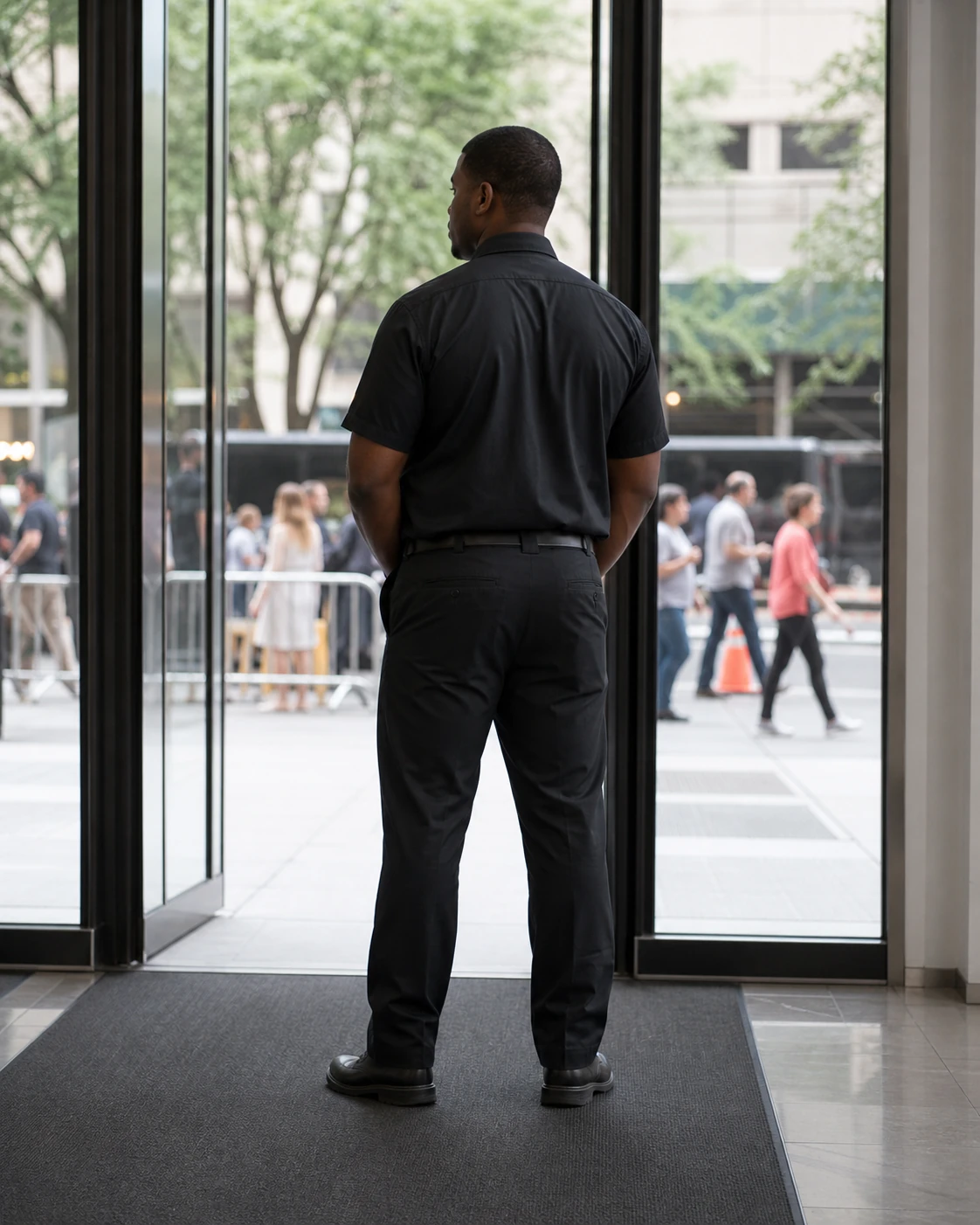
Ask officers to repeat critical instructions back. A documented briefing is more dependable than assuming everyone read a long email.
Document Decisions and Return to Normal Deliberately
Incident logs should distinguish direct observations from secondhand reports. Record access changes, unusual activity, calls for assistance, service interruptions, and the times instructions were issued.
When conditions improve, management should formally restore normal procedures. Reopen entrances, notify staff and tenants, reconcile keys or temporary credentials, and conduct a brief after-action review. That review can reveal practical improvements for the next planned event or unexpected disruption.
Build a Proportionate Manhattan Security Plan
Guardian ISI supports commercial properties that need site-specific planning, trained security guards, and responsive coverage in changing conditions. To discuss an upcoming event or an immediate operational concern, call or text (212) 602-1695 or request coverage online.
Related Guardian services
Discuss temporary staffing through Emergency Security Coverage, and coordinate building access procedures with Commercial Office Security.
Frequently asked questions
Should an NYC building lock its doors whenever a demonstration is nearby?
Not automatically. Management should base access changes on credible information, site conditions, tenant needs, required egress, and guidance from relevant authorities.
What should security officers document during a public-space disruption?
Logs should capture direct observations, access changes, service interruptions, instructions received, notifications made, and response times without speculation.
How can a property prepare for officers delayed by transit problems?
Confirm relief personnel early, identify approved backup coverage, maintain current contact lists, and define how long an officer may remain on duty under company policy.
Should officers engage with demonstrators outside the property?
Generally, officers should remain professional and focus on lawful site responsibilities, observed conduct, access control, and escalation procedures established by management.
When should a building request emergency security coverage?
Consider it when regular staffing is unavailable, entrances or loading areas require additional control, or changing conditions create duties the existing team cannot safely manage.