
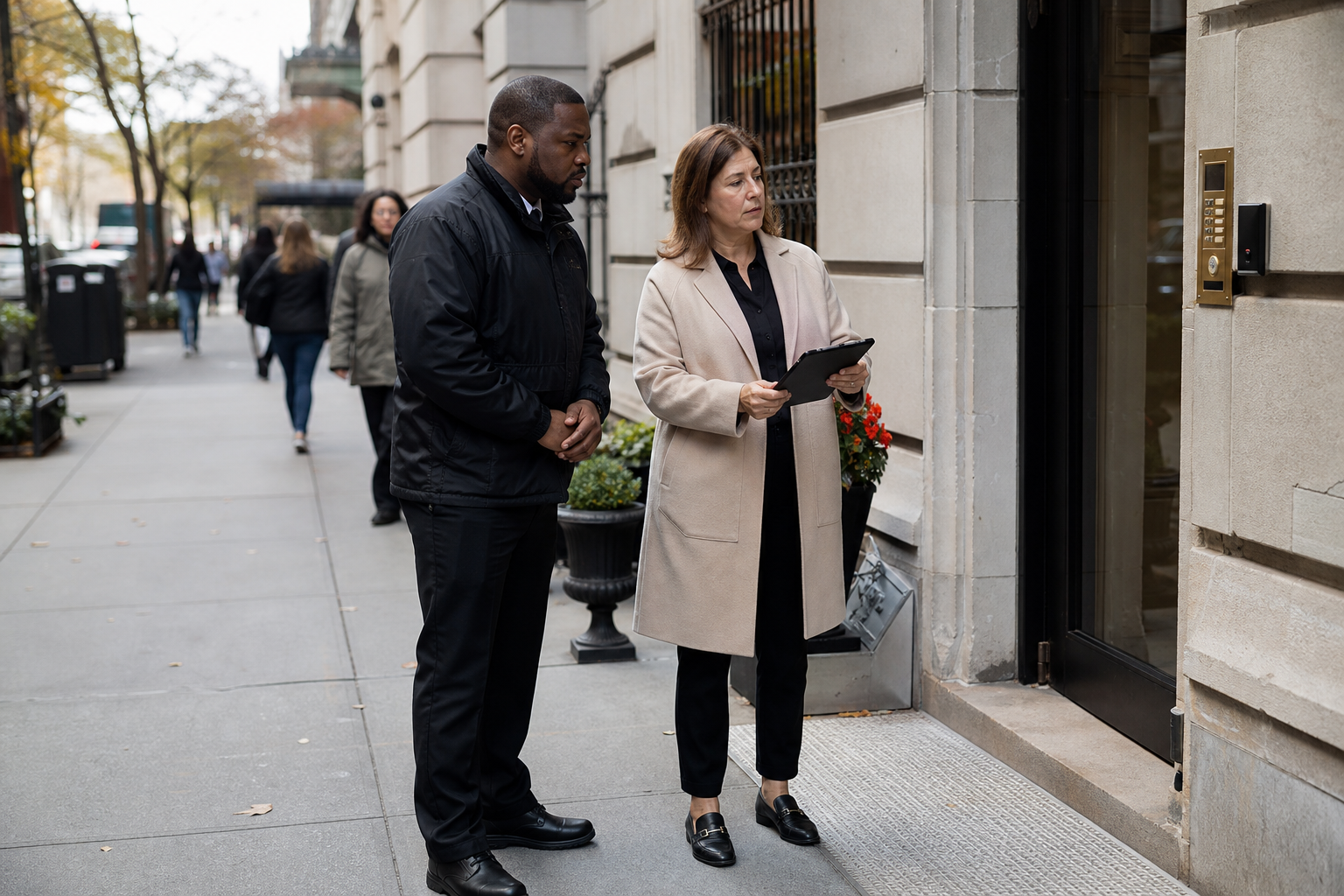
New York City’s 2026 general election is scheduled for Tuesday, November 3, with early voting running from October 24 through November 1. Election Day polling hours are 6 a.m. to 9 p.m. (vote.nyc)
For a Manhattan property that contains a poll site—or shares an entrance, plaza, sidewalk, or loading area with one—the operational impact can begin well before the first voter arrives. Poll workers may need early access, unfamiliar visitors may enter throughout the day, and normal tenant traffic must continue without confusion.
The goal is not to turn private security officers into election officials. It is to give the building team a clear plan for separating property-security duties from poll-site operations.
Start With the Property’s Exact Relationship to the Poll Site
A building can be affected in several ways:
- The voting room is inside the property.
- Voters use the building’s main entrance but follow a separate interior route.
- The poll site is in an adjoining property that shares a plaza or curb.
- Voter lines may form near a tenant entrance, loading dock, or garage.
- The building is not a poll site but expects demonstrations, media, or increased pedestrian activity nearby.
Do not plan from assumptions or an old election setup. Confirm the designated entrance, voting room, accessible route, setup schedule, poll-worker arrival time, and election contact for the current election.
Separate Voter Access From Normal Building Access
If the property hosts voting, the route should be understandable without giving voters unnecessary access to tenant areas.
Define three operating zones
- Public voting route: The path from the exterior entrance to the voting area.
- Controlled property area: Elevators, tenant corridors, service spaces, amenity areas, and other locations not used for voting.
- Shared transition area: The lobby or vestibule where voter and tenant traffic may briefly intersect.
Use physical layout, staffed positions, existing barriers, and clear verbal directions to support the separation. Any temporary arrangement must preserve required egress and accessibility; building management should coordinate proposed changes with the appropriate professionals and election representatives.

Keep voter questions with election personnel
A security officer may provide basic wayfinding approved in the briefing, such as directing someone to the voting-room entrance. Questions about voter eligibility, electioneering, poll watchers, ballots, identification requirements, or voting procedures should go to the poll-site coordinator or the appropriate public authority.
Build an Election Day Post Order Addendum
Do not expect officers to apply ordinary visitor-management rules to an unusual public-access arrangement without written instructions. A concise addendum should cover:
- Election and early-voting dates affecting the property
- Poll-worker access and setup times
- Approved public entrance and voting route
- Tenant, employee, and vendor entrances
- Areas that remain credential-controlled
- Accessible entrance procedures
- Restroom policy, if applicable
- Package and delivery routing
- Queue-management responsibilities
- Photography or media questions requiring escalation
- Emergency contacts and decision authority
- Incident-reporting expectations
The addendum should identify the person authorized to resolve conflicts between normal building operations and the agreed poll-site plan.
Protect Tenant Operations Without Creating Friction
Notify tenants early
Tenant communications should explain operational changes without political commentary. Include:
- Dates and hours when traffic will change
- Entrances tenants should use
- Expected delivery restrictions
- Whether guest registration procedures will change
- Who should receive tenant security concerns
Rework deliveries and contractor access
A courier approaching a voter line should not have to negotiate access at the curb. Where possible, move routine deliveries to a service entrance, reschedule nonessential work, and distribute instructions to recurring vendors.
Check the opening and closing periods
The busiest security problems may not occur during midday voting. Early setup can conflict with overnight access controls, while closing activities may continue after normal tenant staffing has ended.
A Five-Step Readiness Sequence
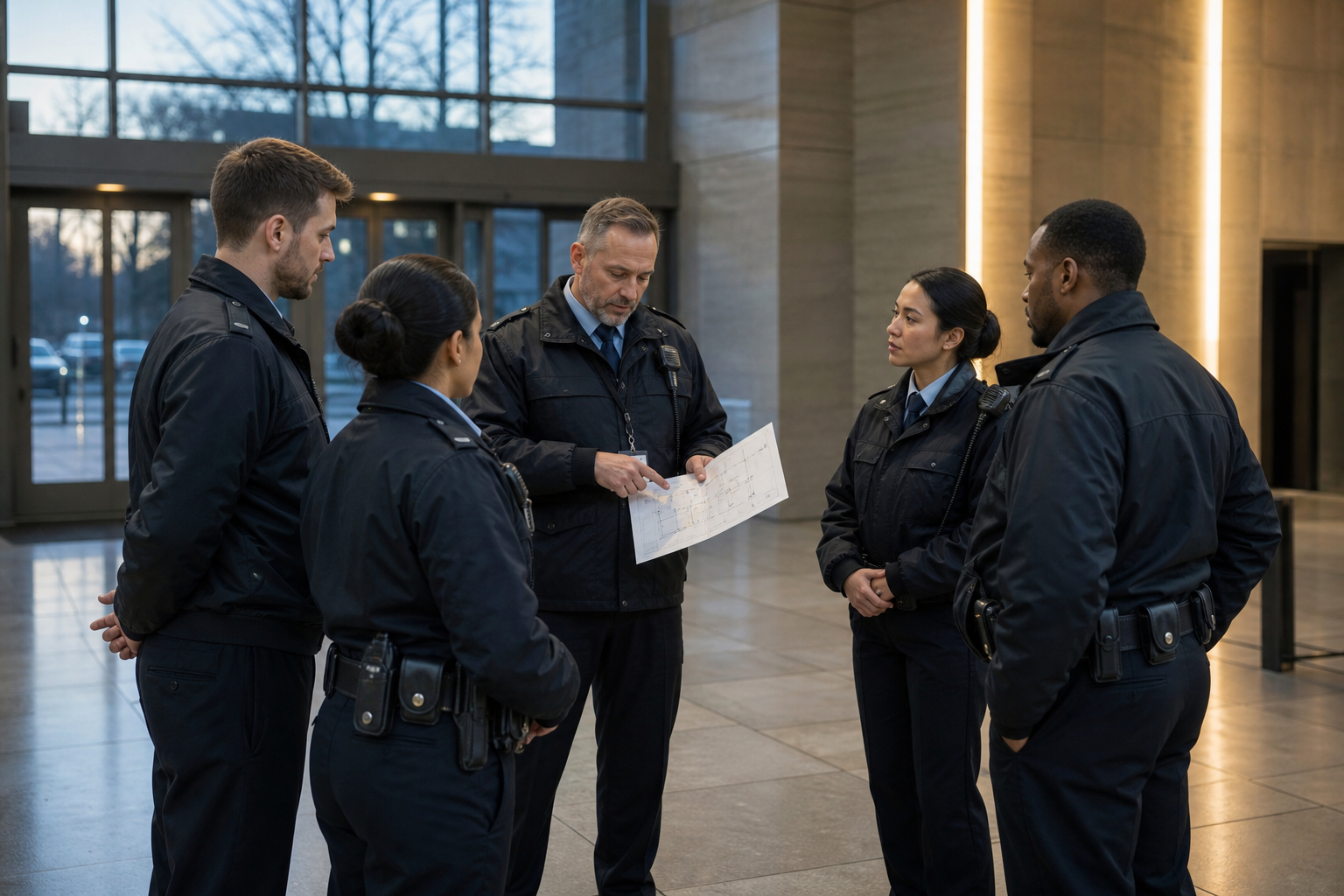
- Confirm the current poll-site plan. Walk the route with management, security leadership, and the designated election contact.
- Map intersecting traffic. Identify where voters, tenants, deliveries, contractors, and vehicles could conflict.
- Issue written instructions. Brief every affected officer, lobby employee, engineer, and manager.
- Test the opening. Verify keys, doors, lighting, radios, accessible access, and contact numbers before the first operating day.
- Hold a short debrief. Record congestion, access problems, complaints, and changes needed before the next early-voting or Election Day period.
Escalation Should Be Neutral and Specific
Reports should describe conduct rather than political viewpoint. Useful observations include:
- A doorway is blocked.
- A person entered a credential-controlled tenant corridor.
- A dispute is disrupting lobby movement.
- An unattended item was found.
- Someone made a specific threat.
- Emergency access is obstructed.
Officers should follow post orders, preserve a safe route, contact the designated authority, and call 911 when an immediate emergency exists. They should not invent election rules or attempt to settle political disputes.
Prepare the Property Before Early Voting Begins
A building-specific plan is more useful than adding officers without defined duties. Guardian can help Manhattan properties align entrances, guard posts, tenant access, patrols, and escalation procedures through commercial office security services.
For help reviewing coverage before early voting or Election Day, call or text (212) 602-1695 or request coverage.
Frequently asked questions
When is Election Day in New York City in 2026?
The general election is Tuesday, November 3, 2026. NYC early voting runs from October 24 through November 1. (vote.nyc)
Should a building security guard answer questions about voter eligibility?
No. Eligibility, ballots, poll watchers, electioneering, and voting procedures should be referred to authorized election personnel or the appropriate public authority.
Can a poll site use the same entrance as office tenants?
That depends on the approved site arrangement. If routes intersect, management should clearly define the public voting route and protect credential-controlled tenant areas without obstructing poll-site access.
What should tenants receive before voting begins?
Provide dates, operating hours, entrance changes, delivery instructions, guest procedures, and a building contact for security concerns.
Should the building add more guards for Election Day?
Possibly, but staffing should follow a site-specific traffic and risk review. Additional officers are useful only when their posts, authority, communications, and escalation duties are clearly defined.