
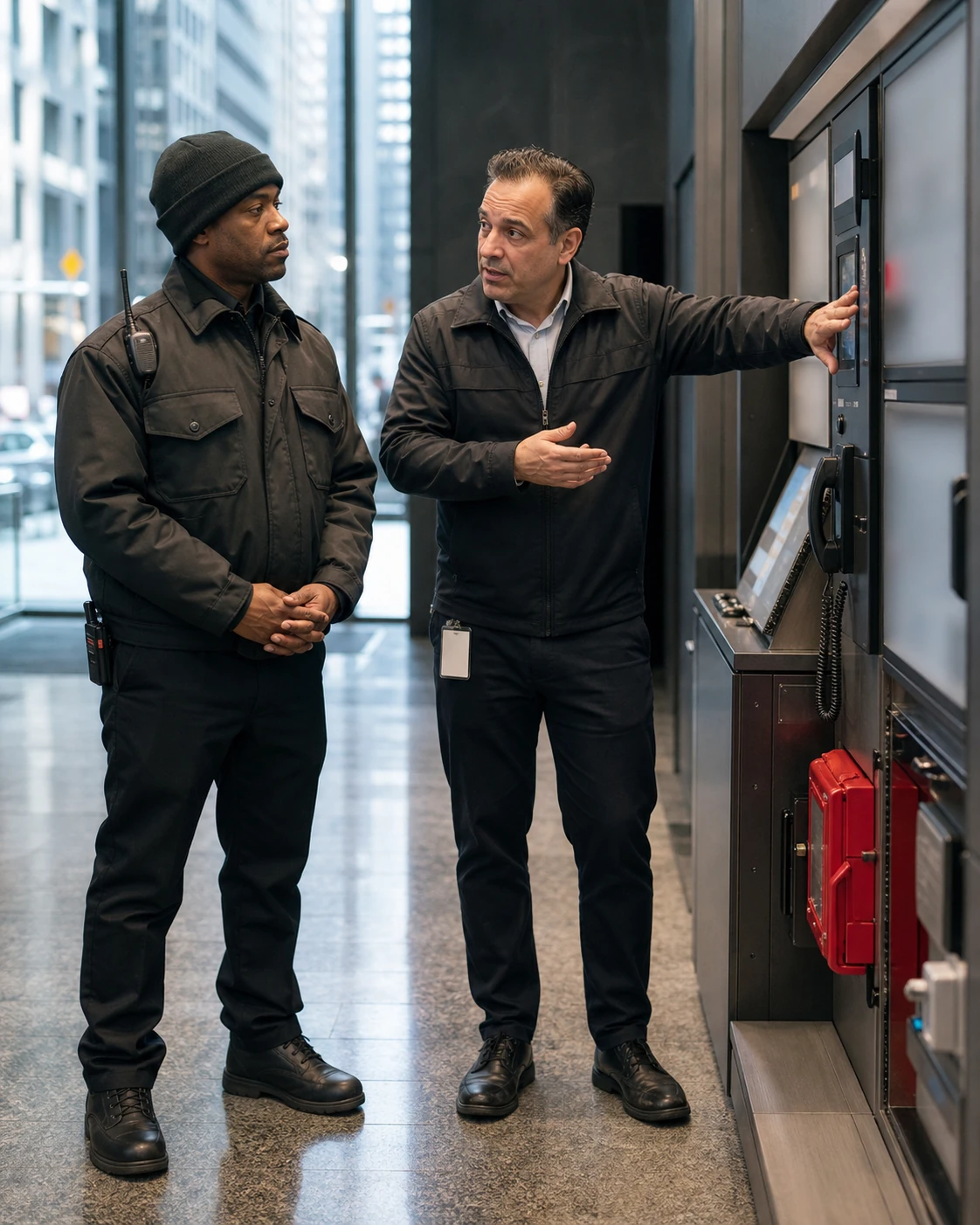
Deploying an F-01 Fire Guard is not complete when a qualified person arrives at the property. Before the first patrol, the Fire Guard must understand exactly what is impaired, which areas are affected, how to access them, and how to report a dangerous condition.
New York City requires a fire watch when a required fire protection system is out of service. FDNY guidance also ties staffing to the affected area, requires the assigned areas to be patrolled at least once each hour, and limits an individual Fire Guard to no more than 50,000 square feet of building floor area. (FDNY F-01 study material)
A structured pre-shift briefing helps the building translate those requirements into a workable site assignment.
Who Should Conduct the Briefing?
The building owner must designate an impairment coordinator to take required actions when a sprinkler, standpipe, or fire alarm system is out of service. If no one is specifically designated, the owner is treated as the impairment coordinator. (nyc.gov)
At the property level, the briefing may involve the impairment coordinator, property manager, engineer, Fire and Life Safety Director, construction safety personnel, security supervisor, or another responsible representative. The important point is that the person giving instructions has accurate information about the impairment and authority to answer operational questions.
1. Identify the Impaired System Precisely
Do not brief the Fire Guard with a statement such as “the alarm is down.” Clarify:
- The system or component that is out of service
- Whether the impairment is planned or unplanned
- The time the condition began
- The known cause, if confirmed
- The technician or contractor responding
- Whether the condition affects the entire building or only defined zones
- Whether FDNY or another authority has issued specific directions
The Fire Guard is not responsible for diagnosing or repairing the system. This information helps the Fire Guard understand what automatic protection is unavailable and where increased human observation is required.
2. Define the Exact Affected Area
The affected area should be described in operational terms:
- Building, floor, wing, tenant space, cellar, roof, or construction zone
- Stairwells and corridors included in the route
- Mechanical, storage, or utility rooms requiring access
- Areas excluded because they remain protected
- Temporary barriers or tenant work that changes normal circulation
Whenever possible, walk the route before active patrols begin. A paper description may not reveal a locked vestibule, unmarked connecting stair, or construction partition.
3. Confirm the Route Can Be Completed
The Fire Guard must be able to reach every assigned area within the required patrol interval. Before the first round, verify:
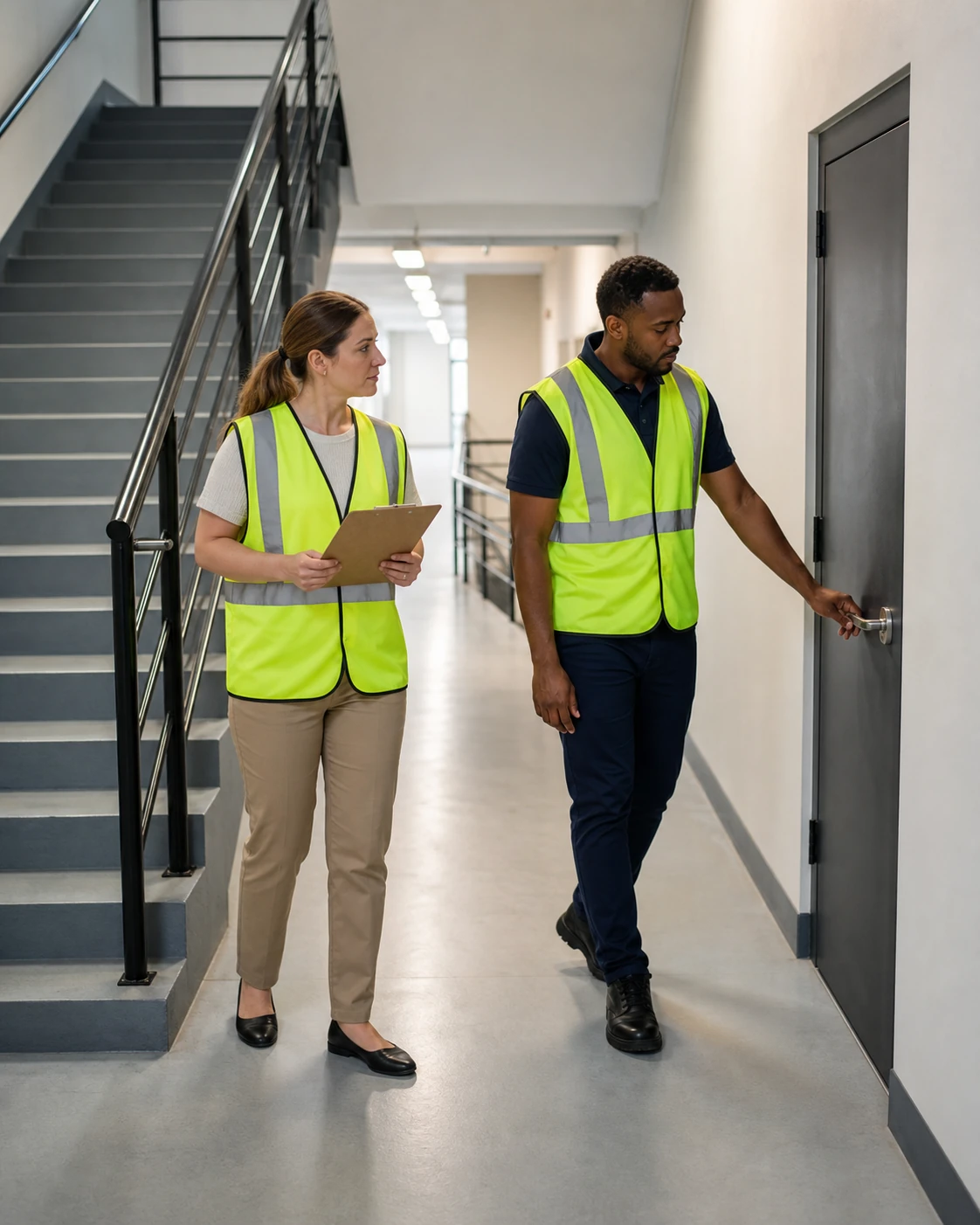
- Keys, cards, and elevator permissions work
- Restricted rooms can be entered
- The route is free of locked or obstructed sections
- Construction personnel know the Fire Guard requires access
- The assigned area is within the allowable coverage for one person
- A reliable timekeeping method is available
If the route cannot be completed, the plan must be corrected. The answer is not to omit an inaccessible room and mark the patrol complete.
4. Review What the Fire Guard Must Observe
The briefing should connect the impairment to visible conditions the Fire Guard must monitor. Depending on the assignment, observations may include:
- Smoke, flame, unusual heat, or burning odors
- Obstructed exits, aisles, or stairways
- Fire doors that are blocked or improperly held open
- Accessible extinguishers and manual pull stations
- Unsafe storage or accumulating combustible materials
- Unauthorized hot work or ignition sources
- Changes in construction or occupancy conditions
The site briefing should supplement—not replace—the Fire Guard’s Certificate of Fitness training and current FDNY instructions.
5. Establish Immediate Notification Procedures
The Fire Guard should know what communication method is available throughout the route and whom to contact for different conditions.
The notification section should cover:
- How to contact 911 without delay when fire or smoke is discovered
- How to activate the building alarm when appropriate and available
- How to reach the impairment coordinator
- How to notify the FLSD, engineering, security, or property management
- Where to meet responding firefighters
- What to do if the assigned radio or phone fails
Emergency notifications should not depend on locating one specific manager who may be unavailable.
6. Explain the Log and Reporting Method
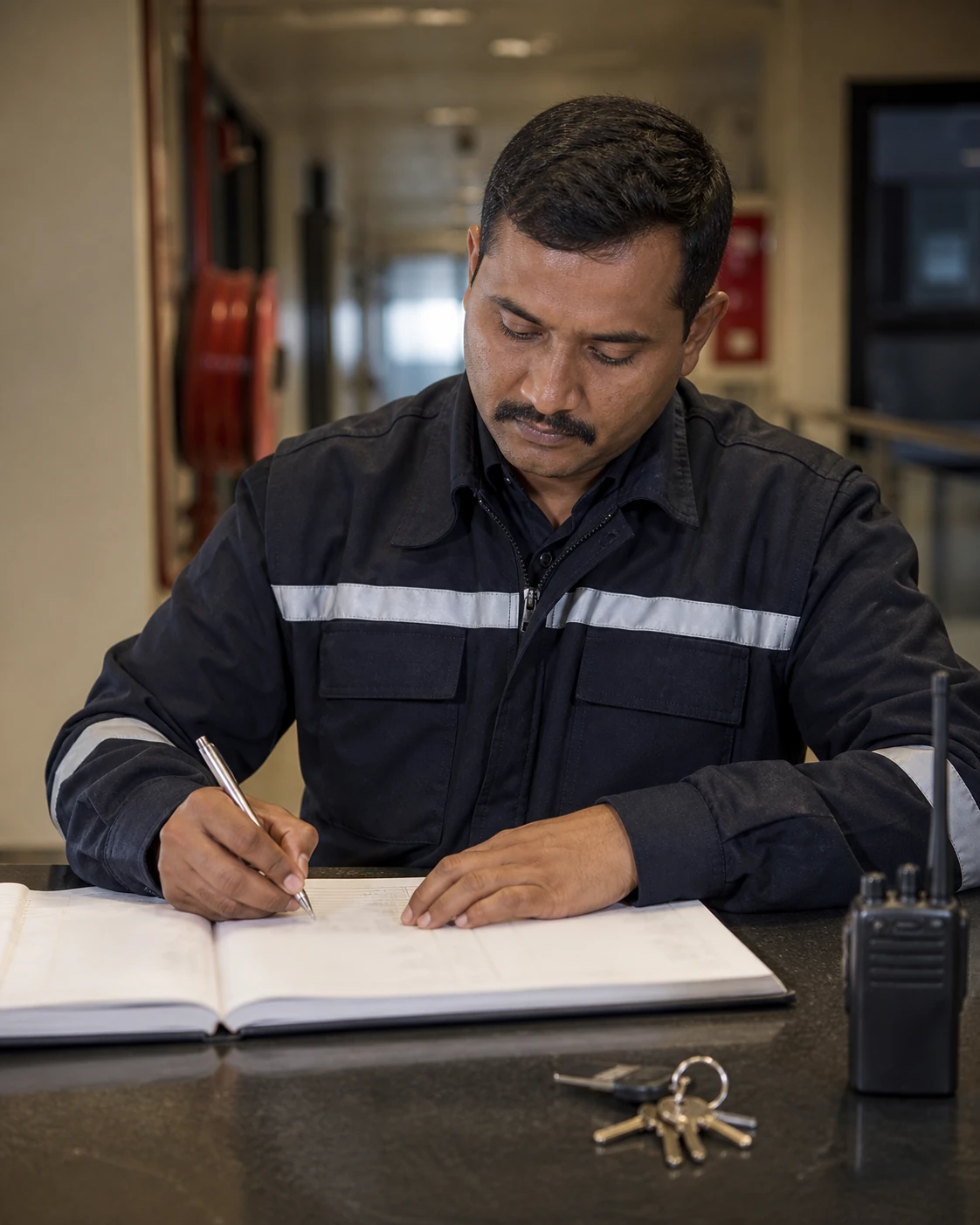
Before patrol begins, show the Fire Guard where and how patrols are recorded. Required or site-directed information may include:
- Date and time
- Area inspected
- Fire Guard’s name and Certificate of Fitness information
- Conditions found
- Notifications made
- Corrective or temporary action taken
- Signature or electronic verification
The log should remain available at the premises for review. Officers should not be asked to reconstruct patrol times at the end of a long shift.
7. Remove Conflicting Assignments
An impairment Fire Guard must be able to focus on the fire watch. Arrange the assignment so unrelated duties do not interrupt the required fire-watch patrol. Confirm separate coverage for any life-safety position that must remain staffed. (nyc.gov)
Do not expect the same person to conduct the assigned route while continuously staffing a lobby, processing deliveries, escorting contractors, or performing unrelated security patrols.
8. Define How Changes Will Be Communicated
Impairments can expand, contract, or change as technicians isolate and restore components. Establish who can revise the assignment and how the Fire Guard will receive that revision.
Any change should identify:
- New affected or restored areas
- Effective time
- Revised route or staffing
- Person authorizing the change
- Required notation in the log
Verbal instructions such as “you can probably skip that floor now” are not sufficient for controlled operations.
9. Explain the Restoration and Stand-Down Process
The Fire Guard should know that coverage continues until the responsible building representative confirms the system has been restored and authorizes the fire watch to end. FDNY guidance states that impairment duties continue until systems are restored to good working order. (nyc.gov)
The final record should capture the restoration confirmation, time, authorizing person, and disposition of the fire-watch log.
Arrange Qualified Fire Guard Coverage
Guardian ISI provides qualified fire guard personnel and operational support for planned and unplanned fire protection system impairments across New York City.
Call or text (212) 602-1695, or request fire guard coverage. For an active emergency or signs of fire, call 911 immediately.
Before releasing the guard to the route
- Confirm the qualification and affected area.
- Walk the route and test access and communications.
- Review immediate notifications and the patrol log.
- Identify who can change the assignment or authorize stand-down.
Related Guardian services
Arrange Fire Guard Services around the confirmed impairment, coverage hours, and briefing requirements. Share the affected areas and required qualifications when requesting personnel.
Official references
Frequently asked questions
Is an F-01 Fire Guard always required immediately when a system goes out of service?
FDNY provides a limited initial four-hour provision for affected areas of 50,000 square feet or less, during which the impairment coordinator or another trained and knowledgeable designee may perform the fire watch. After four hours, the patrol must be conducted by an F-01 holder. Confirm the current requirements and any site-specific FDNY direction.
How much area can one F-01 Fire Guard cover?
FDNY guidance states that no individual Fire Guard should patrol more than 50,000 square feet of building floor area, and all assigned affected areas must be reachable within the required interval.
Can the building’s lobby security officer also perform the fire watch?
The person assigned to the fire watch should not have unrelated duties that interfere with the required patrol. A continuously staffed lobby post and an impairment route will often require separate personnel.
Should the Fire Guard receive a route map?
A route map is strongly useful, especially for partial impairments, large floors, construction areas, or properties with complex connections. It should be verified through a physical orientation.
Who tells the Fire Guard when coverage can end?
The property should identify an authorized impairment coordinator or responsible representative who confirms restoration and gives a documented stand-down instruction.