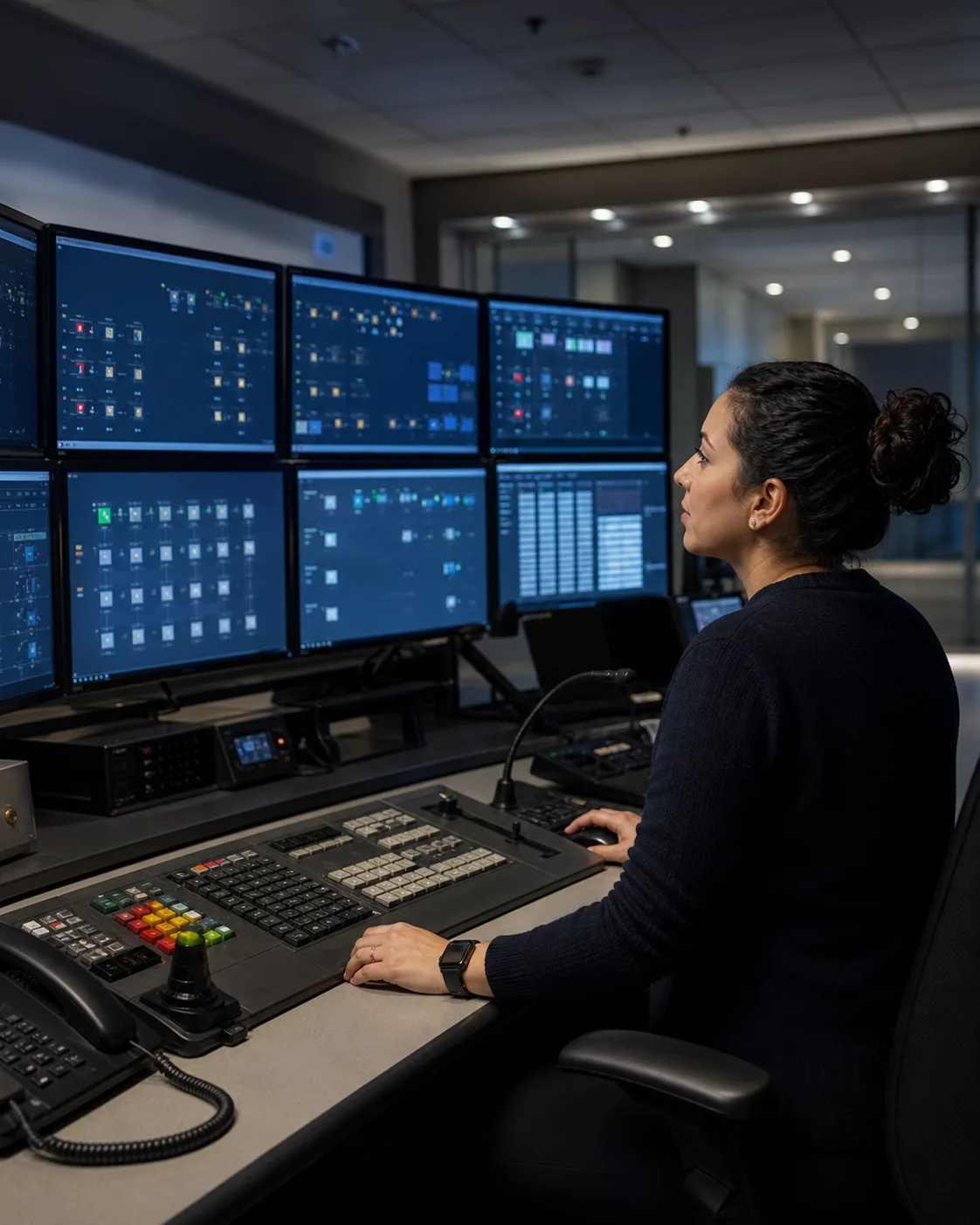
When a Manhattan building’s fire alarm sends a signal to an off-site monitoring facility, the person receiving and processing that signal performs a specialized fire-safety function. In New York City, the relevant FDNY Certificate of Fitness is the F-40 for an Operator of Central Station Signaling Systems.
The F-40 is commonly confused with the S-95 building system supervisor, the F-01 impairment fire guard, and a regular security officer. These roles may interact during an alarm or system outage, but they are not interchangeable.
This guide explains the practical distinctions and summarizes NYC F-40 requirements. Building owners and managers should always confirm current details in the FDNY’s F-40 Notice of Examination and study materials before making staffing or compliance decisions.
What Is an F-40 Certificate of Fitness?
The F-40 is the FDNY Certificate of Fitness associated with operating a central station signaling system. A central station is an off-site facility that receives signals from protected properties, processes those signals, and initiates the required notifications and response procedures.
An F-40 operator may handle several types of incoming conditions, including:
- Alarm signals, which indicate a possible fire or other emergency condition
- Supervisory signals, which indicate an abnormal condition involving monitored fire-protection equipment
- Trouble signals, which can indicate a fault in equipment, wiring, communications, or power
The operator must identify the signal correctly and follow the central station’s approved procedures. Depending on the signal and system, this can include transmitting or reporting the condition to the appropriate party, contacting responsible building representatives, documenting events, and escalating unresolved conditions.
An F-40 holder normally works at the monitoring station—not at the Manhattan building sending the signal. A lobby desk, property-management office, or building security command center does not become a central station simply because personnel can view the fire alarm panel.
How Central-Station Monitoring Works
A monitored fire alarm generally follows this sequence:
- A detector, manual pull station, sprinkler waterflow device, or other initiating device reports a condition.
- The building’s fire alarm control unit processes and displays that condition.
- The system’s communications equipment transmits the signal to the central station.
- Central-station equipment receives and classifies the signal.
- An F-40 operator follows the required notification, response, and documentation procedure.
The operator is an important human link in this chain, but an F-40 certificate does not qualify its holder to design, install, repair, or inspect the building’s fire alarm equipment. Those activities may require separately qualified companies, technicians, or licensees.
NYC F-40 Requirements
FDNY Certificate of Fitness rules and application procedures can change, so applicants should use the current F-40 Notice of Examination rather than relying on an old study guide or an employer’s informal checklist.
At a practical level, NYC F-40 requirements generally involve:
- Meeting the eligibility conditions listed in the current FDNY notice
- Providing acceptable identification and any required employer documentation
- Demonstrating an adequate understanding of English to perform the role safely
- Passing the FDNY Certificate of Fitness examination for F-40 operators
- Understanding signal types, central-station procedures, communications, recordkeeping, and abnormal conditions
- Keeping the certificate current through the applicable FDNY renewal process
- Performing only the duties authorized by the certificate and the operator’s training
The Certificate of Fitness belongs to the individual operator. It should not be treated as a blanket credential that automatically covers every employee working in a monitoring facility.
Property managers hiring a monitoring provider should ask how the provider qualifies its operators, maintains required authorizations, documents signals, updates emergency contact lists, and handles failures in the transmission path. The F-40 operator is only one part of a complete monitoring arrangement.
F-40 vs. S-95: Off-Site Operator and On-Site Supervisor
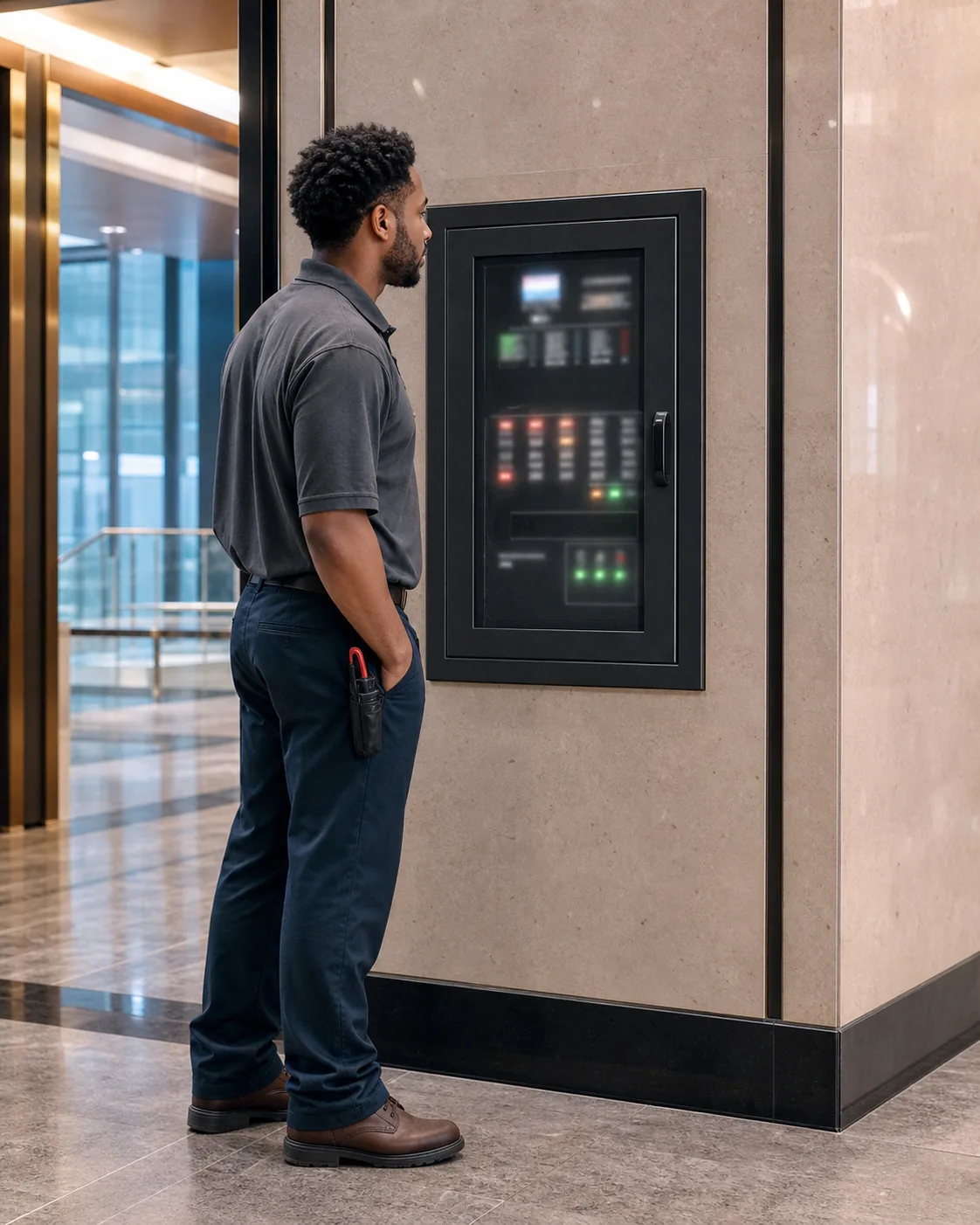
The S-95 Certificate of Fitness for Supervision of Fire Alarm Systems and Other Related Systems generally applies to a person responsible for supervising a building’s fire alarm system at the protected premises.
An S-95 holder may be responsible for activities such as:
- Observing the fire alarm control unit and related system status
- Recognizing alarm, supervisory, and trouble conditions
- Maintaining required records or logbook entries
- Reporting defects and arranging appropriate corrective action
- Following building procedures when equipment is impaired
- Helping keep system information and emergency contacts current
The central distinction is location and function:
- F-40: Receives signals at the central monitoring station.
- S-95: Supervises the fire alarm system at the building.
An S-95 holder does not replace the central-station operator, and an F-40 operator does not provide daily on-site supervision of a building’s fire alarm control unit. Neither certificate, by itself, authorizes its holder to repair the system.
Some Manhattan properties also require broader on-site emergency leadership through an FDNY-certified Fire and Life Safety Director. That is a separate role whose applicability depends on the building and occupancy.
F-40 vs. F-01: Monitoring Signals and Conducting Fire Watch
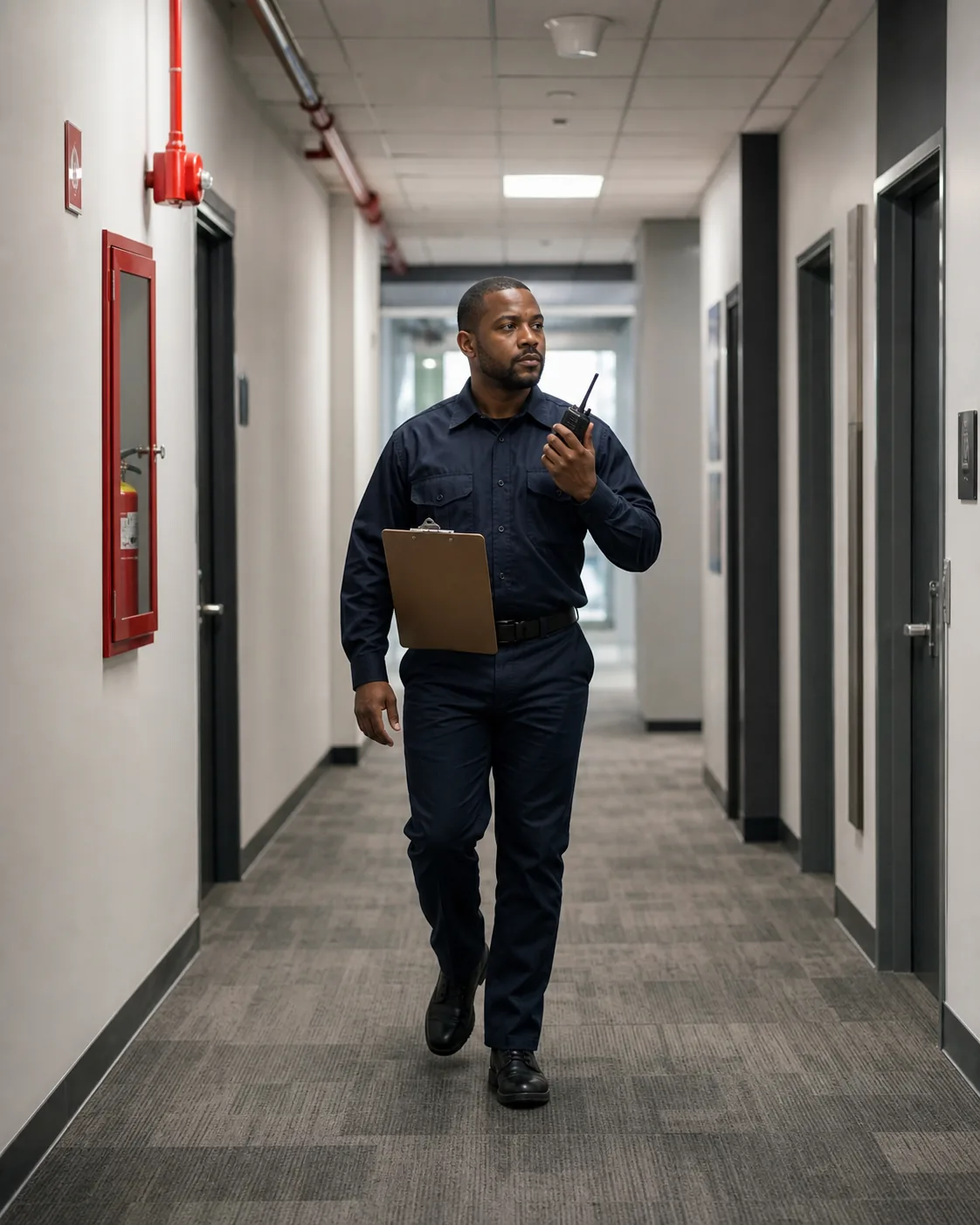
The F-01 Citywide Fire Guard for Impairment is intended for personnel assigned to fire-watch duties when required fire-protection equipment is out of service and FDNY impairment procedures call for fire-guard coverage.
An F-01 fire guard may be assigned to:
- Patrol designated areas at required intervals
- Watch for smoke, fire, unsafe work, or changing hazards
- Keep the required fire-watch records
- Maintain a reliable means of reporting an emergency
- Notify occupants and initiate emergency procedures as directed
- Monitor affected areas until the impairment is resolved or the assignment ends
The difference is straightforward:
- F-40: Processes signals received at a central station.
- F-01: Physically watches an affected property or area during a qualifying impairment.
A central-station trouble signal may alert a building to a communications or system problem, but the F-40 operator does not become the building’s fire guard. The property must evaluate the condition under its impairment procedures and determine whether an FDNY-certified fire guard is required.
Not every alert automatically creates the same fire-watch obligation. The affected system, duration, area, occupancy, approved building procedures, and FDNY direction can all matter. Building management should avoid guessing when life-safety equipment is out of service.
F-40 vs. a Regular Security Officer
A regular security officer typically handles duties such as access control, visitor management, patrols, incident reporting, package screening, or monitoring security cameras. In New York, security guard registration is administered at the state level and is separate from the FDNY Certificate of Fitness program.
A security officer’s guard registration does not automatically qualify that person to:
- Operate a central station under an F-40 role
- Supervise a building fire alarm system under an S-95 role
- Serve as an F-01 impairment fire guard
One person may hold both a security guard registration and one or more FDNY Certificates of Fitness, but the employer should verify each credential separately and assign duties within its scope.
This matters when arranging commercial office security or temporary life-safety coverage. Calling someone a “fire guard” on a schedule does not make the person qualified for a Certificate of Fitness assignment.
Quick Comparison of the Four Roles
| Role | Primary location | Main purpose | Credential framework |
|---|---|---|---|
| F-40 operator | Off-site central station | Receive and process monitored system signals | FDNY Certificate of Fitness |
| S-95 supervisor | Protected building | Supervise the premises fire alarm system | FDNY Certificate of Fitness |
| F-01 fire guard | Impaired property or designated area | Conduct required fire watch | FDNY Certificate of Fitness |
| Security officer | Assigned property | Security, access control, patrol, and reporting | New York State guard registration; separate FDNY certificates may also be needed |
What Manhattan Property Managers Should Verify
A well-managed monitoring program extends beyond confirming that someone has an F-40 certificate. Owners, managing agents, and facility teams should review the entire chain between the building and the monitoring station.
Confirm the monitoring arrangement
Know which company receives the building’s signals, which systems and accounts are covered, and how the provider handles alarm, supervisory, and trouble conditions.
Keep contact information current
Outdated phone numbers and after-hours contacts can delay responses to system problems. Update the central station whenever building ownership, management, engineering, or emergency contacts change.
Define on-site responsibility
Identify who monitors the building panel, who has the applicable on-site Certificate of Fitness, and who can reach the fire alarm service company. Do not assume the off-site monitoring provider manages conditions inside the property.
Plan for impairments before they occur
Maintain a written escalation process for outages involving fire alarms, sprinklers, standpipes, communications equipment, or other life-safety systems. Include vendor contacts and a process for obtaining emergency coverage when qualified fire guards are required.
Verify credentials individually
Review the certificate type, holder’s name, expiration information, and any location or scope limitations that apply. A photocopy in a staffing file is not a substitute for confirming that the credential matches the assignment.
Need Qualified Fire-Safety Coverage in NYC?
Guardian ISI can help Manhattan property teams arrange qualified fire guards, security personnel, and related emergency coverage when systems are impaired or a site needs additional staffing.
Call or text [(212) 602-1695](tel:2126021695), or request coverage online. For planned assignments and broader staffing questions, you can also contact Guardian ISI.
Official references
- FDNY: F-40 central-station operators
- FDNY: S-95 fire alarm supervision
- FDNY: F-01 impairment fire guards
Frequently asked questions
Is an F-40 operator stationed inside the building being monitored?
Usually not. The F-40 role concerns operators at the central station receiving signals from protected properties. On-site fire alarm supervision is a separate function commonly associated with the S-95 certificate.
Can an S-95 holder work as an F-40 operator?
Not solely on the basis of an S-95 certificate. F-40 and S-95 cover different duties. A person performing both functions would need the credential required for each assignment.
Does an F-40 certificate authorize fire alarm repairs?
No. The F-40 covers central-station operation, not the design, installation, inspection, testing, or repair of fire alarm equipment.
Can a regular security officer perform an F-01 fire watch?
Only if that individual also holds the appropriate current FDNY Certificate of Fitness and is assigned according to the applicable fire-watch requirements. Security guard registration alone is not an F-01 certificate.
Does every fire alarm trouble signal require an F-01 fire guard?
Not necessarily. The required response depends on what is impaired, the extent and duration of the condition, the property’s procedures, and applicable FDNY requirements or direction. The condition should be assessed promptly rather than assumed to be harmless.
Where should an applicant confirm current F-40 application requirements?
Use the current F-40 Notice of Examination, study material, and application instructions published by FDNY. Requirements, fees, submission methods, and renewal procedures can change.