

NYC crime data provides useful context for property-security planning, but a headline or citywide percentage cannot describe the risk at one building. Start with the NYPD’s current reports, note their dates and geography, and compare matching periods and crime categories before drawing conclusions.
Citywide Improvement Does Not Eliminate Site-Level Risk
A commercial building can operate during a safer period and still experience unauthorized entry, workplace conflict, theft, vandalism, an aggressive visitor, a medical emergency, or a fire-safety problem. Risk is shaped by the property’s entrances, hours, staffing, neighborhood activity, tenant mix, delivery volume, and emergency procedures. A strong plan uses citywide trends as context while relying on site-specific information for decisions.
Patrols Should Produce Verifiable Information
Security patrols are most valuable when they do more than demonstrate presence. Each patrol should confirm that assigned areas were checked, note unusual conditions, identify maintenance or life-safety concerns, and document corrective action. Randomized timing can reduce predictability, while clear patrol zones help ensure stairwells, loading areas, mechanical spaces, parking areas, rooftops, and perimeter doors are not overlooked.
Response Procedures Need to Be Tested
Written procedures are useful only when officers and building staff can apply them under pressure. Managers should periodically test responses to an unauthorized person, fire alarm, elevator entrapment, suspicious package, flooding condition, medical emergency, or power loss. A short tabletop review can reveal missing phone numbers, unclear authority, broken notification chains, or outdated assembly locations.
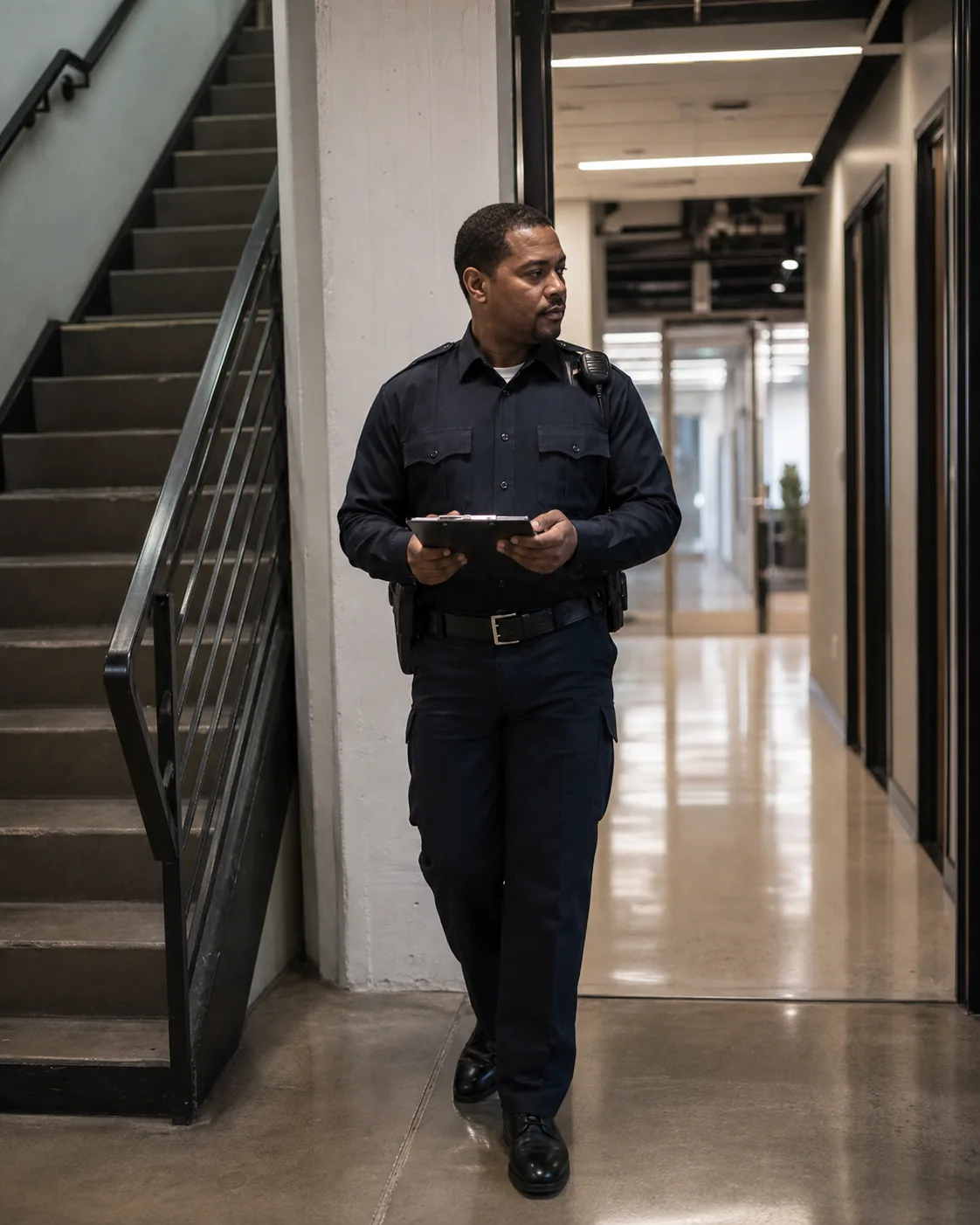
Access Control Is a Daily Discipline
Doors, credentials, visitor logs, contractor approvals, and loading-dock rules form a single access-control system. A weakness in one area can undermine the rest. Properties should verify who can issue or deactivate credentials, how after-hours visitors are approved, where delivery personnel may travel, and what happens when someone refuses to follow procedure.
A practical review of the plan
| Check | Evidence to review |
|---|---|
| Access procedures | Credential changes and documented visitor exceptions |
| Patrols | Locations checked, observations, and unresolved conditions |
| Communications | Current contacts and a tested notification path |
| Corrective work | Assigned owners and verification that repairs work |
Reporting Turns Incidents Into Prevention
Incident reports should state who was involved, what occurred, when and where it happened, who was notified, what actions were taken, and how the matter ended. Supervisors should review reports for patterns. Several small door-propping incidents, repeated loitering, or recurring contractor problems may reveal a larger vulnerability before a serious event occurs.
Security Plans Should Match the Property
The right plan for a Midtown office tower may differ from the plan for a residential building, hotel, school, construction site, or retail property. A professional assessment should connect staffing, patrol frequency, post orders, technology, training, and escalation procedures to the actual environment.

The Practical Takeaway for NYC Property Leaders
Whether the latest figures rise or fall, property teams still need to verify that their own procedures work. Use stable periods to test the plan, inspect the site, confirm contacts, review recent incidents, and correct weak points. Guardian ISI helps New York organizations build clear, site-specific procedures. To discuss your property, call or text (212) 602-1695 or request coverage.
Related Guardian ISI services
For on-site coverage and operational support discussed in this article, review Commercial Office Security and Residential Security. Contact Guardian ISI to discuss the property, duties, and availability.
Official references
Frequently asked questions
Do lower citywide crime numbers mean a building needs less security?
Not necessarily. Staffing and procedures should reflect the property’s activity, vulnerabilities, incident history, and operating hours.
How often should a security plan be reviewed?
Use a review schedule suited to the property and revisit the plan after significant incidents, renovations, tenant changes, new operating hours, or system changes.
What should a patrol report include?
It should identify the areas checked, time completed, unusual conditions, actions taken, and people notified.
Can a tabletop exercise help without disrupting the building?
Yes. A short scenario-based discussion can expose gaps in contacts, authority, communications, and escalation procedures.