
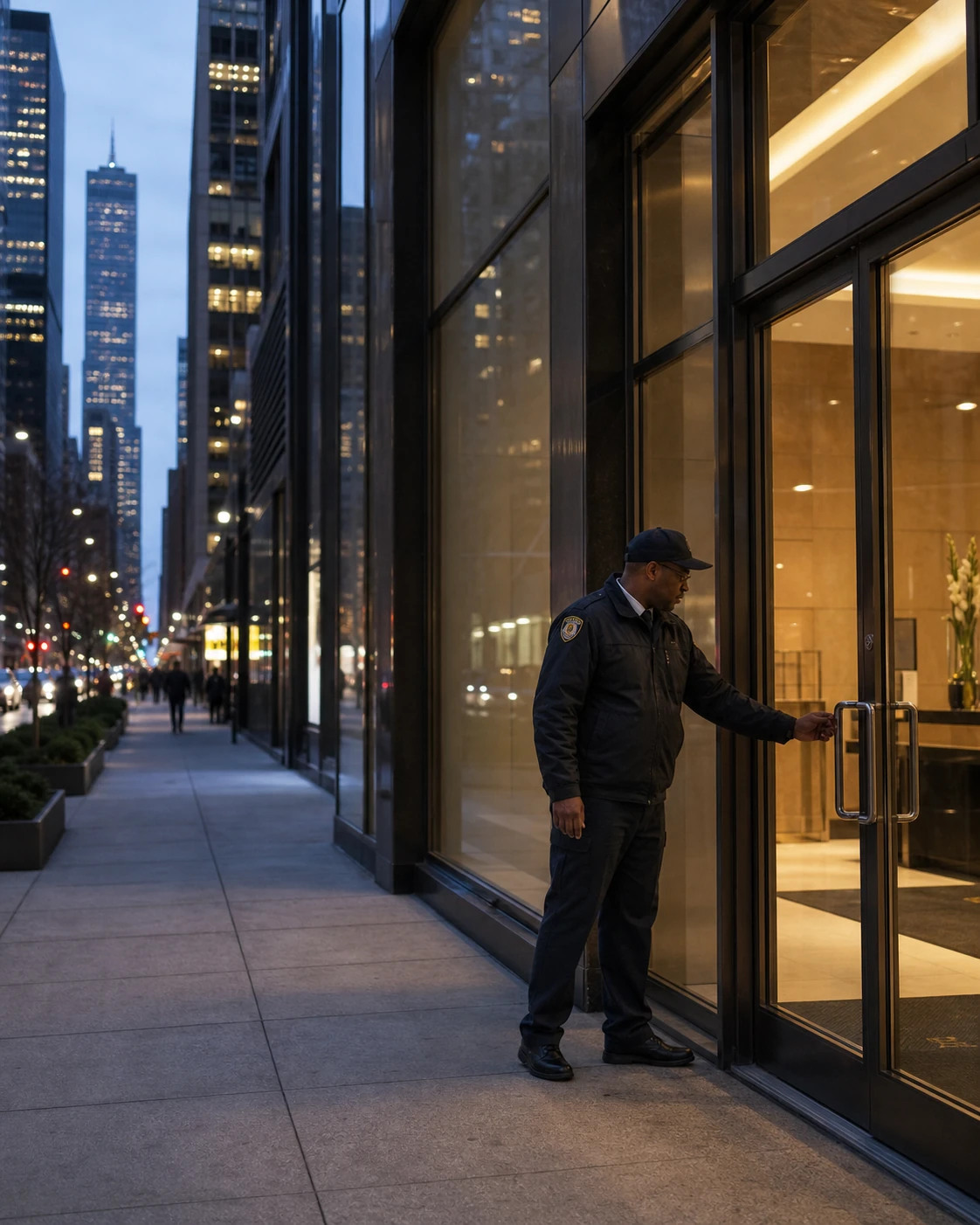
A property patrol should do more than show that an officer walked through the building. It should identify security concerns, visible fire-life-safety issues, maintenance problems, and unusual activity early enough for property management to respond.
For Manhattan commercial properties, patrol instructions should reflect the building’s layout, operating hours, tenant activity, access-control systems, and known vulnerabilities. Officers also need a clear process for documenting conditions and escalating urgent findings.
The following checklist provides a practical starting point. It does not replace building-specific post orders, maintenance inspections, fire-safety procedures, or directions from property management and emergency responders.
What to Establish Before the Patrol Begins
Each patrol route should define:
- Areas the officer is expected to visit
- Doors, floors, and equipment rooms that require verification
- Restricted areas the officer may not enter
- Expected patrol frequency and any randomized timing
- Conditions requiring immediate notification
- Contacts for management, engineering, and emergency services
- Required reports, photographs, or electronic checkpoints
There is no single patrol frequency appropriate for every New York property. A quiet office building, an active construction site, and a hotel with overnight visitors have different risk profiles. Patrol schedules should be based on site conditions rather than copied from a generic template.
Exterior Doors and the Building Perimeter
Exterior doors are among the most important patrol points because a single unsecured entrance can undermine the property’s access-control plan.
An officer should check whether:
- Doors close, latch, and lock as intended
- Door hardware shows signs of damage or tampering
- Doors have been propped open
- Access readers or intercoms appear damaged
- Emergency exit doors show visible signs of interference
- Packages, tools, or unfamiliar objects have been left nearby
- Sidewalk sheds, scaffolding, or temporary barriers create hidden areas
- Anyone is loitering near employee or service entrances
Officers should observe door operation without forcing or attempting to repair the hardware. A malfunction should be documented and reported through the building’s established process.
Properties needing regular lobby, perimeter, and after-hours coverage can learn more about Guardian’s commercial office security services.
Stairwells and Fire Exits
Stairwells can become locations for unauthorized access, storage, smoking, sleeping, or concealed activity. They are also important paths of egress during an emergency.
During a patrol, the officer should look for:
- Objects visibly obstructing stairs, landings, or exit doors
- Doors that are propped open or do not appear to close properly
- Unauthorized occupants
- Smoke, unusual heat, or burning odors
- Water on stairs or landings
- Damaged handrails, fixtures, or door hardware
- Missing or failed lighting
- Evidence of smoking or discarded smoking materials
Security officers should report observable conditions rather than make technical code determinations unless they hold a role specifically requiring that expertise. An active fire, visible smoke, or immediate threat requires emergency action under the property’s procedures, including calling 911 when appropriate.
Vacant Floors and Unoccupied Spaces
Vacant floors may receive less daily attention, allowing leaks, unauthorized entry, and building-system problems to go unnoticed.
The patrol should verify:
- Entry doors are secured as directed
- No unknown individuals are present
- Windows and accessible openings appear intact
- Lights, water fixtures, or appliances have not been left on unexpectedly
- No new water stains, pooling, or ceiling damage are visible
- No smoke, chemical, sewage, or other unusual odor is present
- Construction materials and tools appear undisturbed
- Temporary walls, locks, or barriers have not been altered
Officers should not enter a space when there are signs of a hazardous atmosphere, active electrical danger, structural instability, or another immediate risk. They should move to a safe location and notify the appropriate contact.
Mechanical and Building-Service Areas
Mechanical rooms, electrical closets, telecommunications spaces, roof-access points, and other service areas should be checked only when they are included in the patrol route and the officer is authorized to enter.
The officer’s role is generally to identify visible or audible abnormalities, such as:
- An unlocked or open door
- Evidence of unauthorized access
- Water on the floor
- Unusual vibration, banging, alarms, or equipment noise
- Burning, gas-like, chemical, or other abnormal odors
- Unexpected heat or visible smoke
- Damaged locks or access-control devices
- Materials stored where they are not normally kept
An officer should not operate, reset, or repair building equipment unless specifically trained and authorized. Suspected gas odors, smoke, sparking equipment, or similar hazards should be treated as urgent: avoid switches or ignition sources, withdraw to a safe area, and follow the building’s emergency notification procedure.
Loading Docks and Delivery Areas
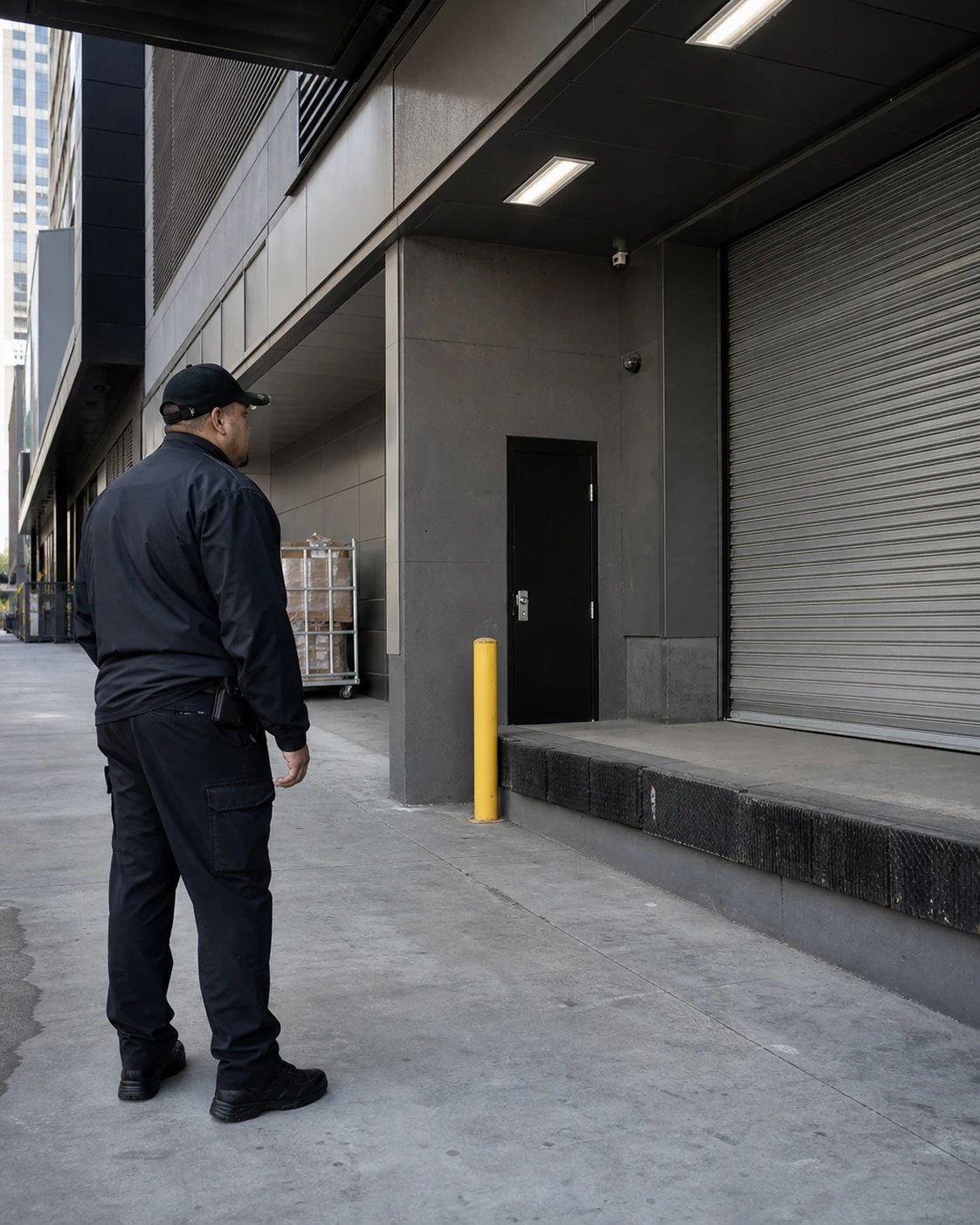
Loading docks combine vehicle traffic, deliveries, contractors, waste removal, and direct access to the building. These conditions can create both security and safety concerns.
Patrol checks should include:
- Dock doors and gates are secured when not in use
- Drivers and vendors are in authorized areas
- Delivered items are not blocking doors or travel paths
- Unclaimed packages or pallets are reported
- Vehicle lanes remain clear
- Access credentials or sign-in procedures are being followed
- Locks, cameras, intercoms, and lighting show no obvious damage
- Trash or discarded materials do not conceal suspicious activity
- No person has entered behind an authorized worker without verification
Officers should avoid standing in vehicle blind spots and should not attempt to direct trucks unless that responsibility is included in their assignment and they have received appropriate instruction.
Parking Areas and Garages
Parking facilities require attention to both people and vehicles. Visibility may be limited by columns, ramps, parked vehicles, and lighting conditions.
The officer should look for:
- Unauthorized or suspiciously positioned vehicles
- People attempting to enter vehicles or restricted areas
- Broken windows or signs of vehicle damage
- Open gates, doors, or pedestrian access points
- Lighting failures and unusually dark sections
- Water, oil, debris, or objects creating an apparent hazard
- Occupied vehicles remaining for an unusual length of time
- Damaged cameras, call stations, or access equipment
- Activity in stair towers, elevator lobbies, or secluded corners
An observation alone does not prove criminal activity. Officers should document objective facts—location, time, behavior, descriptions, and direction of travel—rather than assumptions.
Water Leaks, Unusual Odors, and Lighting Failures
Security patrols often identify building problems before tenants or engineering staff do. Three conditions deserve consistent attention.
Water leaks
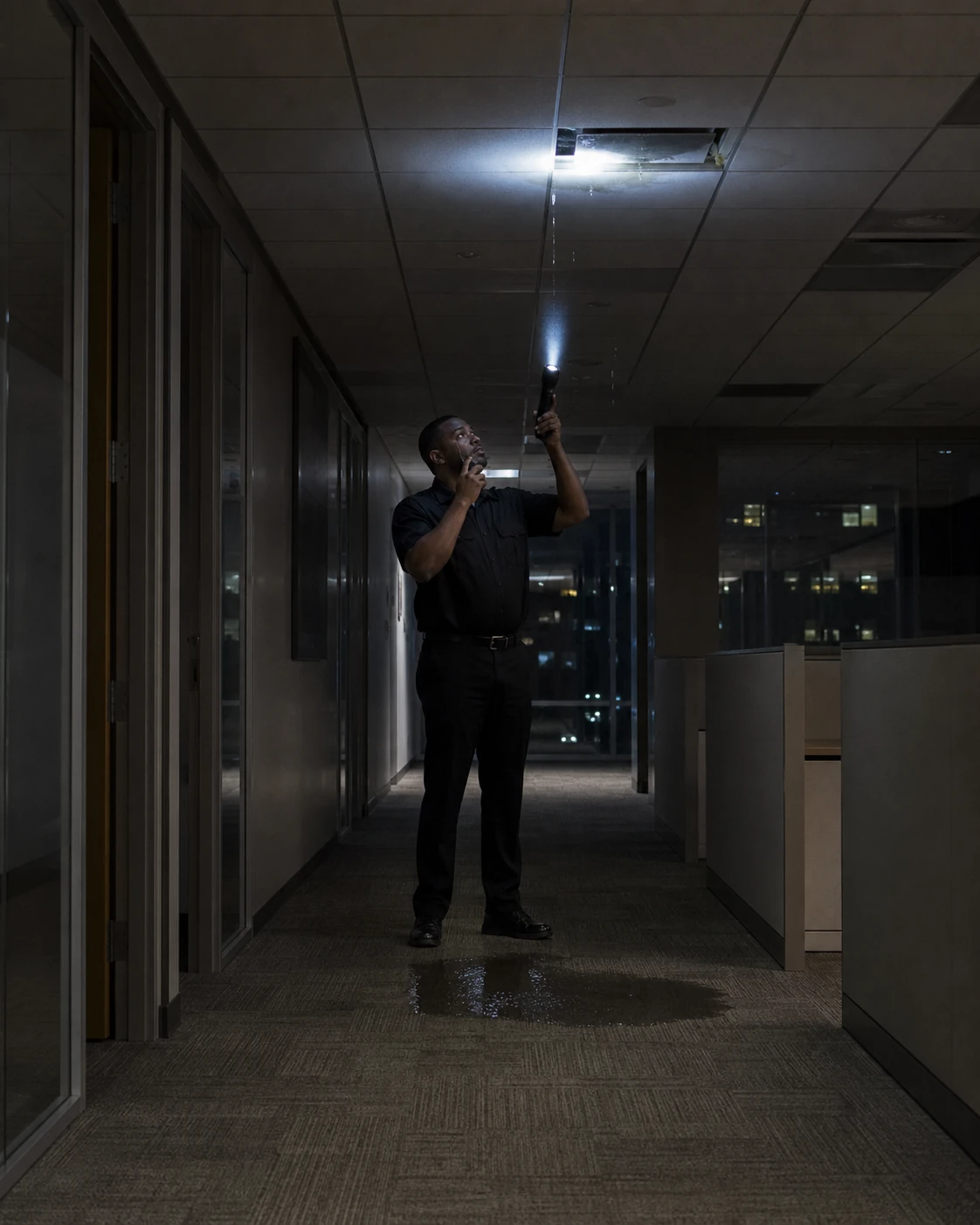
Officers should note the source if it can be observed safely, the approximate affected area, whether water is spreading, and whether it is near electrical equipment, elevators, tenant property, or pedestrian routes. They should not enter standing water when an electrical hazard may be present.
Unusual odors
Reports should describe the odor without overstating its cause—for example, “strong burning-plastic odor near the west electrical closet” rather than declaring an electrical fire without confirmation. Smoke, gas-like odors, or physical symptoms require immediate movement to safety and escalation under site procedures.
Lighting failures
Failed lighting can create trip hazards and reduce visibility around doors, stairs, loading areas, and parking facilities. Reports should identify the exact fixture or area and explain how the failure affects security or safe movement.
Unauthorized Occupants
An unauthorized occupant may be a trespasser, a lost visitor, a former employee, a contractor in the wrong area, or someone who entered through an unsecured door. Officers should follow the property’s access and removal procedures rather than assume intent.
A professional response may include:
- Observing from a safe position.
- Requesting identification or confirming the person’s destination when appropriate.
- Checking authorization through the designated tenant or management contact.
- Directing the person to an approved waiting or exit area.
- Requesting assistance if the person refuses instructions or becomes threatening.
- Calling 911 when there is an immediate danger or other emergency reason to do so.
De-escalation, distance, clear communication, and timely backup are generally preferable to unnecessary confrontation.
What a Useful Patrol Report Should Contain
A report should allow a manager who was not present to understand what happened. Each exception should include:
- Date and exact time
- Specific location
- Objective description of the condition or behavior
- Person notified and time of notification
- Action taken by the officer
- Photographs or video references when permitted
- Whether the issue remained open at the end of the shift
- Any required follow-up
“Checked and secure” may be sufficient for a normal checkpoint, but an incident needs detail. For example: “At 10:42 p.m., the west loading-dock pedestrian door did not latch after closing. No visible damage observed. Building manager notified at 10:45 p.m. Officer remained nearby until engineering arrived at 11:03 p.m.”
Turning Patrol Findings Into Better Property Protection
Patrol reports are most useful when management reviews them for patterns. Repeated door failures, recurring unauthorized access, frequent lighting outages, or water intrusion in the same area may indicate a larger problem requiring operational or capital attention.
Property managers should periodically review patrol routes with security, engineering, and building leadership. Routes may need to change after tenant move-outs, construction work, access-system failures, special events, or changes in overnight occupancy.
Guardian ISI can help Manhattan properties plan dependable security guard coverage and respond when a scheduled officer is unavailable through emergency security coverage. For construction and renovation environments, review our construction security services.
Request Security Coverage in New York City
Need trained personnel for a commercial building, vacant floor, loading dock, construction project, or overnight patrol assignment? Call or text Guardian ISI at (212) 602-1695, or request coverage online. We can discuss the property, hours, patrol priorities, and reporting expectations before coverage begins.
Related Guardian services
Review Security Guard Services and Commercial Office Security to connect these procedures with the appropriate staffing and site responsibilities.
Frequently asked questions
How often should a security officer patrol a New York property?
Patrol frequency should be based on the building’s operating hours, occupancy, layout, known risks, and post orders. Higher-risk areas may require more frequent or randomized checks. There is no single schedule suitable for every property.
Should a security officer enter every mechanical room?
No. Officers should enter only areas included in their post orders and for which they are authorized. They should report visible, audible, or odor-related abnormalities without operating equipment unless specifically trained and authorized.
What should an officer do after finding an unlocked exterior door?
The officer should monitor the opening, check for signs of tampering or unauthorized entry, notify the designated contact, and document the condition and response. The officer should not attempt repairs unless authorized.
How should a patrol officer respond to a water leak?
The officer should remain clear of electrical hazards, record the location and extent of the leak, protect the area when safe and authorized, and promptly notify management or engineering. Rapid escalation is important when water threatens electrical systems, elevators, or occupied spaces.
What information belongs in a property patrol report?
A useful report includes the exact time and location, objective observations, people notified, action taken, supporting photographs when permitted, and whether follow-up is still required.