
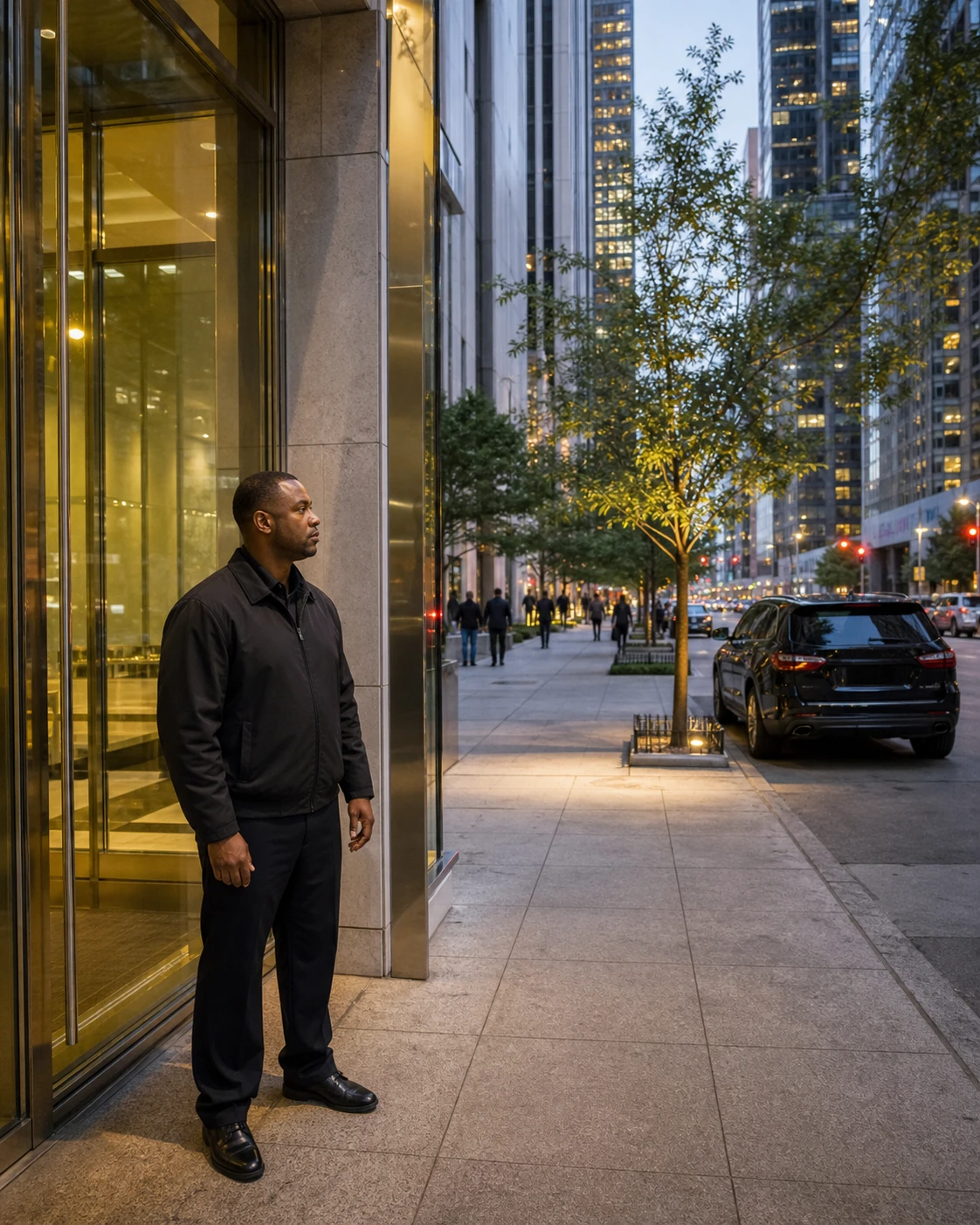
Choosing between a mobile security patrol and an on-site security guard is not simply a question of budget. The right approach depends on your property’s risks, operating hours, access points, tenant activity, and expectations for response.
A mobile patrol can provide scheduled or randomized checks without keeping a guard at the property continuously. An on-site guard remains assigned to the location and can monitor activity, control access, respond to incidents, and carry out property-specific post orders throughout the shift.
Some properties may benefit from a combination, provided each coverage gap and responsibility is explicitly addressed.
What Is a Mobile Security Patrol?
A mobile security patrol visits a property at predetermined or randomized intervals. Depending on the assignment, the officer may arrive in a patrol vehicle, conduct an exterior inspection, walk designated interior areas, verify doors, check vulnerable spaces, and document conditions.
Typical mobile patrol duties may include:
- Inspecting entrances, gates, loading areas, and perimeter doors
- Checking for signs of trespassing, vandalism, or property damage
- Confirming that designated doors or windows are secured
- Observing mechanical rooms, vacant floors, or other approved areas
- Providing opening or closing checks
- Documenting each visit and escalating unusual conditions
The exact scope should be established in written post orders. A patrol visit is a snapshot in time—not continuous protection between visits.
When mobile patrols may be appropriate
Mobile patrols can make sense for properties that need visible, documented checks but do not require a guard to remain at one fixed post. Examples may include:
- Vacant commercial buildings
- Construction or renovation sites during lower-activity periods
- Small properties with limited overnight traffic
- Multiple nearby locations managed by one organization
- Parking, loading, or perimeter areas that need periodic observation
- Buildings seeking randomized checks as an added deterrent
New York City traffic, parking restrictions, building access procedures, and elevator travel can all affect patrol timing. Property managers should define acceptable visit windows rather than assume an officer can arrive at an exact minute every night.
What Is an On-Site Security Guard?
An on-site security guard is assigned to remain at the property for a scheduled shift. Depending on the site, the guard may work from a lobby desk, loading dock, service entrance, security console, construction gate, or another designated post.
Typical on-site responsibilities may include:
- Monitoring entrances and visitor activity
- Enforcing access-control procedures
- Conducting regular interior and exterior rounds
- Managing contractor, vendor, or delivery access
- Observing cameras or alarm notifications when authorized
- Responding promptly to disturbances and property incidents
- Contacting management, emergency services, or building personnel
- Maintaining daily activity and incident reports
An on-site officer becomes familiar with the property’s routines, occupants, recurring vendors, and unusual conditions. That familiarity can be particularly valuable in busy Manhattan buildings where activity changes throughout the day.
Learn more about on-site security guard services for New York City properties.
Mobile Security Patrol vs. On-Site Security Guards
| Consideration | Mobile patrol | On-site guard |
|---|---|---|
| Presence | Periodic visits | Continuous during the scheduled shift |
| Response at the property | Officer responds when present or dispatched | Guard is already on site |
| Access control | Limited to the patrol window | Ongoing monitoring and enforcement |
| Property familiarity | May vary by patrol schedule and officer | Typically stronger with a consistent team |
| Deterrence | Intermittent, especially when visits are randomized | Visible and sustained |
| Reporting | Visit or exception reports | Shift logs, activity reports, and incident reports |
| Best suited for | Periodic checks and lower-activity sites | Active properties and locations requiring continuous attention |
| Cost structure | Often based on visit frequency and scope | Generally based on scheduled staffing hours and post requirements |
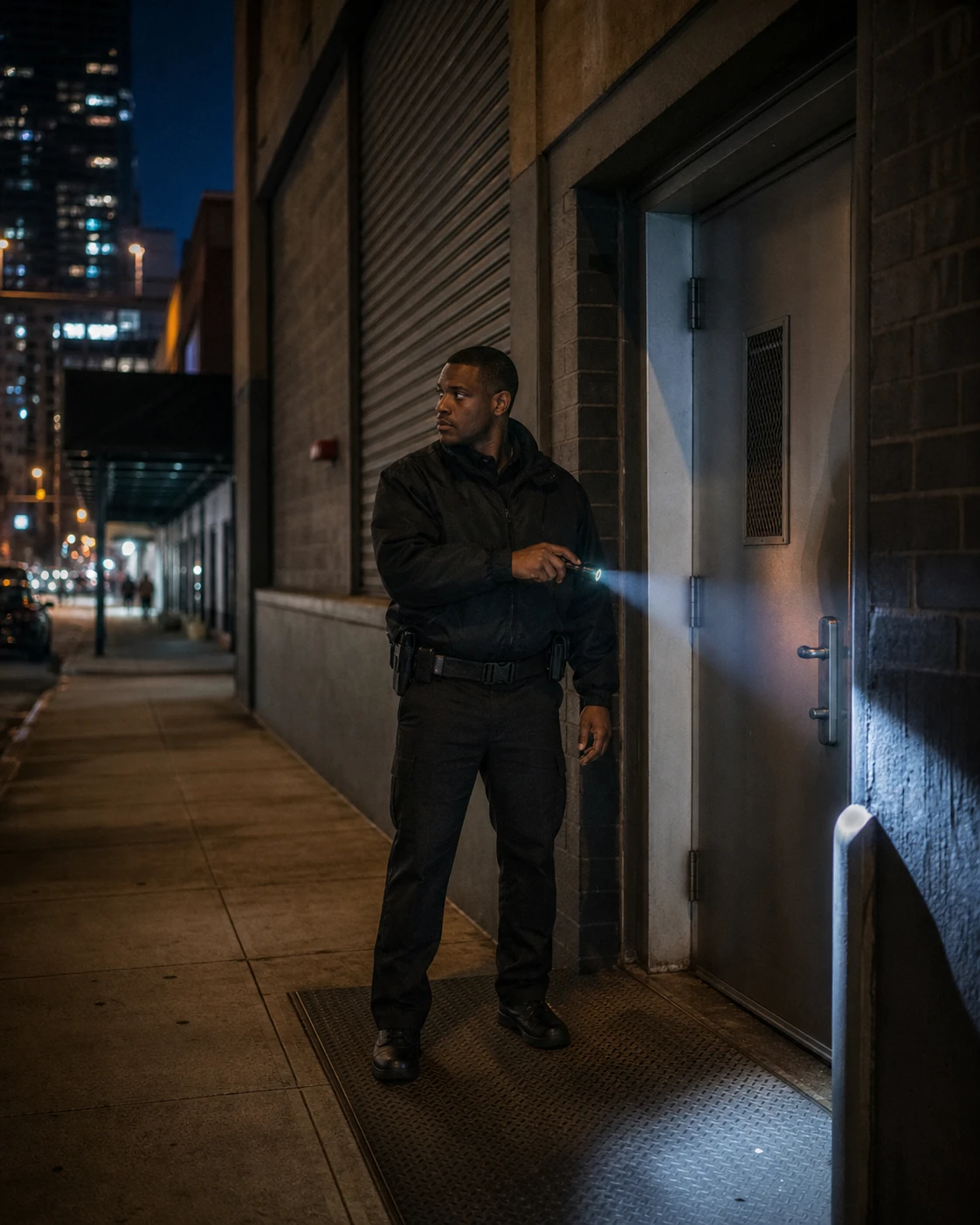
Neither model automatically provides better security in every situation. The appropriate choice depends on what must happen at the property—and how quickly someone must be available when a problem develops.
Choose On-Site Guards When Immediate Attention Matters
An on-site guard is generally the stronger option when delays could expose people, operations, or property to greater risk.
Your building has frequent public or tenant traffic
Commercial offices, residential buildings, hotels, and retail properties may experience a steady flow of tenants, guests, deliveries, contractors, and service personnel. Continuous coverage supports consistent access procedures and provides an identifiable point of contact.
For office-specific planning, review Guardian ISI’s commercial office security services.
You need active access control
A periodic patrol cannot continuously check identification, maintain visitor logs, direct deliveries, or challenge unauthorized entry. If these functions are important throughout operating hours, an on-site post is usually more suitable.
Incidents require prompt on-property action
An on-site officer can observe conditions, notify the appropriate parties, preserve information, and follow site-specific procedures without first traveling to the location. Security guards are not substitutes for police, firefighters, or medical responders, but they can help initiate notifications and manage the immediate area within their training and post orders.
The property has multiple interior risk areas
Large buildings may need repeated rounds of stairwells, amenity areas, loading docks, vacant floors, or mechanical spaces. An assigned guard can perform these checks throughout a shift while remaining available on the premises.
Choose Mobile Patrols When Periodic Checks Address the Risk
Mobile patrols may be practical when the primary objective is to confirm conditions, create an intermittent visible presence, and report exceptions.
The property is vacant or lightly occupied
An unoccupied floor, temporarily closed location, or vacant building may not require continuous staffing. Scheduled and randomized patrols can help identify unsecured access points, damage, leaks visible within the assigned patrol area, or signs of unauthorized entry.
You manage several nearby sites
A patrol route may allow an organization to arrange checks at multiple locations. However, the plan should account for travel time, parking, access credentials, and the amount of time needed to inspect each property properly.
You want supplemental overnight visibility
Some properties use patrol visits to supplement existing cameras, alarms, remote management, or daytime staffing. Patrols can add a human inspection, but they should not be treated as continuous alarm response unless that service and its response procedures are specifically included in the agreement.
When a Hybrid Security Plan Works Best
A hybrid plan combines fixed on-site coverage with mobile checks. This can help a property align staffing with changing activity levels.
Examples include:
- An on-site lobby guard during business hours and exterior patrol checks overnight
- A fixed guard at a construction entrance plus randomized perimeter inspections
- Evening on-site coverage during tenant departures followed by late-night patrol visits
- A primary guard post supported by periodic checks of a nearby annex or secondary location
Hybrid coverage should still have clear lines of responsibility. Managers should know who receives alarm calls, who can authorize building access, how missed visits are addressed, and which incidents require escalation.
Properties with active work zones can also explore dedicated construction security services.
Important New York City Planning Considerations
Licensing and assignment requirements
Security guard services in New York should be provided through appropriately licensed providers using guards who meet applicable state registration and training requirements. Armed assignments involve additional requirements and should be considered only after a site-specific risk review.

Some fire and life-safety functions require specific credentials or roles. A general mobile security patrol should not be used as a substitute for a required fire watch, fire guard, or other mandated position. If your property has an impairment or a fire-safety staffing question, discuss the circumstances with building management and qualified professionals. Guardian ISI can also help evaluate appropriate fire guard coverage.
Building access
Patrol officers need reliable access to every area included in the assignment. Key control, electronic credentials, after-hours contacts, elevator restrictions, alarm procedures, and lockbox protocols should be resolved before service begins.
Documentation
Reports should provide useful operational information—not merely state that a visit occurred. Depending on the assignment and privacy policies, useful documentation may include arrival and departure times, areas checked, observed conditions, actions taken, and required notifications.
Response expectations
Ask whether the service is based on scheduled visits, randomized visits, dispatch after an alarm, or a combination. Travel and response times in Manhattan can vary because of traffic, street closures, weather, parking limitations, and simultaneous calls. Avoid relying on an unspecified promise of “rapid response.”
Questions to Ask Before Selecting Coverage
Before requesting a proposal, document the answers to these questions:
- During which hours is the property most vulnerable?
- Does someone need to monitor an entrance continuously?
- How many access points, floors, and exterior areas require inspection?
- What is the property’s history of trespassing, theft, vandalism, or disruptive behavior?
- Are tenants, guests, workers, or deliveries present overnight?
- How quickly must an incident receive on-property attention?
- Are there insurance, lease, contractual, or regulatory requirements to review?
- What reports and notifications should management receive?
- Who can provide emergency access and make decisions after hours?
- Would fixed coverage during peak periods and patrol visits during quiet periods address the risk?
A professional security assessment should translate these answers into post locations, coverage hours, patrol routes, duties, escalation procedures, and reporting standards.
Get a Property-Specific Security Recommendation
The decision between mobile security patrols and on-site security guards should reflect your actual building—not a generic package. Guardian ISI can review your Manhattan property’s hours, access points, activity patterns, and operational concerns to help identify an appropriate coverage model.
Call or text (212) 602-1695, or request security coverage online. For urgent staffing needs, review our emergency security coverage options.
Related Guardian services
For the on-site staffing option discussed here, review Security Guard Services. For office-specific post responsibilities, see Commercial Office Security. Confirm any mobile patrol offering and its scope directly before relying on that coverage model.
Official references
Frequently asked questions
Is a mobile patrol the same as an on-site guard?
No. A mobile patrol visits at scheduled or randomized intervals, while an on-site guard remains assigned to the property during a defined shift.
Are mobile patrols less expensive than on-site guards?
They can be when a property needs only limited periodic checks. Pricing depends on visit frequency, patrol scope, travel, reporting, access requirements, and dispatch responsibilities.
Can mobile patrols respond to alarms?
They may be able to if alarm response is included in the service agreement. Procedures, authorization requirements, service area, and response expectations should be documented.
Can an on-site guard also conduct patrols?
Yes. An assigned guard can conduct scheduled rounds if post orders allow the primary post to be left temporarily and the property remains appropriately covered.
Can a mobile security patrol serve as a fire watch?
Not automatically. Fire watches and fire guard assignments may have specific staffing, credential, continuity, and documentation requirements.