
Choosing between a mobile patrol and a standing security guard is not simply a question of which service costs less. The right choice depends on when incidents are most likely, how quickly someone must respond, and whether the property needs continuous supervision or periodic checks.
For Brooklyn commercial property owners and managers, conditions can vary significantly between an active office lobby, a vacant warehouse, a construction site, and a mixed-use building. This guide explains how standing guards and mobile patrol services in Brooklyn differ—and how to decide which approach fits your property.
What Is a Mobile Security Patrol?
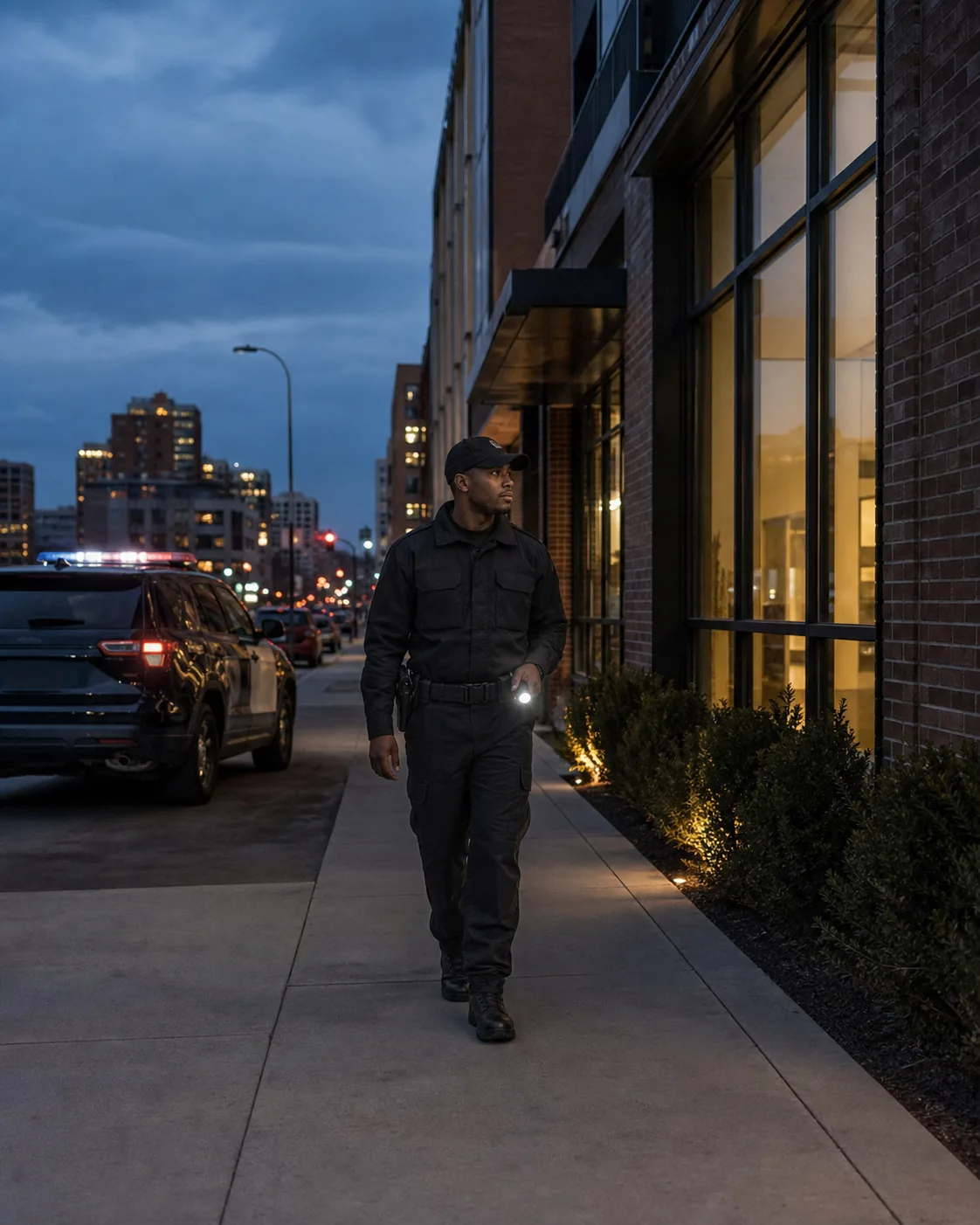
A mobile patrol officer visits a property at scheduled or randomized intervals rather than remaining there continuously. Depending on the assignment, a patrol may include:
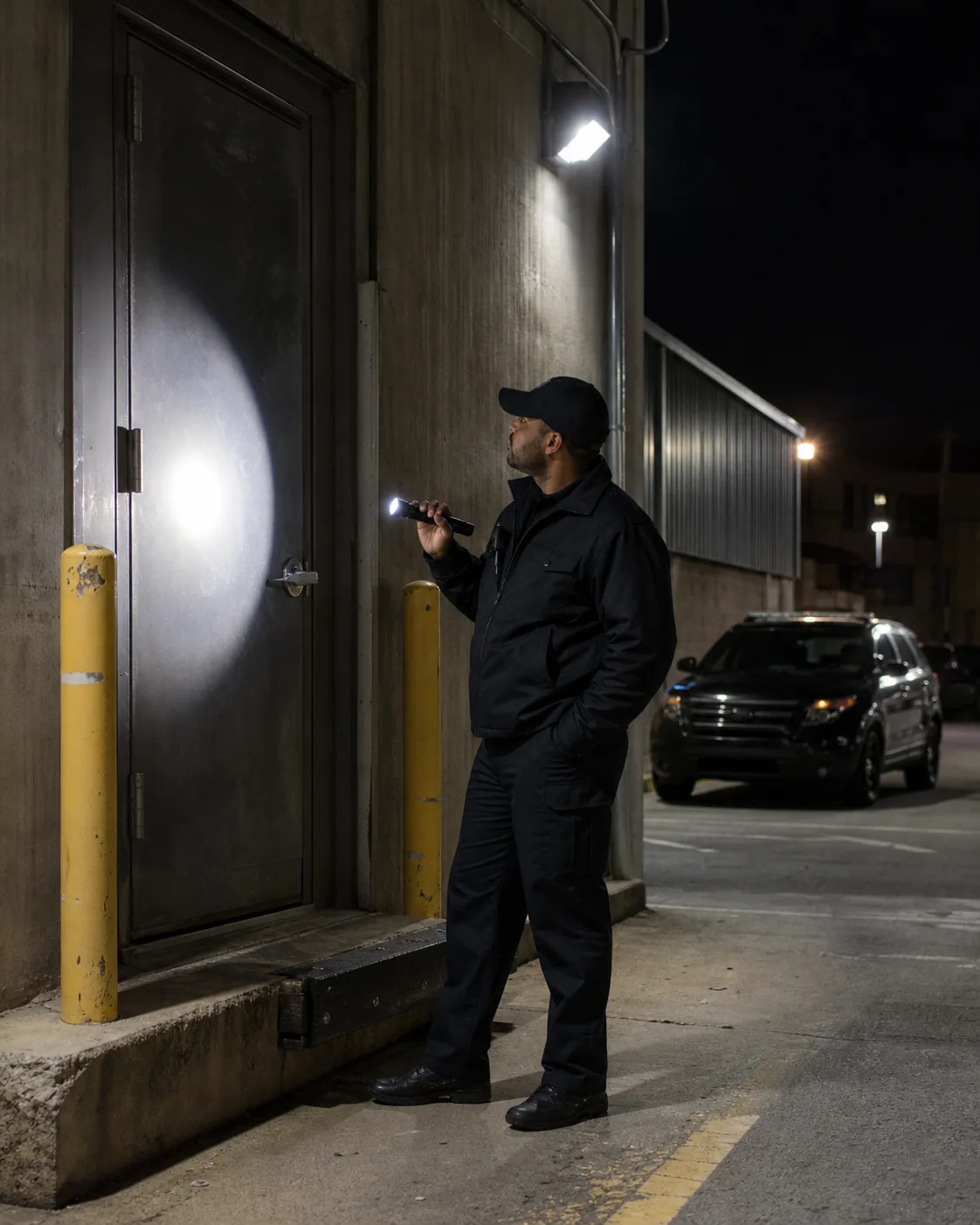
- Inspecting exterior doors, gates, loading areas, and parking facilities
- Checking for broken windows, damaged locks, or signs of unauthorized entry
- Looking for lighting failures, water leaks, or other visible property issues
- Confirming that designated areas are clear after business hours
- Documenting observations with time-stamped reports, photographs, or checkpoint records
- Escalating emergencies according to the property's written instructions
Mobile patrols are often useful for locations that do not require constant public-facing security but still need a visible presence and documented inspections. Examples may include closed retail sites, warehouses, small commercial buildings, parking areas, and temporarily vacant properties.
A patrol visit is a point-in-time inspection. Unless an officer is specifically assigned to remain on site, the property will be unattended between visits.
What Is a Standing Guard?
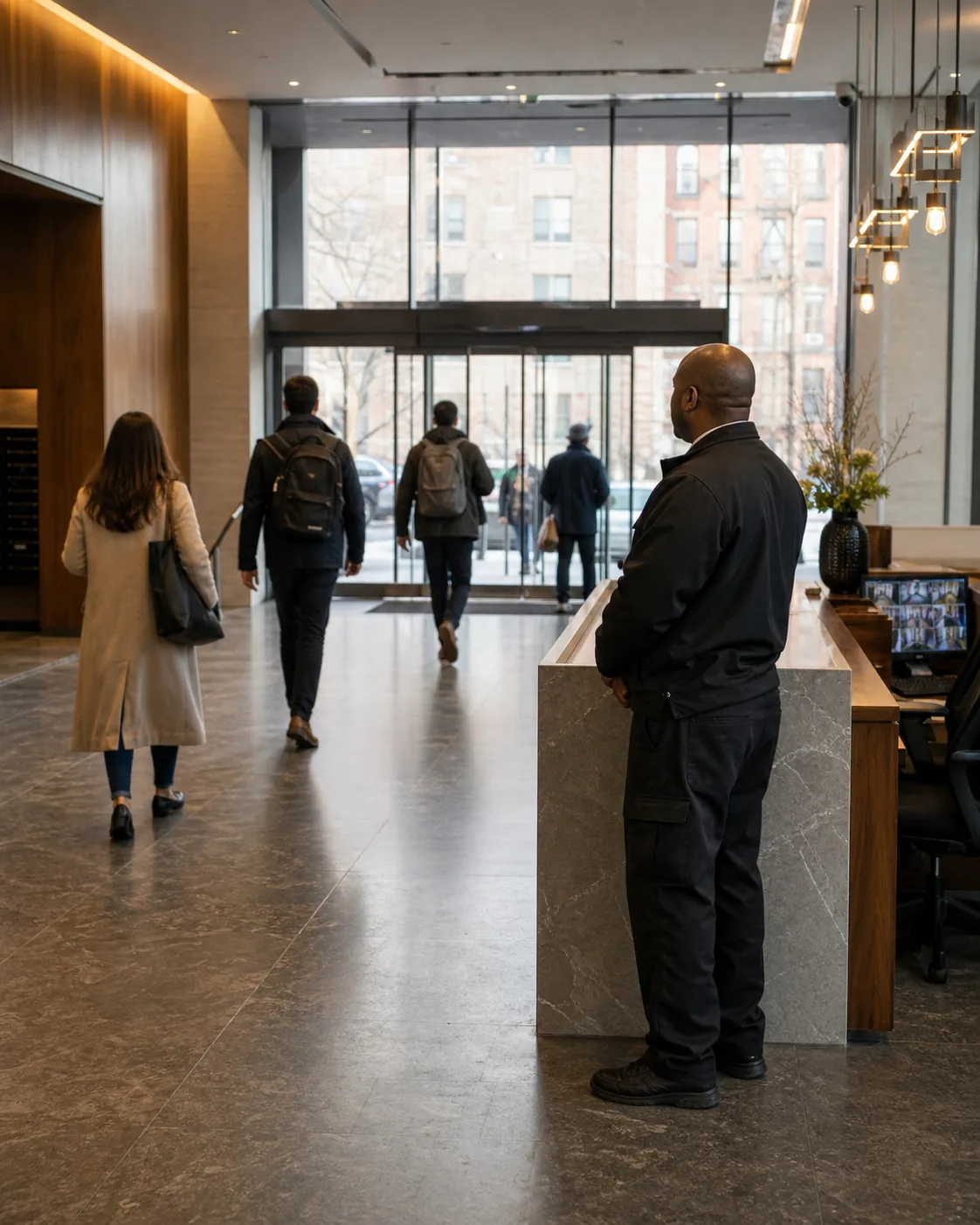
A standing guard is assigned to one property or post for a defined shift. The guard may remain at a lobby desk, entrance, loading dock, security station, or other designated location while also conducting foot patrols when required.
Typical responsibilities include:
- Monitoring entrances and controlling access
- Greeting and screening visitors, vendors, and contractors
- Observing cameras or alarm panels when included in the post orders
- Managing deliveries and loading-dock activity
- Responding promptly to disturbances and property concerns
- Maintaining incident and shift reports
- Coordinating with property management or emergency responders
Standing security guards are generally better suited to properties that need continuous oversight, frequent interaction with occupants, or an immediate on-site response.
Mobile Patrol vs. Standing Guard: Key Differences
Continuity of coverage
A standing guard provides continuous coverage throughout the assigned shift. Mobile patrol coverage is intermittent, so incidents can occur after one visit and before the next.
If a property has an active lobby, recurring trespassing, valuable inventory, or regular after-hours activity, uninterrupted coverage may be the stronger choice. A low-traffic property with clearly defined inspection needs may be a better candidate for patrol visits.
Response time
An on-site guard can assess a developing situation immediately, subject to training, post orders, and safety protocols. A mobile officer must travel to the property unless already present.
Ask prospective providers how patrol officers are dispatched, what happens when an alarm or tenant complaint is received, and whether response expectations are documented. Avoid treating an estimated patrol arrival as guaranteed emergency response.
Visibility and deterrence
Both options can create a visible security presence. A standing guard provides sustained visibility, while a mobile patrol vehicle and repeated officer visits show that a site is being inspected.
Randomized patrol timing may make visits less predictable, but it does not provide the same deterrence as having someone continuously at an entrance or other high-risk post.
Access control and customer service
Mobile patrols are not designed to operate a busy front desk. Properties that require visitor screening, tenant assistance, delivery coordination, or contractor sign-in generally need a standing officer.
This is particularly important for commercial office security, where the guard may be part of the daily experience for tenants and visitors.
Reporting and accountability
Either service should include clear documentation. Depending on the assignment and technology used, reports may include arrival and departure times, completed checkpoints, photographs, incident notes, and escalation details.
Before hiring a provider, ask to see a sample report. Confirm who receives reports, how quickly serious incidents are communicated, and how missed patrols or incomplete tasks are handled.
Budget structure
Mobile patrol can be more economical when a property only needs limited inspections. Standing guards require staffing for the entire scheduled shift, but they also provide broader and more continuous coverage.
Compare proposals based on the actual service scope—not just the quoted rate. Review the number and approximate duration of patrol visits, tasks included, supervision, reporting, holiday pricing, minimum hours, and procedures for additional response requests.
Which Option Fits Your Brooklyn Property?
Consider mobile patrol services when:
- The property is closed or lightly occupied overnight
- Periodic exterior and door checks address the primary concerns
- Management wants documented inspections without a full-shift post
- There is no ongoing need for visitor or delivery management
- Risks are limited enough to tolerate gaps between visits
Consider a standing guard when:
- The site has regular tenant, customer, or contractor traffic
- Access control is a core responsibility
- An immediate on-site response is important
- The property has recurring security incidents or persistent unauthorized access
- The guard must monitor a lobby, loading dock, gate, or security desk
- Management needs continuous observation during specific hours
Construction properties require a separate assessment because site conditions change as work progresses. Equipment, material deliveries, open access points, and changing contractor schedules may affect the appropriate coverage. Learn more about construction security.
When a Hybrid Security Plan Makes Sense
Some Brooklyn commercial properties benefit from combining both services. For example, a standing guard might cover business hours or evening tenant departures, followed by mobile patrol visits overnight. Another property might use weekday lobby coverage and patrol inspections on weekends.
A hybrid plan can concentrate continuous staffing during higher-activity periods while maintaining oversight during lower-traffic hours. To make it effective, the property should define:
- The hours and exact location of each standing post
- The required number or frequency of patrol visits
- Inspection checkpoints and access instructions
- Alarm, incident, and emergency escalation procedures
- Reporting expectations for both services
- Who is authorized to request additional coverage
The plan should be reviewed after incidents, occupancy changes, major construction, or shifts in operating hours.
Questions to Ask Before Selecting a Security Provider
A strong proposal should reflect the actual property rather than offering a generic package. Ask each provider:
- Will you inspect the site before recommending coverage?
- Are assigned personnel appropriately licensed and trained for their duties?
- How are guards supervised in the field?
- What proof-of-service and incident reporting will we receive?
- How are call-outs and staffing gaps handled?
- What duties are included—and specifically excluded?
- Can coverage be adjusted for holidays, tenant events, or temporary closures?
- Can you provide current insurance and business documentation for review?
Fire watch and other fire-life-safety functions should not be assumed to be part of a routine security patrol. If a building has a fire protection impairment or another life-safety concern, obtain guidance based on the specific condition and use personnel assigned to the appropriate scope. Guardian also provides dedicated fire guard services when required for the assignment.
Request a Site-Specific Coverage Recommendation
The best choice depends on the building, operating schedule, incident history, access points, and expectations for response. Guardian ISI can review your Brooklyn commercial property and help structure mobile patrol, standing guard, or hybrid coverage around its actual needs.
Call or text [(212) 602-1695](tel:+12126021695) or request security coverage online. For urgent or short-notice staffing needs, review our emergency coverage options.
Related Guardian ISI services
For on-site coverage and operational support discussed in this article, review Security Guard Services and Commercial Office Security. Contact Guardian ISI to discuss the property, duties, and availability.
Frequently asked questions
Are mobile patrol services less expensive than a standing guard?
They can be when a property only needs periodic inspections. Compare the number, duration, and scope of visits because a lower price may also mean less time on site and gaps between checks.
How often should a Brooklyn commercial property be patrolled?
There is no universal frequency. It should reflect operating hours, access points, incident history, occupancy, surrounding activity, and the property's tolerance for unattended periods.
Can a mobile patrol officer respond to an alarm?
A provider may offer alarm-response services if they are included in the agreement. Ask how dispatch works, what the officer will do on arrival, and whether response-time estimates are guaranteed or only targets.
Can mobile patrol replace a lobby security guard?
Usually not when the lobby requires continuous access control, visitor assistance, delivery coordination, or immediate on-site response. Those duties are generally better suited to a standing guard.
Can a property use both mobile patrols and standing guards?
Yes. A hybrid plan can use standing guards during busy or higher-risk hours and mobile patrol visits during quieter periods, provided duties and handoff procedures are clearly documented.
Is a routine security patrol the same as a fire watch?
No. A routine security patrol should not be assumed to satisfy a fire-watch or fire-life-safety need. Those conditions require a separate, site-specific scope and appropriately assigned personnel.