
Weekend construction can reduce tenant disruption, but it also changes an office building’s normal risk profile. Contractors may arrive before management staff, freight elevators may remain unlocked, doors may be propped open, and fire alarm devices may need temporary protection or authorized bypasses.
A written weekend security plan helps property managers, owners, and chief engineers control these risks without expecting security personnel to make construction or life-safety decisions outside their authority. The plan should identify who may enter, where work may occur, which systems may be affected, and who must confirm that the building is secure when the shift ends.
Build the plan before contractors arrive
Do not leave the weekend officer or lobby attendant to interpret a stack of emails after the crew arrives. Create one approved work plan that security, engineering, management, and the contractor can follow.
At minimum, document:
- The contractor company, on-site supervisor, and emergency contacts
- Approved worker roster and scheduled arrival and departure times
- Floors, suites, loading areas, and mechanical spaces the crew may access
- Authorized entrances and delivery routes
- Freight elevator schedule and access controls
- Expected tools, materials, and waste removal
- Any planned hot work, dust-producing work, shutdown, or alarm impairment
- Who may approve schedule, staffing, or work-area changes
- End-of-shift inspection and sign-off responsibilities
Distribute only the information each post needs. The lobby desk may need the roster and access rules, while engineering needs detailed shutdown and system-restoration information.
Verify every contractor and visitor
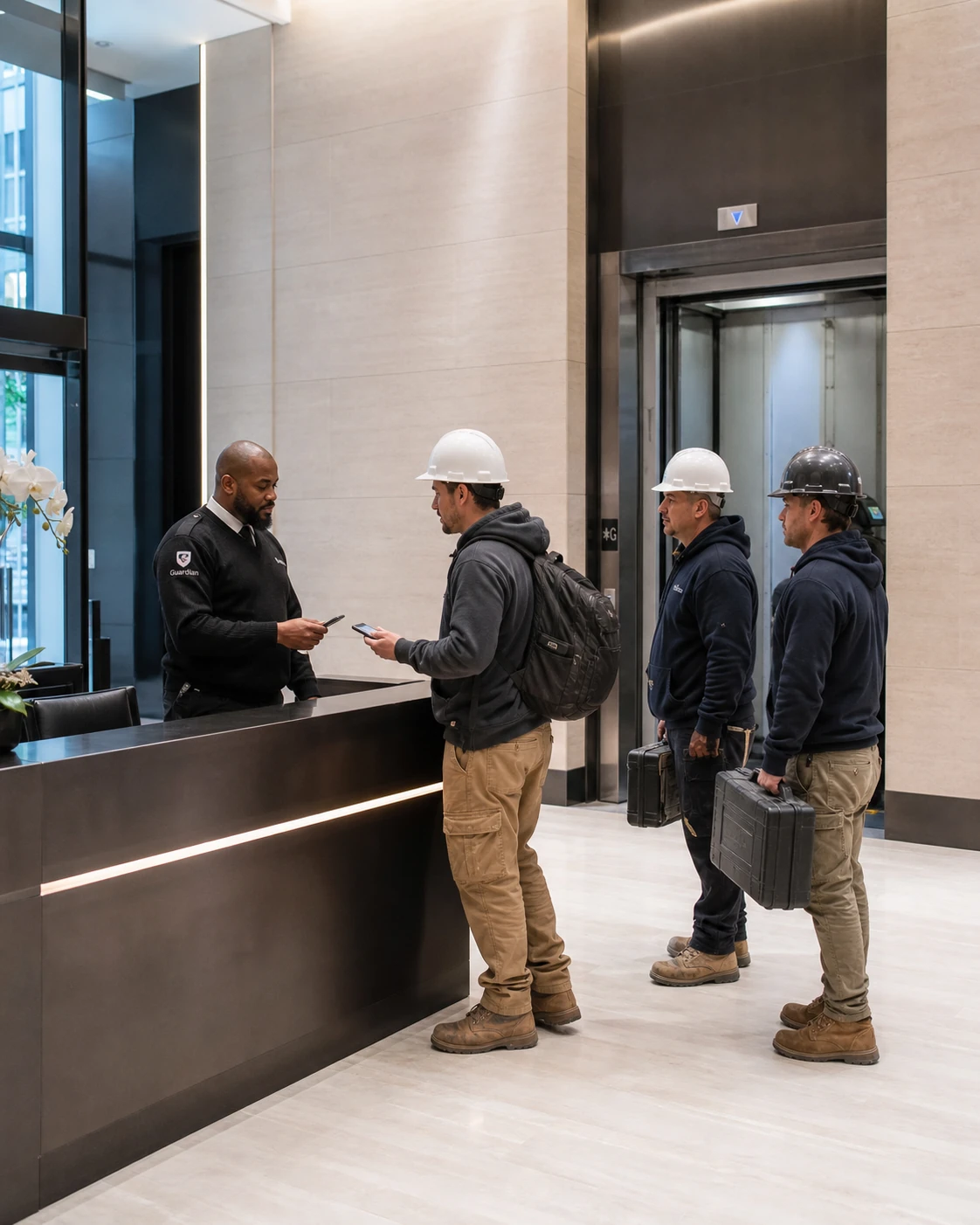
Weekend conditions should not weaken normal access control. Security should compare each worker against the approved roster and follow the building’s credential-checking policy before granting access.
A practical check-in process can include:
- Confirming the worker’s name and employer against the approved list
- Verifying identification in accordance with building policy
- Recording arrival time and destination
- Issuing a temporary credential, if used by the property
- Explaining restricted areas, elevator rules, and emergency procedures
- Recording departure and collecting temporary credentials
Workers who are not listed should not gain access based only on another contractor’s verbal assurance. Security should contact the designated property manager or construction representative. The escalation plan should also state what happens when no authorized decision-maker can be reached.
Crew substitutions are common, so establish a deadline and method for roster updates. This avoids arguments at the lobby while preserving management control over who enters the property.
Keep work inside approved areas
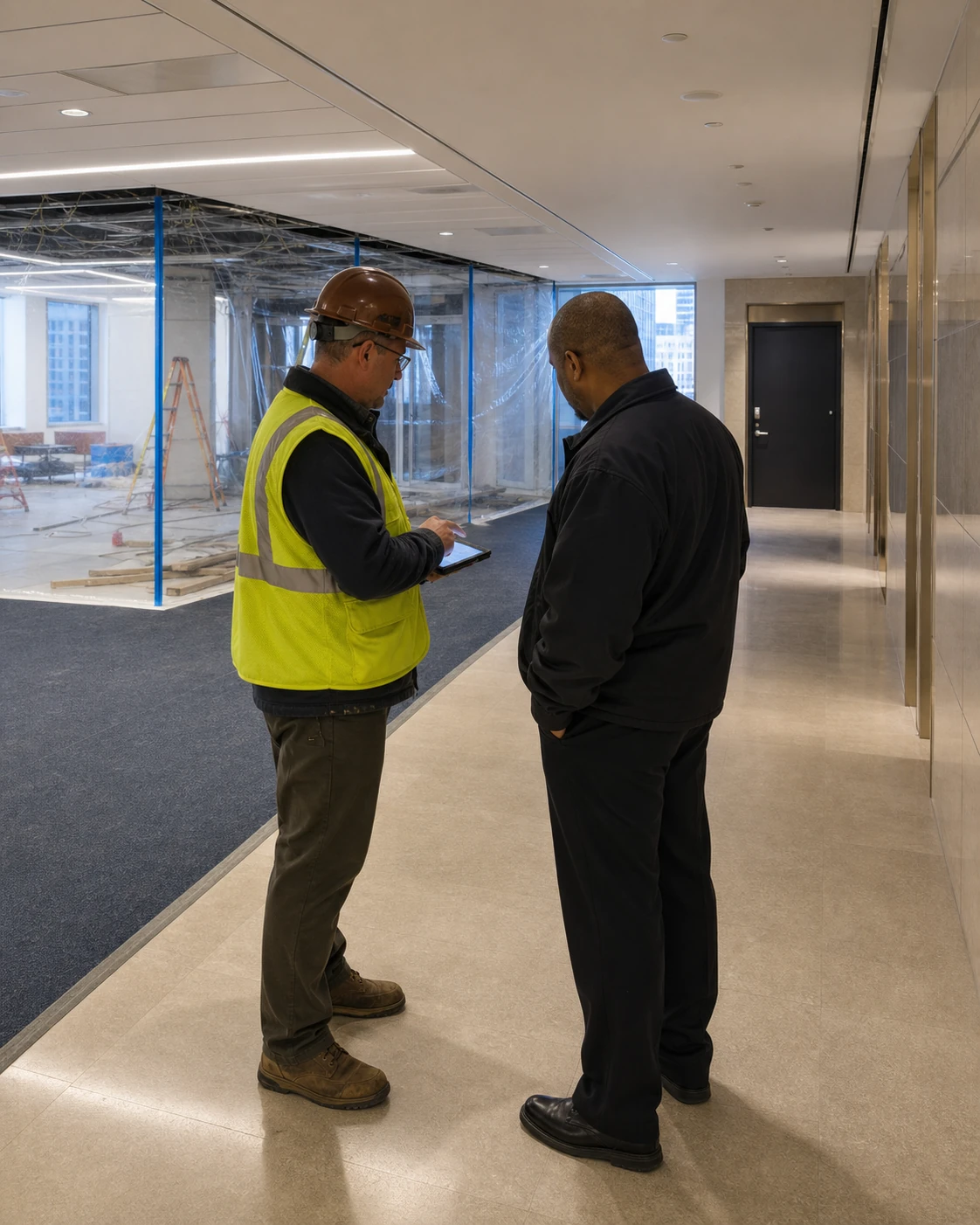
Construction access should be limited to the specific floors, suites, corridors, loading areas, and support rooms needed for the assignment. Contractors should not use unoccupied offices as break rooms, storage areas, or shortcuts.
Use clear boundaries and patrol checks
Where practical, secure non-work floors and tenant spaces through locked doors, elevator restrictions, or access-control permissions. Security patrols can verify that:
- Work remains within the approved footprint
- Stairwell and corridor egress routes remain unobstructed
- Mechanical, electrical, telecom, and tenant spaces remain secured
- Materials are not stored in common areas without approval
- Contractors are following the building’s rules for smoking, deliveries, and waste
Security personnel should observe and report. They should not direct construction methods or enter hazardous work zones unless trained, authorized, and properly equipped.
For multi-floor renovations or demolition, consider dedicated construction security rather than relying solely on a busy lobby post.
Coordinate alarm bypasses and fire protection
Dust, vibration, and airborne debris can affect detection devices, but contractors should never cover, disable, or bypass fire alarm equipment on their own. Any planned impairment should be coordinated in advance with building management, engineering, the fire alarm service provider, and other responsible parties identified by the property.
The written plan should state:
- Which device, zone, or system may be affected
- Why an impairment is necessary
- Who is authorized to initiate it
- Start and expected restoration times
- Required notifications and protective measures
- Who will verify restoration and document completion
Requirements can vary with the building, system, work, and direction of the authority having jurisdiction. A qualified building representative should determine whether a fire guard, fire watch, or other temporary measure is required. Security staff should not independently decide that an alarm can remain offline.
At shift closeout, obtain positive confirmation that affected equipment has been restored and, where applicable, tested by an authorized party. “The contractor said it was done” is not a sufficient closeout record.
Control hot work from authorization through final inspection
Welding, cutting, brazing, soldering, torch-applied roofing, and other spark- or heat-producing tasks require advance coordination. Property management should confirm the applicable permit, certificate, fire watch, extinguisher, area preparation, and post-work monitoring requirements with qualified personnel before work begins.
Security’s role may include verifying that the scheduled hot work matches the approved plan, controlling access to the area, documenting relevant times, and escalating visible departures from building policy. A guard should not issue technical approval or substitute for a qualified fire watch unless specifically trained, assigned, and authorized for that function.
The plan should also address what happens if hot work runs late. Extending a construction shift can affect fire-watch coverage, engineering availability, elevator operation, and alarm restoration. The contractor supervisor should obtain approval before the work exceeds the authorized window.
Manage freight elevators and loading areas
Weekend projects often create repeated movement between the loading dock, lobby, freight elevator, and work floor. These routes can expose back-of-house areas that are normally locked.
Useful controls include:
- Requiring deliveries during scheduled windows
- Verifying the vendor, destination, and receiving contact
- Using the freight elevator rather than passenger cars when required by building policy
- Assigning elevator operation to authorized personnel where appropriate
- Protecting cab finishes without blocking sensors or safety equipment
- Keeping keys and elevator controls under accountable custody
- Inspecting the cab, vestibules, and loading area after use
Do not leave a freight elevator on unrestricted service merely for contractor convenience. If a car must remain dedicated, define who controls it and how access to other floors will be prevented.
Prevent doors from becoming security gaps
Contractors may prop doors to move materials, run temporary cables, or improve airflow. Even brief propping can create an uncontrolled entrance or allow access to tenant areas.
The weekend plan should identify doors that may be opened for deliveries and require active monitoring while they are unsecured. Loading dock doors, sidewalk entrances, stairwell doors, roof access points, and doors between construction and occupied spaces deserve particular attention.
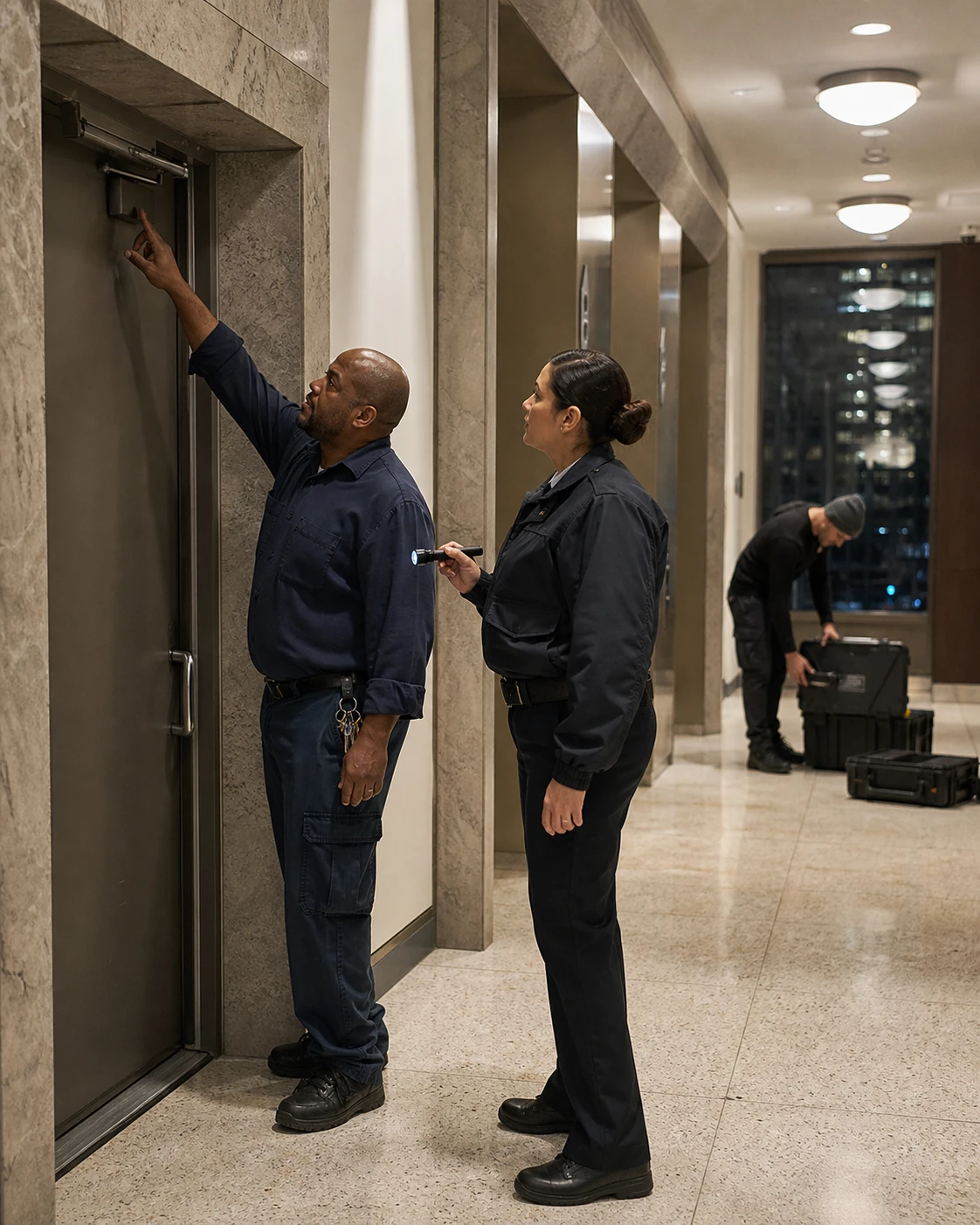
Security patrols should check for:
- Propped, taped, or obstructed doors
- Disabled locks or altered door hardware
- Latches that do not fully engage
- Unsecured roof or mechanical-room access
- Temporary barriers that interfere with closing or egress
- Access-control alarms that were acknowledged but not resolved
Contractors should return all issued keys and credentials at checkout. Lost keys, missing cards, or damaged locks should be escalated immediately rather than deferred until Monday.
Track tools, materials, and waste removal
A simple material-control process protects both the property and the contractor. Before work starts, decide whether the building will record major incoming equipment, toolboxes, high-value materials, or items removed from tenant space.
Removal controls may include property passes, contractor manifests, or written authorization from the designated representative. Security should not be expected to determine ownership without supporting documentation.
At the end of the shift, require the contractor to:
- Remove tools and materials that are not approved for on-site storage
- Secure approved stored items inside the designated work area
- Remove combustible waste and debris as directed by building policy
- Clear corridors, stairs, elevator lobbies, and electrical rooms
- Account for keys, access cards, and building equipment
- Report any damaged doors, walls, systems, or tenant property
The closeout record should note anything intentionally left behind and who approved it.
Complete an end-of-shift inspection
A structured walkthrough is the final defense against an overnight problem. The contractor supervisor should inspect the work area, while security or building staff verify the conditions within their assigned responsibilities.
Use a checklist covering:
- All workers and vendors have signed out
- Temporary credentials and keys have been returned
- Tools, materials, and waste have been removed or secured
- Hot work has ended and required monitoring is complete
- Alarm devices and other affected systems have been restored by an authorized party
- Water, gas, and temporary power conditions match the approved plan
- Work-area, stairwell, roof, loading dock, and perimeter doors are secured
- Elevators have been returned to the approved operating mode
- Corridors and exits are clear
- Photos, incident reports, and exception notes have been submitted
Unresolved exceptions should be handed directly to the responsible manager or engineer. Do not rely only on a note for Monday morning when the issue involves an unsecured opening, active leak, alarm impairment, fire risk, or other urgent condition.
Assign responsibility, not just tasks
The strongest weekend plans identify one accountable person for each decision. A responsibility matrix can distinguish among property management, engineering, security, the general contractor, subcontractors, fire alarm vendors, and life-safety personnel.
Guardian ISI can help Manhattan properties plan commercial office security, construction posts, fire guard coverage, and emergency coverage around weekend work. Duties should be tailored to the building, project scope, and direction of property management and qualified life-safety professionals.
For weekend construction coverage, call or text (212) 602-1695 or request coverage online. Share the work schedule, property address, expected crew size, access points, and any anticipated hot work or alarm impairment so the assignment can be evaluated properly.
Related Guardian services
Review Construction Security and Fire Guard Services to connect these procedures with the appropriate staffing and site responsibilities.
Frequently asked questions
Should every weekend contractor be on an approved roster?
Yes. The property should maintain an approved roster and a process for authorized updates. Unlisted workers should be escalated to a designated decision-maker rather than admitted on another worker’s verbal assurance.
Can a security guard authorize a fire alarm bypass?
Generally, security should not independently authorize or perform a bypass. Planned impairments should be managed by authorized building personnel and qualified service providers under the property’s procedures and applicable requirements.
When might fire guard or fire-watch coverage be needed?
Coverage may be required when fire protection equipment is impaired or certain hazardous work occurs. The need and scope depend on the building, work, system condition, and direction of the authority having jurisdiction or other qualified responsible parties.
How should tools and materials be removed from the building?
Use a documented process such as a contractor manifest, property pass, or written authorization. Record exceptions and secure any materials approved to remain on-site inside the designated work area.
What should be checked before the final contractor leaves?
Confirm that workers have signed out, credentials are returned, doors and elevators are secured, exits are clear, tools and waste are handled properly, and affected alarms or systems have been restored by an authorized party.
Is a regular lobby post enough for weekend construction?
It depends on the project. Large crews, multiple work floors, active deliveries, hot work, or system impairments may justify dedicated construction security, fire guard coverage, or additional patrols.