
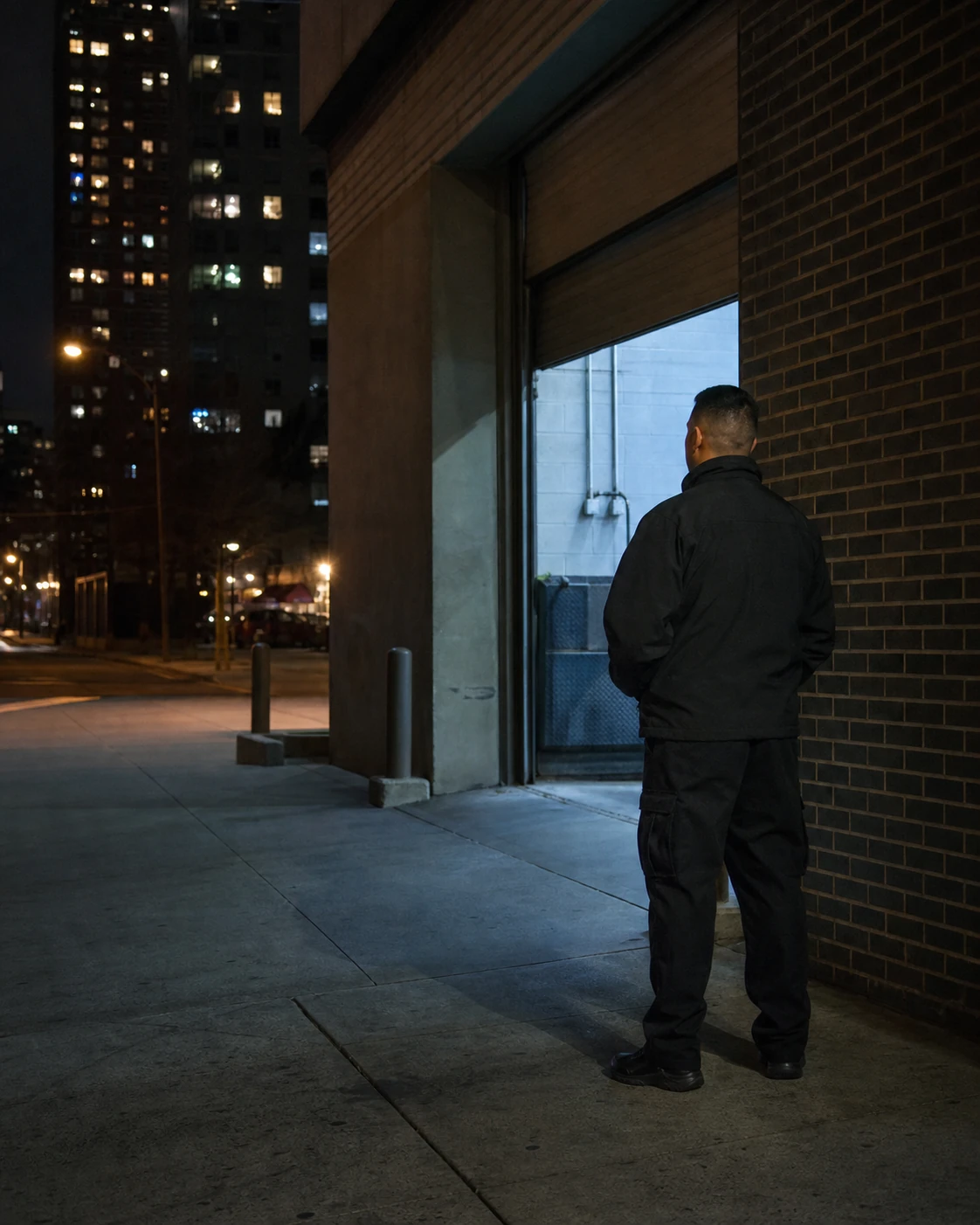
A loading dock door that will not close is more than a maintenance inconvenience. At a Manhattan office, hotel, residential tower, or mixed-use property, it can create an unplanned entrance to service corridors, freight elevators, storage rooms, and other back-of-house areas.
The responding officer’s job is not to repair the mechanism. It is to control the exposure, protect people, communicate clearly, and maintain accountability until the door can be secured.
Step 1: Observe Before Approaching
The officer should pause long enough to understand the immediate conditions.
Look for:
- A vehicle, pallet, cart, cable, or debris obstructing the door
- A person entering or leaving the dock
- Visible damage to the door, track, lock, control panel, or gate
- Unattended deliveries
- Evidence that someone forced or propped the entrance
- Water, smoke, unusual odors, broken glass, or electrical hazards
- Employees or contractors working nearby
The officer should not stand beneath a suspended overhead door or reach into moving components. If the door appears unstable, the unsafe area should be kept clear and building operations notified immediately.
Step 2: Treat the Opening as an Active Access Point
Until the door is secured, it should be managed as an entrance—not merely logged as a defect.
The officer should position where the opening and its interior approach can be observed without creating a personal safety hazard. Depending on the building and staffing level, a supervisor may need to assign a temporary fixed post.
Key controls may include:
- Challenging or verifying anyone attempting to enter
- Preventing unauthorized tailgating behind vendors
- Directing scheduled deliveries to a controlled waiting location
- Restricting access to adjacent service corridors
- Monitoring nearby freight-elevator calls
- Preserving a clear path for emergency responders and authorized building personnel
A patrol officer should not repeatedly leave an unsecured opening to continue a normal route unless another officer or authorized employee has assumed control.
Step 3: Notify the Right People in the Right Order
The escalation list should be established in the site’s post orders. It will often include:
- Security supervisor or command center
- Building engineer, superintendent, or facilities contact
- Property manager or designated after-hours representative
- Loading-dock manager, if the property has one
- Access-control or door vendor when authorized by management
The initial message should be concise:
- Exact door and location
- Time discovered
- Whether the opening is being monitored
- Visible damage or obstruction
- Recent activity at the dock
- Whether additional staffing is needed
Avoid sending a message that says only “dock door broken.” Decision-makers need to know the current exposure and what security is doing about it.

Step 4: Do Not Reset Equipment Without Authorization
Commercial gates and overhead doors can have powered operators, safety sensors, manual releases, interlocks, or building-specific shutdown procedures. An officer who has not been trained and authorized should not attempt a repair or repeatedly activate the controls.
Security may identify obvious conditions from a safe position, but qualified building personnel should determine whether the door can be reset, isolated, locked, or physically secured.
Improvised measures can create additional risk. A chain, vehicle, movable barricade, or piece of furniture should not be used as a substitute lock unless building management has approved a safe temporary measure.
Step 5: Adjust Deliveries and Contractor Access
The loading dock may remain operational even while the opening is impaired, but the building needs a controlled plan.
Possible adjustments include:
- Holding deliveries outside until authorization is confirmed
- Using another approved service entrance
- Admitting one vehicle or vendor at a time
- Requiring a tenant or building representative to accept each delivery
- Suspending nonessential deliveries
- Assigning an officer to escort vendors through the affected area
The property manager, not an arriving driver, should decide whether normal delivery activity can continue.
Step 6: Check the Connected Interior Route
An open dock door may have allowed someone to enter before the patrol discovered it. Without abandoning the opening, the supervisor should determine whether another officer can inspect connected areas.
The inspection may cover:
- Service corridor doors
- Freight-elevator vestibules
- Package or storage rooms
- Mechanical-room entrances
- Stairwell doors
- Contractor work areas
- Other exterior exits near the dock
The purpose is to identify evidence of unauthorized movement or another unsecured opening. Officers should not conduct a solo search when circumstances suggest an intruder may be present. Follow site escalation procedures and contact emergency services when there is an immediate threat.
Step 7: Preserve Useful Video and Access Information
If the property has cameras or electronic access records, authorized personnel should identify the relevant period before routine retention overwrites it.
Useful review points include:
- The last confirmed closure of the door
- Vehicles and people entering after that time
- Anyone manipulating the controls
- Deliveries that may have struck or blocked the door
- Repeated opening failures during earlier shifts
The incident report should reference retained footage or system records without making unsupported conclusions about cause or intent.
Step 8: Document the Temporary Security Plan
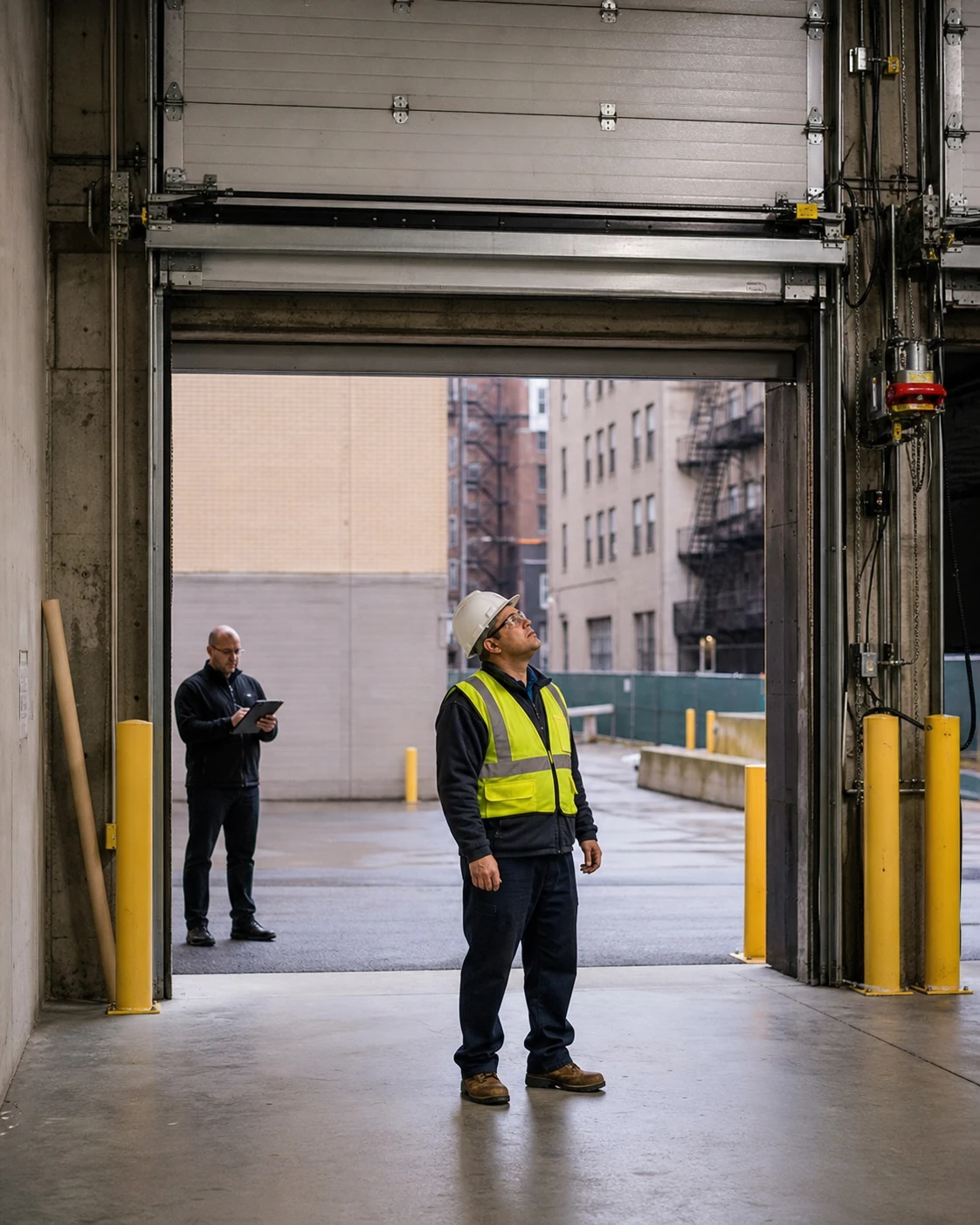
The report should describe both the defect and the response. Include:
- Discovery time and exact location
- Door position and observed condition
- Photographs taken under property policy
- People notified and notification times
- Temporary access restrictions
- Officer assigned to the opening
- Deliveries admitted or redirected
- Interior areas checked
- Vendor arrival and actions
- Time the door was tested and secured
- Name and role of the person authorizing return to normal operations
Continue documenting the condition during shift handoffs. An open work order is not proof that the security exposure has ended.
Step 9: Verify Restoration From Both Sides
Once repairs are reported complete, authorized building personnel should confirm that the door:
- Fully closes and secures
- Opens only through the approved control method
- Does not reverse or reopen unexpectedly
- Can be observed by available cameras, where applicable
- Leaves connected interior doors and controls in their normal condition
Security should then remove the temporary post only after receiving clear authorization and updating the incident record.
Step 10: Review Why the Failure Became a Security Problem
Management should determine whether the event was an isolated equipment failure or evidence of a recurring operational gap.
Questions for the review include:
- Had earlier sticking or closing problems been reported?
- Was the door routinely propped for convenience?
- Did delivery activity damage the track or sensor area?
- Was the dock left unattended during a predictable busy period?
- Did the officer know whom to call after hours?
- Could staffing or patrol timing reduce the duration of a future exposure?
The lesson may involve maintenance, vendor management, post orders, staffing, or all four.
Strengthen Loading-Dock Response Procedures
Guardian ISI can evaluate patrol routes, loading-dock controls, after-hours escalation lists, temporary-post procedures, and incident reporting for NYC properties.
Call or text (212) 602-1695, or request security coverage when an unsecured entrance requires immediate attention.
Related Guardian services
Discuss a temporary staffed post through Emergency Security Coverage, and review ongoing loading-dock responsibilities with Commercial Office Security.
Frequently asked questions
Should a security officer try to repair a stuck loading dock door?
No, unless the officer is specifically trained and authorized. Qualified building or door-service personnel should handle the mechanism.
Does the officer need to remain at the door?
The opening should remain under effective observation or control until secured. A supervisor may assign a temporary fixed post.
Should deliveries continue while the door is stuck open?
Only under a management-approved procedure that maintains access control and protects the affected area.
What should the incident report include?
Record the condition, discovery time, notifications, temporary controls, relevant activity, repair response, and verified restoration.
When can normal patrols resume?
After authorized personnel verify that the door closes and secures properly and management ends the temporary-post assignment.