
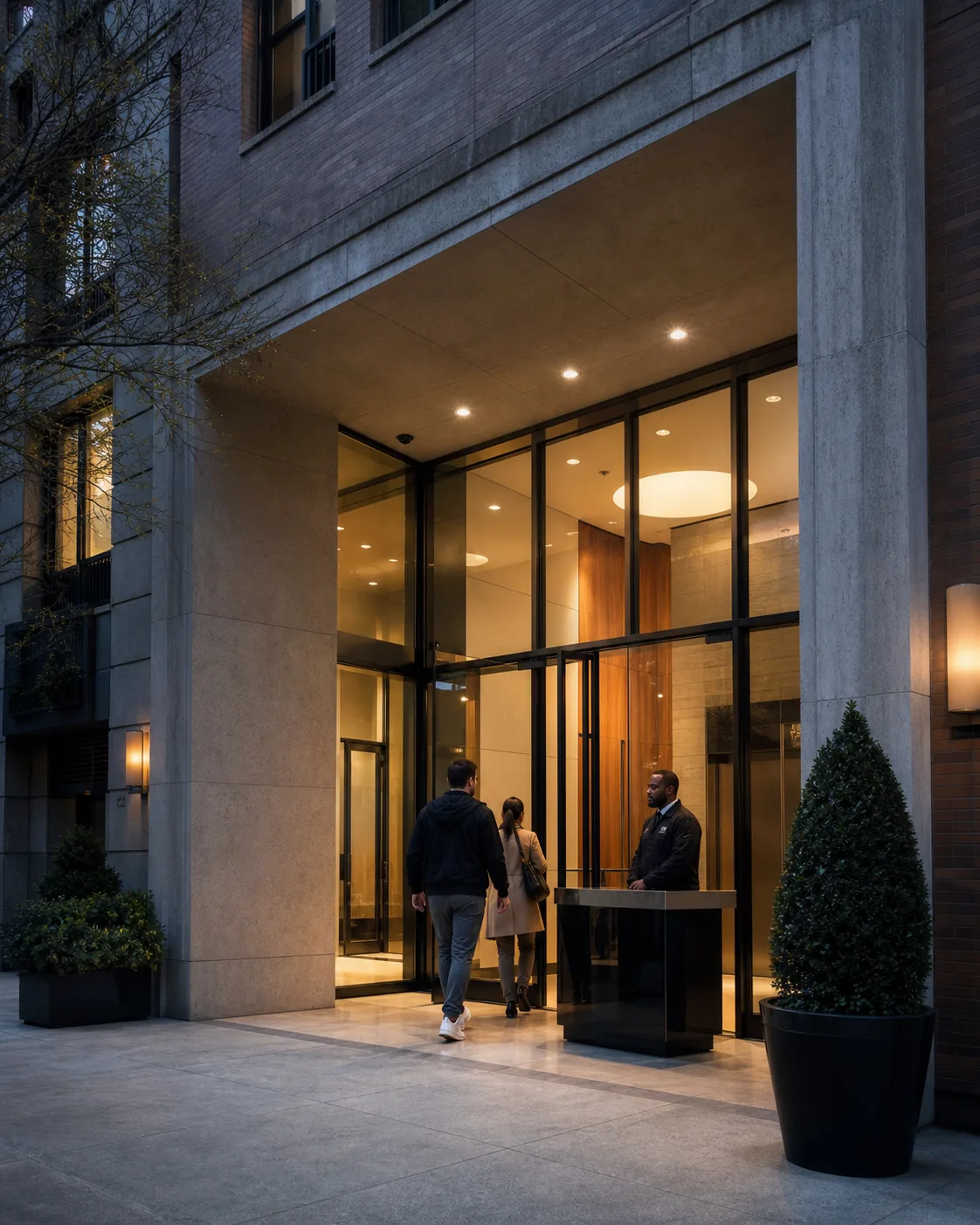
Security vulnerabilities in an apartment building are not always obvious. A door may have an electronic lock yet remain vulnerable to tailgating. Cameras may cover the lobby but miss package rooms, side entrances, or poorly lit approaches. Even strong equipment can be undermined by inconsistent procedures.
For Manhattan property managers, owners, condominium and co-op boards, and managing agents, a useful security review should consider how people, technology, building design, and daily operations work together. The goal is not to make a residential property feel unwelcoming. It is to identify realistic gaps and prioritize improvements that protect residents, visitors, employees, contractors, and deliveries.
Start With the Building’s Actual Risk Profile
Avoid applying the same checklist to every property. A staffed high-rise, a small walk-up, and a mixed-use building have different access patterns and vulnerabilities.
Begin by documenting:
- The number and location of entrances and exits
- Lobby or front-desk staffing hours
- Resident, visitor, contractor, and delivery volume
- Retail, garage, roof, courtyard, basement, and service access
- Package-handling procedures
- Recent incidents, resident complaints, and recurring rule violations
- Periods when the building has limited staffing or supervision
- Existing locks, intercoms, alarms, cameras, and access-control systems
Review incident reports and access records where available. Patterns—such as repeated door-propping, lost credentials, package theft, or unauthorized entry during shift changes—often reveal more than a single walkthrough.
Inspect the Property From the Outside In
Conduct the assessment during both daytime and nighttime conditions. Lighting, visibility, staffing, and street activity can change significantly after business hours.
Perimeter and Building Approaches
Walk every route a resident, visitor, employee, or intruder could use to approach the property. Look for:
- Burned-out, poorly positioned, or obstructed lighting
- Landscaping, scaffolding, construction materials, or fixtures that reduce visibility
- Side alleys or recessed areas that are difficult to observe
- Garage, courtyard, basement, or roof access that bypasses the lobby
- Doors or gates that do not close and latch reliably
- Utility or service areas accessible from the street
- Camera views blocked by awnings, plants, decorations, or seasonal conditions
A vulnerability is not limited to a broken device. For example, a working camera may offer little value if glare, poor placement, or an obstructed angle prevents useful observation.
Entrances, Vestibules, and Lobby Access
The main entrance is often where security procedures face the most pressure. Observe operations during busy delivery periods and resident arrival times.
Check whether:
- Exterior and vestibule doors close and latch without assistance
- Residents frequently prop doors open
- Visitors can follow residents through controlled doors
- Intercom or video-entry systems function consistently
- Staff can clearly see and communicate with arriving visitors
- Former residents, employees, or vendors may retain active credentials
- Accessible entrances receive the same attention as the main entrance
- Keys, fobs, and temporary credentials are inventoried and deactivated promptly
If the property uses lobby personnel, assess whether duties are clearly defined. A front-desk employee handling calls, packages, resident requests, and visitor verification at the same time may be unable to monitor every entrance effectively. Dedicated residential security services can help buildings establish a more consistent lobby and patrol presence.
Examine Common Areas and Secondary Access Points
Security reviews often concentrate on the front door while overlooking less visible spaces.
Inspect:
- Stairwells and elevator landings
- Mailrooms and package rooms
- Laundry rooms, gyms, lounges, and storage areas
- Garages, bicycle rooms, and loading areas
- Basements, mechanical spaces, and utility rooms
- Roof, terrace, and courtyard access
- Amenity areas shared with commercial tenants
- Connections between retail and residential portions of a mixed-use property
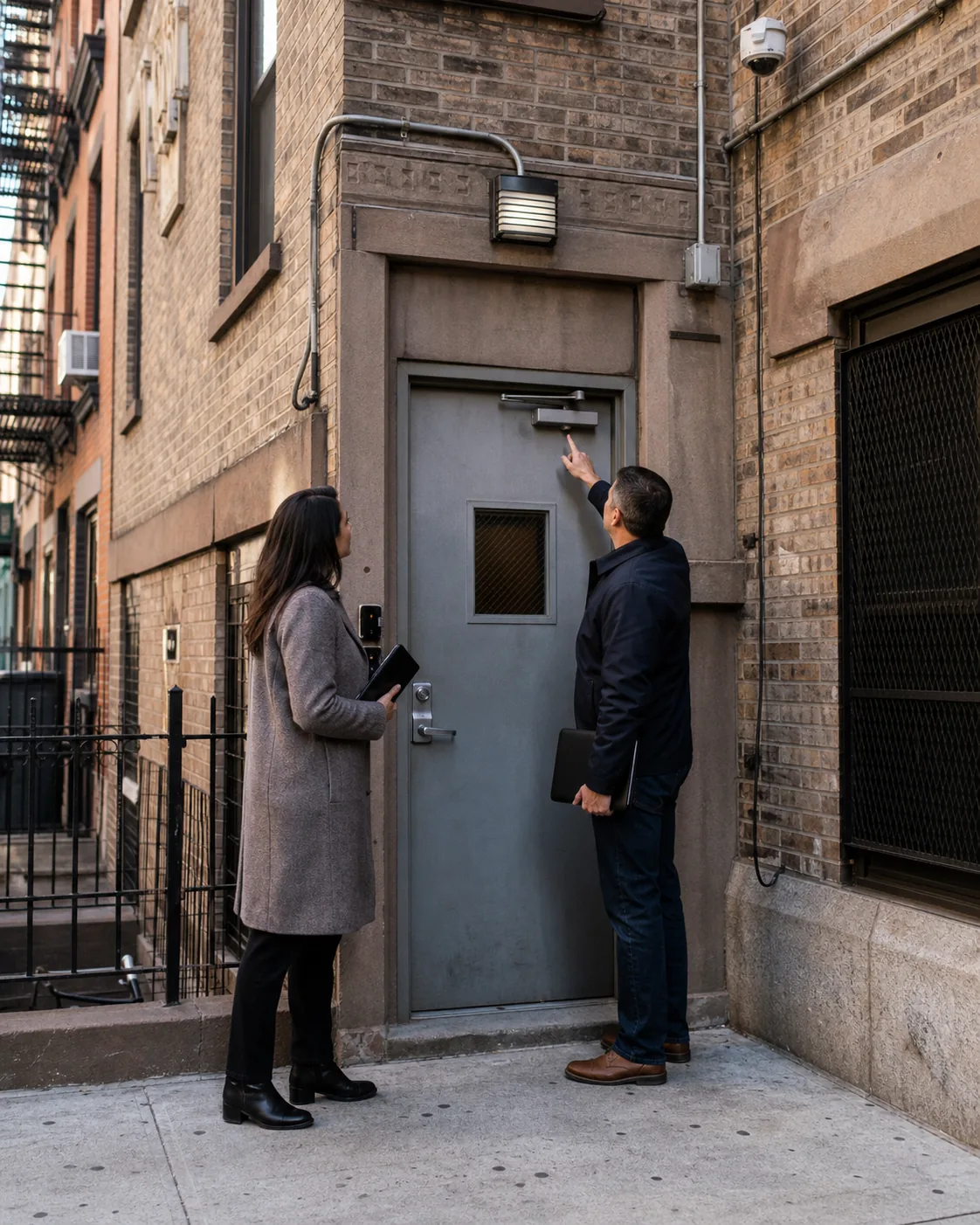
Determine who can enter each area, how access is granted, and whether an unauthorized person could move from a public zone into a resident-only space. Mechanical, electrical, telecommunications, and building-control rooms should receive particular attention because disruption can affect broader operations.
Evaluate Access Control as a Complete Process
Access control is more than the reader mounted beside a door. Review the full credential lifecycle—from issuance through return or deactivation.
Questions to ask include:
- Who is authorized to issue keys, fobs, codes, or mobile credentials?
- Is each credential assigned to a specific person or apartment?
- How quickly are lost credentials disabled?
- What happens when a resident moves out or an employee leaves?
- Are contractors given time-limited access?
- Are shared codes changed after staff or vendor transitions?
- Are audit logs reviewed after incidents?
- Is there a documented process for system outages?
Physical door conditions matter as well. Confirm that locks, hinges, frames, closers, and request-to-exit devices operate as intended. Any proposed changes affecting egress, fire protection, accessibility, or door hardware should be reviewed by qualified professionals and coordinated with applicable building requirements.
Review Camera Coverage and Monitoring Practices
A camera system should support a defined operational purpose. More cameras do not automatically mean better security.
For each camera, document:
- The area it is intended to cover
- Whether the image remains useful in changing light conditions
- Whether faces, entrances, or relevant activity can be observed at the needed distance
- How long recordings are retained
- Who may view or export footage
- Whether the system time is accurate
- How footage is preserved after an incident
- Whether equipment failures generate alerts or are found only after an event
Also consider privacy. Cameras should be positioned and managed appropriately for residential settings, with access to recordings limited according to building policy and professional guidance.
Test Security Procedures, Not Just Equipment
Written procedures should match what actually happens on a busy shift. Interview front-desk personnel, supers, porters, property managers, and residents to identify informal workarounds.
Review procedures for:
- Visitor identification and resident confirmation
- Food, grocery, and package deliveries
- Movers and contractors
- Real estate showings and prospective tenants
- Lost keys or access credentials
- Resident lockouts
- Unattended bags or suspicious activity
- Welfare concerns and requests for apartment access
- Elevator or access-control outages
- Shift handoffs and incident reporting
- Contacting management or emergency services
Run simple tabletop exercises using realistic scenarios. Ask staff what they would do if an intercom failed, a resident demanded an exception, or a delivery person attempted to enter a restricted floor. The exercise can uncover unclear authority, missing contact information, and inconsistent escalation practices.
Include Fire-Life-Safety and Emergency Conditions
Security and emergency planning overlap. A response plan should not create unsafe congestion or interfere with evacuation, emergency responders, or required building systems.
Confirm that staff know:
- How to report a fire, medical emergency, or suspected crime
- Where current emergency contacts and building information are kept
- How to direct first responders to the correct entrance or location
- What to do when alarms, elevators, intercoms, or access systems are unavailable
- How security duties change during construction, utility interruptions, or major building work
- Which issues must be escalated to building management or qualified fire-life-safety professionals
Buildings seeking trained personnel for required or operational roles can review Guardian’s fire-life-safety director services. Specific staffing and certification needs depend on the property and circumstances and should be verified with the appropriate professionals and authorities.
Look Closely at Staffing Gaps and Temporary Conditions
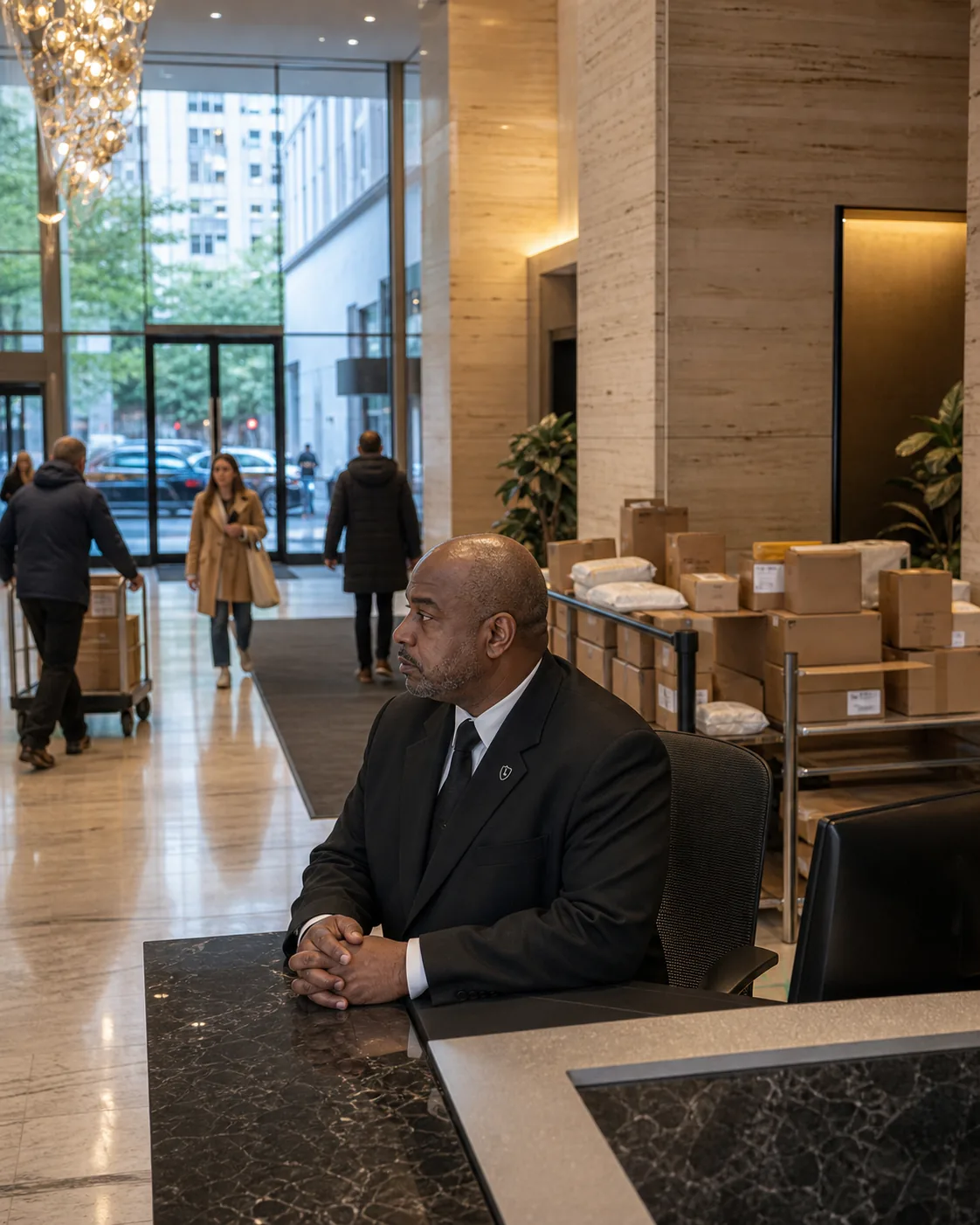
Risk can increase when normal operations change. Renovations may create temporary entrances. Scaffolding can affect visibility. A front-desk vacancy or callout may leave an otherwise controlled lobby without coverage.
Identify foreseeable gaps such as:
- Overnight or weekend staffing reductions
- Meal breaks and shift changes
- Holidays and high-delivery periods
- Special events or large move-ins
- Construction projects and open work areas
- Access-system or elevator outages
- Sudden employee absences
- Severe weather or neighborhood disruptions
Create a written backup plan for each high-priority condition. If an unexpected vacancy leaves a property exposed, emergency security coverage may help provide temporary on-site support while management restores normal operations.
Prioritize Findings by Risk and Feasibility
A useful assessment should end with an action plan—not a collection of observations. Rank each finding according to:
- Likelihood of occurrence
- Potential effect on people and operations
- Number of residents or areas exposed
- Existing safeguards
- Ease and cost of correction
- Whether an interim measure is needed
Separate recommendations into three groups:
Immediate Corrections
Examples may include securing a door that does not latch, deactivating an unreturned credential, replacing failed lighting, or updating an outdated emergency contact list.
Near-Term Operational Improvements
These may include revising visitor procedures, retraining staff, adjusting patrol routes, testing camera-recording processes, or formalizing package-room access.
Longer-Term Capital Projects
These may involve replacing an access-control platform, redesigning a lobby, adding controlled doors, improving garage security, or upgrading camera coverage. Coordinate these projects with qualified security, building, accessibility, fire-protection, and legal professionals as appropriate.
Make the Assessment an Ongoing Practice
A security assessment is a snapshot. Review conditions after incidents, staff changes, major construction, equipment upgrades, or changes in how residents and deliveries use the building. Periodic nighttime walkthroughs and spot checks can also show whether procedures remain effective.
Document what was inspected, what was found, who owns each corrective action, and the target completion date. Follow up to verify that the correction works in practice.
Request a Residential Security Review or Coverage
Guardian ISI helps New York residential properties evaluate on-site security needs and arrange professional guard coverage. To discuss lobby security, patrols, temporary assignments, or an urgent staffing gap, call or text (212) 602-1695 or request coverage online.
Frequently asked questions
How often should an apartment building conduct a security assessment?
Review the property periodically and whenever a significant change occurs, such as an incident, renovation, staffing change, new access-control system, or change in building use. High-traffic or complex properties may benefit from more frequent reviews.
What is the most commonly overlooked residential building vulnerability?
Secondary entrances and inconsistent procedures are frequently overlooked. A well-controlled lobby can be undermined by a service door that fails to latch, a shared access code, or routine tailgating.
Should a security review be performed during the day or at night?
Both. Daytime reviews show normal business and delivery activity, while nighttime reviews reveal lighting, visibility, staffing, and access conditions that may not be apparent earlier.
Are security cameras enough to protect an apartment building?
No. Cameras can support deterrence, monitoring, and incident review, but they work best alongside reliable doors, controlled credentials, appropriate staffing, clear procedures, and timely maintenance.
What should management do first after finding a vulnerability?
Address conditions posing an immediate risk, implement a temporary safeguard if a permanent repair will take time, document responsibility, and set a completion date. Verify afterward that the correction is effective.
Can a security company provide coverage for an unexpected lobby staffing gap?
Often, depending on personnel availability and assignment requirements. Management should provide the building location, schedule, duties, access procedures, and any site-specific concerns when requesting coverage.