
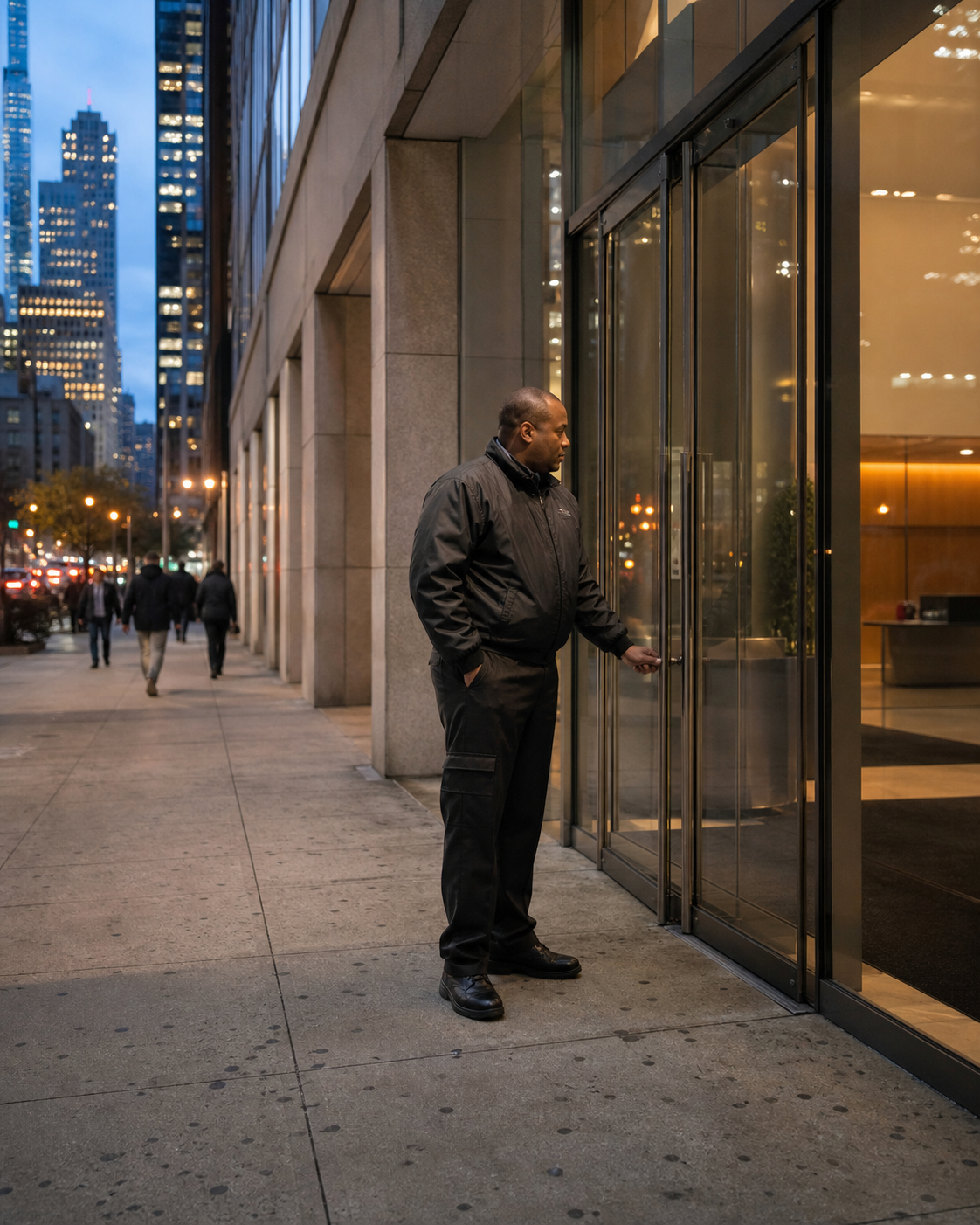
A security guard’s patrol schedule should reflect the building’s actual risks—not an arbitrary number of rounds per shift. High-activity entrances and lower-activity spaces may need different levels of coverage.
The right frequency depends on occupancy, operating hours, building layout, access points, incident history, and the duties assigned to each officer. Patrol timing should also vary enough that it is not easily predicted.
Is There a Standard Patrol Frequency?
There is no single patrol interval that works for every commercial building. A 24-hour office tower, a residential property, an active construction site, and a boutique retail location have different vulnerabilities.
Instead of asking only how many patrols a guard should complete, property managers should consider:
- Which areas require observation
- How often each area should be checked
- What the officer must verify at every checkpoint
- How patrols will be documented
- Which conditions require immediate escalation
- Whether fixed-post responsibilities leave enough time for meaningful rounds
A guard responsible for lobby access control, visitor processing, tenant requests, and deliveries may not be able to leave the desk every 30 minutes. If frequent patrols are essential, staffing and post assignments must make that possible.
Set priorities before choosing intervals
Use the site assessment, applicable obligations, and written post orders to set actual intervals. The following questions help define the assignment without treating sample timings as a standard.
| Area | What the scheduling review should establish |
|---|---|
| Main lobby | Whether continuous staffing is needed and who provides relief |
| Loading dock | How coverage follows active deliveries and contractor access |
| Perimeter | Which doors, lighting conditions, and recurring incidents need attention |
| Interior common areas | How occupancy, privacy, and travel time affect the route |
| Restricted areas | Who is authorized to enter and how door conditions are checked safely |
| Vacant spaces | Whether changing access or maintenance conditions justify extra checks |
Factors That Determine How Often Guards Should Patrol
Building Use and Occupancy
Busy office buildings generally require more attention during morning arrivals, lunchtime, deliveries, and evening departures. After-hours patrols may focus more heavily on vacant floors, restricted doors, loading areas, and the perimeter.
Mixed-use buildings need schedules that account for different operating hours. A property with offices, retail tenants, and residential units may remain active long after the traditional workday ends.
Layout and Patrol Duration
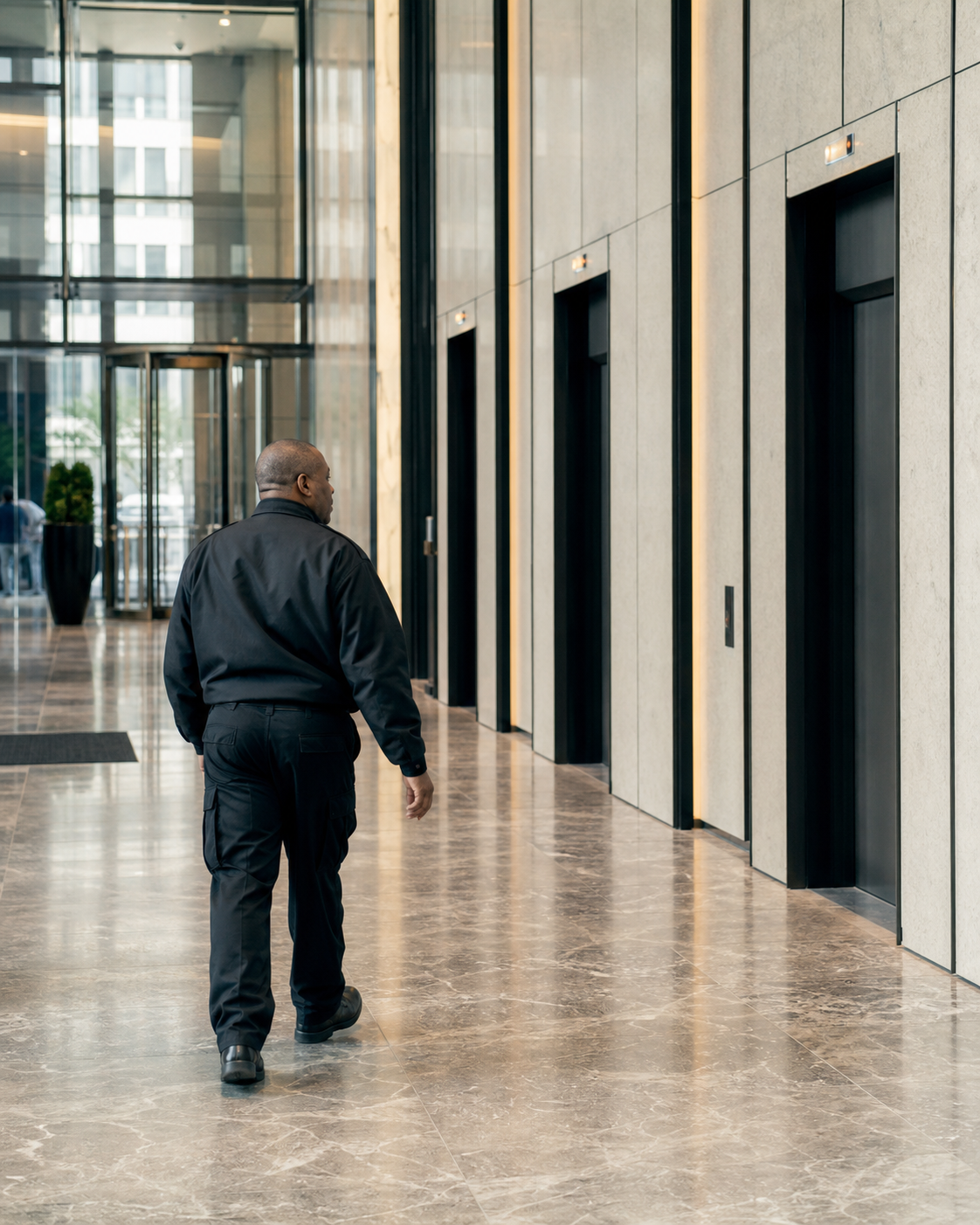
A patrol interval is only realistic if an officer can complete a thorough round and return to the assigned post without rushing. Elevators, stairwells, multiple entrances, mechanical floors, and separate structures all add time.
Managers should walk the proposed route with the security provider. This helps identify how long a proper patrol takes and whether another officer is needed to maintain lobby or control-room coverage.
Incident History
Reports of package theft, vandalism, unauthorized entry, tenant complaints, or recurring door problems should influence patrol priorities. Incident records can reveal patterns by location, day, and time.
For example, if unauthorized access attempts repeatedly occur near a service entrance during shift changes, patrols can be concentrated around that period rather than increased uniformly across the entire day.
Time of Day
A single schedule may not fit the full 24-hour cycle. Patrol plans often work better when divided into operating periods:
- Opening: Check entrances, public areas, and conditions that developed overnight.
- Business hours: Prioritize access points, visitor activity, deliveries, and high-traffic spaces.
- Closing: Confirm that designated doors and common areas are in the expected condition.
- Overnight: Focus on the perimeter, vacant areas, restricted doors, and unusual building conditions.
Temporary Risk Conditions
Coverage should be adjustable. Construction work, a broken door, a camera outage, a special event, or an increase in local incidents may justify a temporary patrol post or shorter intervals.
If a fire protection system is impaired, ordinary security patrols should not automatically be treated as a fire watch. Fire-watch responsibilities, qualifications, documentation, and frequency should be addressed separately with the building’s fire-life-safety professionals and the authorities overseeing the condition. Guardian also provides dedicated fire guard services when appropriate.
Scheduled vs. Random Patrols
A useful patrol program usually combines scheduled accountability with some timing variation.
Fixed intervals make it easier to verify that priority areas are being checked. However, an entirely predictable route can create gaps that are easy to anticipate. Controlled variation helps reduce that predictability without allowing critical checkpoints to be missed.
For example, post orders might require a loading dock check at least twice per hour while allowing the officer to vary the exact time and route. Certain checks—such as opening procedures or scheduled contractor access—may still need to occur at specific times.
What Should Happen During a Patrol?
Patrol quality matters as much as frequency. Officers should be trained to observe and report conditions such as:
- Propped, damaged, or unsecured doors
- Unauthorized people in restricted areas
- Water leaks, unusual odors, smoke, or abnormal sounds
- Obstructed corridors or exits
- Damaged locks, gates, windows, or lighting
- Unattended property or suspicious packages
- Unsafe behavior or apparent medical emergencies
- Conditions requiring engineering, management, or emergency response
The guard’s instructions should explain what can be corrected safely, what must be reported, and whom to contact. Security officers should not perform engineering, maintenance, or emergency-response tasks outside their training and assigned role.
How to Document Patrols
Patrol records help managers verify performance and identify recurring problems. Depending on the property, documentation may include electronic checkpoints, time-stamped activity logs, incident reports, photographs, or supervisor reviews.
A useful patrol entry records more than “all clear.” It should identify the area, time, observed condition, action taken, and person notified when follow-up is needed.
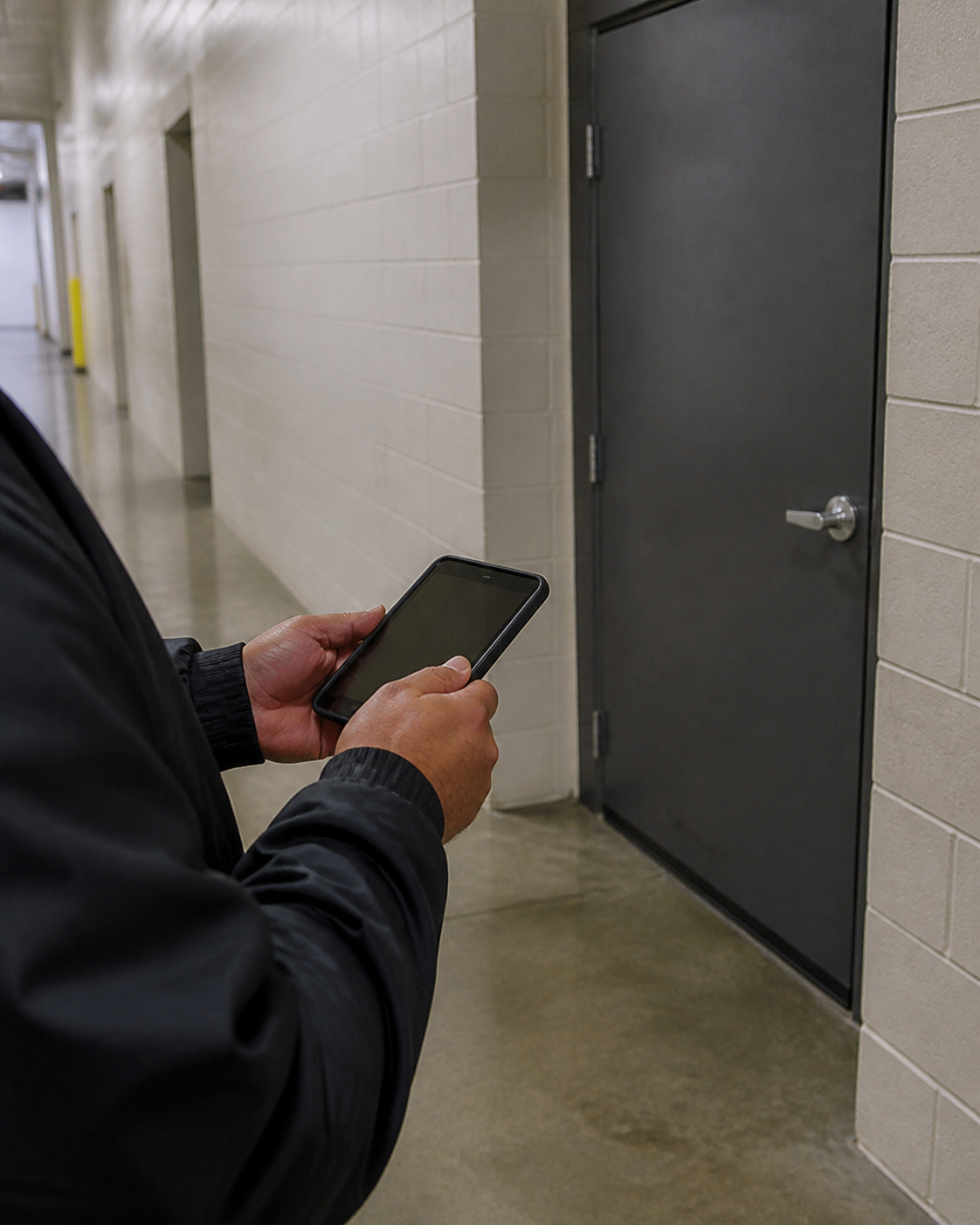
Technology can confirm that a checkpoint was visited, but it cannot by itself show whether the officer made a careful observation. Supervisory review, clear post orders, and periodic route audits remain important.
A Simple Process for Setting Patrol Frequency
- List critical areas. Include entrances, loading zones, restricted floors, common areas, stairwells, perimeter sections, and recurring trouble spots.
- Rank each area by risk. Consider consequences as well as the likelihood of an incident.
- Measure the route. Walk it at realistic operating times, including elevator waits and required documentation.
- Define minimum checks. Assign practical frequencies by area and time period.
- Preserve fixed-post coverage. Confirm that patrols will not leave essential access points unattended.
- Write escalation procedures. Specify who receives routine, urgent, and emergency notifications.
- Review the data. Adjust the plan after incidents, operational changes, or recurring exceptions.
A professional security guard service can help translate these needs into workable post orders and staffing recommendations. Manhattan office properties may also benefit from a plan designed specifically for commercial office security.
Review Patrol Plans Regularly
Patrol frequency should be reviewed whenever a building’s occupancy, hours, access procedures, construction activity, or incident profile changes. Managers should also review missed checkpoints, repeated maintenance observations, tenant feedback, and response times.
The goal is not to maximize the number of rounds. It is to place trained officers in the right areas often enough to deter problems, identify unusual conditions, and support an appropriate response—without compromising other critical posts.
Request Security Coverage in New York City
Guardian ISI can help Manhattan property managers evaluate patrol routes, officer responsibilities, operating hours, and temporary risks. For planned assignments or emergency security coverage, call or text (212) 602-1695 or request coverage online.
Frequently asked questions
How many patrols should a security guard complete during an eight-hour shift?
There is no universal number. The appropriate total depends on the route length, risk level, building activity, fixed-post duties, and required documentation. Frequencies should be set by area rather than using one building-wide target.
Should security guards patrol at the same time every hour?
Not always. Critical checks can have minimum required intervals while exact timing and routes vary. This maintains accountability without making every patrol completely predictable.
Are electronic patrol checkpoints necessary?
They are not appropriate for every property, but they can provide time-stamped confirmation that key locations were visited. They should support—not replace—officer observations, incident reports, and supervision.
Should a lobby guard leave the desk to conduct patrols?
Only if the site’s staffing plan and post orders permit it. If the lobby requires continuous coverage, another officer or relief arrangement may be needed for interior and perimeter rounds.
When should patrol frequency be increased?
Consider temporary increases during special events, construction, equipment outages, repeated access problems, tenant move-ins, elevated local activity, or other changes that increase the property’s exposure.
Can a regular security patrol serve as a fire watch?
Do not assume it can. A fire watch may involve separate qualifications, duties, documentation, and instructions based on the specific impairment. Coordinate with qualified fire-life-safety professionals and the authorities overseeing the condition.