
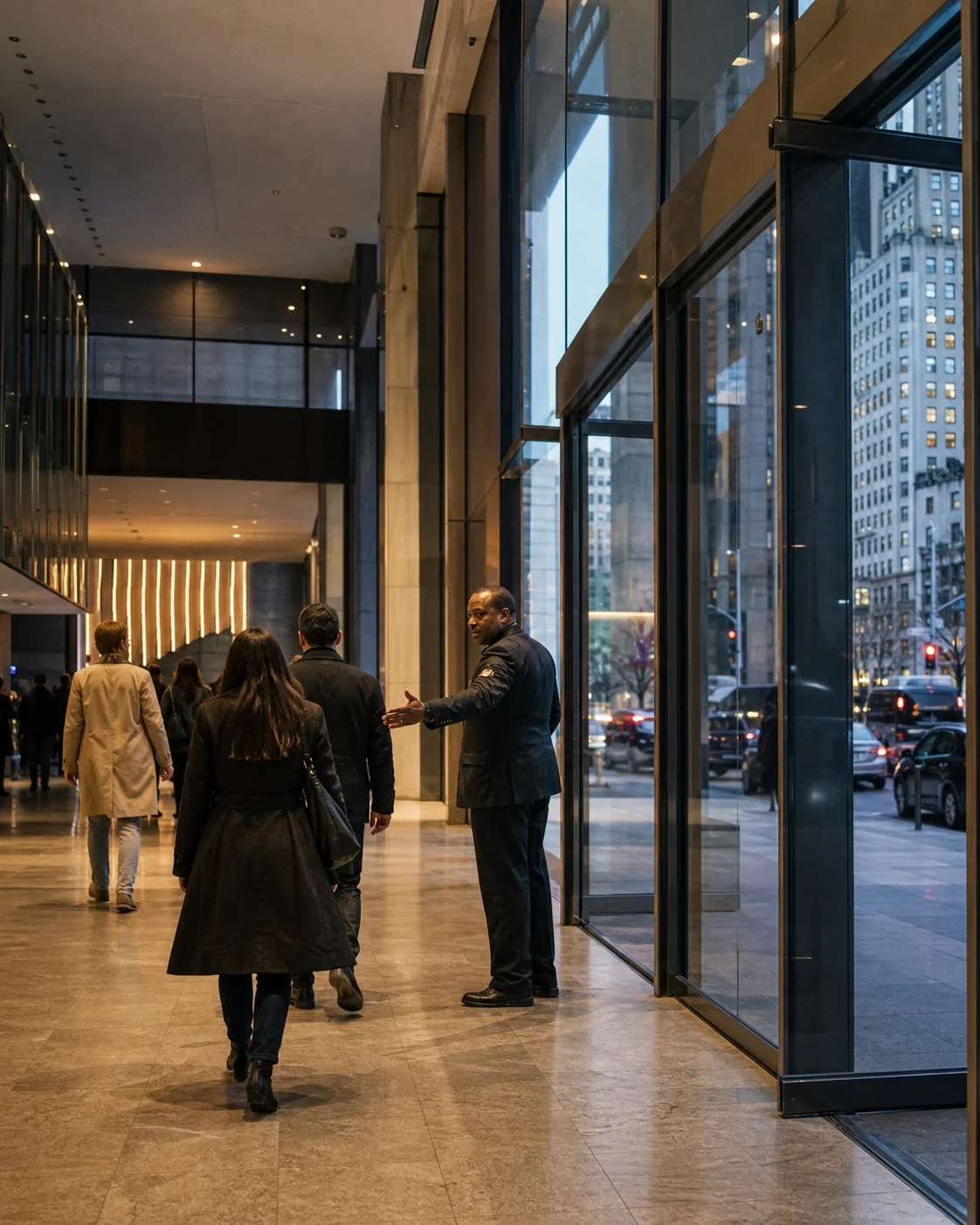
When gunfire is heard or reported outside a New York City property, the lobby guard’s first responsibility is to protect life without creating additional exposure. The guard should not step outside to investigate, approach the suspected source, or place themselves in view through lobby glass.
The immediate priorities are to move people away from danger, call 911, control access when it is safe to do so, and communicate reliable information. Evidence preservation and management notifications matter, but they come after urgent life-safety actions.
The first actions: shelter, create distance, and call 911
If shots appear to be coming from outside, the guard should direct occupants and visitors away from exterior doors, windows, and street-facing glass. Use substantial walls, interior rooms, or other available areas that provide greater protection from the apparent direction of the threat.
The guard should also move to a protected position. Looking through the doors, walking onto the sidewalk, or standing directly behind glass can create unnecessary exposure.
Once in a safer location, call 911 without delay. Do not assume that another person has already called.
Provide the dispatcher with:
- The property’s complete address, borough, and nearest cross street
- The location from which the shots appeared to come
- Whether shots are continuing
- Any description of a person, vehicle, or direction of travel that was actually observed
- Known or reported injuries
- The safest entrance or meeting point for responding officers, if known
- The caller’s name, role, location, and callback number
Stay on the line and follow the dispatcher’s instructions. Avoid presenting assumptions as facts. For example, say “I heard four loud bangs from the east side of the building” rather than claiming to know the weapon or shooter’s exact location.
Do not go outside to confirm what happened
A lobby guard is not helped by obtaining a better view if doing so places the guard in the line of fire. Cameras, intercoms, access-control systems, and information from protected witnesses should be used when available.
The guard should not:
- Step outside to investigate sounds or confront a suspicious person
- Stand in front of glass doors to watch the street
- Pursue a fleeing person or vehicle
- Touch weapons, shell casings, blood, or abandoned property
- Allow curiosity to draw occupants toward windows
- Post images or incident details on social media
If an injured person is outside, tell the 911 dispatcher what can be seen from a protected location and follow instructions. A guard should not enter a potentially active danger area unless directed by responding authorities and it is safe to do so.
Shelter occupants based on where the danger is located
When the apparent threat is outdoors, moving people deeper into the building may be safer than sending them into the street. Direct occupants to get low, stay away from windows, silence phones when appropriate, and wait for verified instructions.
Avoid making an automatic evacuation announcement without considering the location of the danger. An evacuation can move people toward gunfire or into the path of responding officers. The property’s emergency procedures, information from 911, and instructions from NYPD should guide the response.
If the threat enters the building or circumstances change, the response must change as well. Guards should relay new information to 911 immediately and follow the site’s emergency action procedures.
Restrict entry without blocking emergency egress
If it can be done from a protected position and is consistent with the property’s procedures, the guard may secure or restrict exterior entry to reduce the risk of an armed person entering the building.
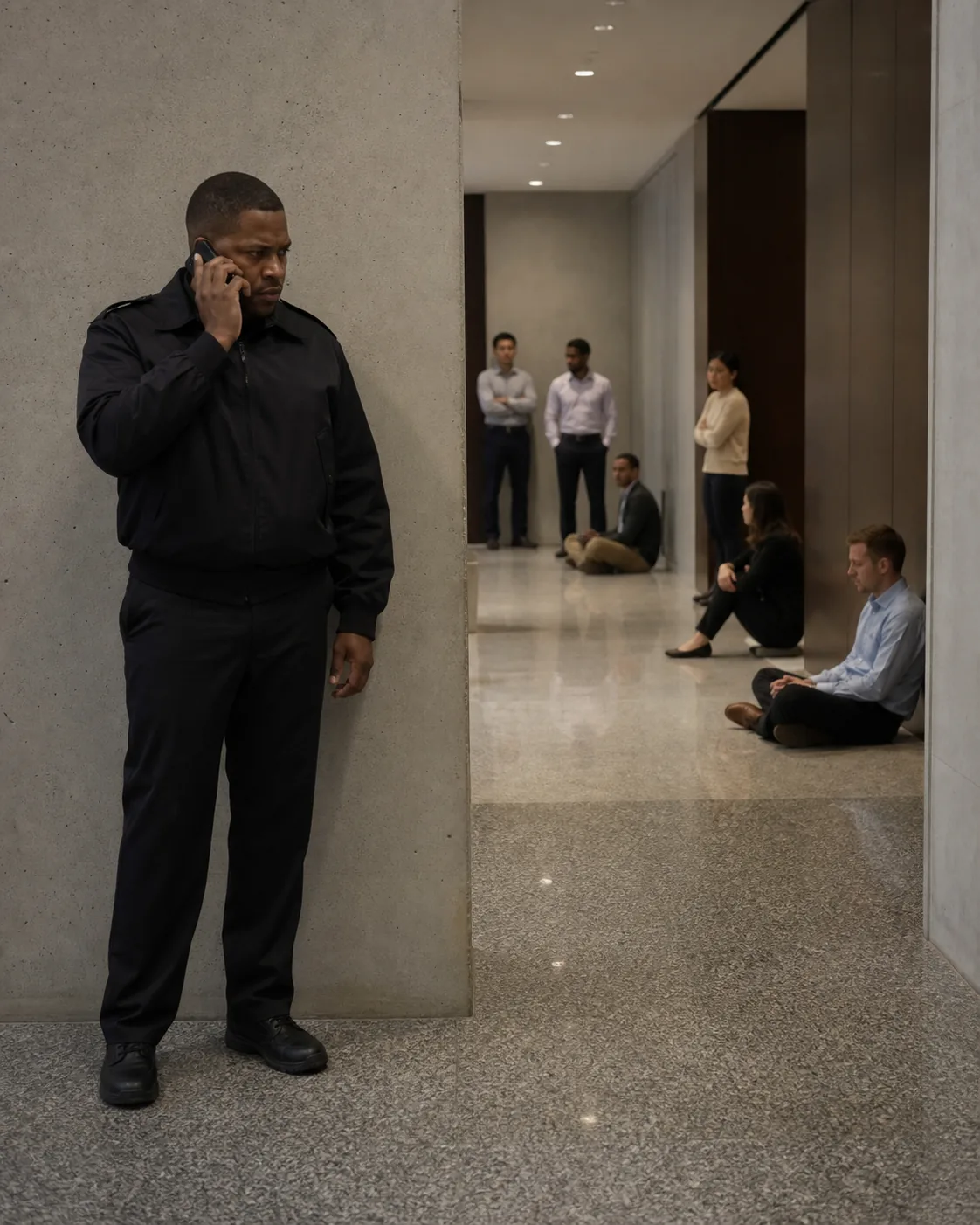
This may involve:
- Locking or electronically securing designated entrance doors
- Moving occupants away from the vestibule
- Using an intercom rather than opening a door
- Directing arriving tenants away from the affected entrance when communication systems permit
- Assigning another trained team member to monitor a protected secondary entrance
Entry control should not require the guard to stand exposed at the door. It also should not obstruct required emergency egress. Police, fire, and emergency medical personnel must be able to reach the property, so the guard should tell 911 which entrance is secured and how responders can gain access.
Give responding officers a clear handoff
NYPD officers arriving at a gunfire call may have limited information. The guard should keep their hands visible, follow commands promptly, and avoid running toward officers.
From a protected and appropriate location, be ready to state:
- What the guard personally saw or heard
- When it happened and whether it is continuing
- The apparent direction of the gunfire or travel
- Where occupants are sheltering
- Whether anyone may be injured
- Which doors are locked and how officers can enter
- Where relevant cameras and recorded video are located
Do not repeat unverified descriptions as confirmed facts. Identify whether information came from direct observation, a witness, a camera, or a third-party report.
Preserve surveillance video before it is overwritten
After the immediate threat is addressed and law enforcement has been notified, the property should preserve relevant surveillance footage. The goal is to retain original evidence—not to conduct an independent investigation.
Follow the site’s video-retention and evidence procedures. Practical steps may include:
- Recording the incident time and checking whether the camera system’s clock is accurate
- Identifying street-facing, entrance, loading-area, elevator, and adjacent cameras
- Preserving footage from a reasonable period before and after the event
- Exporting footage in its native format when possible, along with an ordinary playable copy if site procedure permits
- Retaining the original export securely
- Documenting who accessed, exported, copied, or released the footage
- Preventing automatic overwrite of the relevant recording
Do not edit the video, add commentary, record it on a personal phone, or distribute it to tenants or the media. Requests for footage should be handled through authorized management and law-enforcement channels.
Record witness information without conducting an interrogation
Witnesses may leave before officers arrive, particularly if they are frightened. If conditions are safe, a guard can request basic contact information and write down what each person says they personally observed.
Useful information includes:
- Full name
- Preferred phone number or email address
- Where the witness was standing
- The approximate time of the observation
- What the witness saw or heard, in their own words
- Any description or direction of travel they personally observed
Keep witness accounts separate. Do not ask witnesses to compare stories, pressure them to remain, promise confidentiality, or detain anyone. Record facts objectively and give the information to responding officers or authorized management.
Notify management after emergency services
Management should be notified promptly, but an internal call tree must not delay the 911 call. Once urgent life-safety steps are underway, the guard should contact the property manager, security supervisor, and other designated personnel under the site’s emergency plan.
The first internal update should be brief and factual:

- Time the incident was heard, seen, or reported
- Time 911 was called
- Current location of the apparent threat
- Actions taken to shelter occupants and secure entrances
- Known injuries, without speculation
- Status of police or EMS response
- Whether video and witness information are being preserved
Continue using a written incident log. Record times, instructions received, notifications made, access-control changes, and the arrival of emergency responders. Avoid including rumors or unsupported conclusions.
Prepare the lobby team before an incident occurs
A guard can respond more effectively when the property has clear, site-specific procedures. Management should review:
- Protected shelter locations away from exterior glass
- Which doors can be secured remotely
- How emergency responders will enter
- Who is authorized to make building announcements
- Camera coverage, system time accuracy, and export procedures
- Emergency contact lists and escalation responsibilities
- Relief coverage if the lobby becomes part of a police scene
- Post-incident reporting and evidence-handling procedures
Periodic drills and tabletop discussions can reveal problems such as missing keys, outdated phone numbers, blocked shelter areas, or staff members who do not know how to preserve video.
A simple priority order for lobby guards
When gunfire is outside the property, remember this sequence:
- Move people away from glass and the apparent direction of danger.
- Take cover and call 911.
- Restrict entry from a protected position when safe and appropriate.
- Follow dispatcher and police instructions.
- Notify management without delaying emergency services.
- Preserve video, witness details, and an objective incident log.
Every event is different. Site procedures and real-time instructions from 911 and responding authorities should take priority over a generic checklist.
Review your property’s security response plan
Guardian ISI helps Manhattan properties plan and staff professional lobby security, access control, incident reporting, and emergency coverage. To discuss your building’s needs, call or text (212) 602-1695 or request coverage online.
Quick planning checklist
| Review point | What to confirm |
|---|---|
| Immediate safety | Reduce exposure and call 911 when safe |
| Coordination | Follow emergency instructions and communicate entry arrangements |
| After stabilization | Preserve records and document observed facts |
Related Guardian services
Review Commercial Office Security and Emergency Security Coverage to connect these procedures with the appropriate staffing and site responsibilities.
Official references
Frequently asked questions
Should a lobby guard go outside after hearing gunfire?
Generally, no. The guard should avoid unnecessary exposure, move people away from exterior glass, call 911 from a protected location, and follow dispatcher or police instructions.
Should occupants evacuate if the gunfire is outside?
Not automatically. Sending people outside could move them toward the danger. Use the property’s emergency procedures and instructions from 911 or NYPD to determine whether occupants should shelter or relocate.
Can the guard lock the front doors?
The guard may restrict exterior entry if it can be done safely and under site procedures. Emergency egress should remain available, and 911 should be told how responders can enter.
What should the guard tell 911?
Provide the full address, nearest cross street, apparent location and direction of the gunfire, whether shots are continuing, known injuries, factual descriptions, and a callback number.
How should surveillance footage be handled?
Preserve relevant footage before it is overwritten, retain an original export securely, document access, and provide it only through authorized management or law-enforcement channels. Do not edit it or copy it to a personal device.
Should the guard interview witnesses?
The guard may request contact details and record brief, separate accounts when conditions are safe. The guard should not pressure, detain, or encourage witnesses to coordinate their stories.