
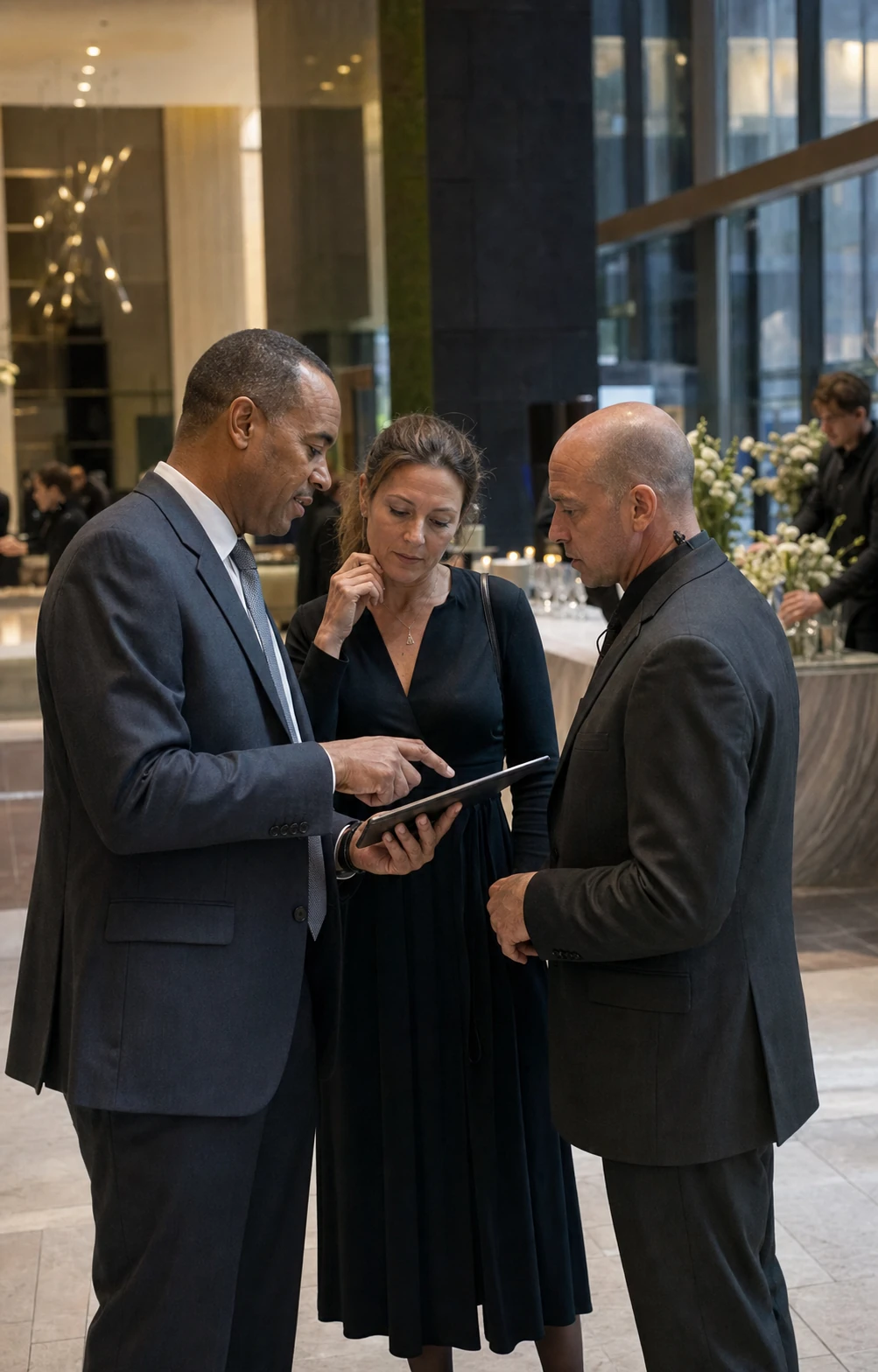
A tenant reception, product launch, client dinner, or employee celebration can change how a Manhattan office building operates after hours. A floor that normally holds a small cleaning crew may suddenly contain guests, caterers, temporary staff, production equipment, and people unfamiliar with the building.
The Fire and Life Safety Director should not discover those changes when guests begin arriving. Early coordination allows the FLSD, security team, property management, and tenant organizer to keep event operations aligned with the building’s accepted emergency procedures.
Why After-Hours Events Need a Separate Briefing
Regular business-day assumptions may not apply during an evening event. Tenant fire wardens may be absent. Visitors may not know the nearest stairs. The service elevator may be reserved for catering. Lobby personnel may be processing guests while delivery workers are using another entrance.
Coordinate the event with the building’s accepted emergency plan and designated fire-life-safety staff. The tenant organizer should understand who issues emergency directions and how event personnel receive them.
An event briefing does not create a separate emergency plan. It gives the team the information needed to apply the building’s existing plan to an unusual occupancy pattern.
Obtain an Event Profile
Ask the tenant organizer to provide an operational summary early enough for the building team to review it. Useful information includes:
- Event date and operating hours
- Expected attendance
- Floors and rooms being used
- Tenant and event-company contacts
- Guest arrival and departure windows
- Catering, entertainment, and production vendors
- Furniture or equipment being brought in
- Elevator and loading-dock needs
- Whether alcohol will be served
- Any guests who may require assistance during an emergency
- The expected time the final vendor and tenant representative will leave
The FLSD does not need a marketing description of the event. The goal is to understand how the event changes occupancy, movement, access, and emergency communication.
Identify the Responsible Tenant Representatives
There should be a designated tenant decision-maker on-site throughout the event, plus an alternate. Security and the FLSD need names and mobile numbers—not a general office line that no one answers after 6 p.m.
The representative should be able to:
- Confirm whether a person is an invited guest
- Contact the event organizer or senior tenant leader
- Address unsafe event conditions
- Assist with emergency instructions
- Account for vendors and temporary workers
- Confirm when the event has ended
Do not assume the outside event planner has authority to make decisions for the tenant or building.
Review Arrival and Access Procedures
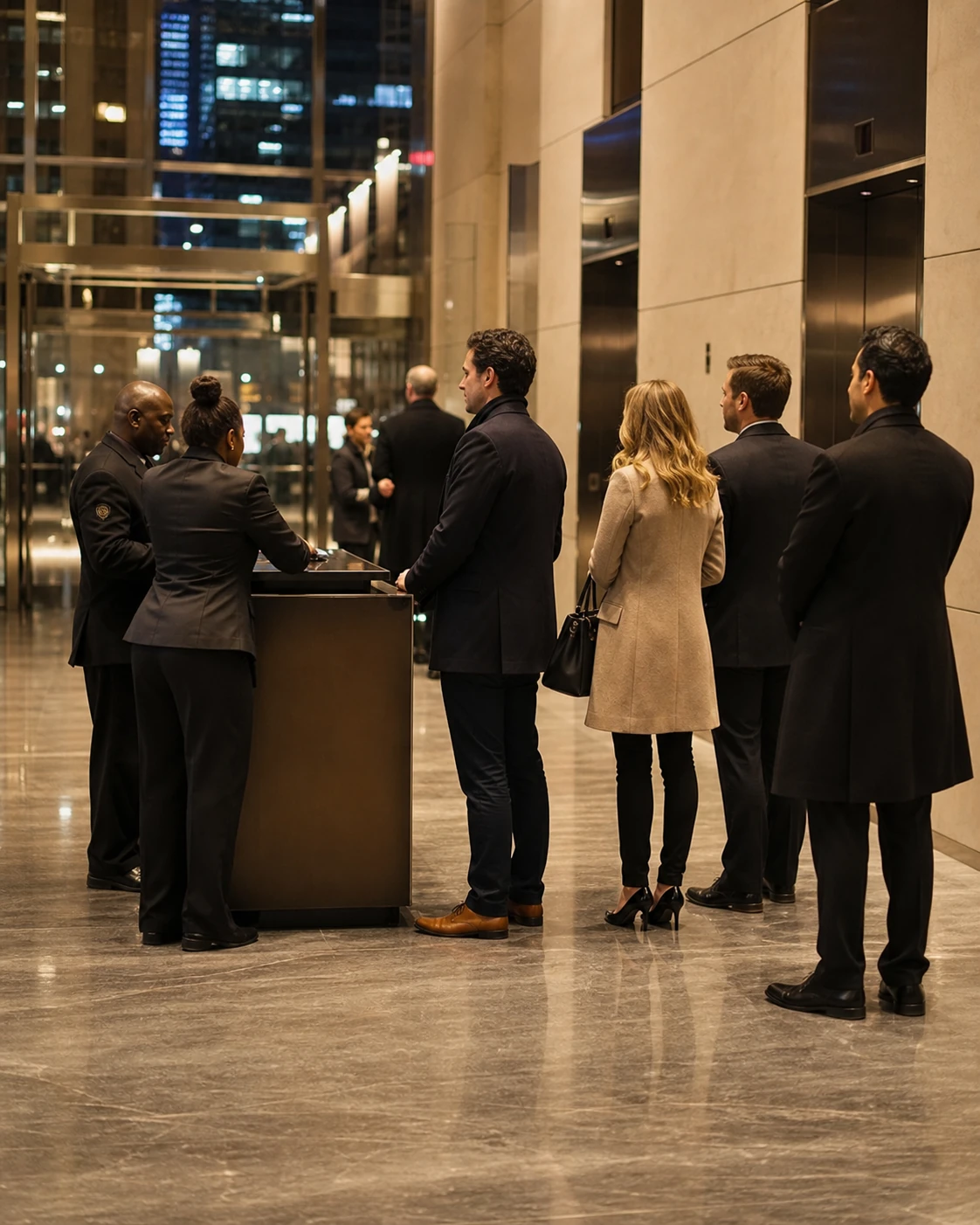
Large guest lists can overwhelm a lobby if security receives them at the last minute. Decide how invitations will be verified and what happens when a name is missing, misspelled, transferred, or accompanied by additional guests.
The plan should address:
- Where guests queue without blocking normal tenant traffic
- Which desk or person verifies attendance
- Whether identification is required by building or tenant policy
- How approved guests reach the event floor
- Whether elevator access is controlled
- How late arrivals are handled
- Who resolves disputes without pressuring the lobby officer
Security officers should receive a script and escalation contact. They should not be expected to negotiate invitation exceptions independently.
Walk the Event Floor
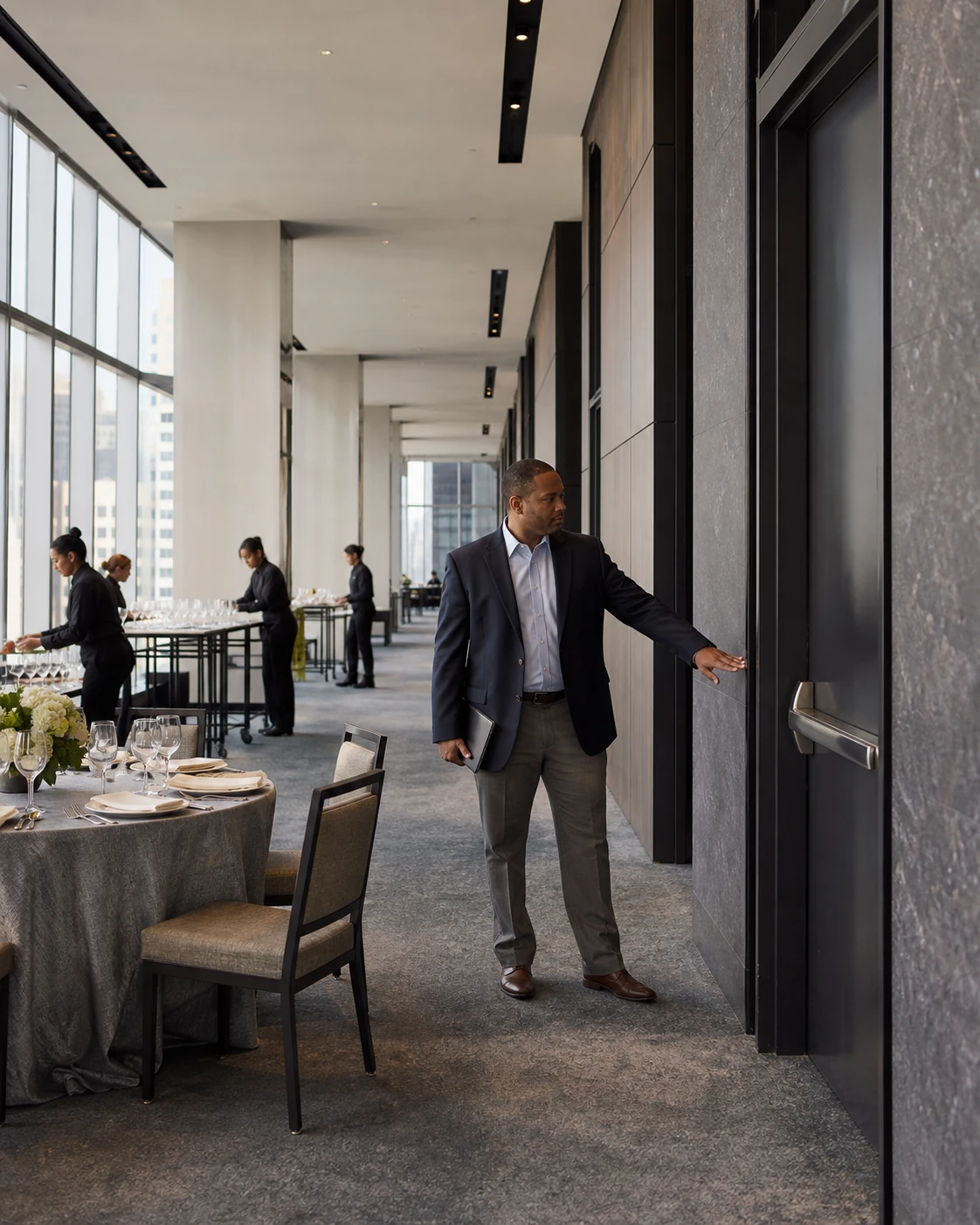
Before guests arrive, the FLSD or designated building representative should review conditions that could affect emergency operations. Depending on the building and event, the walk-through may include:
- Exit and stair access
- Corridors and door swing areas
- Temporary reception tables and coat racks
- Audio, lighting, and production equipment
- Catering staging and warming equipment
- Decorations or displays
- Doors held open for guest movement
- Areas restricted to building or tenant personnel
- Communication capability with the lobby and fire command center
Required egress must remain free from obstruction and ready for immediate use. (nyc.gov) If a setup creates a concern, address it before admission begins rather than during the event.
Brief Event Staff on Emergency Communications
Outside vendors may not recognize building announcements or know who has authority during an emergency. A short briefing should explain:
- Who issues building emergency instructions
- That event staff and guests must follow those instructions
- How the tenant representative receives updates
- Which exits or stairs serve the event area
- That elevators should not be used contrary to emergency instructions
- How to report smoke, fire, a medical emergency, or another immediate danger
- Where vendor supervisors should assemble their teams if directed
The briefing should be concise and consistent with the building’s accepted plan. Avoid inventing event-specific evacuation directions that conflict with established procedures.
Plan for Medical Calls and Disruptive Behavior
After-hours gatherings can produce medical incidents, lost guests, intoxicated individuals, disputes, or people attempting to enter restricted areas. The FLSD, security supervisor, and tenant representative should understand their distinct responsibilities.
Security may control the immediate area and facilitate responder access. The FLSD or designated FLS staff may need to implement applicable emergency procedures. Tenant leadership may manage event communications and identify the person involved. No one should delay a 911 call while attempting to protect the event schedule or avoid embarrassment.
Maintain Building Coverage Outside the Event
An event on one floor should not consume every available officer. Loading docks, lobbies, mechanical areas, other tenants, and perimeter doors still require attention.
Management should review whether the event adds tasks that justify a temporary officer, such as:
- Guest-list screening
- Elevator-bank control
- Event-floor access monitoring
- Loading-dock coverage
- Vendor escorting
- Late-night lobby support
Guardian offers Fire and Life Safety Director services and commercial office security for Manhattan properties that need coordinated building coverage.
Complete an End-of-Event Handoff
The tenant representative should tell security when the event has ended and identify vendors who remain behind. The closing check should address:
- Remaining guests
- Catering or production crews still working
- Equipment left in corridors or common areas
- Propped or unlocked doors
- Unclaimed property
- Temporary credentials or access permissions
- Any incident requiring a report
- The final tenant representative leaving the floor
This prevents the overnight team from inheriting unexplained people, property, or access conditions.
Coordinate Before the Event Changes the Building
A successful event should feel effortless to guests, but that experience depends on careful coordination behind the scenes. The FLSD needs timely event information, security needs clear access procedures, and tenant leadership must remain reachable.
To arrange FLSD or security support for an after-hours Manhattan event, call or text Guardian ISI at (212) 602-1695, or request coverage online.
Related Guardian services
Coordinate Fire & Life Safety Director services with Event Security so emergency roles and guest-access duties remain clearly assigned.
Frequently asked questions
Does every tenant event require an additional FLSD?
Not automatically. Staffing should be evaluated against the building’s accepted plan, occupancy conditions, operating hours, and applicable FDNY requirements.
How far in advance should the FLSD receive event details?
As early as practical, especially when the event involves large attendance, temporary equipment, catering, altered access, or after-hours building operations.
Who should remain on-site for the tenant?
A responsible tenant representative with decision-making authority should remain available throughout the event, with an alternate identified.
Should guests receive a full emergency briefing?
A lengthy presentation is rarely practical, but event staff should understand who issues emergency directions, how to report an emergency, and the importance of keeping exits accessible.
Can security change emergency procedures for an event?
No. Event-specific operating instructions should support—not replace or conflict with—the building’s accepted fire safety and emergency procedures.