
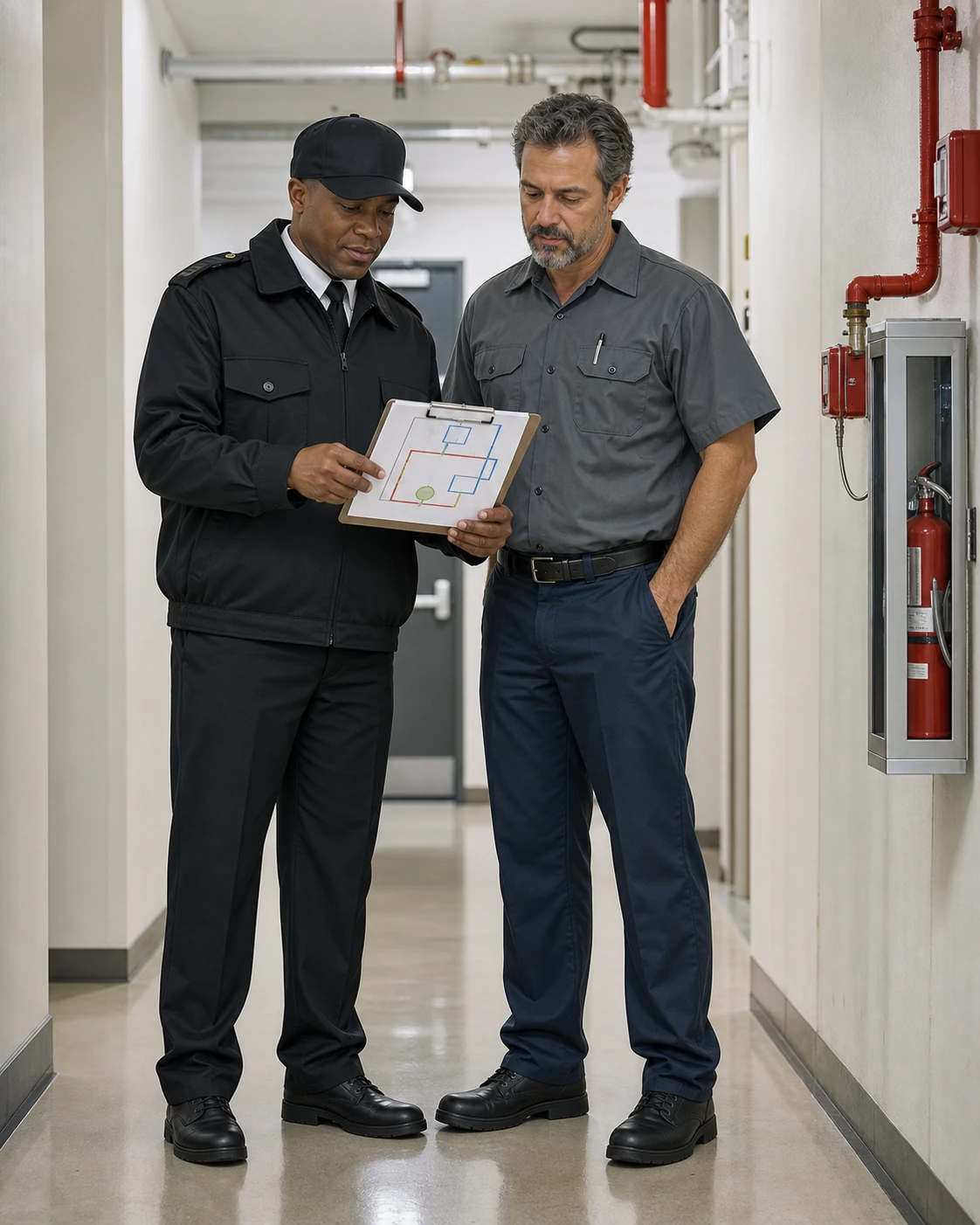
A partial fire-protection-system impairment can affect one floor, one tenant space, a vertical zone, or several disconnected areas of a New York City building. That creates an operational question that generic post orders rarely answer: What exact route should the fire guard patrol?
A well-designed route map helps the guard cover the affected area consistently, recognize hazards, document each patrol, and communicate changes to the impairment coordinator and building team.
It does not replace the building’s impairment plan, accepted fire-safety plan, or instructions from FDNY. It translates those requirements into a route that can be performed on the ground.
Confirm the Actual Scope of the Impairment
Do not build the route around a vague statement such as “sprinkler work on the 12th floor.” The impairment coordinator, engineer, fire-alarm vendor, or sprinkler contractor should identify the affected system and boundaries.
Clarify:
- Which system or component is out of service
- The exact floors, rooms, zones, or tenant areas affected
- Whether corridors, stairs, mechanical rooms, shafts, or setback areas are included
- The expected start and restoration times
- Whether the scope will move as work progresses
- Which building representative can authorize route changes
A panel message or contractor description may not tell the guard every area that has lost protection. The route must be based on confirmed building information.
Apply the Coverage Requirements to the Route
Current FDNY F-01 study material states that affected areas must be patrolled at least once every hour and that an individual fire guard must not be assigned more than 50,000 square feet of building floor area. It also addresses who may conduct the initial fire watch and when an F-01 Certificate of Fitness holder is required. (nyc.gov)
Those requirements should inform staffing before the route begins. If one guard cannot safely cover the assigned area within the required cycle, management should not solve the problem by telling the guard to walk faster. The scope, route, or staffing needs to be reassessed.
FDNY personnel may provide additional direction based on the specific condition. The building team should document and follow that direction.
Mark Every Required Route Element
A route map can be a clean floor plan, a simplified diagram, or another format the guard can readily understand. It should identify:
- The patrol starting point
- Every affected floor or zone
- Required rooms and concealed areas that must be checked
- Stairways or elevators authorized for travel
- Areas temporarily blocked by construction
- Manual fire-alarm activation points, where applicable
- Fire extinguishers and other relevant equipment
- Reliable communication locations
- The log station or electronic checkpoint
- The point where the completed cycle ends
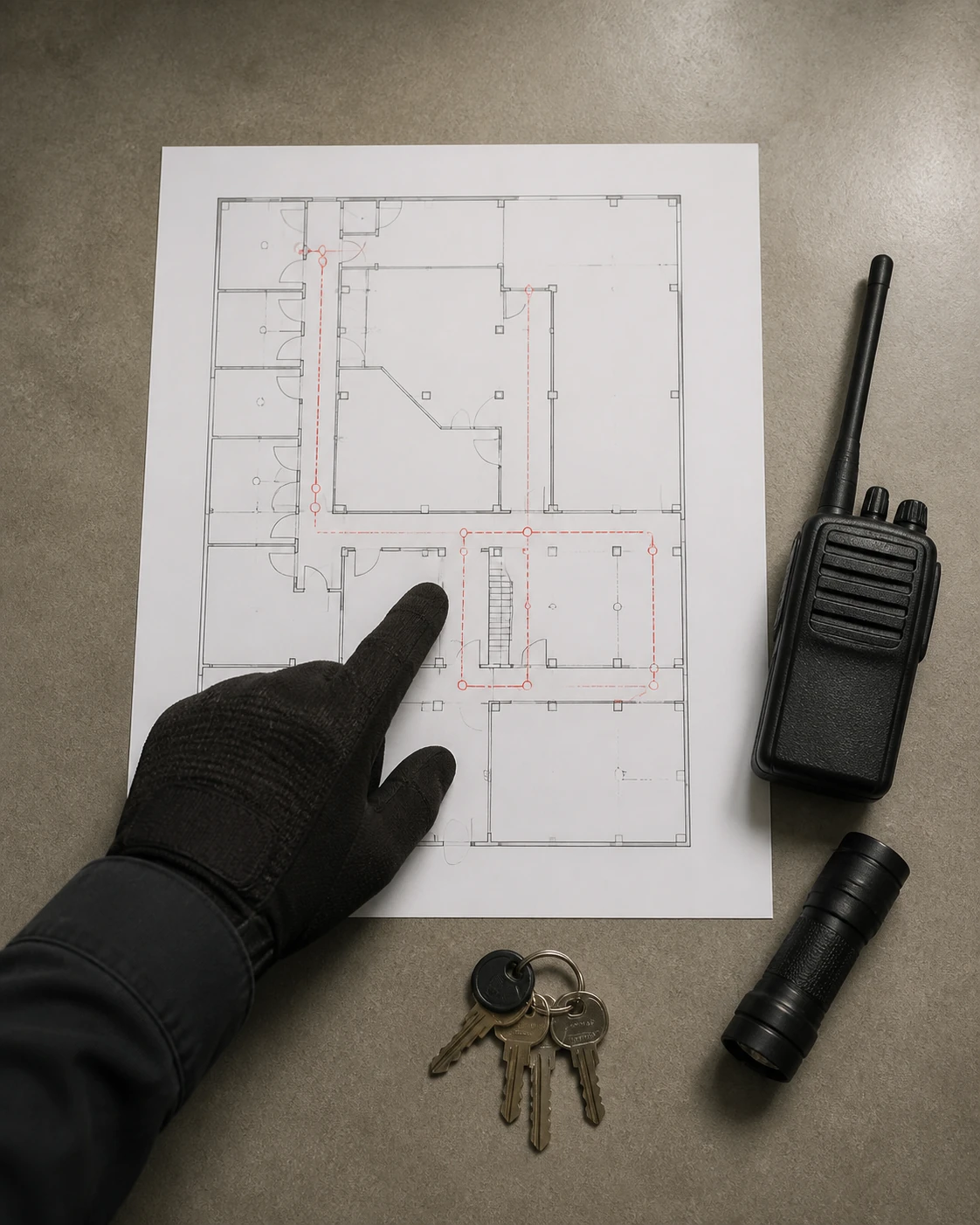
Avoid maps crowded with unrelated architectural information. The fire guard needs a clear operational route, not an entire construction drawing set.
Walk the Route Before Coverage Starts
A paper route may fail in practice because of locked tenant doors, freight operations, temporary walls, elevator restrictions, or work materials in corridors.
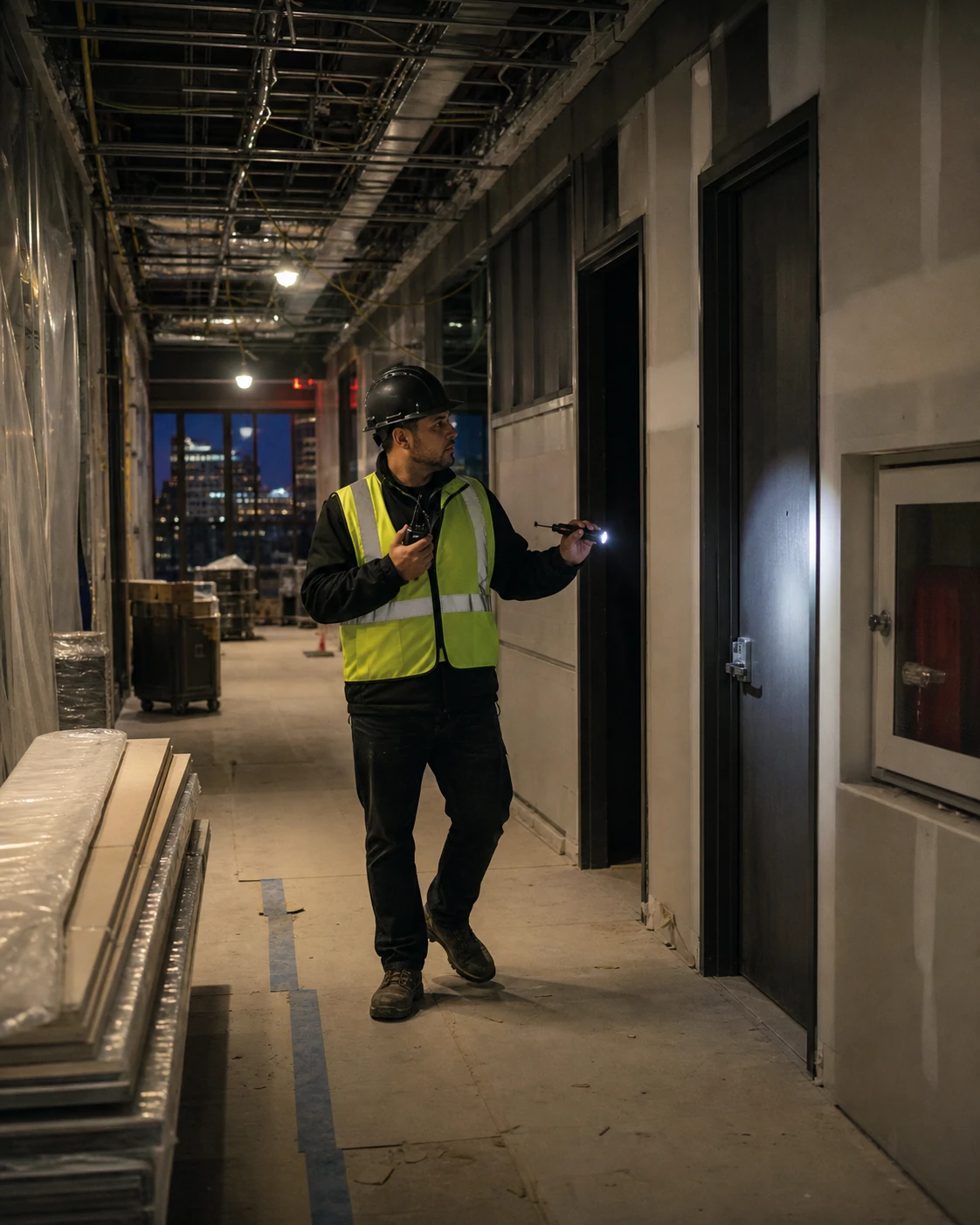
The impairment coordinator or authorized building representative should walk the route with the fire guard and verify:
- The guard can enter every required area
- Keys and credentials work
- The route does not depend on an elevator that may be unavailable
- Stair doors and crossover points are understood
- The guard knows which sounds, smells, smoke conditions, or work activities require immediate action
- Contractors understand that the patrol path must remain accessible
If the guard cannot reach an affected area, the route is not operationally complete.
Account for Disconnected Impairment Areas
Partial impairments are not always neatly contained. A fire-alarm condition might affect a lobby device, several tenant spaces, and a remote mechanical area. A sprinkler shutdown may include portions of multiple floors connected to the same system.
When affected areas are disconnected, decide whether one continuous route remains practical or whether separate patrol sectors are needed. Consider travel time, controlled doors, elevator dependency, and the time needed to make meaningful observations.
The route should not leave large gaps simply because the affected spaces appear close together on a riser diagram.
Define What the Guard Checks
A fire watch is an active observation assignment, not a race between checkpoints. Site instructions should explain what the guard looks for along the route, including:
- Smoke, flames, sparks, or unusual heat
- Burning or electrical odors
- Hot work or unauthorized ignition sources
- Blocked exits or patrol paths
- Accumulated combustible materials
- Open fire doors or doors held out of position
- Work that has expanded beyond the approved area
- Occupied spaces that were expected to be vacant
- Changes in the impairment boundary
The guard should know how to report an emergency immediately and how to notify the impairment coordinator of a non-emergency condition that still requires correction.
Build Relief and Break Coverage Into the Map
Fire watch duties should not disappear during meals, breaks, shift changes, or delayed relief. Identify where handoffs occur and what information must be transferred.
The incoming guard should receive:
- The current impairment scope
- The active route map
- Keys or access credentials
- The latest patrol status
- Open hazards or inaccessible areas
- Contact numbers
- Estimated restoration status
Both guards should understand who is responsible for the next patrol cycle before the outgoing guard leaves.
Update the Route as Work Changes
Contractors may restore one zone while disabling another. Tenant access may change after business hours. Construction partitions may move. The route map should have a revision time and the name of the person who approved the change.
Do not rely on verbal instructions that never reach the next shift. Replace outdated maps and brief every assigned fire guard.
When the system is restored, the impairment coordinator and building team should follow the required restoration process before ending coverage. Fire watch should not be discontinued merely because a contractor says the repair is finished.
Guardian provides fire guard services and emergency coverage for planned and unplanned conditions throughout New York City.
Make the Route Defensible and Usable
The best route map demonstrates that the building understood the affected area, assigned sufficient personnel, provided access, and gave the guard clear instructions. More importantly, it helps the guard perform a meaningful patrol when the building’s normal protection is reduced.
For help planning qualified fire guard coverage for an impairment, call or text Guardian ISI at (212) 602-1695, or request coverage online.
Related Guardian services
Arrange Fire Guard Services for the confirmed affected area. Maintain any separate Fire & Life Safety Director coverage required by the building.
Frequently asked questions
Does every NYC fire watch need a written route map?
The building should provide sufficiently clear instructions for the guard to cover every affected area. A route map is often the most practical way to communicate and verify that scope.
How often must affected areas be patrolled?
FDNY F-01 study material states that affected areas must be patrolled at least once every hour, subject to any additional direction for the specific condition. (nyc.gov)
Can one fire guard cover more than 50,000 square feet?
FDNY’s current F-01 material states that an individual impairment fire guard must not patrol more than 50,000 square feet of building floor area. (nyc.gov)
Who should approve changes to the route?
Route changes should be coordinated through the impairment coordinator or another properly authorized building representative, consistent with the building plan and any FDNY direction.
When can fire watch coverage end?
Coverage should continue until the affected system is restored to good working order and the building completes the applicable restoration and notification procedures.