

A fire watch may begin with a clearly defined condition: one affected floor, one sprinkler zone, or a specific portion of a fire alarm system. Then the scope changes.
A contractor discovers an additional problem. Work extends into another riser. A valve closure affects more space than expected. Testing cannot be completed before the next shift. The fire guard may still be following the original route even though the actual impairment has expanded.
That mismatch requires immediate attention. Fire watch coverage must follow the affected area and current condition—not yesterday’s work order or the route created at the beginning of the shift.
Treat Every Scope Change as a New Operational Decision
The fire guard should not independently decide the technical boundaries of an impairment. That information should come from the building’s impairment coordinator and qualified fire-protection personnel.
When the affected area changes, the property team should pause and reconfirm:
- Which system or component is out of service
- The floors, zones, rooms, or sections now affected
- Whether the building remains occupied
- Whether work or occupancy conditions have changed
- How long the expanded condition is expected to continue
- Whether current staffing can still cover the affected area properly
FDNY study materials state that fire guards must patrol all areas affected by an out-of-service fire protection system at least once every hour and that an individual fire guard may not be assigned more than 50,000 square feet of affected floor area. The materials also explain that impairment coverage must continue until the system is restored to good working order, subject to FDNY direction. (nyc.gov)
Property teams should verify the requirements for the actual condition with the impairment coordinator and applicable FDNY guidance rather than relying on a generic staffing assumption.
Signs That the Original Fire Watch Plan Is No Longer Adequate
The plan needs review when:
- Additional floors or zones become affected
- A partial impairment becomes building-wide
- A stair, corridor, or tenant space becomes inaccessible
- The route can no longer be completed within the required interval
- The building’s occupancy changes during the impairment
- Construction barriers alter travel paths
- The condition continues into an unplanned second shift
- Another fire-protection component is taken out of service
Even if the number of guards ultimately remains the same, the route, communications, and documentation may need to change.
Step One: Get a Clear Technical Scope
The impairment coordinator should obtain a plain-language description from the responsible contractor or engineer. “Alarm work on 12” is not enough if the condition also affects notification devices on other floors or requires access through several tenant areas.
A useful description identifies:

- The impaired system
- The physical limits of the affected area
- Any active systems that remain available
- Restricted or locked spaces within the area
- Expected restoration steps
- The person responsible for confirming system status
The fire guard needs operational boundaries, not instructions to diagnose or repair the system.
Step Two: Reassess Staffing and Route Feasibility
The impairment coordinator should compare the revised affected area with the actual walking route. Square footage is important, but travel conditions also matter.
A route may become impractical because of:
- Separate towers or building sections
- Locked tenant suites
- Long stair or elevator travel times
- Construction detours
- Public-assembly activity
- Loading or material movement
- The need for continuous observation of a particular condition
If one guard cannot conduct the required patrol reliably, management should arrange additional qualified coverage rather than instructing the guard to rush or skip spaces.
Step Three: Issue a Revised Route
The revised route should show every affected location that must be inspected. It should also identify:
- Start and end points
- A logical sequence of floors or zones
- Access methods for locked areas
- Communication check-in points
- Locations of available fire extinguishers and means of reporting an emergency
- Areas that require special attention because of work or occupancy
- The procedure for an inaccessible checkpoint
Do not alter a route only through a hurried verbal instruction. Provide a written or electronically documented update that the fire guard can follow and the next shift can understand.
Step Four: Preserve the Timeline in the Log
The fire watch record should show when the scope changed and when the revised coverage began. Useful entries include:
- Time the expanded impairment was reported
- Name and role of the person providing the updated scope
- Newly affected locations
- Notifications made
- Additional guard deployment, if any
- Time revised patrol instructions were issued
- Any delayed or inaccessible inspection area
The earlier entries should not be rewritten to make it appear that the expanded area had been covered before anyone knew it was affected.
Step Five: Brief Every Affected Building Role
An impairment can involve more than the fire guard. The updated condition may need to be communicated to:
- The impairment coordinator
- Building management
- Engineering personnel
- The FLSD or other on-duty life-safety personnel, as applicable
- Security supervision
- Affected tenants or contractors, when directed by management
- The incoming fire guard shift
Each person should receive information relevant to their role. Broad but vague statements can create confusion, while overly technical messages may hide the practical impact.
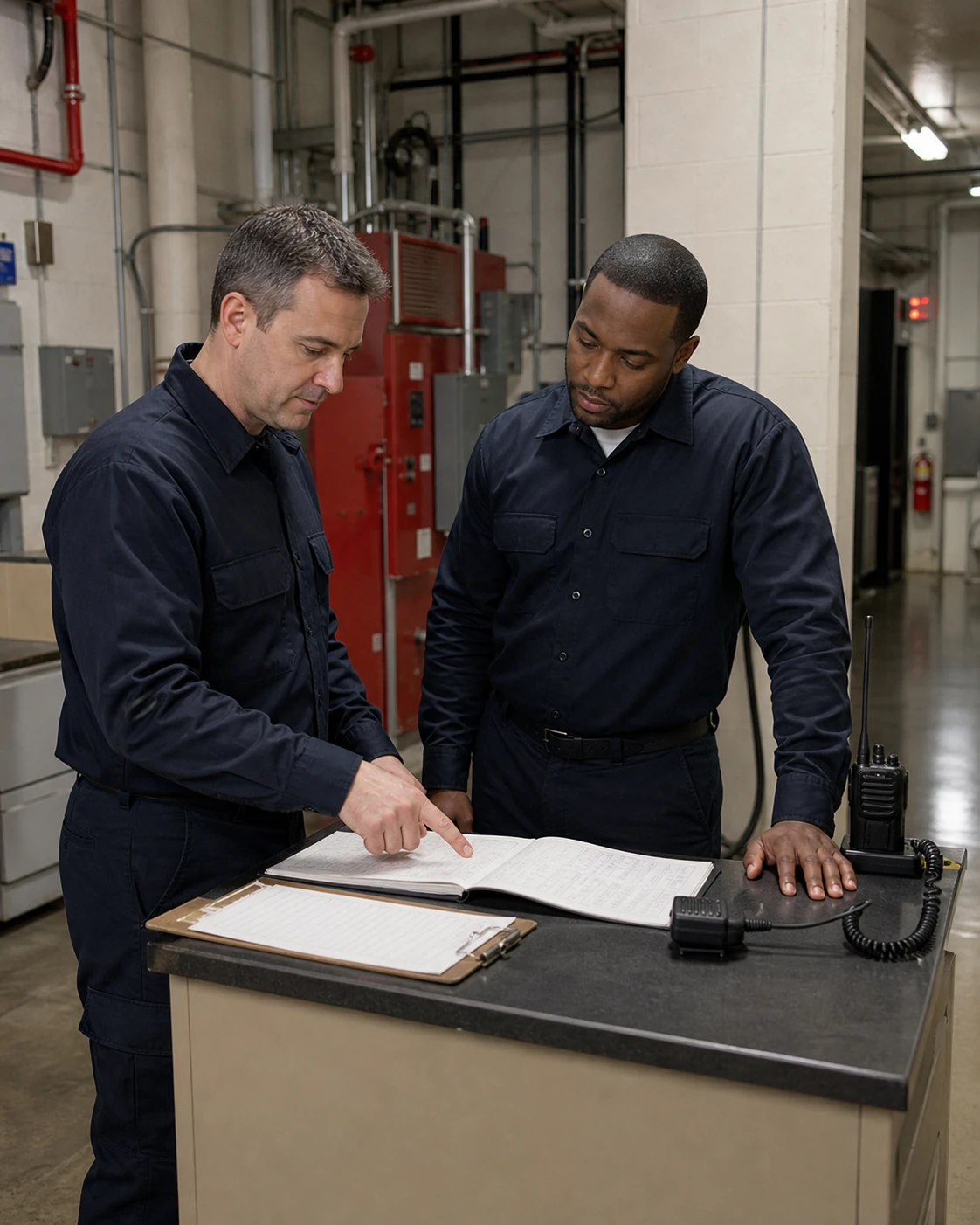
Manage the Shift Change Carefully
An impairment that expands late in the day creates a significant handoff risk. Before relief takes the post, the incoming fire guard should know:
- What changed during the previous shift
- The current affected area
- Which route is now active
- When the last complete round occurred
- Whether any areas are awaiting access
- Who is serving as impairment coordinator
- The current restoration estimate
- What must happen before coverage can end
Both guards should review the active records rather than relying solely on a brief verbal summary.
Do Not End Coverage Based on an Informal Update
A contractor saying that work is “basically done” is not the same as formal confirmation that the system has been restored to normal operation. The impairment coordinator should control the restoration and notification process.
Until authorized confirmation is received, the fire guard should continue following the active instructions. The final log should document who authorized the end of coverage and when that instruction was given.
Build Expansion Triggers Into the Impairment Plan
Before the next planned shutdown, add clear triggers requiring reassessment. Examples include another affected floor, a missed restoration deadline, loss of access to part of the route, or continuation into a new shift.
This prevents the original plan from remaining in place simply because no one stopped to revise it.
Arrange Qualified Fire Guard Coverage
Guardian ISI provides NYC fire guard coverage for planned and unplanned fire-protection impairments. Call or text (212) 602-1695, or request coverage.
Confirm restoration before release
The impairment coordinator should verify restoration with qualified personnel and complete the applicable notifications and tag-removal steps before releasing coverage. See NYC Fire Code 901.7.6. Partial restoration requires a clear plan for any area that remains impaired.
Related Guardian services
Discuss revised impairment staffing through Fire Guard Services. Keep any separate Fire & Life Safety Director assignment coordinated with the updated condition.
Frequently asked questions
Who decides whether the affected fire-watch area has expanded?
The impairment coordinator should establish the scope using information from qualified fire-protection contractors, engineers, and applicable FDNY direction.
Can the fire guard revise the route without management?
The guard should report changed conditions, but revised scope and staffing decisions should come from the impairment coordinator or authorized management.
When might an additional fire guard be needed?
Additional coverage may be necessary when the affected area exceeds applicable limits or when distance, access, occupancy, or route conditions prevent reliable patrol coverage.
Should earlier fire-watch logs be changed after discovering a larger impairment?
No. Preserve the actual timeline and record when the expanded scope became known and when revised coverage began.
Can fire-watch coverage end when the contractor says repairs are finished?
Coverage should continue until the impairment coordinator receives appropriate restoration confirmation and authorizes the end of the fire watch.