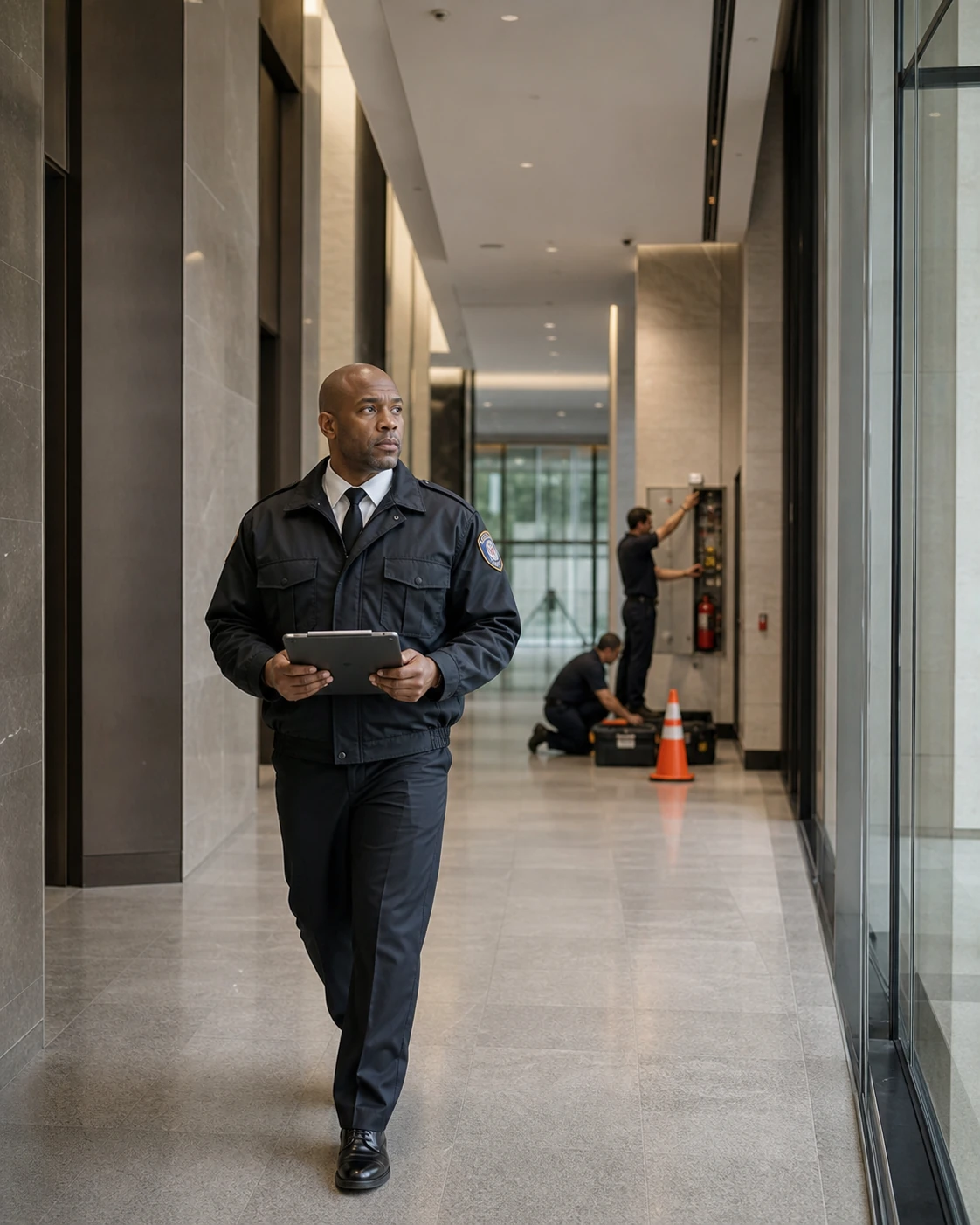
Mobilizing a fire watch receives significant attention, but ending one also requires disciplined coordination. Removing fire guards too early can leave an area without the protection assumed by building staff. Keeping coverage unnecessarily can create avoidable cost and confusion.
The key question is not whether a contractor has finished working. It is whether the affected fire protection system has been restored to good working order and the building’s designated decision-makers have completed the required closeout.
NYC’s Fire Code requires an impairment coordinator when a standpipe, sprinkler, or fire alarm system is out of service. It also calls for evacuation or a fire watch while covered systems remain out of service, unless otherwise directed by the Fire Department. The code separately requires verification that a system affected by damage or an out-of-service condition is in good working order. (nyc.gov)
Do Not Use the Contractor’s Departure as the Stand-Down Signal
A technician leaving the property may mean work is complete. It does not automatically establish that:
- All affected devices are back in service
- Control valves are in their required position
- Alarm points have returned to normal
- Supervisory or trouble conditions have cleared
- Monitoring connections are restored
- Temporary bypasses have been removed
- Every impaired floor or zone has been addressed
Fire guard coverage should continue while the system remains out of service. The impairment coordinator should manage the restoration decision in coordination with qualified system personnel and any applicable FDNY direction.
Identify the Exact Scope Being Restored
Before standing down coverage, compare the original impairment scope with the restoration scope.
The closeout should identify:
- System type: alarm, sprinkler, standpipe, or combination
- Floors, zones, devices, or areas affected
- Date and time the impairment began
- Whether the scope changed while work was underway
- Other system troubles that remain open
- Related work scheduled to continue
A building may have more than one impairment at the same time. Restoration of a sprinkler zone, for example, does not end a separate fire alarm impairment affecting the same area.
Build a Restoration Confirmation Packet
The exact documentation will depend on the system, work, and building procedures, but the impairment coordinator should have a reliable basis for the decision.
The closeout packet may include:
- Contractor or system vendor service record
- Identification of the system and areas restored
- Test results or confirmation performed by qualified personnel
- Fire alarm panel status, where applicable
- Central-station or monitoring confirmation, where applicable
- Confirmation that valves, controls, and bypasses are in their required condition
- Names and roles of people participating in the restoration
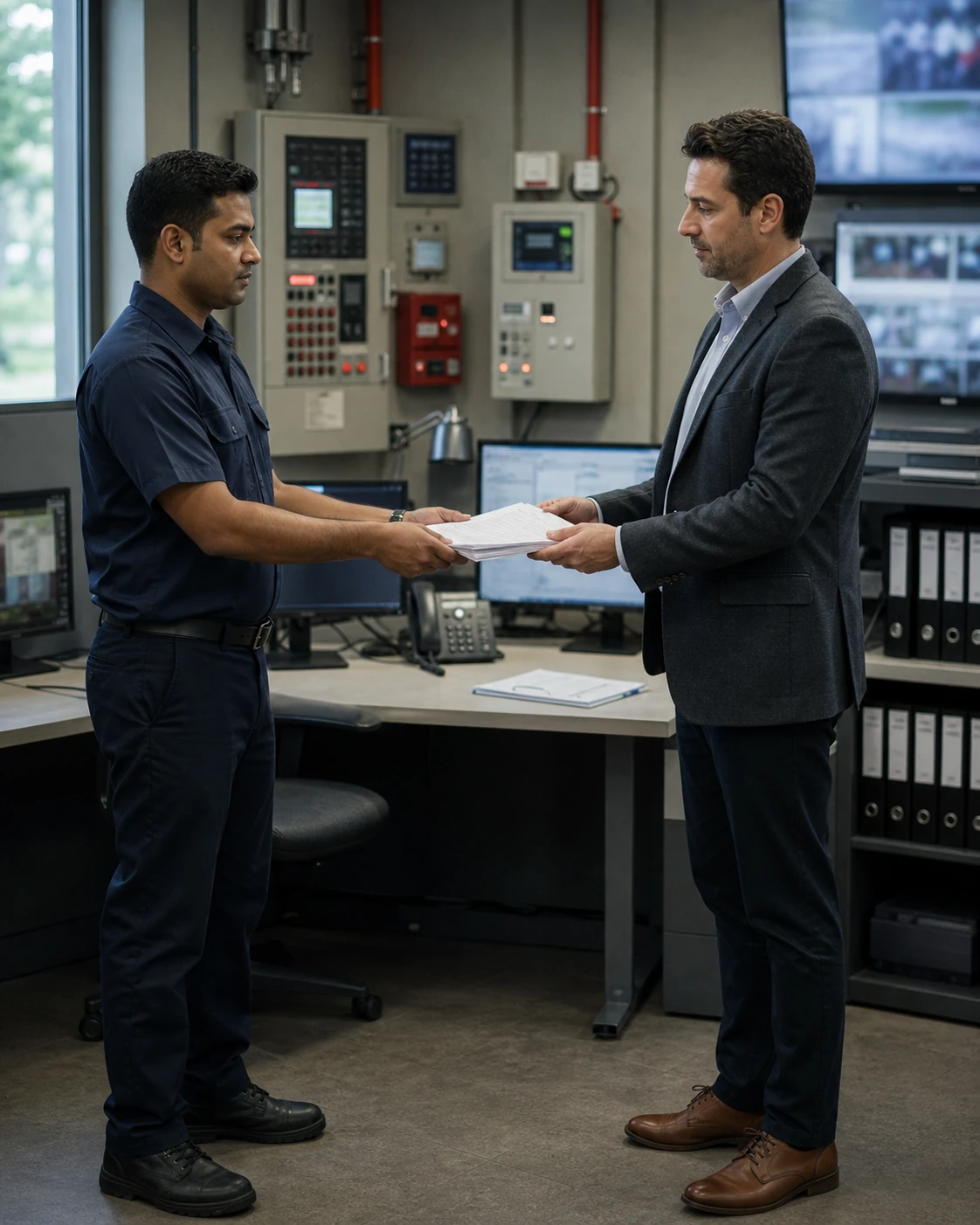
- Date and exact time the building accepted the system as restored
A text saying “all done” is not a useful restoration record.
Use a Two-Stage Stand-Down
A practical closeout separates technical restoration from operational release.
Stage 1: Technical confirmation
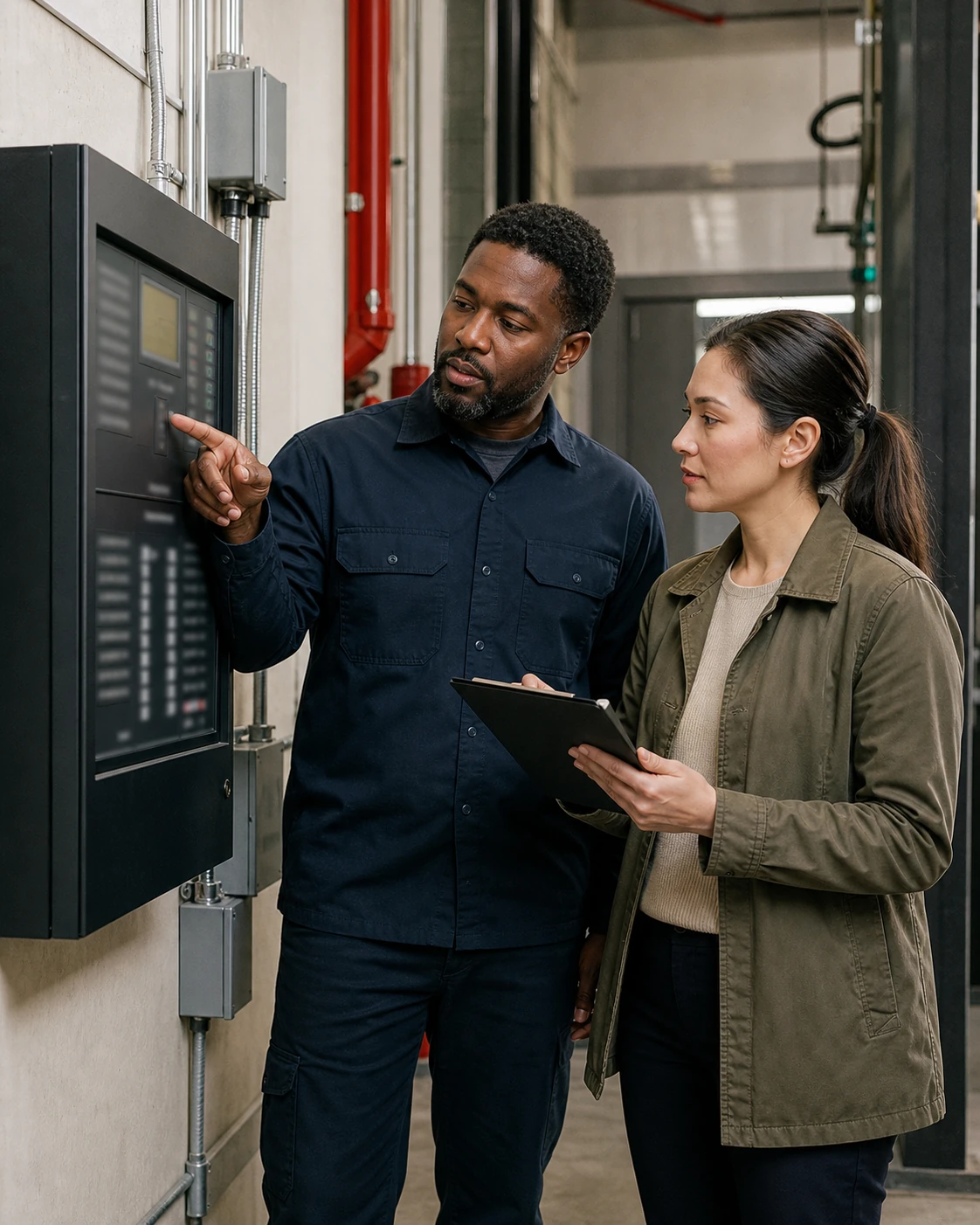
Qualified system personnel complete their work and report the affected protection as restored. Any remaining trouble, supervisory, or out-of-service condition is identified clearly.
Stage 2: Operational confirmation
The impairment coordinator or designated building representative confirms that:
- The original affected area is accounted for
- No overlapping impairment requires continued coverage
- Required building and vendor notifications have been completed
- The fire guard log is current through the release time
- Security, engineering, property management, and emergency-preparedness staff have received the same status
- The person with authority to release the fire guards has done so
This prevents a technician, guard, or dispatcher from making an isolated assumption about coverage.
Confirm the Panel and Field Condition Agree
A normal-looking panel should not be treated as the only proof of restoration, and a field repair should not be accepted without checking the associated system status.
Depending on the impairment, building personnel may need confirmation that:
- The correct zone is normal
- Devices used during testing have been reset
- Control functions are no longer bypassed
- Monitoring has resumed
- No new trouble condition appeared during restoration
- A valve or device in the field matches the reported system condition
Only trained and authorized personnel should operate or test fire protection equipment.
Keep the Fire Watch Active During Testing
Coverage should not disappear during the transition between “repair complete” and “system verified.” Testing may reveal another defect or show that only part of the system has returned to service.
Fire guards should continue following their assigned routes and communication procedures until they receive an explicit stand-down instruction from the authorized building contact.
Do not ask guards to pack equipment, leave assigned areas, or convert to unrelated duties while restoration is still being evaluated.
Close the Fire Guard Log Precisely
The final entry should establish a clear endpoint. It should include:
- Time of the final completed patrol
- Condition observed during that patrol
- Time the stand-down instruction was received
- Name and role of the person giving the instruction
- System and area reported restored
- Disposition of radios, keys, route sheets, and other property
- Any issue still requiring follow-up
Avoid entries such as “job finished” or “system okay.” The log should show what changed, when it changed, and who authorized the change in coverage.
Complete required restoration notifications
Under NYC Fire Code 901.7.6, restoration includes necessary verification, notice to FDNY under the applicable notification provision, notice to the owner, central station, insurance carrier, emergency-preparedness staff and previously notified affected occupants, and removal of out-of-service tags. The impairment coordinator should confirm the required steps with qualified personnel.
Notify Everyone Who Was Operating Under the Impairment Plan
The restoration message should reach the same operational groups that adjusted their work when the impairment began.
Depending on the property, that may include:
- Property management
- Engineering
- Security supervisors and lobby personnel
- FLSD or other emergency-preparedness staff
- Tenant representatives
- Contractors working in the affected area
- Monitoring or fire protection vendors
The message should identify the restored system and area, the effective time, and any restrictions that remain. “Fire watch ended” is insufficient if another floor or system is still impaired.
Return Temporary Security Measures to Normal
An impairment may have changed access, patrol, elevator, hot-work, or contractor procedures. After restoration, management should confirm which temporary measures can end and which should remain.
Examples include:
- Removing temporary fire guard stations
- Returning keys and route devices
- Reopening an area that had been restricted
- Restoring the normal security patrol schedule
- Updating shift pass-on information
- Removing temporary contact sheets or impairment notices
The building should not retain contradictory instructions at the fire command center, security desk, and engineering office.
Conduct a Short Post-Impairment Review
For a significant or extended impairment, review:
- Whether the reported scope matched the actual affected area
- How quickly qualified coverage arrived
- Whether route instructions were usable
- Whether logs were complete
- Whether contractors communicated schedule changes
- How long verification took after physical work ended
- Whether the same system is likely to require another shutdown
Use the findings to improve the next impairment plan rather than filing the paperwork without discussion.
Coordinate Fire Guard Coverage Through Final Restoration
Guardian ISI provides NYC properties with qualified fire guard coverage and operational coordination for planned and unplanned fire protection system impairments.
Call or text (212) 602-1695, or request fire guard coverage. Coverage should be planned through verified restoration—not merely through a contractor’s estimated completion time.
A clear closeout sequence
- Confirm the restored system and affected area with qualified personnel.
- Check for remaining or overlapping impairments.
- Complete required notifications and obtain the authorized release instruction.
- Close the log and communicate any continuing restrictions.
Related Guardian services
Plan Fire Guard Services through verified restoration. Coordinate with Fire & Life Safety Director coverage where the building has a separate requirement for that role.
Official references
Frequently asked questions
Can fire guards leave when the repair contractor finishes?
Not automatically. Coverage should continue until the affected system is verified as restored and an authorized building representative gives the stand-down instruction.
Who should coordinate the end of an NYC fire watch?
The building’s impairment coordinator should manage the restoration and stand-down process with qualified system personnel and any applicable FDNY direction.
What if only part of the impaired system is restored?
Coverage should be reassessed for the areas that remain out of service rather than ended for the entire building.
Should fire guards remain during system testing?
Yes, while the system remains out of service or restoration has not yet been verified.
What should the final fire watch log entry record?
Record the final patrol, stand-down time, restored system and area, and the name and role of the person authorizing release.