
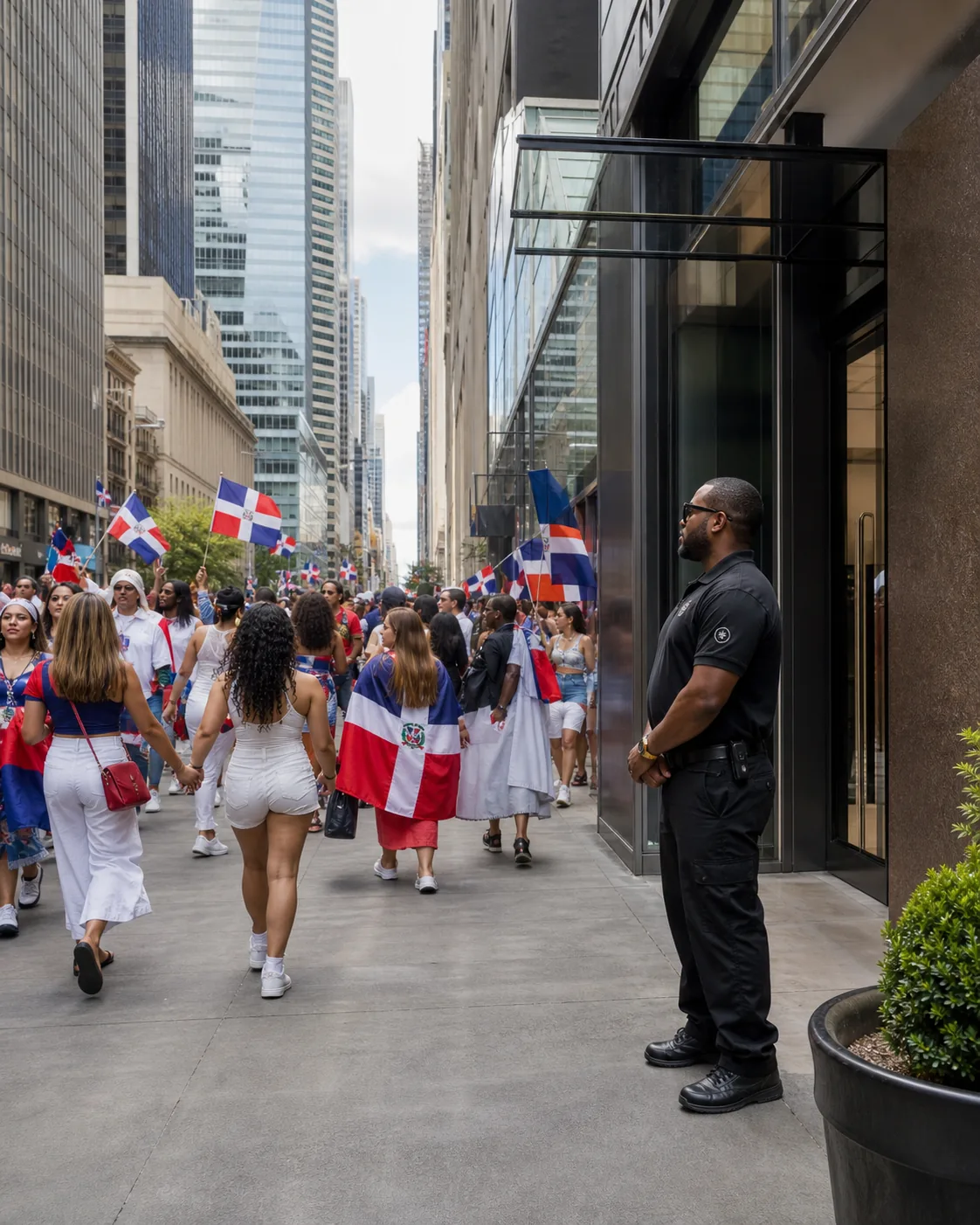
Large parades can affect Midtown building access, deliveries, and staffing beyond the event route. For Dominican Day Parade preparations, confirm the current route, schedule, and restrictions with official event and city sources before setting the building plan.
Property managers, security directors, and facilities teams should confirm their plans before parade activity begins. The goal is to maintain controlled access without creating unsafe crowding, blocking required exits, or interfering with NYPD operations.
Planning note: Street closures and security conditions can change. Confirm current instructions through official NYPD, NYC Department of Transportation, and event-organizer communications rather than relying on an older closure map.
Why buildings near Sixth Avenue need a specific parade plan
A normal weekend security schedule may not be sufficient for an event of this scale. Buildings may encounter unusually heavy pedestrian traffic, delayed employees, interrupted loading-dock access, and repeated requests from members of the public.
Review conditions not only at the main entrance, but also at:
- Side and service entrances
- Loading docks and package rooms
- Parking-garage entrances
- Emergency exits
- Retail or restaurant spaces connected to the property
- Plazas, setbacks, vestibules, and revolving-door areas
Properties several blocks from Sixth Avenue may also experience spillover as attendees arrive, leave, or navigate around closures.
Strengthen access control without creating an entrance bottleneck
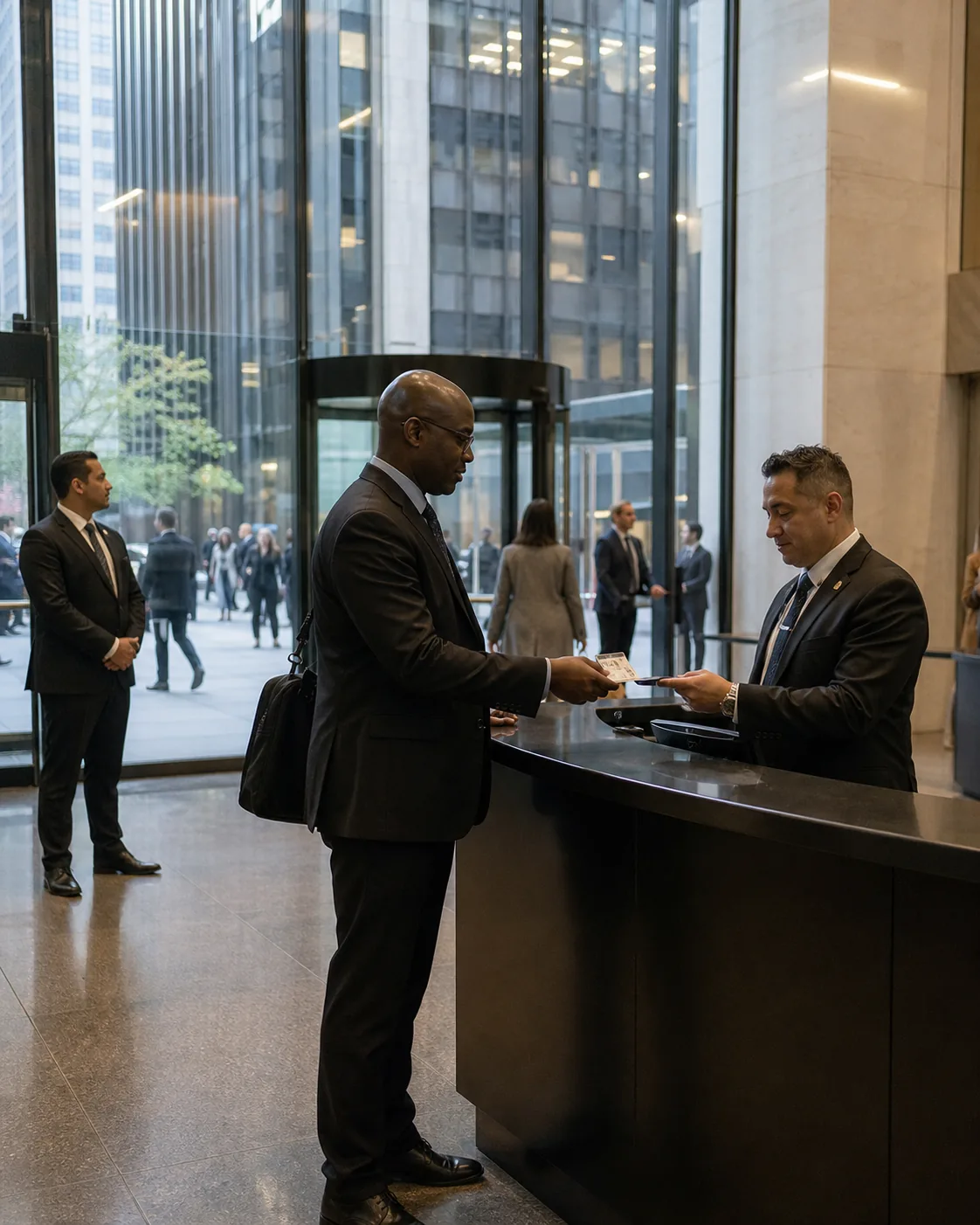
Verify everyone entering the building
Employees, tenants, residents, vendors, and contractors should follow the building’s established credentialing process. Security personnel should not make exceptions simply because an entrance is busy.
Before the event, management should:
- Send tenants a reminder to carry their normal building credentials.
- Obtain an approved list of scheduled vendors and contractors.
- Confirm who may authorize unexpected visitors.
- Decide how food deliveries and courier drop-offs will be handled.
- Test radios, intercoms, access-control equipment, and emergency contact lists.
If a person cannot be verified, officers should follow the property’s escalation procedure rather than relying on verbal claims or photographs of credentials.
Separate screening from pedestrian flow
When possible, place credential checks inside the property line and away from doors that must remain clear. Avoid allowing a queue to extend across the sidewalk, obstruct neighboring properties, or interfere with emergency access.
A second officer or lobby ambassador can answer questions while the access-control officer remains focused on screening. Buildings expecting sustained activity may benefit from temporary security guard coverage at secondary doors, loading areas, or garage entrances.
Prepare for members of the public seeking help
Parade attendees may approach a building to request restrooms, water, shelter, phone charging, directions, or access to transportation. Management should decide in advance what the property can provide and communicate one consistent policy to the security team.
Officers should remain courteous and direct while protecting tenant-only areas. A practical response plan may include:
- Keeping current transit and street-closure information at the desk
- Identifying nearby public facilities without guaranteeing availability
- Using clear, neutral language when denying unauthorized access
- Calling a supervisor when a person is distressed, refuses to leave, or may need assistance
- Contacting 911 for an immediate threat or medical emergency
Security staff should not leave an assigned entrance unattended to provide directions or resolve a situation on the sidewalk unless directed under the site’s procedures.
Confirm delivery, loading-dock, and garage restrictions
Street closures may begin before the parade and remain in effect after the final procession passes. Even streets that stay open can become difficult for trucks, car services, and private vehicles to reach.
Contact scheduled vendors before the event to confirm whether deliveries can be moved to another day or time. Provide written instructions covering:
- Approved arrival windows
- The entrance or loading area to use
- Driver identification requirements
- A contact number for access problems
- Whether curbside unloading will be possible
- Procedures for canceled or delayed deliveries
Garage operators should avoid promising access until they have reviewed current NYPD restrictions. They should also be prepared for drivers attempting to turn around near an entrance or stop in a travel lane.
Prevent overcrowding around entrances
A building entrance can become an informal gathering point because it offers shade, an overhang, steps, or a clear view of the route. Monitor these areas before they become congested.
Security teams should protect door swing, accessible paths, and normal tenant movement while recognizing that public sidewalks are not controlled in the same way as private interior space. Officers should avoid confrontational crowd-management tactics and seek NYPD assistance when conditions on public property create an immediate safety concern.
Useful measures include:
- Removing unnecessary stanchions, furniture, or signs that narrow the entrance
- Assigning an officer to observe exterior conditions from a safe position
- Keeping revolving doors and accessible entrances operational
- Moving tenant pickup and drop-off activity away from the busiest frontage when feasible
- Establishing a clear point for supervisor escalation
Keep exits and emergency access unobstructed
Parade operations must not compromise the building’s fire and life-safety procedures. Inspect emergency exits, exit discharge areas, fire department connections, hydrant access, and designated emergency routes before crowds arrive and throughout the event.
Do not store parade supplies, delivery items, bicycles, barricades, or equipment in an exit path. If an exterior crowd blocks an exit discharge area, notify building management and coordinate with the appropriate public-safety personnel rather than attempting an unplanned crowd move.
The property’s assigned fire-life-safety personnel should review staffing, communications, and emergency procedures for the day. Guardian ISI can also help properties evaluate appropriate fire and life safety director coverage and fire guard coverage when those services are relevant to site conditions.
Coordinate private security with NYPD instructions
Private security supports the building; it does not replace law enforcement or event security. Supervisors should brief officers on their exact posts, duties, communication channels, and limits of authority.
The site plan should identify:
- Who communicates with NYPD or event personnel
- Who can modify building access rules
- Where officers should report suspicious activity
- When to call 911 instead of a property supervisor
- How to document incidents, denied entries, and service interruptions
- Where officers should relocate if an assigned exterior position becomes unsafe
Officers should comply with lawful police directions affecting access or movement. Any conflict between a planned delivery and an active NYPD closure should be escalated to management rather than debated at the checkpoint.
Maintain security after the parade ends
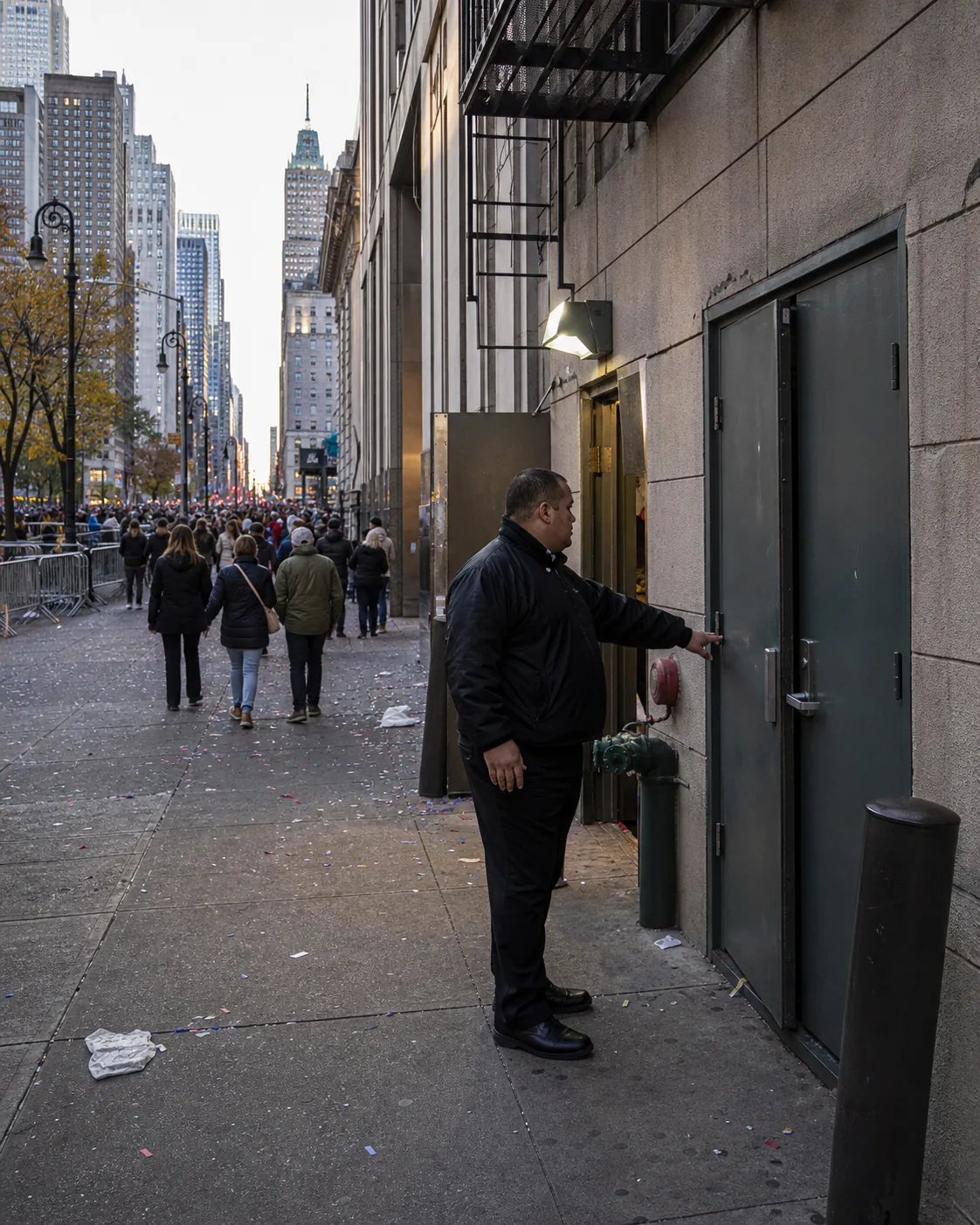
The end of the procession is not necessarily the end of the building’s exposure. Departing crowds may remain in Midtown, nearby restaurants may become busier, and streets may reopen in phases.
Keep enhanced coverage in place until management confirms that pedestrian traffic and access conditions have stabilized. Post-event tasks should include:
- Checking exterior doors, loading areas, stairs, and other sensitive spaces
- Removing temporary access lists and restoring normal credential rules
- Inspecting for property damage, abandoned items, or unauthorized entry
- Confirming that deliveries and garage operations can resume
- Documenting incidents and preserving relevant video
- Conducting a short debrief before the next major Midtown event
Do not handle a suspicious or unattended item. Isolate the immediate area when safe to do so and contact 911 or follow NYPD instructions.
A final readiness checklist for property managers
Before parade day, confirm that your building has:
- A current staffing schedule and post assignments
- Verified tenant, employee, vendor, and contractor lists
- Written rules for public access and restroom requests
- Updated delivery and garage instructions
- Clear entrances, exits, and emergency access points
- Working radios and access-control systems
- A supervisor escalation and NYPD coordination plan
- Coverage that continues through the post-parade period
Request parade-day security coverage
Guardian ISI provides commercial security and fire-life-safety staffing for Manhattan properties. If your building needs additional entrance, lobby, loading-dock, or post-event coverage, call or text (212) 602-1695 or request coverage online.
For an urgent last-minute staffing need, review our emergency security coverage options. Availability depends on timing, site requirements, and personnel.
Quick planning checklist
| Review point | What to confirm |
|---|---|
| Before crowds | Current closure notices, staffing, deliveries, and contacts |
| During activity | Controlled entrances, clear exits, and supervisor escalation |
| After the event | Confirm conditions, restore normal procedures, and debrief |
Related Guardian services
Review Commercial Office Security and Emergency Security Coverage to connect these procedures with the appropriate staffing and site responsibilities.
Frequently asked questions
When should a Midtown building begin parade-day security coverage?
Coverage should begin before nearby closures and crowd activity are expected. Allow time for officers to arrive, receive a site briefing, inspect entrances, and account for transit delays.
Should parade attendees be allowed to use a private building’s restrooms?
Management should establish a consistent access policy in advance. Security staff should protect tenant-only areas while responding courteously and directing people to public resources when appropriate.
How should security verify vendors during the parade?
Use a preapproved vendor list, standard identification checks, and confirmation from an authorized tenant or manager. Do not waive verification because an entrance is busy or a driver reports delays.
What should a building do if crowds block an emergency exit?
Notify building management immediately and coordinate with NYPD or appropriate public-safety personnel. Keep the exit path clear inside the property and avoid an improvised crowd intervention.
How long should enhanced security remain after the parade?
Maintain coverage until management confirms that crowds have dispersed, access restrictions have eased, and entrances, loading areas, and garages have returned to normal operation.
Can private security direct parade crowds on the sidewalk?
Private security should focus on protecting the property and follow site procedures. Conditions affecting public sidewalks or event crowds should be coordinated with NYPD rather than managed through unsupported enforcement.