
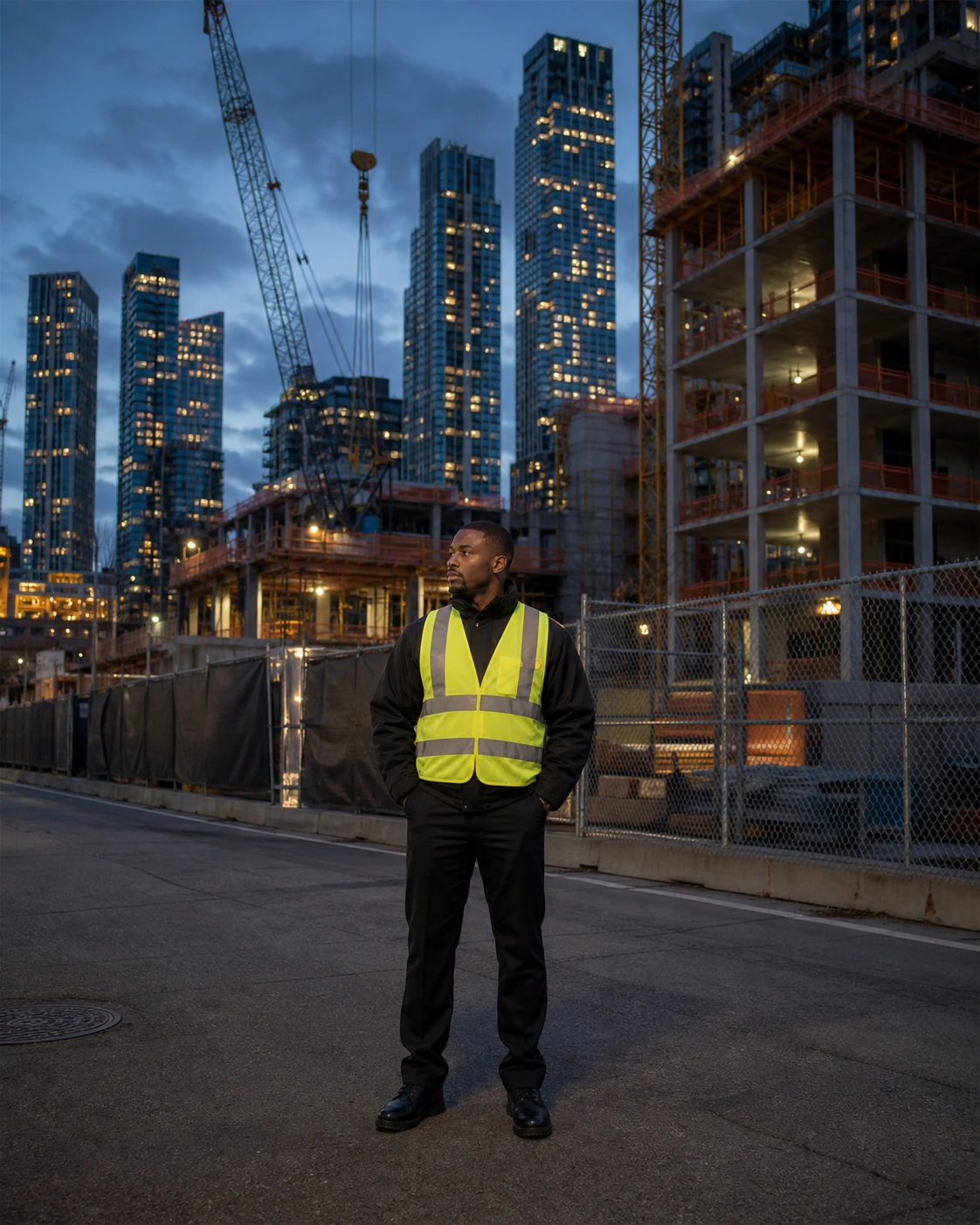
Long Island City construction sites face a challenging mix of valuable equipment, changing work crews, frequent deliveries, temporary fencing, and active streets. When a site is left unattended—or access procedures are inconsistent—the risk of theft, vandalism, trespassing, and costly project disruption can increase.
An effective construction site security Long Island City plan should combine physical safeguards, clear operating procedures, and trained personnel. The right approach depends on the project phase, site footprint, surrounding activity, and what remains exposed after working hours.
Why Long Island City construction sites require a tailored plan
Long Island City includes high-rise developments, renovations, mixed-use projects, warehouses, and infrastructure work. Many sites operate near residential buildings, transit routes, loading areas, and busy pedestrian corridors.
Security planning should account for conditions such as:
- Multiple contractor and subcontractor teams
- Deliveries arriving through congested streets
- Temporary entrances that change as construction progresses
- Tools, copper, appliances, and machinery stored on site
- Scaffolding or partially completed structures that may attract trespassers
- Work areas with limited visibility after dark
- Neighbors who may need a clear way to report suspicious activity
A plan created during excavation may no longer work once the building is enclosed. Site leadership should reassess coverage as entrances, stored assets, and working hours change.
Start with a site-specific security assessment
Before assigning guards or installing additional equipment, identify where unauthorized entry and loss are most likely to occur.
Review the perimeter
Walk the entire fence line and look for loose panels, gaps, climbable objects, poorly secured gates, and areas concealed from public view. Pay particular attention to boundaries shared with alleys, vacant lots, loading zones, or neighboring construction projects.
Map every access point
Document gates, pedestrian entrances, loading areas, temporary doors, roof access, cellar entrances, and connections to adjacent structures. Determine which openings are active, who controls them, and how they are secured after hours.
Create an asset inventory
Identify items that are portable, valuable, necessary for the next shift, or difficult to replace quickly. Record serial numbers where appropriate and designate secure storage areas for tools, electronics, fixtures, wire, and fuel.
Examine vulnerable time periods
Risk is not limited to overnight hours. Shift changes, lunch periods, weekends, holidays, and delivery windows can create opportunities for unauthorized access. Review incident records and reports from workers, neighbors, and property management to identify patterns.
Use layered protection instead of relying on one measure
Cameras, fencing, lighting, and guards each serve a different purpose. A stronger strategy uses several layers so that one failure does not leave the entire property exposed.
Control gates and verify entrants
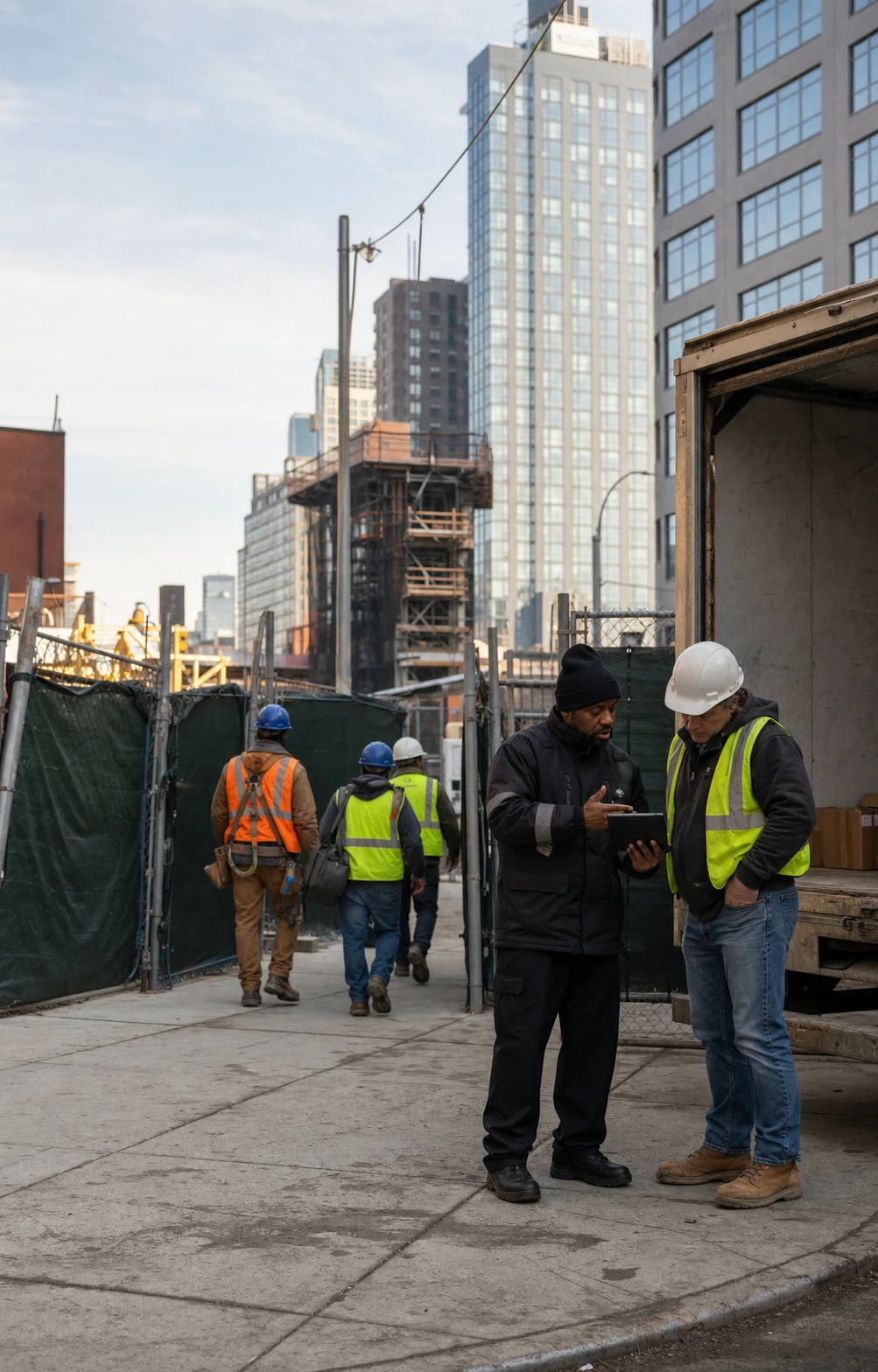
During active hours, a controlled entrance can help prevent unknown individuals from blending in with workers. Depending on site operations, the process may include:
- Checking approved worker or visitor lists
- Confirming delivery destinations
- Recording vendor arrivals and departures
- Directing visitors to the appropriate supervisor
- Preventing unauthorized vehicles from entering
- Maintaining a log of unusual access events
Procedures should be practical enough to follow during busy morning arrivals. Site management should also define who may approve exceptions.
Strengthen after-hours coverage
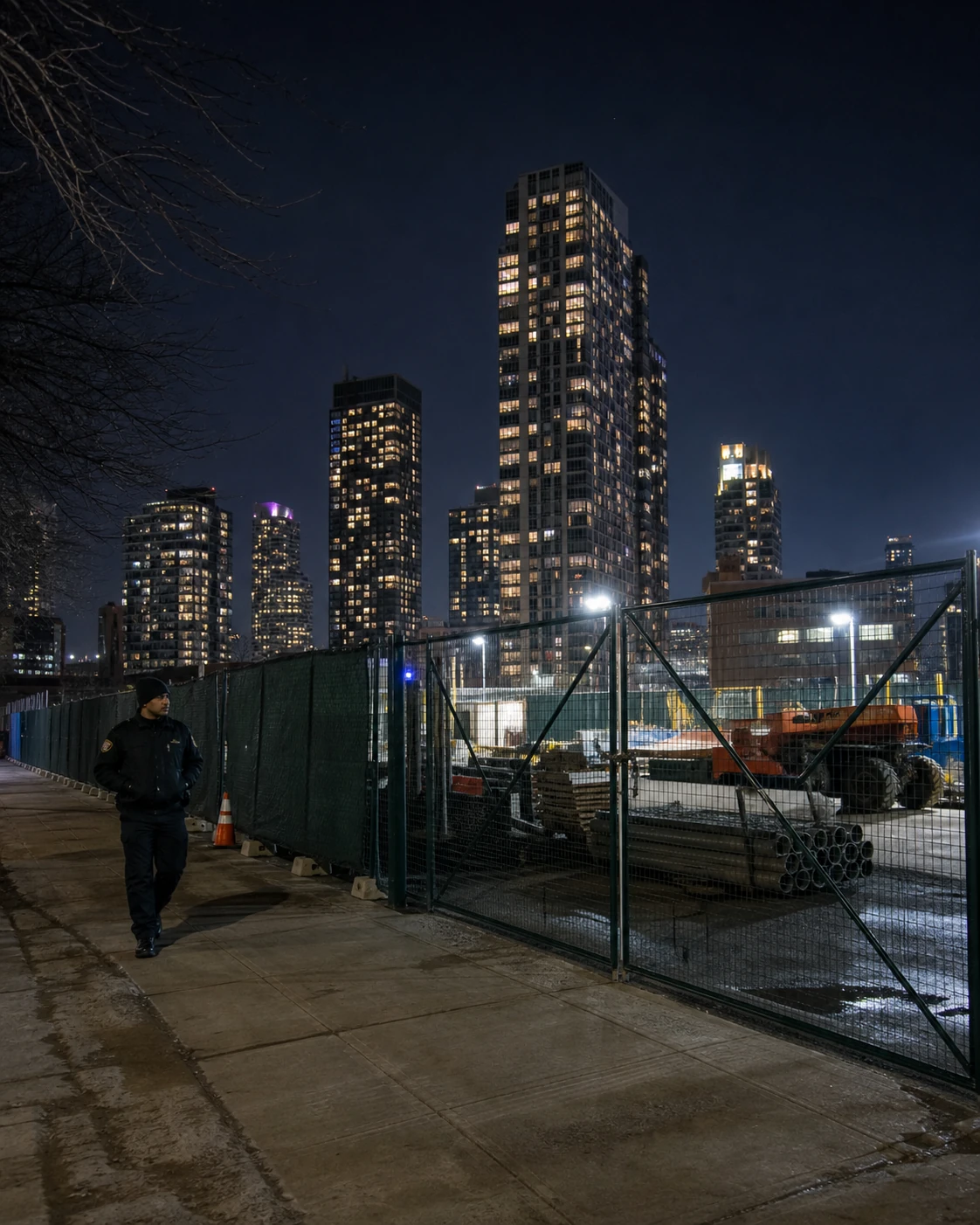
After workers leave, a visibly secured perimeter and documented patrol process can discourage opportunistic entry. Professional construction security guards may be assigned to a fixed gate, conduct patrols, monitor designated areas, or perform a combination of duties.
Guard post orders should specify:
- Patrol routes and frequency
- Areas that must be visually checked
- Gate-locking responsibilities
- Restricted zones
- Escalation contacts
- Procedures for police, fire, or medical emergencies
- Required incident and activity reports
Guards should not enter unstable or prohibited construction areas. Patrol routes must be coordinated with site safety personnel and updated as conditions change.
Improve lighting without creating new problems
Lighting should help guards and cameras observe gates, pathways, storage areas, and perimeter blind spots. Fixtures need to be positioned carefully to avoid glare, deep shadows, and unnecessary spill into neighboring residences.
Temporary lighting should be inspected regularly because construction activity can shift, disconnect, or obstruct fixtures.
Position cameras around defined risks
Video surveillance is most useful when each camera has a clear purpose. Priority locations often include entrances, material storage, equipment yards, loading areas, and isolated perimeter sections.
Confirm that cameras provide usable views under actual nighttime conditions. Someone must also be responsible for reviewing alerts, preserving relevant footage, and responding when a camera is blocked or stops working. Cameras can support security personnel, but they do not physically challenge a trespasser or repair an open gate.
Reduce theft through better material and delivery controls
Not every loss begins with someone climbing a fence. Confusing deliveries, untracked tools, and inconsistent storage procedures can make it difficult to determine when property disappeared.
Practical controls include:
- Scheduling major deliveries when authorized staff can receive them.
- Verifying the vendor, recipient, and delivery location before opening a gate.
- Keeping high-value materials away from the perimeter and public view.
- Limiting access to tool rooms and storage containers.
- Recording equipment moved between projects or floors.
- Removing keys from machinery and securing them separately.
- Conducting end-of-shift checks before the site is locked.
Security personnel can document activity, but supervisors should retain responsibility for inventory management and authorization decisions.
Address trespassing safely and consistently
A trespasser may be attempting theft, seeking shelter, exploring the structure, or entering without understanding the hazards. Regardless of the reason, unfinished buildings may contain open shafts, incomplete stairs, temporary electrical systems, and other serious dangers.
Guards need clear instructions for observing, reporting, maintaining a safe distance, and contacting the appropriate authorities. They should follow their training and post orders rather than pursuing an unknown person through unsafe areas.
Visible signage, intact fencing, locked gates, and a well-defined visitor process can also reduce accidental entry and make site boundaries clearer.
Coordinate security with fire-life-safety responsibilities
Construction security and fire watch are not interchangeable services. If a project has an impaired fire-protection system or another condition requiring fire watch, the property team should confirm the applicable requirements and use properly qualified personnel.
Guardian can help clients discuss separate fire guard coverage when site conditions call for it. Project managers should verify current requirements with the authority having jurisdiction and their fire-safety professionals rather than assuming a general security patrol satisfies a fire-watch obligation.
Build useful reporting and accountability
A guard program should produce actionable information—not just a record that someone was present. Daily activity reports can document patrols, gate activity, lighting failures, damaged fencing, unsecured doors, suspicious behavior, and contacts with project representatives.
For significant incidents, reports should clearly distinguish observed facts from assumptions. Site leadership should review reports regularly, assign corrective actions, and confirm that recurring vulnerabilities are addressed.
Useful performance questions include:
- Are gates consistently secured at the scheduled time?
- Are patrols covering the current site layout?
- Are fence or lighting problems corrected promptly?
- Are delivery exceptions being documented?
- Do guards have updated emergency contacts?
- Have post orders changed with the construction phase?
Construction site security checklist
Use this checklist during project reviews:
- Perimeter fencing is intact and inspected regularly
- Active and inactive entrances are documented
- After-hours gate and key responsibilities are assigned
- Worker, visitor, and delivery procedures are clear
- High-value materials have secure storage
- Lighting covers priority areas without severe glare
- Cameras have usable day and night views
- Guard patrol routes avoid construction hazards
- Post orders include emergency and escalation contacts
- Incident and activity reports are reviewed by management
- Security coverage is reassessed as the project changes
- Any separate fire-watch need has been evaluated appropriately
Arrange construction security coverage in Long Island City
Guardian ISI provides planned and emergency security coverage for commercial properties and construction projects in New York City. We can discuss gate control, after-hours guarding, patrol duties, reporting expectations, and coverage schedules based on your current site conditions.
Call or text (212) 602-1695, or request coverage online. Share the Long Island City site address, requested hours, access points, current construction phase, and any immediate concerns so the coverage request can be evaluated efficiently.
Related Guardian services
Review Construction Site Security for gate and patrol coverage, and Fire Guard Services for a separately required fire-watch assignment.
Frequently asked questions
What should a Long Island City construction security plan include?
A practical plan should address perimeter integrity, gate control, worker and visitor access, deliveries, high-value material storage, lighting, cameras, patrol routes, incident reporting, and emergency escalation procedures.
Should a construction site have security during the day or only overnight?
Coverage should match the site's risks. Overnight and weekend coverage can help protect an unattended property, while daytime gate control may be useful for busy sites with multiple contractors, visitors, and deliveries.
Can security guards monitor construction cameras?
Guards may monitor designated camera views if that duty is included in their post orders and the equipment is accessible. The response process for alerts, equipment failures, and saved footage should be defined in advance.
How often should a construction security plan be updated?
Review it whenever the site layout, entrances, working hours, stored materials, or project phase changes. It should also be reassessed after an incident or recurring security concern.
Is a construction security guard the same as a fire guard?
No. General security and fire-watch duties serve different purposes. If a fire watch is required, the project team should confirm the applicable requirements and arrange appropriately qualified personnel.
Can Guardian provide emergency construction site coverage in Long Island City?
Coverage depends on staffing and site requirements. Call or text (212) 602-1695 or submit the online coverage request with the address, schedule, duties, and desired start time.