
Midtown Manhattan buildings operate within dense pedestrian traffic, major transit hubs, tourism, deliveries, construction activity, demonstrations, and high visitor volume. A commercial office security plan must protect the property without creating unnecessary friction for tenants, employees, clients, and vendors.
Begin With the Lobby and Entrance Experience
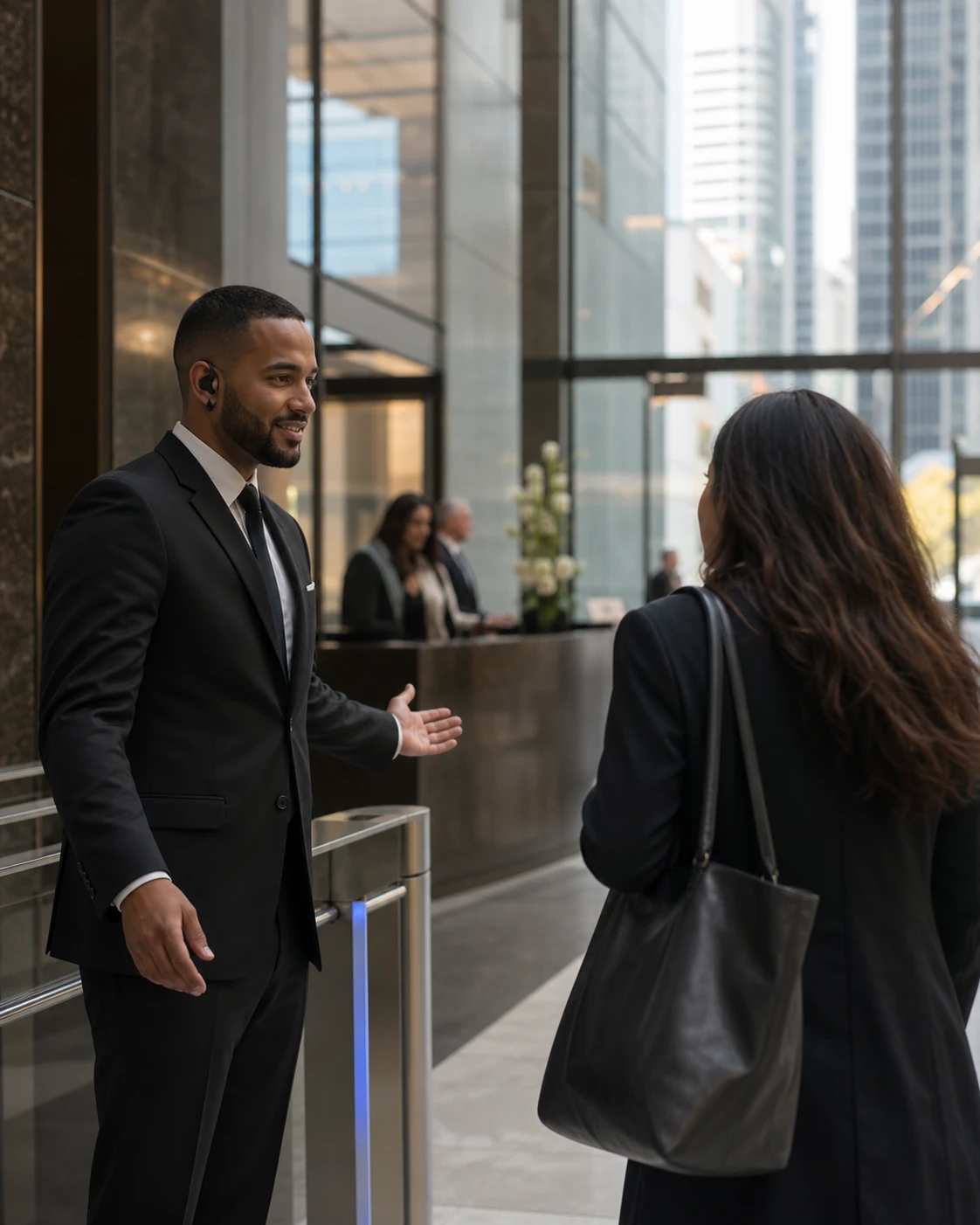
The lobby is both a security checkpoint and the building’s first impression. Officers should have clear procedures for greeting visitors, confirming destinations, contacting tenants, issuing credentials, and handling people who refuse to cooperate.
Separate Visitor, Delivery, and Contractor Processes
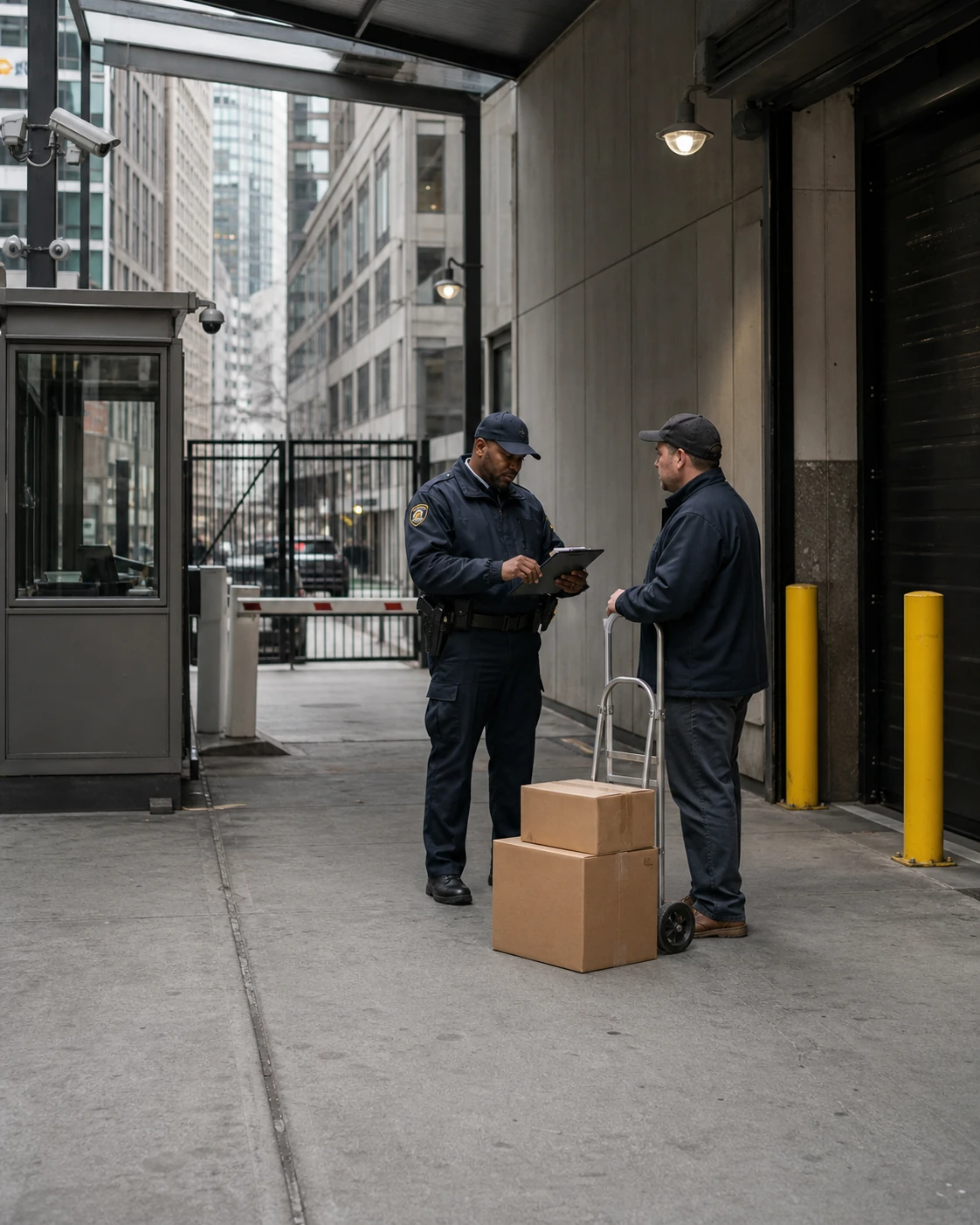
Visitors may need tenant approval, delivery personnel may be restricted to designated routes, and contractors may require identification, insurance verification, work orders, keys, or access to sensitive spaces. Combining every group into one informal process creates avoidable gaps.
Control After-Hours Access
After-hours activity should be based on authorization rather than recognition alone. Define which entrances remain open, how credentials are verified, when tenant confirmation is required, and how guests or vendors are escorted.
Design Patrols Around Building Vulnerabilities
Patrol routes should include stairwells, emergency exits, loading areas, vacant floors, mechanical spaces, rooftops, and the exterior perimeter. Officers should document hazards, unsecured areas, suspicious conditions, and corrective actions.
Prepare for Common Midtown Disruptions
Commercial properties should have procedures for demonstrations, street closures, suspicious packages, medical emergencies, elevator entrapments, fires, power interruptions, severe weather, and nearby police activity.
Coordinate Security and Fire-Life-Safety Duties
Security officers, fire guards, fire and life safety directors, engineers, property managers, and tenant representatives must understand their roles. Drills and tabletop exercises help confirm that notification and command procedures work.
Use Reporting to Improve the Property
Repeated access exceptions, elevator problems, loitering, delivery conflicts, or door alarms can reveal trends. Reports should lead to assigned follow-up rather than simply being archived.
Review the Plan as Occupancy Changes
Tenant turnover, office schedules, renovations, new amenities, and changing delivery patterns can alter risk. Guardian commercial office security helps Midtown properties balance professional service and accountability. Call or text (212) 602-1695 or request coverage.

Put the plan into practice
| Review point | What to confirm |
|---|---|
| Visitor arrival | Verified host, destination, credential, and exception authority |
| After hours | Approved access list, desk coverage, patrol relief, and contacts |
| During an incident | Emergency notification, responder access, and shift handoff |
Related Guardian services
Review Commercial Office Security and Fire & Life Safety Directors to connect these procedures with the appropriate staffing and site responsibilities.
Frequently asked questions
What should a Midtown office visitor process include?
Identity verification, tenant approval, credential issuance, destination control, and procedures for exceptions.
Should deliveries use the main lobby?
The property should define a controlled delivery route appropriate to its layout and tenant needs.
What emergencies should office security plan for?
Fire, medical emergencies, elevator entrapment, power loss, suspicious packages, severe weather, demonstrations, and nearby police activity.
When should the plan be updated?
At least annually and whenever occupancy, entrances, technology, schedules, or major procedures change.