
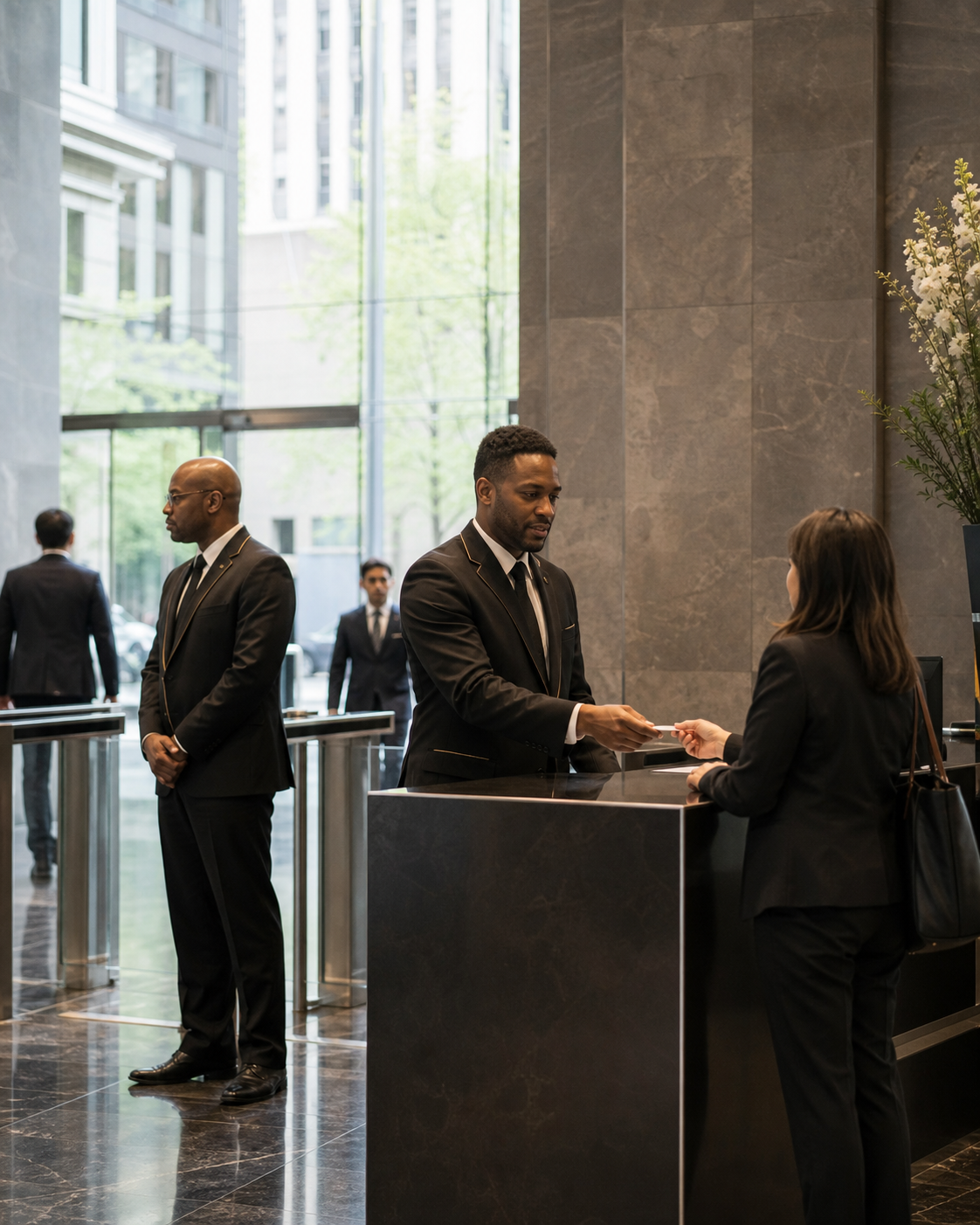
Manhattan office buildings manage a continuous mix of employees, tenants, clients, vendors, delivery workers, contractors, and members of the public. Effective security must protect the property while allowing legitimate business to move efficiently.
Control Every Route Into the Building
The main lobby is only one access point. Loading docks, garages, retail connections, side doors, freight entrances, and emergency exits must be included in the same plan. An entrance that is rarely used can still become the building's weakest point.
Make Visitor Procedures Consistent
Officers need a reliable method for verifying hosts, issuing credentials, handling unresponsive tenants, and limiting access beyond approved destinations. Exceptions should be authorized and documented rather than negotiated at the desk.
Treat Deliveries as an Operational System
Food, parcels, freight, couriers, and contractor materials create different risks. Management should determine where each type enters, where it may wait, which elevator it may use, and who accepts responsibility.
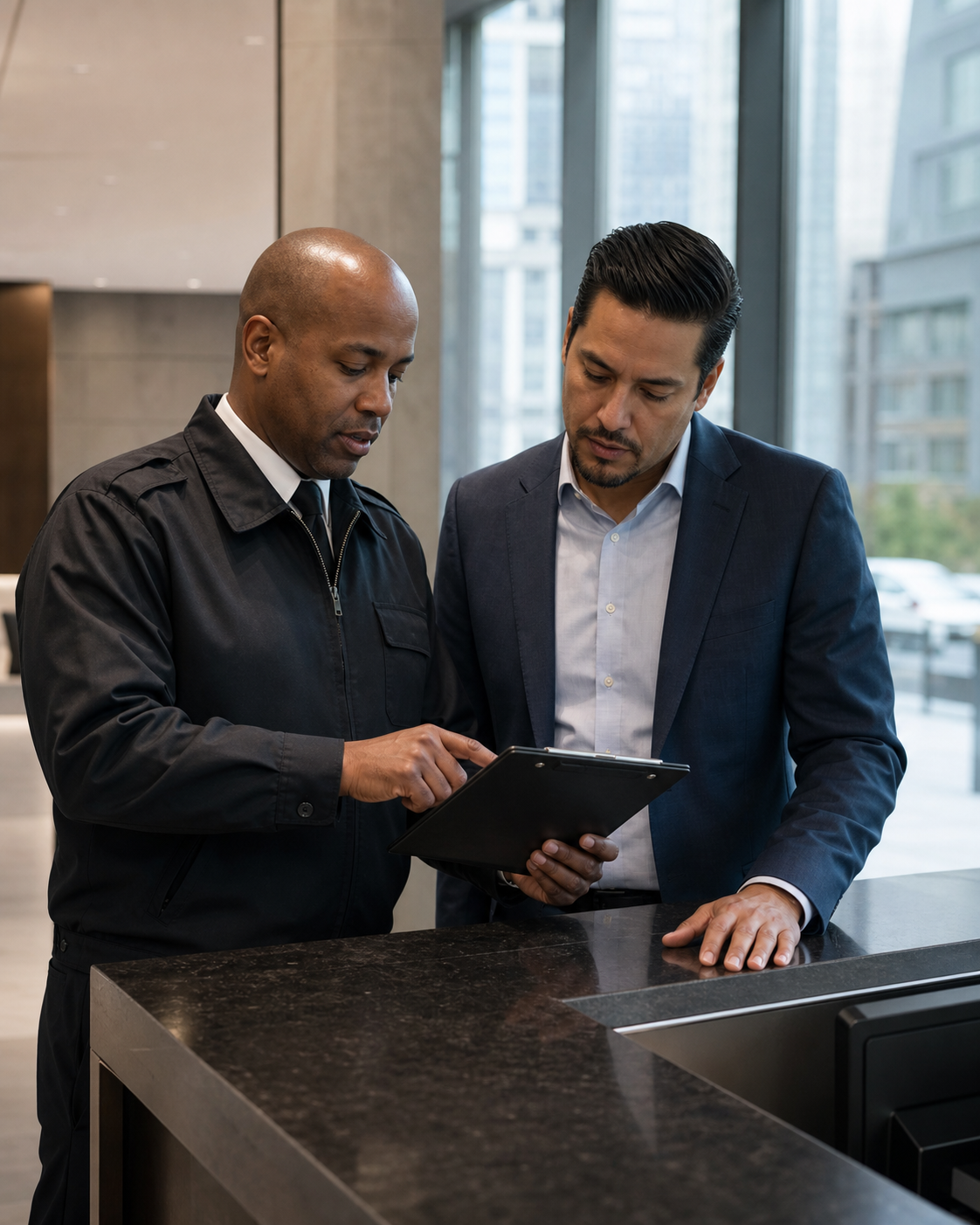
Do Not Overlook Vacant and Shared Floors
Vacant offices can contain unlocked suites, water leaks, abandoned equipment, temporary contractors, or doors left open. Shared and subleased floors may create conflicting visitor and credential rules that require special attention.
Connect Patrols to Building Conditions
Patrols should verify doors, stairwells, lighting, mechanical areas, roof access, loading spaces, and unusual conditions. Findings must be communicated to the responsible department and tracked until resolved.
Prepare for Simultaneous Events
A medical emergency can occur while a delivery arrives and a visitor disputes access. Staffing and procedures should account for competing priorities so the lobby is not left uncontrolled.
Include Tenants in Security Communication
Tenant coordinators should understand visitor rules, emergency notifications, after-hours access, and how to report concerns. Consistent tenant participation strengthens the entire building.
Guardian ISI provides commercial office security and consulting throughout Manhattan. Call or text (212) 602-1695 or request coverage.
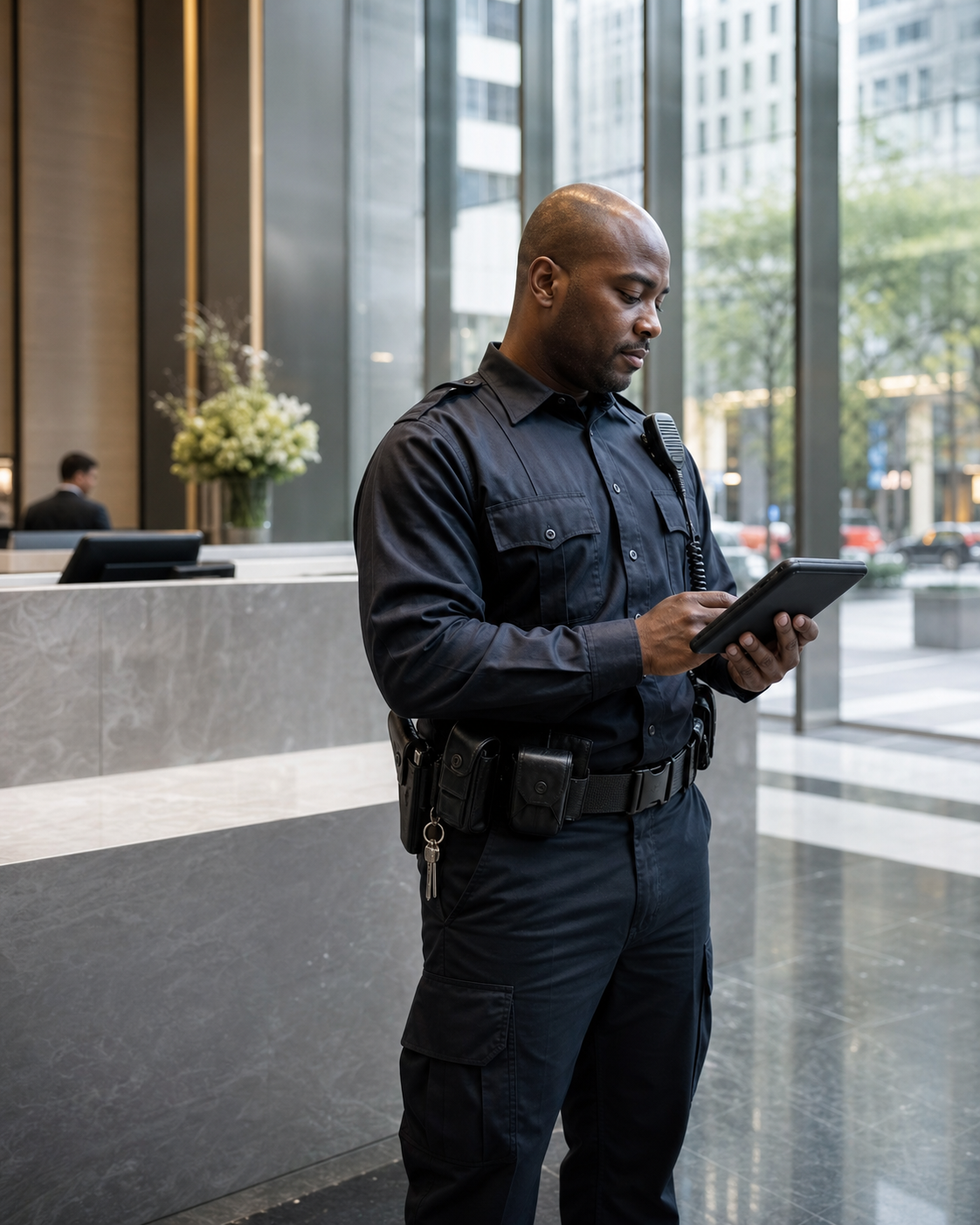
Turn the review into a working shift plan
- Map public, tenant, delivery, and after-hours access routes.
- Assign responsibilities and relief for each essential post.
- Test the plan during a busy period and resolve the gaps with management.
Supervisor review checklist
- Confirm current contacts and post instructions.
- Review unresolved incidents and access exceptions.
- Verify relief arrangements and communication equipment.
- Record corrective actions and the person responsible for follow-up.
Frequently asked questions
Does every New York property need the same security plan?
No. Coverage, patrols, and response procedures should reflect the property's actual activity, vulnerabilities, hours, and responsibilities.
How often should security procedures be reviewed?
At least annually and whenever the property, tenant mix, operating hours, staffing, or risk conditions change.
What makes a security program accountable?
Clear post orders, documented patrols, defined escalation rules, supervisor review, and regular communication with the client.
How can Guardian ISI help?
Guardian can assess the property, recommend coverage, provide trained personnel, develop procedures, and maintain management communication.