

Climate Week NYC runs from September 20–27, 2026, alongside the United Nations General Assembly. It brings together participants from business, government, finance, and civil society. (climateweeknyc.org)
For Manhattan property teams, the operational challenge is not limited to major conference venues. Office tenants may schedule panels, receptions, media interviews, executive meetings, or invitation-only gatherings inside buildings that operate normally during the rest of the day.
A tenant event can therefore create unfamiliar guest volume, curbside congestion, vendor activity, elevator demand, and access requests—all while other occupants expect normal building operations. The following checklist helps property managers prepare without treating every attendee as a threat or turning the lobby into an event-registration desk.
Start With a Building-Level Event Inventory
Ask tenants to disclose planned events through one building contact rather than sending separate instructions to lobby officers, engineers, and loading-dock staff.
For each event, collect:
- Date, start time, end time, and setup window
- Host tenant and responsible on-site representative
- Expected attendance and arrival pattern
- Guest-list or registration method
- Floors and rooms being used
- Catering, production, photography, and delivery vendors
- Executives, public officials, media, or other participants requiring coordinated arrival procedures
- Requested use of freight elevators, loading areas, coat storage, or temporary signage
- Whether alcohol will be served
- Anticipated rideshare, chauffeur, or bus activity
The objective is operational visibility. Security cannot plan staffing or access procedures around an event that exists only on a tenant’s calendar.
Separate Building Access From Event Check-In
One of the most common planning mistakes is expecting the lobby guard to verify building access and conduct full event registration at the same time.
Define the building’s responsibility
Building security should know:
- Which entrance event guests may use
- What credential or guest-list confirmation permits entry
- Which floor guests may access
- Whether an escort is required
- How rejected, unlisted, or early arrivals should be handled
Define the tenant’s responsibility
The tenant should provide enough event staff to manage name lookup, ticket questions, badges, coat checks, program information, and other host functions. A tenant representative should also be reachable throughout the event to resolve exceptions.
This separation keeps the security team focused on access control, observation, emergency response, and the continued operation of the property.
Model the Arrival Wave, Not Just Total Attendance
A 150-person reception may appear manageable until most attendees arrive during the same 20-minute period.
Review the likely peak and determine whether the building needs:
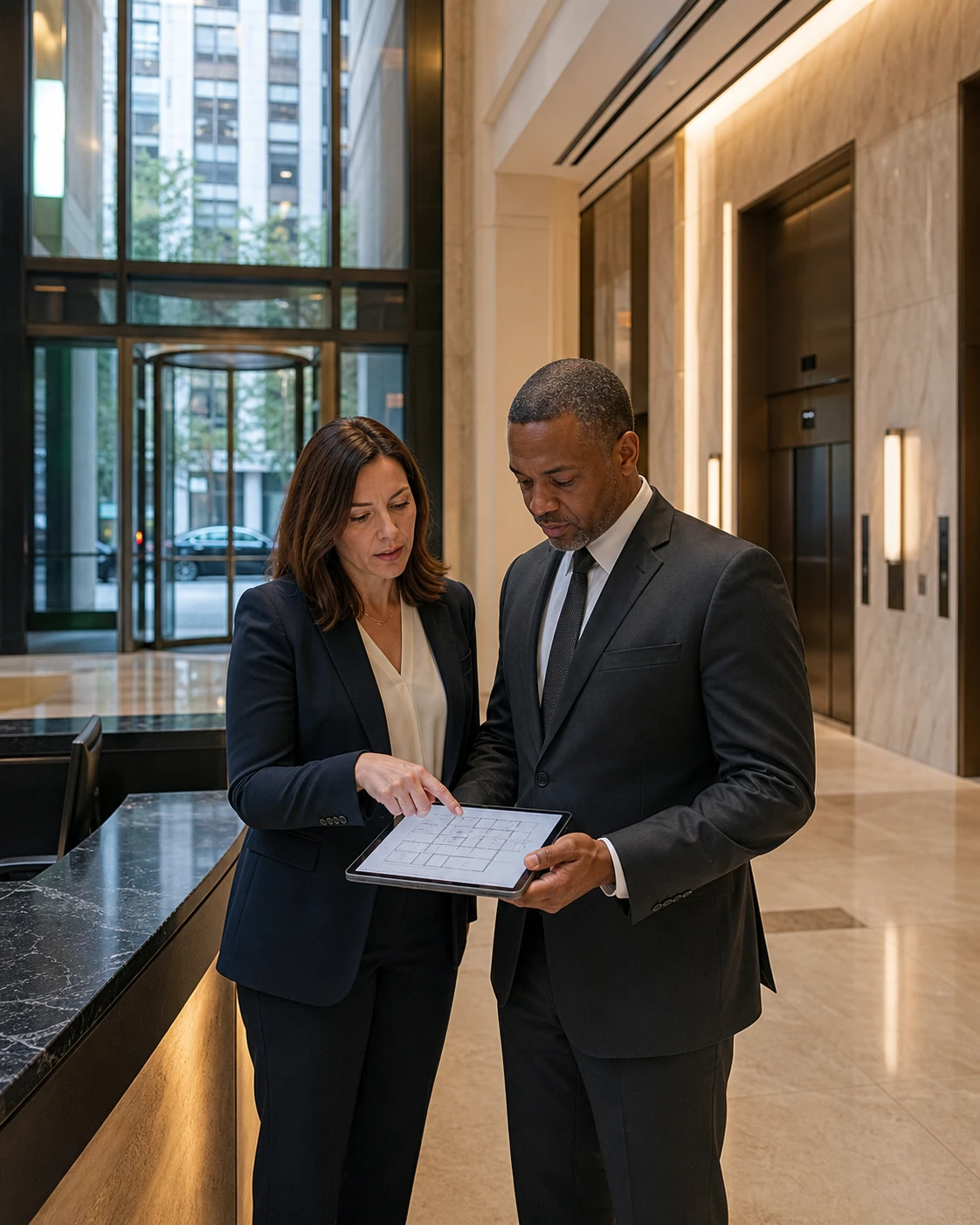
- A temporary guest-processing position
- A second officer near the turnstiles or elevator bank
- Queue space that does not block tenant circulation or exits
- Stanchions or other property-approved wayfinding measures
- An outdoor officer when conditions and property boundaries make that appropriate
- A tenant representative stationed in the lobby
- A separate procedure for VIP or media arrivals
The staffing decision should reflect simultaneous demand, not simply the final head count.
Protect Normal Tenants From Event Spillover
Climate Week activity should not prevent other occupants from entering, receiving deliveries, or reaching elevators.
Before each event, identify:
- The path for ordinary tenant traffic
- The event guest queue
- The location for unresolved registrations
- The route for caterers and production vendors
- The location where cars may safely discharge passengers without building personnel directing traffic in the public roadway
If the lobby is compact, staggered admission or advance credentialing may be more effective than adding another table.
Coordinate the Loading Dock and Service Elevators
Tenant events often introduce vendors who have never worked in the building. They may arrive early, use the wrong entrance, bring unapproved equipment, or assume that curbside unloading space has been reserved.
The building should issue written instructions covering:
- Approved delivery location and arrival window
- Vendor identification requirements
- Freight-elevator reservations
- Package and equipment screening procedures
- Storage restrictions
- Removal of cases, waste, and rental equipment
- The name of the tenant representative accepting each delivery
Loading-dock and lobby teams should receive the same schedule. Conflicting instructions create unauthorized shortcuts and repeated calls to management.
Set an Exception Procedure Before Guests Arrive
Not every name will appear correctly on the list. A speaker may bring an assistant, an executive may arrive through another entrance, or a vendor may appear outside its assigned window.
Post orders should answer:
- Who may approve a guest-list exception?
- How will that approval be recorded?
- Where should an unresolved visitor wait?
- When should a supervisor respond?
- What happens if the tenant contact cannot be reached?
- Under what conditions should entry be denied?
Officers should not improvise admission standards under pressure or accept instructions from an unidentified person claiming to represent the host.
Monitor Conditions Outside Without Overextending the Post
Events held alongside major citywide activity may be affected by changing pedestrian volume, demonstrations, street restrictions, motorcades, or transportation delays. Property teams should monitor official NYC advisories as the date approaches rather than assuming conditions will match an earlier schedule.
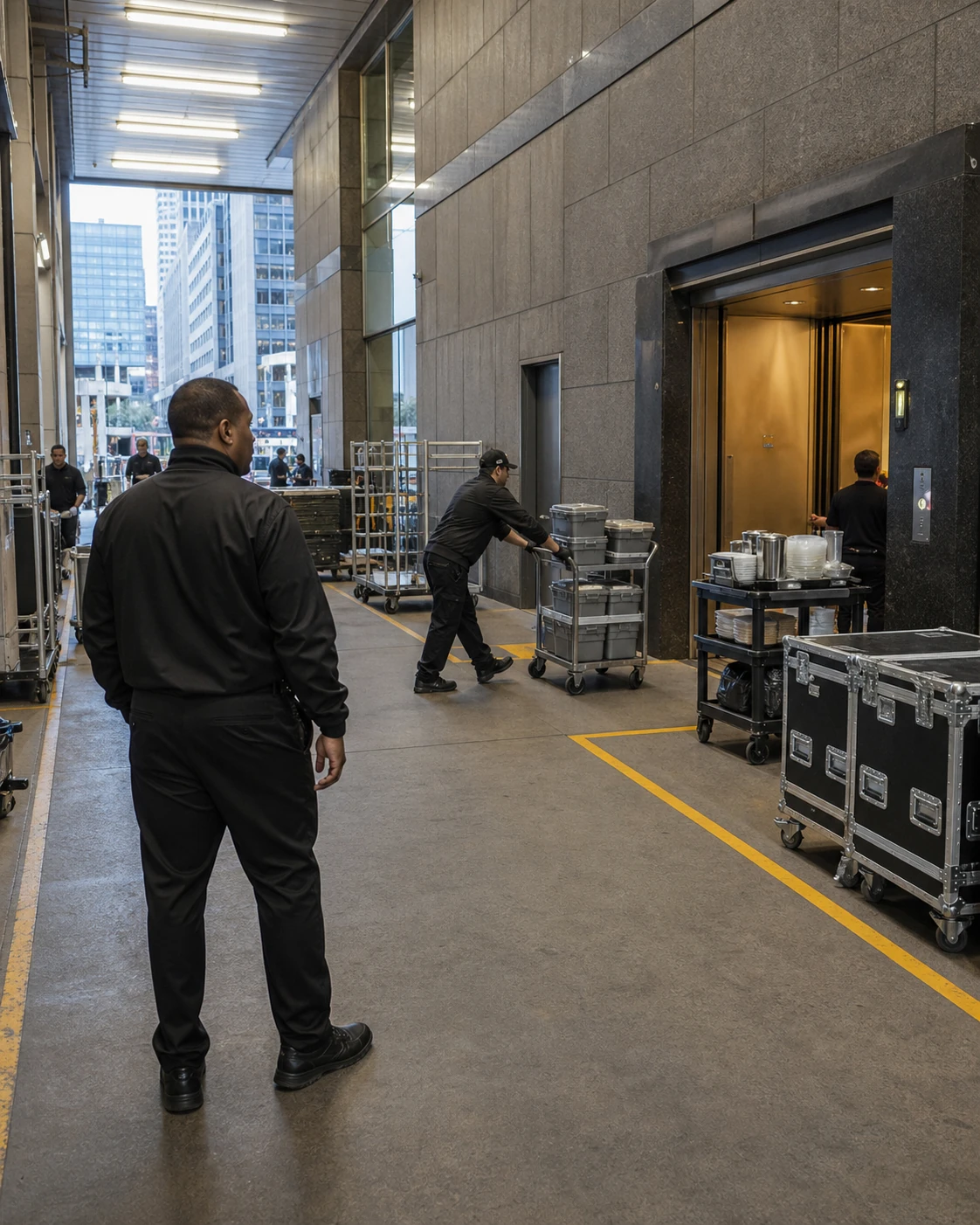
Security observations should focus on the property and its immediate approaches. Officers should report changes that could affect entrances, emergency access, deliveries, or occupant movement. They should not leave assigned posts to investigate unrelated street activity.
Conduct a Pre-Event Briefing
A short briefing should include lobby officers, supervisors, loading-dock personnel, the tenant host, and relevant building operations staff.
Confirm:
- Final event schedule
- Staffing assignments and reliefs
- Guest-entry method
- Vendor list
- Elevator plan
- Emergency contacts
- Radio channel or phone numbers
- Escalation authority
- Closing and equipment-removal procedures
Use the actual guest entrance and route during the briefing. A plan that works on paper may fail when a registration table narrows the path to the elevator bank.
Close the Event Deliberately
The final departure period can be as demanding as the arrival. Guests may gather in the lobby, wait for cars, retrieve coats, or attempt to re-enter after credentials have been collected.
The closeout plan should address:
- Lobby and curbside monitoring during the departure peak
- Credential collection, if applicable
- Vendor load-out
- Unclaimed property
- Removal of temporary signs and registration materials
- Confirmation that event floors and service areas are secured
- Documentation of incidents, access exceptions, and lessons for the next event
A brief next-day review can identify practical adjustments before another tenant hosts a similar program.
Prepare Your Manhattan Property for Each Event
Guardian ISI can help Manhattan owners and property managers evaluate event staffing, access procedures, post orders, loading-dock coordination, and emergency coverage without disrupting normal building operations.
Call or text (212) 602-1695, or request security coverage for an upcoming tenant event.
Related Guardian services
Coordinate Event Security with the property’s Commercial Office Security so event arrivals and normal building access have defined responsibilities.
Frequently asked questions
When is Climate Week NYC 2026?
Climate Week NYC is scheduled for September 20–27, 2026.
Should a lobby security officer check in every event guest?
Security may verify authorization to enter, but the tenant should ordinarily provide staff for detailed event registration and program questions.
How far in advance should tenants disclose an event?
As early as possible. The building needs time to evaluate attendance peaks, staffing, deliveries, elevators, and special access requests.
Does every tenant event require additional guards?
No. Staffing should reflect the arrival wave, lobby layout, event hours, vendor activity, and demands on existing posts.
What should happen when a guest is not on the list?
The officer should follow a written exception procedure and obtain approval from an identified, authorized tenant contact.