
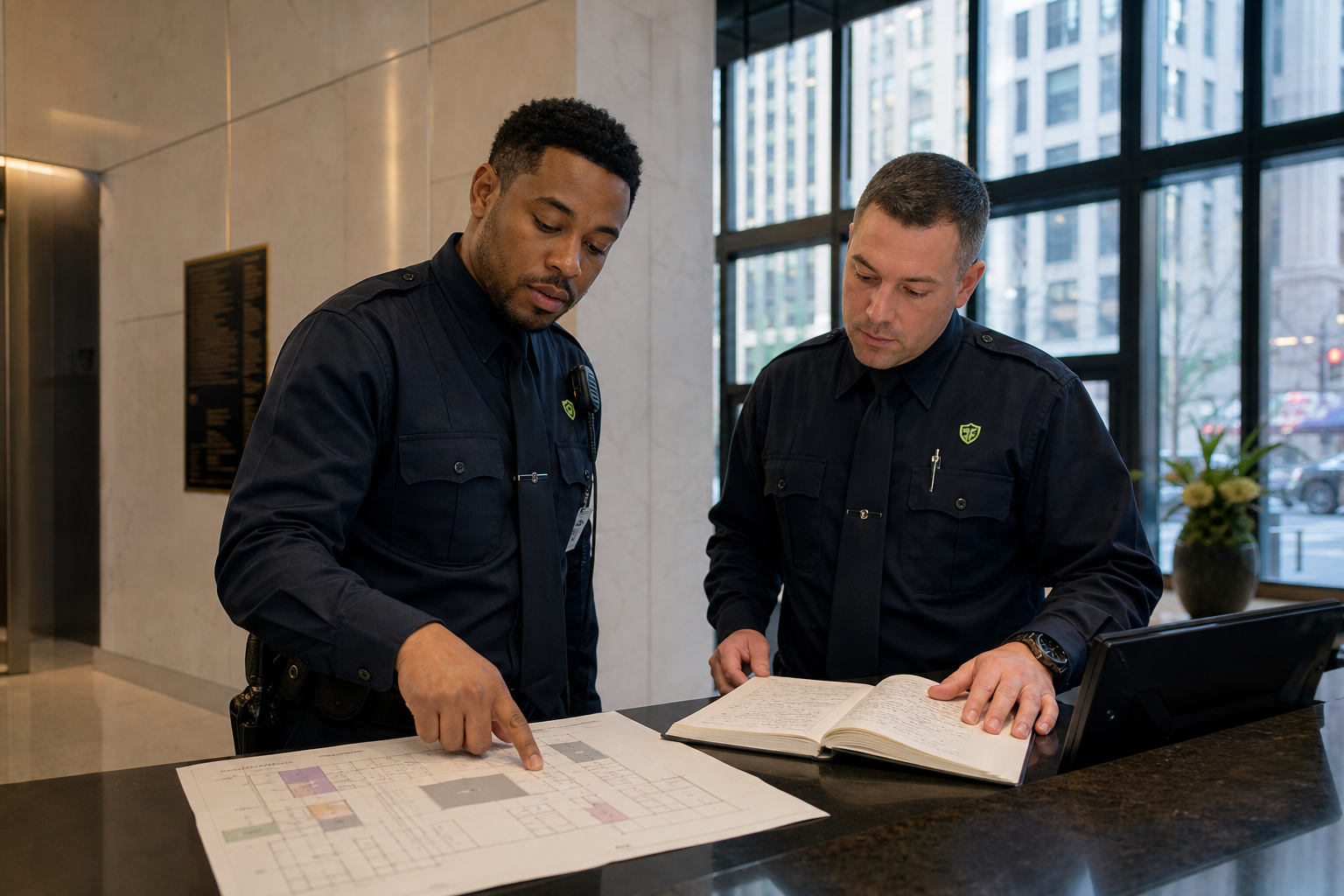
A fire guard is still a person who needs reasonable access to meals, water, restrooms, and relief. But a New York City property cannot treat a personal break as permission to suspend an active fire watch.
FDNY materials state that required impairment fire-guard coverage is to be maintained continuously until the affected fire protection system is restored. The NYC Fire Code also requires enough fire guards for each affected floor or area to be patrolled at least once an hour, with no individual fire guard assigned more than 50,000 square feet of floor area. The department may further limit coverage based on configuration, patrol impediments, occupancy, or fire risk. (nyc.gov)
This article addresses operational coverage, not wage-and-hour requirements. Employers should separately manage meal and rest periods in accordance with applicable rules and employment guidance.
The Wrong Question Is “Can the Guard Leave for 20 Minutes?”
The better question is:
How will the property preserve the required watch while the assigned fire guard is temporarily relieved?
An informal answer—such as asking a concierge, porter, engineer, or security officer to “keep an eye on things”—may not satisfy the qualification and assignment requirements applicable to the impairment.
The relief person must be appropriate for the fire-watch assignment, understand the affected area, and be able to perform the route and emergency actions without delay.
Build Relief Into the Staffing Plan
Relief should be discussed before coverage begins, especially for an impairment expected to continue through a meal period, overnight shift, or multiple days.
Confirm these five items
- Who is authorized and qualified to provide relief?
- What time windows are likely to require relief?
- Can one person maintain the assigned route within the required frequency?
- Does the route include locked, tenant-controlled, or difficult-to-reach areas?
- Who will document the transfer and return of responsibility?
If the original staffing plan leaves no realistic way to provide relief, the plan is incomplete.
Use a Structured Handoff
A relief fire guard should not begin with only a clipboard and the instruction to “walk every floor.” The outgoing guard or supervisor should communicate:
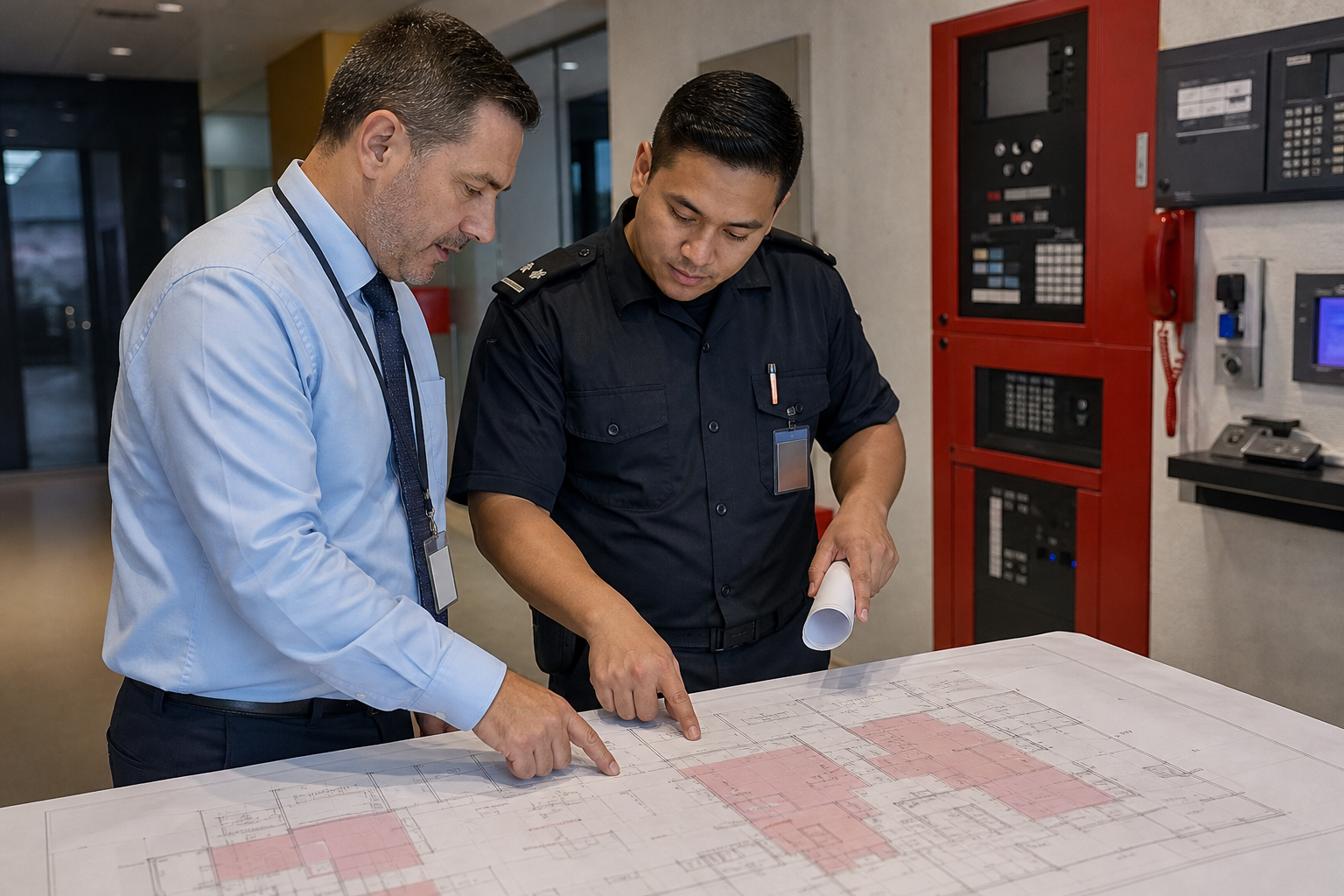
- The impaired system: Identify what is out of service.
- The affected area: Specify floors, rooms, zones, and exclusions.
- The route: Review the actual sequence and access method.
- Current conditions: Report hazards, contractor activity, blocked areas, or unusual observations.
- Emergency actions: Confirm communication methods and notification order.
- Documentation: Identify the active log and the last completed round.
- Restoration status: Explain who is performing repairs and whether the scope has changed.
Both people should understand the exact moment responsibility transfers.
Avoid the “Double Duty” Shortcut
Properties sometimes attempt to cover a break by assigning fire-watch responsibilities to an employee who is already responsible for a lobby, loading dock, control room, or maintenance task.
That can fail operationally when the employee cannot leave the primary post or cannot complete the affected route on time. Before approving dual responsibilities, management should determine whether the person can actually perform the fire watch as directed without abandoning another critical function.
When responsibilities conflict, add relief rather than relying on optimistic scheduling.
Plan for Restroom and Hydration Access
Not every brief personal need requires a lengthy formal process, but the route and post design must remain workable.
A practical plan may include:
- A nearby approved restroom
- A charged radio or phone carried by the fire guard
- A supervisor who can provide immediate short-duration relief
- Water available without leaving the assigned area
- A route schedule that does not force rushed or missed rounds
- Backup access credentials held by the relief person
For a large or complicated affected area, the solution may require an additional fire guard rather than a single roving relief employee.
Account for Shift Changes and Late Relief
Break planning and shift planning are connected. If an incoming guard is late, the outgoing guard should not assume the watch has ended simply because the scheduled shift time has passed.
The escalation plan should answer:
- Who is notified when relief is late?
- Can a supervisor assume the assignment?
- Is another qualified fire guard available?
- Who contacts building management?
- How is overtime or emergency authorization approved?
- What information must remain in the fire-watch log?
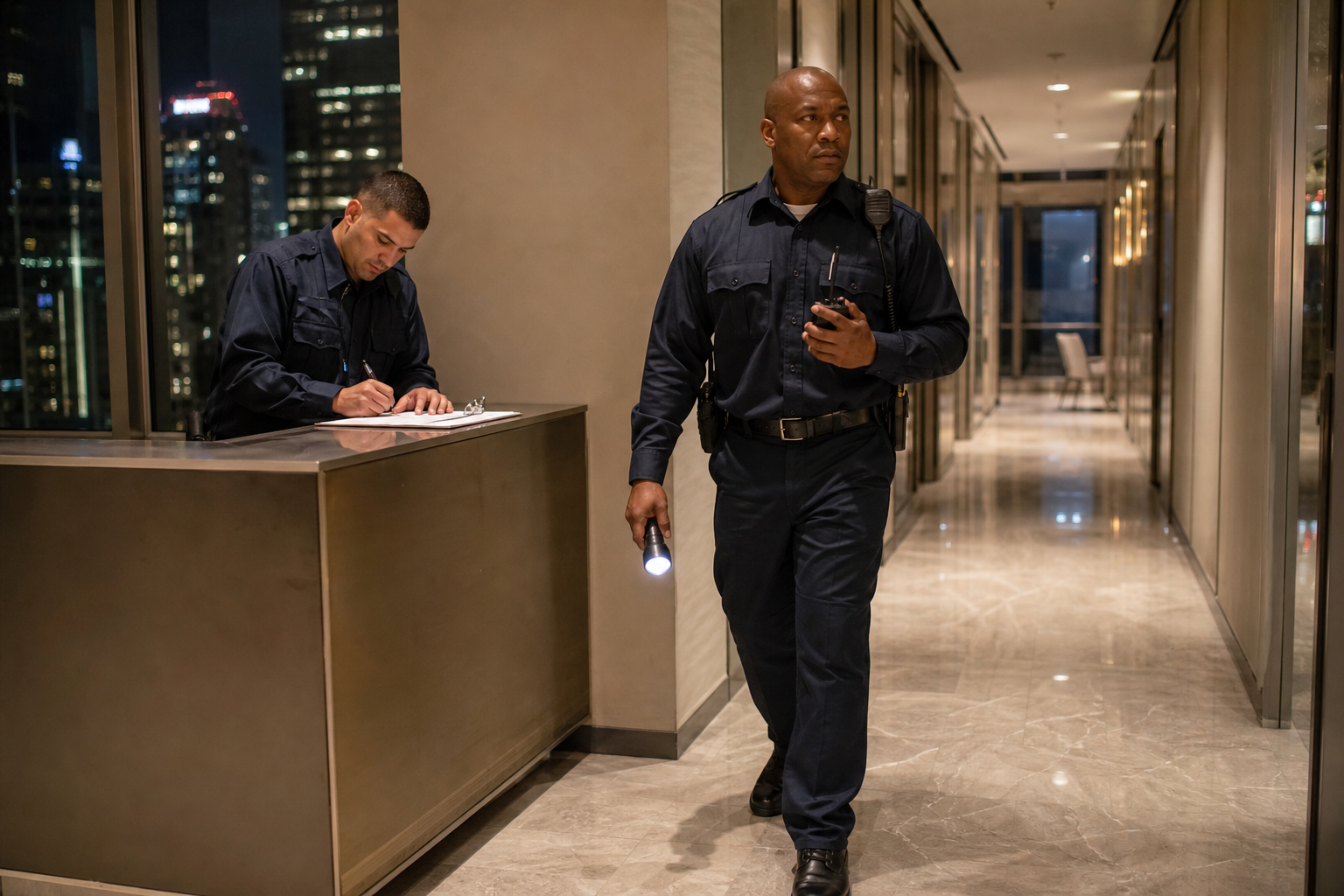
Coverage problems should be escalated while coverage is still in place—not after someone has left.
A Relief-Coverage Checklist for Property Managers
Before the assignment begins, confirm:
- Required qualifications have been verified.
- The affected area and route are documented.
- The staffing level reflects area size and route impediments.
- Meal, restroom, and shift relief are assigned.
- Every relief person has necessary keys or credentials.
- Radios or phones work throughout the route.
- The handoff method is written into the post orders.
- Late-relief escalation contacts are current.
- Management knows who can approve emergency staffing.
- Coverage continues until authorized restoration and stand-down.
Do Not Let a Predictable Break Create an Avoidable Gap
A compliant impairment plan must work for the entire duration of the outage, not just the first hour. Guardian provides NYC fire guard services for planned and emergency impairments, with site-specific patrol and supervision procedures.
To review relief staffing or request fire-watch coverage, call or text (212) 602-1695 or request coverage.
Frequently asked questions
Can an NYC fire guard leave the property for a meal break?
The required fire watch cannot be suspended. If the assigned fire guard leaves the route or property, appropriately qualified relief must maintain the required coverage.
Can a regular security guard relieve a fire guard?
Do not assume so. The relief person must hold the qualifications required for the specific assignment and must understand the affected area, route, documentation, and emergency procedures.
How often must affected areas be patrolled during an NYC impairment fire watch?
The NYC Fire Code requires sufficient fire guards so each affected floor or area is patrolled at least once an hour. FDNY may impose more restrictive coverage based on site conditions. (codelibrary.amlegal.com)
Can one fire guard cover more than 50,000 square feet?
The Fire Code states that the area assigned to each fire guard may not exceed 50,000 square feet of floor area and may be further limited by FDNY. (codelibrary.amlegal.com)
What should happen if the next fire guard is late?
The current coverage should remain in place while the delay is escalated. The plan should identify a qualified backup, supervisor contacts, management notification, and authorization for emergency staffing.