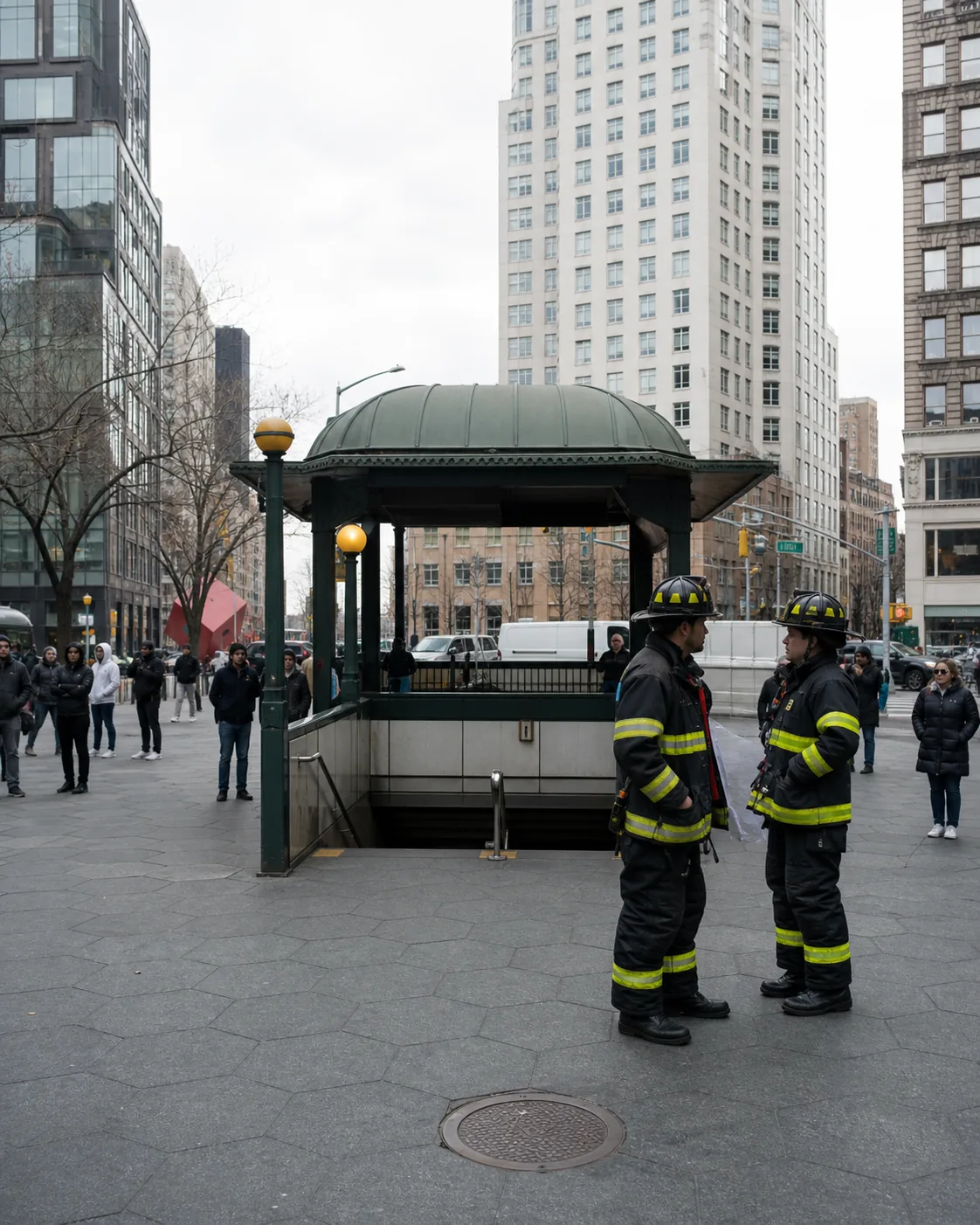
A subway fire or smoke condition can disrupt nearby buildings through emergency vehicle access, transit delays, and displaced passengers. Property teams around Astor Place and elsewhere in Manhattan should prepare for those effects before an incident occurs.
What to do during a subway fire or smoke condition
Anyone inside a station should follow instructions from MTA personnel, firefighters and police officers. If no emergency response is already underway, call 911 or use available station communication equipment. Do not enter a smoke-filled area, cross subway tracks or attempt to retrieve property from a dangerous location.
People at street level should keep station entrances, sidewalks and fire lanes clear. Crowding around an entrance can interfere with emergency operations and expose bystanders to smoke or other hazards.
A subway incident does not automatically require nearby buildings to evacuate. Building occupants should follow instructions from emergency officials and the property’s designated fire-life-safety personnel rather than acting on rumors.
How a nearby subway fire can affect properties
Even when a fire is contained within the transit system, surrounding properties may experience secondary effects.
Disrupted building access
Fire apparatus, police activity or temporary street restrictions can block a normal entrance, loading area or vehicle route. Security teams should identify alternate entrances that can be used without opening uncontrolled access points.
Unexpected lobby traffic
Passengers leaving a station may gather in nearby lobbies, storefronts or building setbacks. Staff should remain courteous while maintaining visitor procedures and keeping exits unobstructed.
Delayed employees and vendors
Subway suspensions and trains bypassing a station can delay scheduled staff, contractors and deliveries. Managers may need to adjust post assignments, notify tenants and verify whether essential coverage is still in place.
Questions about smoke and air quality
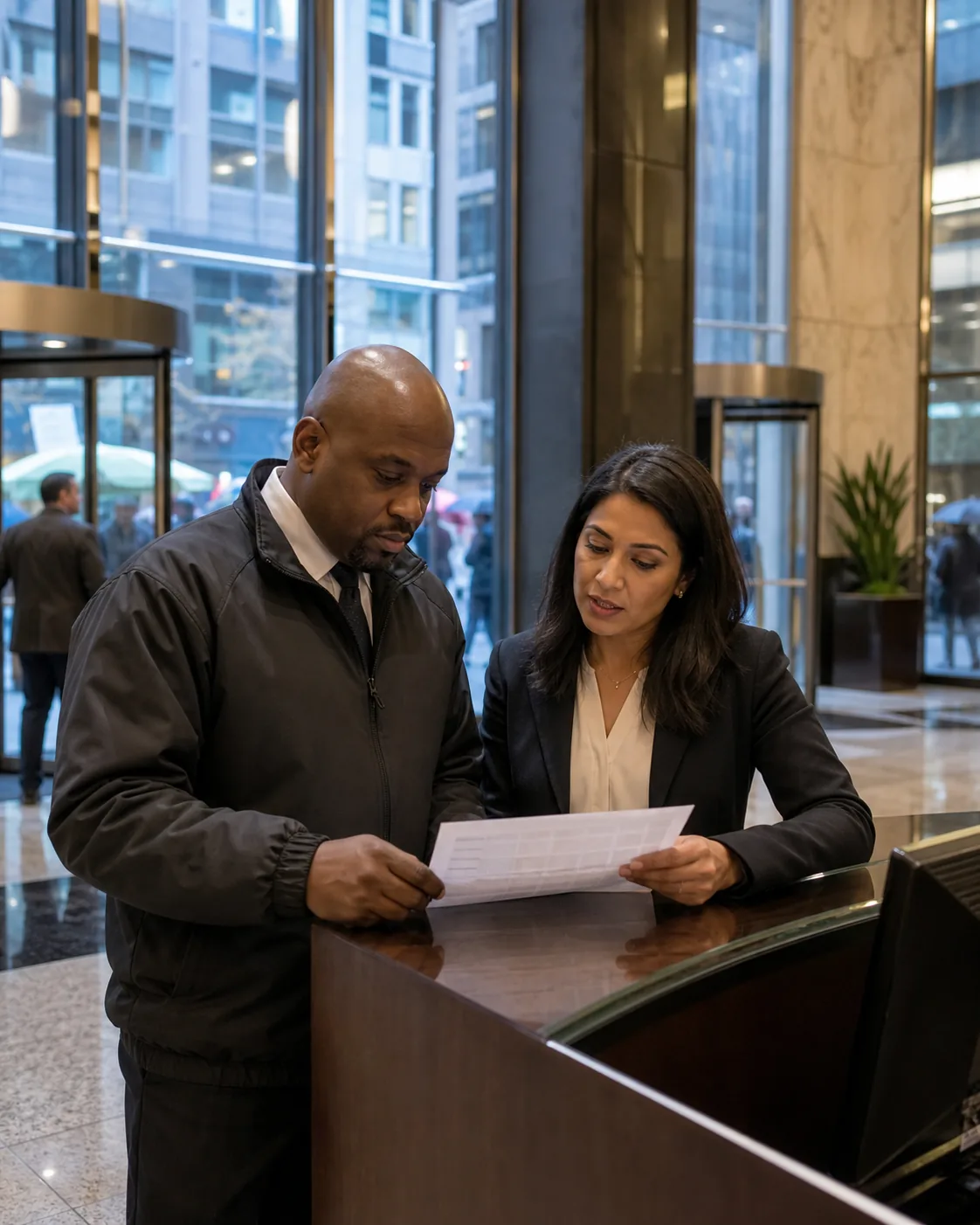
Occupants may report odors or visible haze even when the source is outside the building. Staff should promptly report suspected smoke, follow the property’s emergency procedures and avoid making unsupported statements about whether conditions are safe.
A practical response checklist for property managers
When a major transit incident occurs nearby, property leadership can take the following steps:
- Verify the event through official sources. Review FDNY and MTA updates instead of relying on videos or secondhand reports.
- Contact on-site personnel. Confirm conditions at entrances, sidewalks, loading areas and mechanical spaces.
- Keep emergency access clear. Do not allow vehicles, deliveries or crowds to obstruct fire lanes, hydrants or exits.
- Review staffing. Determine whether guards, front-desk personnel or building engineers are delayed or unable to reach the property.
- Send a concise tenant update. State what is confirmed, explain any access changes and direct occupants to official transit information.
- Document decisions. Record reported conditions, notifications, staffing changes and instructions received from public agencies.
- Reassess after service resumes. Watch for a sudden increase in pedestrian and lobby traffic when station access reopens.
Fire-life-safety and security roles should remain clear
A coordinated response depends on people understanding their responsibilities. Security officers can manage access, protect clear exit paths, relay observations and support communication. They should not diagnose smoke conditions, direct firefighting operations or contradict instructions from the FDNY, NYPD or MTA.
Properties with designated fire-life-safety personnel should use their established emergency plans and chains of command. Guardian provides fire-life-safety directors and security guard services for commercial properties, but on-site personnel do not replace public emergency responders.
If a building’s required fire protection system is temporarily out of service, management should obtain guidance specific to the property and situation. Guardian can help arrange qualified fire guard coverage when it is appropriate and properly requested.

Prepare before the next neighborhood disruption
An incident does not need to begin inside a building to disrupt its operations. Manhattan properties should maintain current emergency contacts, alternate access plans and clear procedures for communicating with occupants.
After any nearby emergency, managers should conduct a brief review. Questions to consider include:
- Did the property receive reliable information quickly?
- Were all entrances and exits monitored?
- Could essential employees reach the building?
- Did tenants know where to find updates?
- Were emergency routes kept clear?
- Is backup security or fire watch coverage available on short notice?
Guardian ISI supports Manhattan property teams with planned assignments and emergency coverage. To discuss coverage, call or text (212) 602-1695 or request coverage online.
Quick planning checklist
| Review point | What to confirm |
|---|---|
| Immediate conditions | Emergency notification and building instructions |
| Operations | Clear responder routes and confirm essential staffing |
| Communication | Verified updates, current contacts, and documented decisions |
Related Guardian services
Review Fire & Life Safety Directors and Security Guard Services to connect these procedures with the appropriate staffing and site responsibilities.
Frequently asked questions
Does a subway fire automatically require a nearby building to evacuate?
No. Follow emergency officials and the building’s approved procedures. Report smoke or immediate danger promptly and do not make decisions from rumors.
What should building staff prioritize?
Protect people, keep emergency access clear, report observed conditions, and communicate verified instructions through the designated building team.
Should security staff assess whether smoke is safe?
No. Report smoke and follow emergency procedures. Qualified personnel and emergency responders should assess the hazard.
How should management prepare for transit disruptions?
Keep current contacts, alternate access arrangements, staffing contingencies, and tenant communication procedures ready.