
Choosing between armed and unarmed security guards is not simply a matter of selecting the highest level of visible protection. For most New York City properties, the right choice depends on credible threats, the value and movement of assets, public access, operating hours, guard responsibilities, and the environment in which the guard will work.
An armed guard may be appropriate when a documented risk justifies a firearm-qualified security professional. An unarmed guard is often the better fit for access control, front-desk coverage, patrols, visitor management, incident reporting, and de-escalation.
The goal is to match the security posture to the property’s actual exposure—without creating unnecessary cost, liability, or friction for tenants and visitors.
What Is the Difference Between Armed and Unarmed Security Guards?
Both armed and unarmed guards can perform important protective duties, including monitoring entrances, conducting patrols, enforcing property rules, documenting incidents, and contacting emergency services. The central difference is that an armed guard is authorized and properly credentialed to carry a firearm while on duty.
Carrying a firearm does not turn a security guard into a police officer. The guard’s authority, post orders, employer policies, training, and legal responsibilities still define what the guard may do at the property.
Typical duties for an unarmed guard
An unarmed security guard may be assigned to:
- Control access at a lobby, loading dock, or employee entrance
- Verify visitors, vendors, and deliveries
- Monitor security cameras and alarm notifications
- Patrol common areas, stairwells, garages, or property perimeters
- Enforce building rules and after-hours procedures
- Observe and report suspicious activity
- De-escalate conflicts and request police, fire, or medical assistance
- Document incidents for management and ownership
These functions address many of the routine risks faced by Manhattan commercial properties.
Typical duties for an armed guard
An armed guard can perform many of the same duties, but may be considered for environments involving:
- Credible threats of serious violence
- High-value assets or sensitive materials
- Regular movement of cash or other attractive targets
- Elevated robbery or targeted-crime concerns
- Executive, institutional, or critical-site protection needs
- Security plans developed from a formal threat assessment
The presence of a firearm should correspond to a defined risk—not serve as a substitute for effective staffing, access control, training, or site procedures.
When Unarmed Security Is Usually the Better Fit
Unarmed guards are appropriate for many office buildings, residential properties, hotels, retail locations, construction sites, and mixed-use properties. They provide a professional security presence while remaining approachable to occupants and guests.
Commercial office buildings
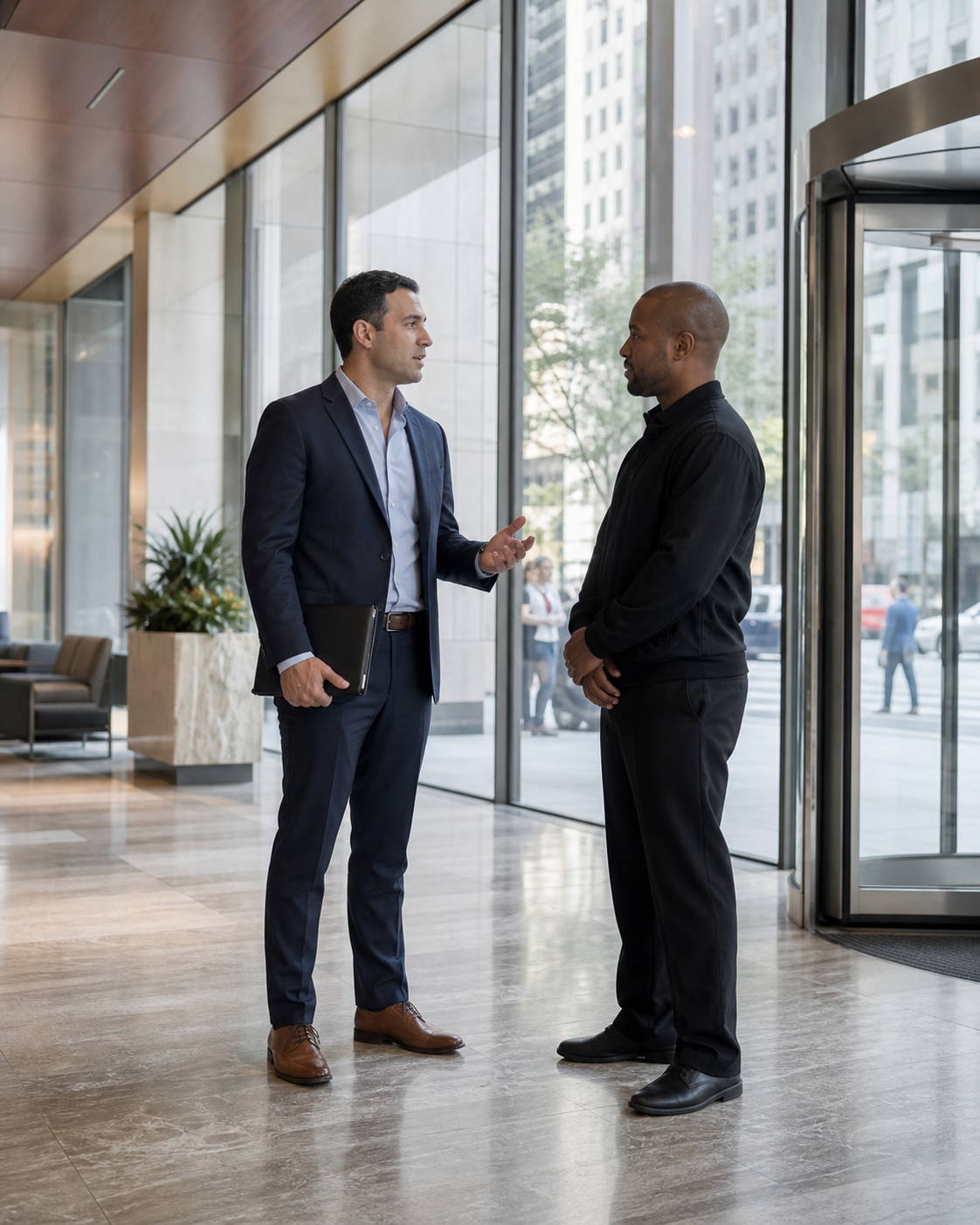
At a Manhattan office building, the most frequent issues may involve unauthorized entry, visitor verification, tenant complaints, deliveries, elevator access, and after-hours activity. A well-trained unarmed guard can manage these responsibilities without making the lobby feel unnecessarily restrictive.
Properties reviewing lobby or tenant-facing coverage can learn more about commercial office security.
Residential and mixed-use properties
Residential guards regularly interact with tenants, guests, delivery workers, contractors, and building staff. Communication, attentiveness, and consistent enforcement of access procedures are often more important than an armed presence.
Retail and hospitality environments
In stores and hotels, guards may need to deter theft, respond to disturbances, assist staff, and preserve a welcoming atmosphere. An armed posture can affect customer perception and may not be proportionate to the site’s normal risks.
Construction and vacant properties
Many construction assignments focus on preventing trespassing, monitoring materials, controlling gates, watching fire hazards, and documenting after-hours activity. These duties can often be handled by unarmed personnel operating under clear post orders.
When an Armed Guard May Be Appropriate
An armed assignment deserves a deliberate review involving ownership, property management, security leadership, legal counsel, and insurance professionals as appropriate. Factors that may support consideration of armed coverage include:

A credible or specific threat
General concern about crime is different from a documented threat against a person, organization, or location. Threatening communications, repeated targeted incidents, or intelligence from law enforcement or qualified risk professionals may justify an elevated security posture.
High-value or targeted assets
Properties where valuable goods, sensitive assets, or substantial cash movements are routinely present may face risks beyond those of a typical office lobby. Even then, management should consider whether operational changes, secure transport, stronger access controls, or surveillance improvements can reduce exposure before adding a firearm to the environment.
Elevated nighttime or isolated-site exposure
A guard working alone at a remote entrance, industrial location, or otherwise isolated post may face different risks than a guard stationed in a staffed Midtown lobby. The surrounding environment, response time, communications, lighting, and backup procedures all matter.
A security assessment recommends armed coverage
The strongest reason to select armed guards is a site-specific assessment showing that they are a reasonable response to identified threats. The assessment should also address staffing levels, supervision, training, emergency procedures, and coordination with property personnel.
Key Factors NYC Property Managers Should Evaluate
1. Threat severity and likelihood
Start with documented conditions rather than assumptions. Review incident reports, access breaches, threatening behavior, theft patterns, operating hours, surrounding activity, and any known threats to occupants.
A severe but unlikely risk should not be evaluated in the same way as frequent lower-level incidents. Both probability and potential impact matter.
2. The guard’s actual responsibilities
Define what the guard must accomplish during each shift. If the primary tasks are greeting visitors, checking identification, managing deliveries, and reporting problems, an unarmed guard may be the more suitable choice.
If management cannot clearly explain why a firearm is needed to complete the post’s duties, armed coverage may not be justified.
3. Public and tenant interaction
A guard in a busy lobby, hotel entrance, retail floor, or residential building interacts with people throughout the shift. Consider how an armed presence could affect occupants, customers, employees, and the overall character of the property.
The guard’s judgment and communication skills remain critical in either model. Many incidents are best resolved through calm direction, distance, de-escalation, and timely police notification.
4. Licensing, training, and supervision
Security guard requirements and firearm rules are regulated, and armed assignments require additional credentials and training. Property managers should work with a qualified provider that verifies current documentation, maintains appropriate records, and assigns personnel whose qualifications match the post.
Ask potential providers about:
- Guard registration and qualification verification
- Firearm-related credentials for armed personnel
- Pre-assignment and site-specific training
- De-escalation and use-of-force policies
- Incident reporting procedures
- Field supervision and performance checks
- Relief coverage when an assigned guard is absent
Requirements can change, and each assignment may present different legal or contractual considerations. Obtain current guidance from the appropriate New York authorities and qualified legal or insurance professionals rather than relying on a general checklist.
5. Insurance and contractual requirements
Armed coverage can create different insurance, indemnification, and liability considerations. Before approving it, review the proposed arrangement with the property’s broker, insurer, and counsel. Confirm that the security company’s coverage and contract align with the assignment.
6. Total program cost
Armed guards generally cost more because of their additional qualifications, training, insurance considerations, and limited staffing pool. However, hourly rate alone should not drive the decision.
Compare the complete security program: number of posts, hours of coverage, supervision, technology, patrol frequency, reporting, and emergency relief. One properly designed unarmed post may provide more practical value than an armed presence unsupported by clear procedures.
A Practical Decision Framework
Use these questions during your initial review:
- What specific incident or exposure are we trying to prevent?
- Is there a credible risk of serious violence, or are our main concerns access and property protection?
- What tasks will the guard perform during a normal shift?
- Will the guard work alone, overnight, or in an isolated area?
- How quickly can police or building personnel respond?
- Would better lighting, locks, cameras, access control, staffing, or procedures reduce the risk?
- How will tenants, employees, customers, and visitors experience the guard’s presence?
- Have our insurer and counsel reviewed an armed-security proposal?
- Can the provider document guard qualifications, supervision, and relevant policies?
- When will we reassess the decision?
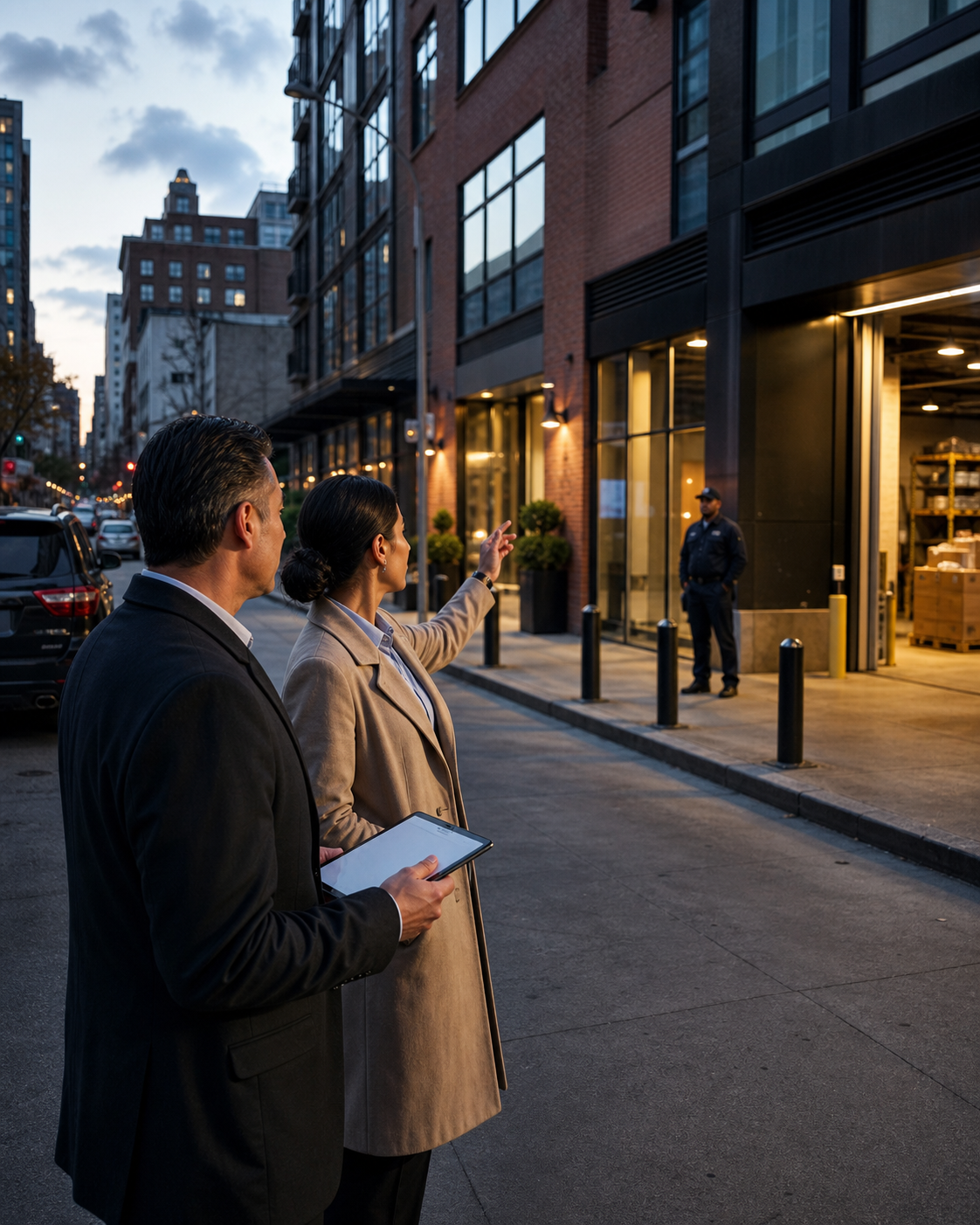
For many NYC properties, the answer may differ by post or schedule. A building might use an unarmed lobby officer during business hours while adopting additional overnight measures for a loading dock or another higher-risk area. Avoid mixing armed and unarmed roles without clear command, communications, and post procedures.
Avoid Choosing Based on Appearance Alone
An armed guard may look more protective, but visible force is not the same as an effective security program. Likewise, an unarmed guard should not be treated as merely a passive observer.
Guard quality depends on selection, training, alertness, communication, supervision, and clear post orders. Effective security also requires management support: functioning cameras, controlled keys and credentials, reliable radios or phones, maintained doors, accurate tenant lists, and a defined escalation process.
If a property has recurring access failures or poorly documented incidents, solving those operational problems may deliver a greater benefit than changing the guard’s equipment.
Review Your Security Plan Regularly
The appropriate level of coverage can change after a threat, tenant turnover, change in building use, construction phase, major event, or shift in operating hours. Review guard deployment after significant incidents and at scheduled intervals.
Guardian ISI can help NYC property managers evaluate post duties and arrange security guard coverage based on the site’s operating needs. If an absence, incident, or unexpected condition leaves a property uncovered, emergency security coverage may also be available.
To discuss armed or unarmed security for your Manhattan property, call or text (212) 602-1695. You can also request coverage online.
Official references
Frequently asked questions
Are armed security guards always safer than unarmed guards?
No. The appropriate choice depends on the property’s credible threats, guard duties, operating environment, and emergency procedures. Introducing a firearm can add complexity and liability, so it should address a defined need.
Do most NYC office buildings need armed guards?
Many office properties can address routine concerns with trained unarmed guards, effective access control, cameras, and clear escalation procedures. A specific threat or unusual asset exposure may justify a different approach.
Can an unarmed guard detain or arrest someone?
A guard’s authority is limited and depends on the circumstances and applicable law; being a security guard does not provide general police powers. Providers should train guards to follow lawful post orders, prioritize de-escalation, and contact police when appropriate.
What credentials should an armed security provider verify?
Ask how the provider verifies current New York security guard registration, required firearm-related credentials, training, and assignment eligibility. Because requirements can change, confirm current details with the relevant authorities and qualified counsel.
Can a property use both armed and unarmed guards?
Yes, if a risk assessment supports different coverage for specific posts or schedules. Responsibilities, supervision, communications, and emergency procedures should be clearly documented.
How often should we reassess our guard type?
Review the decision at regular intervals and after a serious incident, credible threat, change in occupancy, construction phase, major event, or significant change in operating hours.