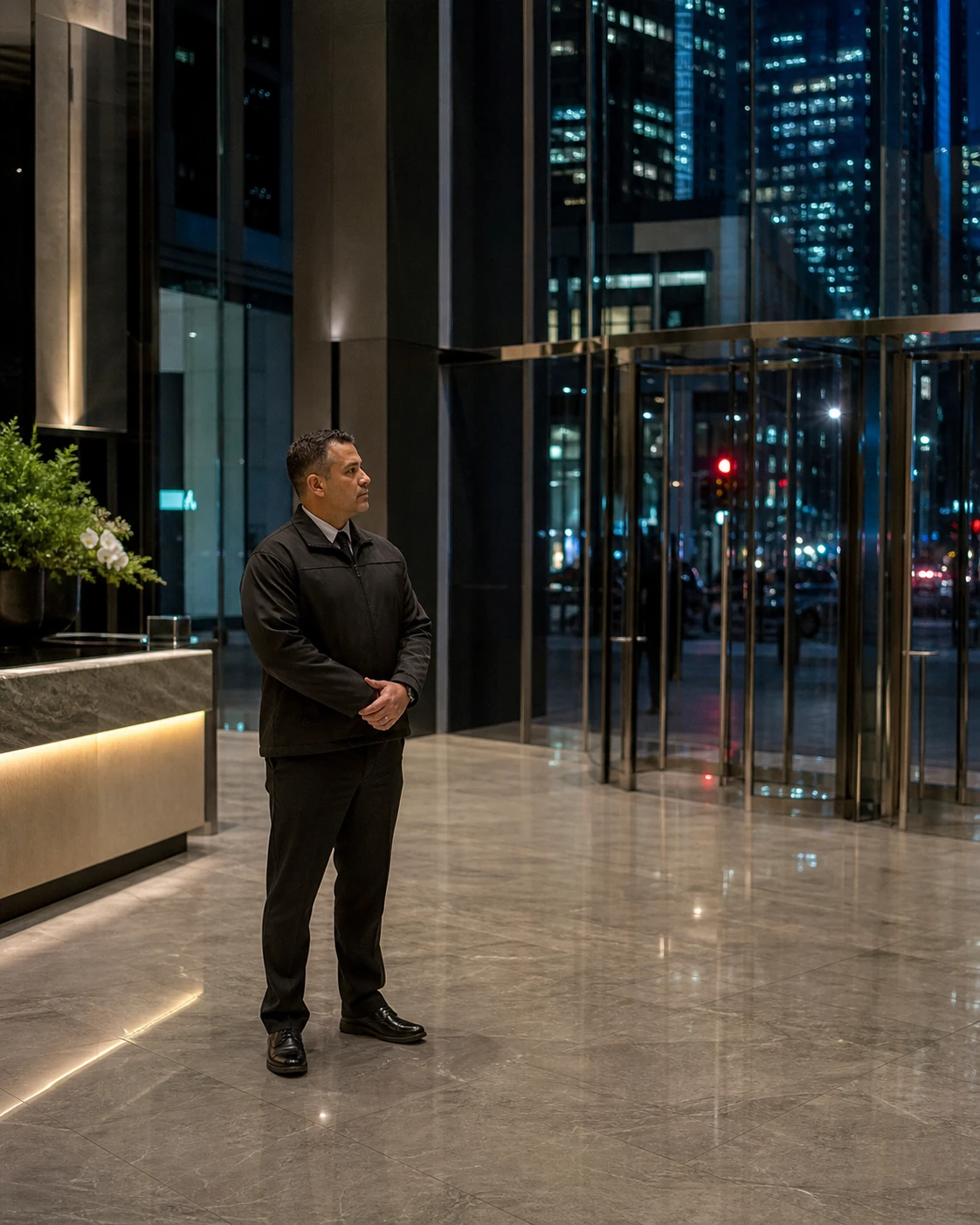
After business hours, a Midtown Manhattan office building operates with fewer occupants, reduced management coverage, and greater reliance on security personnel to recognize and escalate problems. A door alarm, water leak, medical emergency, or unexpected visitor can quickly become more serious when roles and communication channels are unclear.
Effective security response procedures for Midtown Manhattan properties should give each person on duty a practical sequence to follow: detect, verify, prioritize, communicate, protect people, and document. The procedures must reflect the building’s actual staffing, systems, tenant activity, and emergency plans—not a generic checklist copied from another property.
Why after-hours response requires a separate plan
The conditions in an office tower at 2 a.m. are very different from those during a weekday rush. After-hours teams may need to manage:
- A lightly staffed lobby and limited engineering coverage
- Cleaning crews, contractors, messengers, and late-working tenants
- Locked entrances and restricted elevator access
- Deliveries or loading-dock activity outside normal schedules
- Alarm notifications without an employee nearby to explain the cause
- Delayed arrival of property managers or tenant representatives
- Multiple communication systems, including radios, phones, intercoms, and building systems
A good procedure accounts for these constraints. It should also distinguish between situations security can manage on site and emergencies that require immediate assistance from 911, the fire department, emergency medical services, law enforcement, building engineering, or property management.
Build the response around six core steps
1. Detect and acknowledge
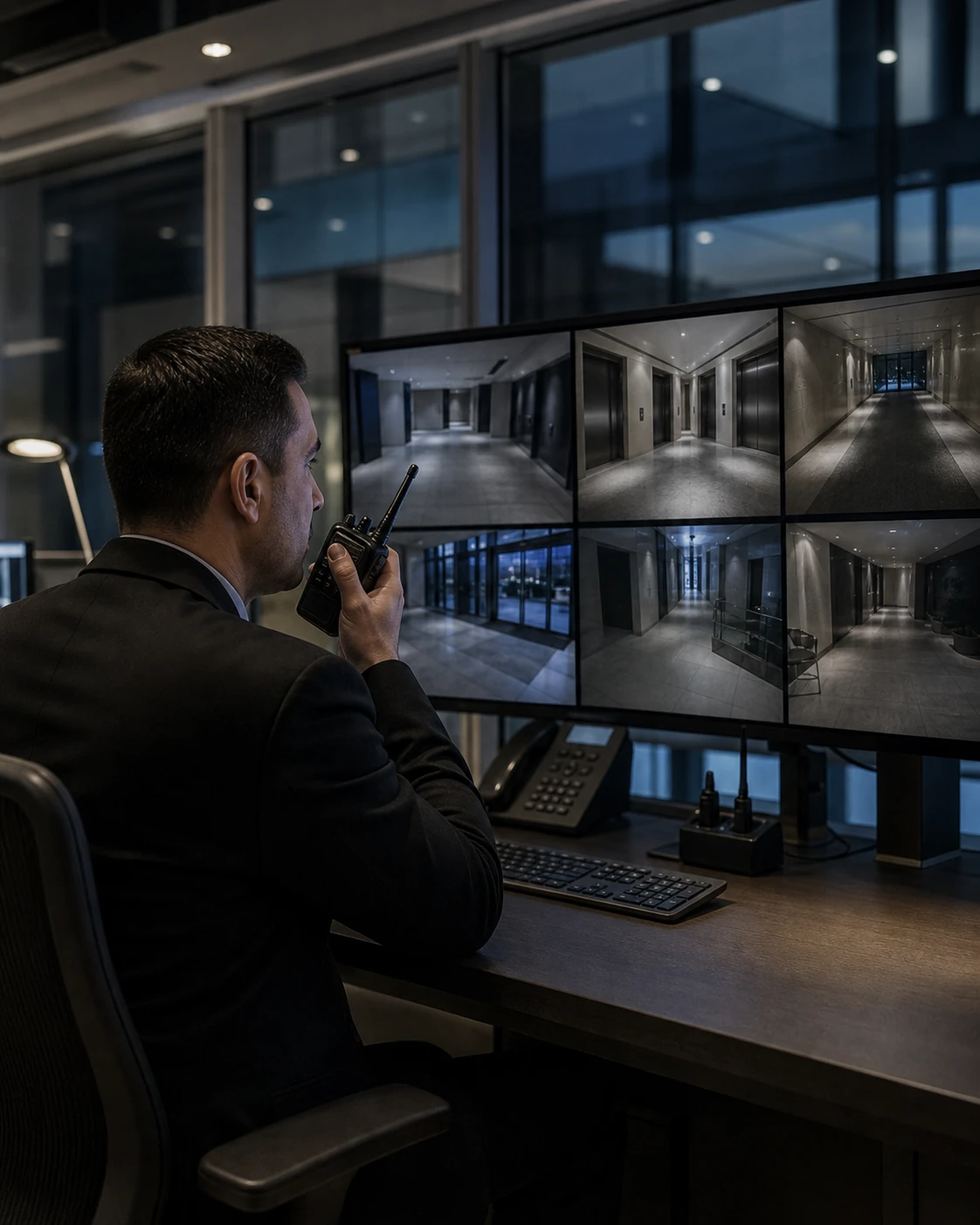
The first person who receives an alarm, call, radio report, or visual observation should acknowledge it promptly. Record the time, source, and location when possible.
Potential sources include access-control alerts, video surveillance, tenant calls, fire or life-safety systems, elevator communications, patrol observations, and reports from cleaners or contractors.
An alert should not be cleared solely because it appears routine. Repeated door alarms, for example, may indicate a faulty contact, a propped door, an access-control issue, or unauthorized activity.
2. Verify without creating unnecessary risk
Verification may involve reviewing a camera, contacting an occupant, checking access records, dispatching a trained officer, or asking engineering to inspect a building condition. The method should match the potential severity of the event.
Security personnel should not enter an unsafe area simply to confirm what is happening. Smoke, a suspected hazardous material, an active threat, or an unknown package requires distance, scene protection, and emergency escalation rather than close inspection.
3. Classify the incident
A simple classification system helps the team act consistently:
| Priority | General description | Typical response |
|---|---|---|
| Critical | Immediate threat to life or a potentially dangerous condition | Call 911 or the appropriate emergency service, initiate the building’s emergency procedures, notify designated leadership, and protect the area |
| Urgent | Significant security or building issue that could escalate | Dispatch appropriate personnel, contact management or engineering, control access, and monitor continuously |
| Routine | Low-risk issue with no immediate threat | Resolve within assigned authority, record the event, and schedule follow-up if needed |
The building should define examples for each level. Officers should also have authority to elevate an incident whenever the available information is incomplete or conditions worsen.
4. Notify the right people in the right order
An after-hours escalation list should identify primary and backup contacts for property management, engineering, tenant leadership, security supervision, and relevant vendors. It should state who can authorize actions such as admitting an emergency contractor, closing an entrance, or contacting a tenant executive.
For life-threatening emergencies or suspected crimes in progress, staff should call 911 first rather than delaying assistance while working through an internal call tree. The caller should provide the building address, entrance responders should use, floor or area involved, known hazards, and an on-site callback number.
5. Stabilize the location and support responders
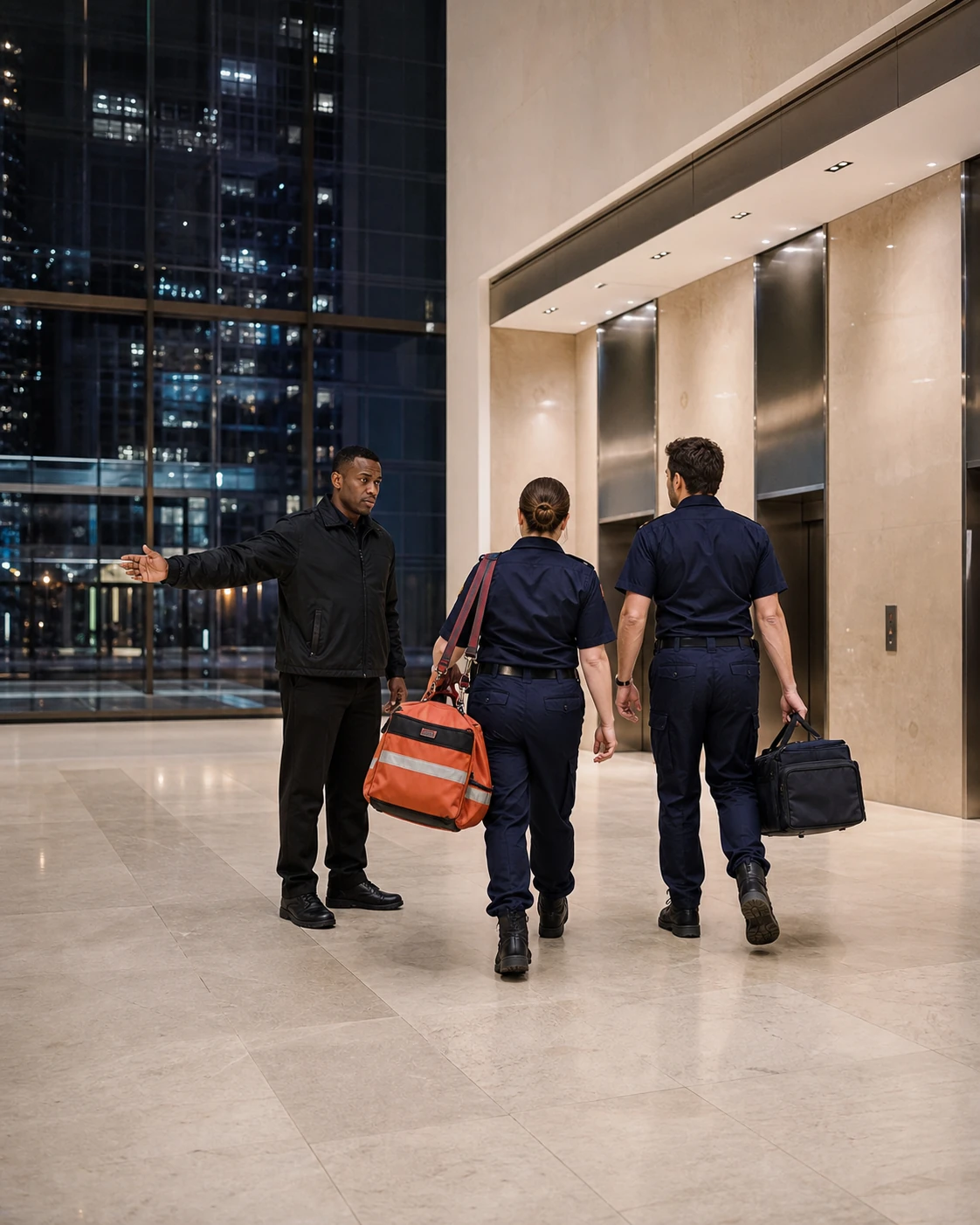
Depending on the incident, stabilization may include restricting access, moving people away from danger, preserving a clear route for responders, assigning someone to meet emergency personnel, or protecting an affected area from additional entry.
Security officers should operate within their training and assigned responsibilities. They should not attempt firefighting, medical treatment, hazardous-material handling, or physical intervention beyond their qualifications and the building’s approved procedures.
6. Document, hand off, and review
The incident record should be factual and chronological. Include:
- When and how the incident was reported
- Exact location and observable conditions
- People notified and notification times
- Actions taken by security, engineering, management, or tenants
- Arrival and departure times of emergency responders or vendors
- Relevant access-control or video references
- Property damage, injuries, or service disruptions that were reported
- Outstanding follow-up items and the person responsible
Avoid speculation, conclusions about fault, or unsupported statements. Preserve relevant records according to the property’s policies, and restrict incident information to authorized recipients.
Procedures for common after-hours incidents
Unauthorized person or access-control alert
Security should assess the person’s location, behavior, and available credentials without assuming that every access error is intentional. Confirm tenant authorization through an approved contact rather than relying on an unverified phone number provided at the desk.
If the person refuses instructions, attempts to force entry, threatens others, or may be committing a crime, maintain a safe distance, protect access points when feasible, and contact 911. Do not turn a lobby dispute into a physical confrontation when safe containment and police assistance are available.
Medical emergency
Call 911 for a potentially serious medical event and provide the precise floor, suite, and best entrance. Dispatch a trained team member to meet responders, keep elevator access available if the building’s procedures permit, and limit crowding around the patient.
Personnel with first-aid, CPR, or AED responsibilities should act only within their current training and the site’s program. Incident documentation should avoid unnecessary personal medical details.
Smoke, fire, or fire alarm activation
Follow the building’s approved fire and life-safety procedures and contact emergency services when required by the situation or plan. Security should not silence, reset, or disregard an alarm unless authorized personnel have followed the applicable process.
The team may need to direct responders to the alarm location, maintain lobby access, support communications, and prevent occupants from entering an affected area. Buildings that need qualified coverage for a planned or emergency condition can review Guardian’s fire guard services and fire and life safety director coverage.
Water leak or building-system failure
A leak discovered overnight can damage several floors before the morning shift arrives. Notify engineering or the designated emergency vendor immediately, protect occupants from slip or electrical hazards, control access to the affected area, and document visible conditions.
Security personnel should not operate unfamiliar valves, electrical equipment, or mechanical systems unless that responsibility is specifically assigned and they are trained to do so.
Suspicious item or package
Do not touch, move, open, or closely inspect an unexplained item that appears suspicious. Create distance, prevent others from approaching, and contact 911. Follow instructions from emergency authorities and the building’s emergency plan. Avoid using radios or phones immediately beside the item if authorities or site procedures advise against it.
Elevator entrapment
Establish communication with the occupants, confirm their location if possible, and contact the building’s elevator response provider and appropriate internal personnel. Call 911 when there is a medical emergency, immediate danger, or another condition requiring emergency assistance.
Security staff should not attempt to open hoistway doors or remove passengers unless they are specifically qualified and authorized to perform that work.
Strengthen communications before an incident
Response plans fail when contact information is outdated or instructions are stored where the overnight team cannot reach them. Property managers should maintain an accessible, controlled set of resources that includes:
- Current emergency and management call trees
- Tenant after-hours authorization lists
- Loading-dock and contractor schedules
- Floor plans and responder entry information
- Radio call signs and backup communication methods
- Key, access-card, and elevator-control procedures
- Incident report and evidence-preservation instructions
- Vendor contacts for elevators, water mitigation, glazing, locksmiths, and other urgent needs
Contact lists should be tested periodically rather than assumed to be accurate. Exercises can include tabletop discussions about a late-night access alarm, water leak, medical call, or simultaneous incidents.
Define post orders that match the property
Post orders turn the broader plan into instructions for each assignment. A lobby officer, mobile patrol officer, loading-dock officer, and supervisor should each know what they are expected to do—and what must be escalated.
Strong post orders typically address:
- Who remains at the primary entrance during an incident
- Who responds to alarms and tenant calls
- How to verify after-hours visitors and vendors
- Which entrances emergency responders should use
- When a supervisor must be contacted
- How keys, radios, and access credentials are controlled
- How an incident is handed off to the next shift
Guardian can help properties evaluate staffing and post coverage through its commercial office security services and security guard services.
Review performance after every significant event
A short after-action review should focus on improvement rather than blame. Ask:
- Was the incident detected and classified promptly?
- Did employees know whom to contact?
- Were emergency responders given accurate access information?
- Did any equipment, communication, or staffing gap delay the response?
- Were reports and relevant records completed and preserved?
- What procedure, training, or contact information needs to change?
Update instructions when tenants, vendors, entrances, systems, or staffing arrangements change. A procedure that no longer matches actual building operations can create more confusion than having no written procedure at all.
Arrange dependable after-hours coverage
Midtown office properties need officers who can communicate clearly, follow site-specific post orders, and escalate incidents without unnecessary delay. Guardian ISI provides planned and emergency security coverage for commercial properties in New York City.
To discuss after-hours staffing or an urgent coverage need, call or text (212) 602-1695 or request coverage online.
Related Guardian services
Review Commercial Office Security and Emergency Security Coverage to connect these procedures with the appropriate staffing and site responsibilities.
Frequently asked questions
What should an after-hours security response procedure include?
It should define detection, verification, incident priorities, emergency notifications, staff roles, access for responders, documentation, and shift handoff. Instructions should reflect the building’s actual systems and staffing.
When should office-building security call 911?
Call 911 for threats to life, suspected crimes in progress, fire or smoke, serious medical events, suspicious items, or other conditions requiring immediate emergency assistance. Internal notifications should not delay an emergency call.
How often should after-hours procedures be reviewed?
Review them periodically and whenever staffing, tenants, systems, entrances, vendors, or building operations change. Significant incidents and exercises should also trigger a review.
Should a security officer investigate every alarm in person?
No. Verification can involve cameras, access records, occupant calls, engineering support, or an on-site check. Personnel should not enter an area that may expose them to fire, violence, hazardous materials, or another uncontrolled danger.
What information should an after-hours incident report contain?
Record the report time, location, observable facts, notifications, actions, responder or vendor arrival times, relevant system references, reported damage or injuries, and required follow-up. Avoid speculation or unsupported conclusions.
Can Guardian provide emergency after-hours security coverage?
Yes. Guardian ISI offers planned and emergency security coverage for New York City commercial properties. Call or text (212) 602-1695 or submit the online coverage request form.