

A physical security assessment examines how well a property’s people, procedures, and protective systems work together. For a Manhattan building, that means looking beyond locks and cameras. The assessment should account for public-facing entrances, deliveries, tenant activity, vertical transportation, neighboring properties, street conditions, and emergency operations.
A useful physical security assessment in NYC should identify credible risks, document vulnerabilities, and give management a practical plan for addressing them. It should not be a generic checklist or a sales proposal disguised as an inspection.
Start With the Property’s Operations and Risk Profile
The assessor first needs to understand how the building actually operates. The same measures will not suit a Midtown office tower, an Upper East Side residential property, a SoHo retailer, and a hotel near Times Square.
The initial review should cover:
- Property type, size, layout, and normal occupancy
- Tenant, resident, employee, visitor, and contractor activity
- Operating hours and periods of reduced staffing
- Public entrances, tenant-only entrances, and shared access points
- Loading docks, package rooms, garages, and service corridors
- Sensitive areas, valuable assets, and critical building systems
- Previous incidents, recurring complaints, and known vulnerabilities
- Planned construction, tenant turnover, or changes in building use
Interviews with property management, security personnel, engineering staff, and front-of-house teams often reveal issues that are not visible during a brief walkthrough. Incident logs and service records can also help distinguish isolated events from recurring patterns.
Assess the Building Perimeter and Approaches
The review should begin before entering the building. In New York City, activity on the sidewalk and at adjacent properties can directly affect access control and visibility.
An exterior assessment should examine:
- Sightlines toward doors, windows, loading areas, and curbside activity
- Exterior lighting and areas of deep shadow
- Door, gate, and street-level window condition
- Side entrances, alleys, setbacks, and connecting passages
- Scaffolding, sidewalk sheds, or construction that changes access routes
- Roof or terrace access from adjoining structures
- Landscaping, fixtures, or stored materials that obstruct observation
- Places where people can wait unnoticed near an entrance
The goal is not to eliminate all public activity around the property. It is to determine whether staff can recognize unusual behavior, control entry, and respond safely when conditions change.
Review Every Access Point
Access control is more than selecting a card reader. The assessment should trace how different groups enter, move through, and leave the property.
Main lobby and public entrances
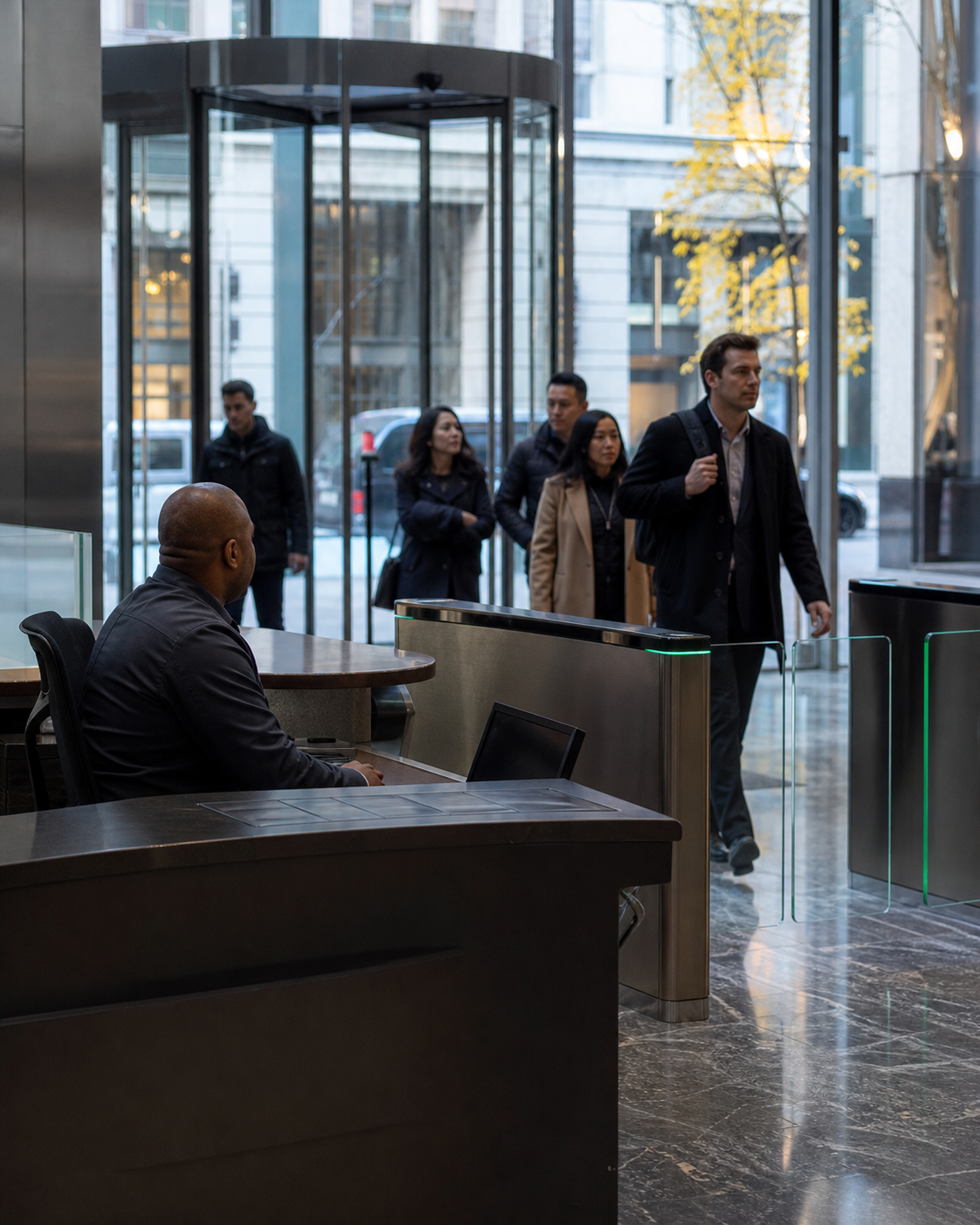
The assessor should observe whether the lobby layout gives staff a clear view of arriving visitors and whether the desk is positioned to support screening without creating unnecessary congestion. The review may include visitor identification procedures, tenant notification, credential issuance, turnstiles, intercoms, and the handling of people who refuse to follow building procedures.
Secondary and after-hours entrances
Side doors and employee entrances can undermine an otherwise effective lobby program. The assessment should verify how these doors are monitored, whether they close and latch reliably, and who can use them after normal business hours.
Loading docks and delivery routes
Loading areas often combine vehicles, vendors, packages, contractors, and access to service elevators. The review should document delivery scheduling, driver verification, package handling, dock staffing, and separation between public and restricted areas.
Roofs, mechanical spaces, and back-of-house areas
Mechanical rooms, telecommunications spaces, security equipment, key storage, and roof access deserve specific attention. Access should be limited to authorized personnel, and management should be able to determine who entered when appropriate.
Evaluate Security Staffing and Post Procedures
A building can have capable personnel but still experience gaps if responsibilities are unclear. The assessment should compare staffing levels and assignments with actual building activity throughout the day—not only during a scheduled daytime visit.
For each post, review:
- Primary responsibilities and limits of authority
- Required patrols and inspection points
- Radio, telephone, and escalation procedures
- Relief coverage for breaks and absences
- Visitor, vendor, and contractor procedures
- Key, credential, and package controls
- Incident reporting and preservation of relevant information
- Coordination with property management and building engineering
- Response expectations for medical events, alarms, disturbances, and suspicious activity
The assessor should also observe whether officers are burdened with unrelated customer-service or administrative duties that prevent them from monitoring entrances. If staffing improvements are needed, management can review options for security guard services or commercial office security.
Inspect Cameras, Alarms, and Communications
Technology should support clearly defined operational needs. Adding more cameras does not automatically improve security if views are obstructed, recordings cannot be retrieved, or nobody is responsible for responding to observed activity.
A camera-system review should consider:
- Coverage of entrances, exits, reception areas, loading zones, and critical corridors
- Image quality under daytime, nighttime, and backlit conditions
- Camera positioning, blind spots, and likely obstructions
- Whether recorded time is accurate and consistent
- Recording retention based on operational and business requirements
- Authorized access to live and recorded video
- Procedures for locating, exporting, and preserving relevant footage
- Maintenance, outage reporting, and periodic testing
The assessment should also review duress devices, intrusion alarms, radios, intercoms, and mass-notification tools where present. Network-connected security systems should be coordinated with qualified IT or cybersecurity personnel to address account access, updates, remote connections, and data protection.
Include Fire and Life-Safety Coordination
Security measures cannot be considered in isolation from emergency movement and life safety. Doors, gates, furniture, screening equipment, and queueing arrangements should not interfere with required egress or emergency response.
The assessment should examine operational coordination for:
- Fire or alarm activations
- Evacuation, in-building relocation, or other building-specific procedures
- Medical emergencies
- Elevator outages or entrapments
- Utility failures and loss of normal lighting
- Severe weather and flooding conditions
- Threats, suspicious packages, or violent incidents
- Communication with tenants, residents, visitors, and first responders
Applicable requirements depend on the building’s occupancy, systems, use, and current conditions. Questions about mandated staffing, certifications, plans, or inspections should be confirmed with qualified professionals and the relevant authorities. Where appropriate, management may need fire guards or qualified fire and life safety directors.
Examine Policies, Records, and Staff Training
Written procedures should match the building’s real conditions. A binder that nobody uses is not an effective security program.
The document review may include:
- Post orders and emergency contact lists
- Incident and daily activity reports
- Visitor and vendor procedures
- Key and access-card inventories
- Credential termination and tenant move-out processes
- Camera and alarm maintenance records
- Staff training and drill documentation
- Contractor access and construction protocols
- Business continuity and emergency communication plans
Assessors should compare these records with interviews and observations. For example, a policy may require immediate card deactivation, while staff interviews reveal that the request moves through several departments and is often delayed.
Observe the Property at Relevant Times
A single scheduled walkthrough may miss the most important conditions. When practical, assessment activities should cover periods such as:
- Morning arrival and evening departure
- Lunch and shift changes
- Delivery windows
- Nights or weekends
- Public events or high-traffic periods
- Active construction phases
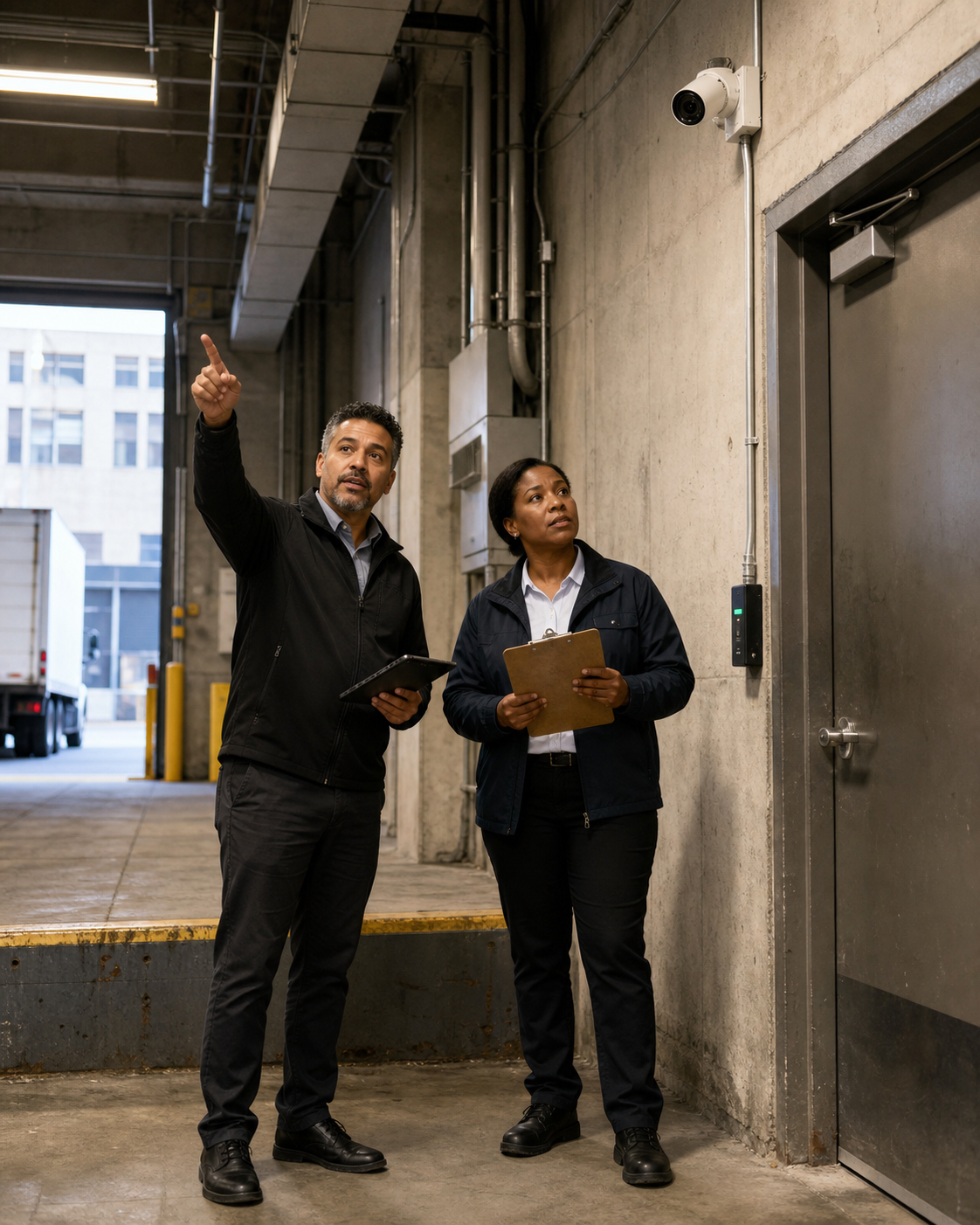
Testing should be authorized, controlled, and designed to avoid disrupting operations. Any attempt to test staff responses, credentials, or restricted access should have written scope and clear safety limits.
Require a Prioritized, Actionable Report
The final report should do more than list deficiencies. It should explain what was observed, why it matters, and how management can address it.
A strong deliverable generally includes:
- Executive summary: The most significant findings and immediate decisions.
- Scope and methodology: Areas visited, records reviewed, personnel interviewed, and limitations.
- Existing safeguards: Measures already working effectively.
- Findings: Specific vulnerabilities supported by observations.
- Risk prioritization: A consistent evaluation of likelihood, potential impact, and existing controls.
- Recommendations: Operational, staffing, procedural, and technology options.
- Implementation sequence: Immediate corrections, near-term projects, and longer-term capital improvements.
- Ownership: The person or department responsible for each action.
- Validation plan: How completed improvements will be tested and reviewed.
Recommendations should be proportionate to the property’s risk. Low-cost operational corrections—such as fixing post orders, removing camera obstructions, or improving credential deactivation—may deserve attention before a major technology purchase.
Questions to Ask a Prospective Security Assessor
Before engaging a provider, ask:
- What NYC property types have you assessed?
- Who will conduct the fieldwork and prepare the report?
- Will you review procedures and incident history, not just equipment?
- Can you assess daytime and after-hours conditions?
- How do you prioritize findings?
- Will recommendations include operational alternatives at different cost levels?
- How do you handle sensitive plans, access records, and security information?
- Are equipment sales or ongoing service contracts separate from the assessment?
The provider should clearly state the scope and any limitations. A physical security assessment is not a guarantee against crime, and it should not be represented as a regulatory inspection unless the provider is specifically qualified and engaged for that purpose.
Plan for Reassessment
Security conditions change when tenants move, construction begins, staffing changes, access technology is replaced, or the surrounding environment evolves. Management should review open findings regularly and consider a reassessment after significant operational changes or a serious incident.
Periodic review turns the assessment into a risk-management process rather than a report that sits on a shelf.
Request a New York City Security Review
Guardian ISI helps Manhattan property teams evaluate security staffing, access procedures, post coverage, and emergency readiness. We can also help address urgent coverage gaps identified during a review.
Call or text [(212) 602-1695](tel:+12126021695) to discuss your property, or request coverage online. For an immediate staffing need, learn more about emergency security coverage.
Frequently asked questions
How long does a physical security assessment in NYC take?
Timing depends on the property's size, hours, access points, and document-review needs. The proposal should distinguish fieldwork, interviews, analysis, and reporting.
Is a physical security assessment the same as a security survey?
The terms are sometimes used interchangeably. Confirm that the scope covers people, procedures, site conditions, technology, emergency coordination, and prioritized recommendations.
Should the assessment include fire and life-safety procedures?
Yes, at an operational coordination level. Security measures should not conflict with egress or emergency procedures, while compliance questions should go to appropriately qualified professionals.
Does every NYC building need more cameras after an assessment?
No. Better camera positioning, maintenance, monitoring, staff procedures, or access control may be more appropriate than adding equipment.
Who should participate in the assessment?
Property management, security, engineering, and front-of-house personnel should generally participate. IT, facilities, tenants, or construction managers may also be relevant.
When should a property be reassessed?
Consider reassessment after renovations, tenancy or use changes, system upgrades, serious incidents, or significant changes in staffing and access patterns.