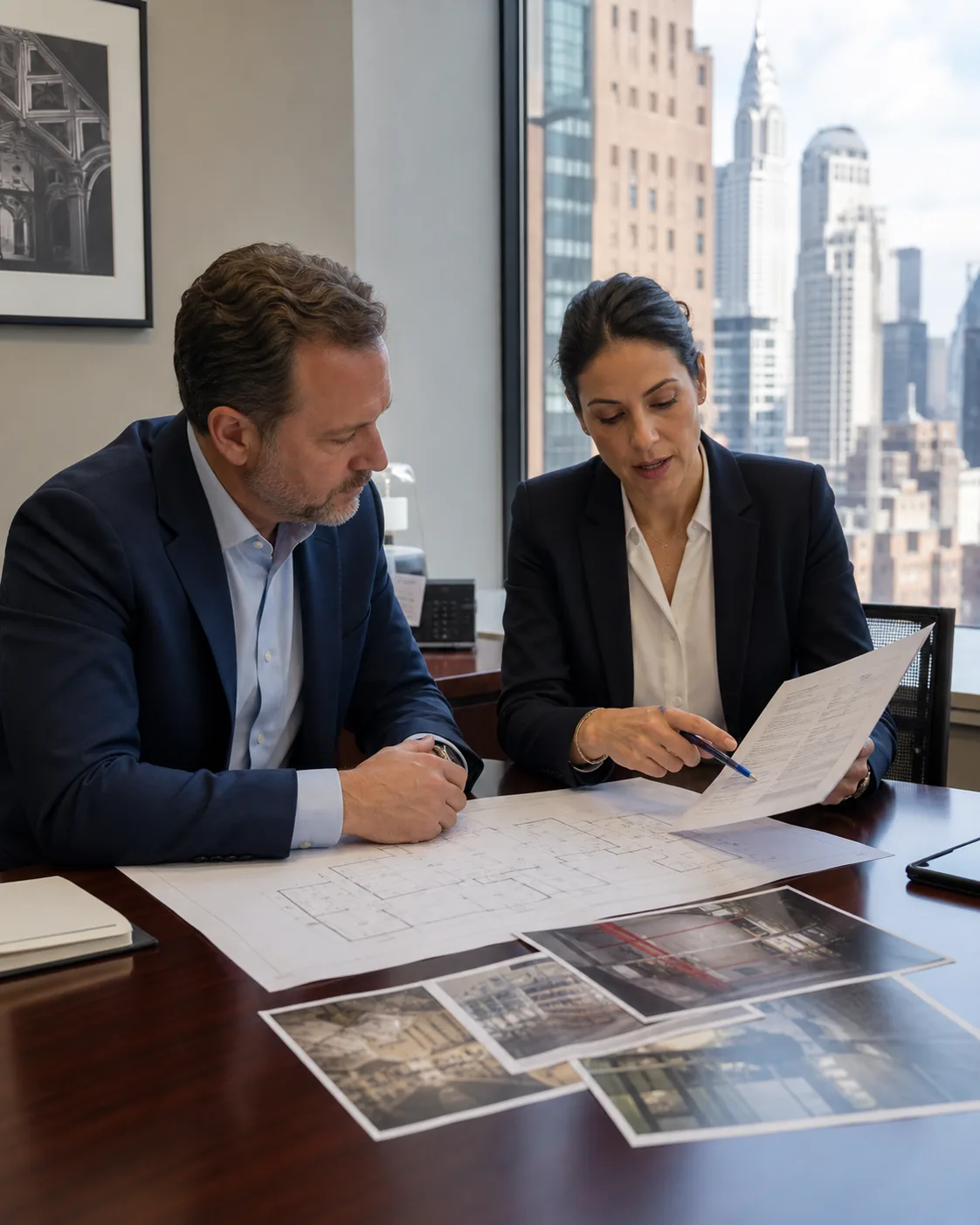
A violation at a New York City property can quickly become more than a facilities issue. It may affect residents, tenants, ownership, contractors, insurers, and daily building operations. For a management company overseeing multiple locations, the challenge is not simply correcting one condition—it is coordinating the right response, maintaining clear records, and confirming that each required step is completed through the appropriate agency process.
Effective NYC violation cure consulting helps management teams turn a notice into an organized action plan. That may involve reviewing the cited condition, identifying immediate safety needs, coordinating qualified vendors, arranging temporary coverage, and collecting the documentation needed to demonstrate correction.
Guardian ISI supports management companies with the operational and fire-life-safety aspects of violation response. We do not replace legal counsel, licensed design professionals, expediters, or agency-approved contractors. Instead, we help property teams understand what must happen on site, close coordination gaps, and maintain safer operations while permanent corrective work moves forward.
Why violation response becomes complicated in NYC
New York City properties may receive notices or violations from agencies such as the Department of Buildings, Fire Department, Department of Housing Preservation and Development, or other authorities with jurisdiction. Each notice can involve different terminology, deadlines, hearing procedures, certification requirements, and acceptable forms of evidence.
The operational situation is often equally complex. A cited fire protection system may be impaired while repairs are pending. A required building safety position may be vacant. An egress issue may involve tenants, stored materials, contractors, or access control procedures. Management must address the condition without creating new risks elsewhere in the building.
Common complications include:
- Notices being sent to ownership while on-site teams remain unaware
- Unclear responsibility among management, supers, contractors, and consultants
- Incomplete or inconsistent records across email, work-order, and vendor systems
- Repair delays caused by access, parts, permits, or scheduling
- Temporary safety measures that are not adequately staffed or documented
- Corrective work being completed without proper proof or agency filing
- Similar conditions recurring at other properties in the portfolio
A structured process helps management distinguish among three separate objectives: protecting people now, correcting the underlying condition, and completing the formal administrative steps required by the issuing authority.
Start with the notice—not assumptions about the notice
Before assigning work, the management team should review the actual document and verify its details. A verbal summary from a tenant, employee, or contractor is not enough to build a reliable cure plan.
Capture the essential information
Create a central record that includes:
- The issuing agency
- Violation, summons, or notice number
- Property address and cited location
- Date of inspection or issuance
- Exact description of the observed condition
- Applicable correction, certification, cure, or hearing dates
- Named respondent or responsible party
- Instructions printed on the notice
- Photographs, inspection reports, and related correspondence
The language on the notice matters. Requirements can vary according to the agency, violation type, building classification, and procedural status. Management should confirm current instructions directly with the issuing agency or an appropriately qualified professional.
Correcting a physical condition also may not automatically eliminate a hearing, civil penalty, filing obligation, or other administrative requirement. Counsel or an experienced expeditor can advise on those issues when necessary.
Triage immediate fire-life-safety concerns
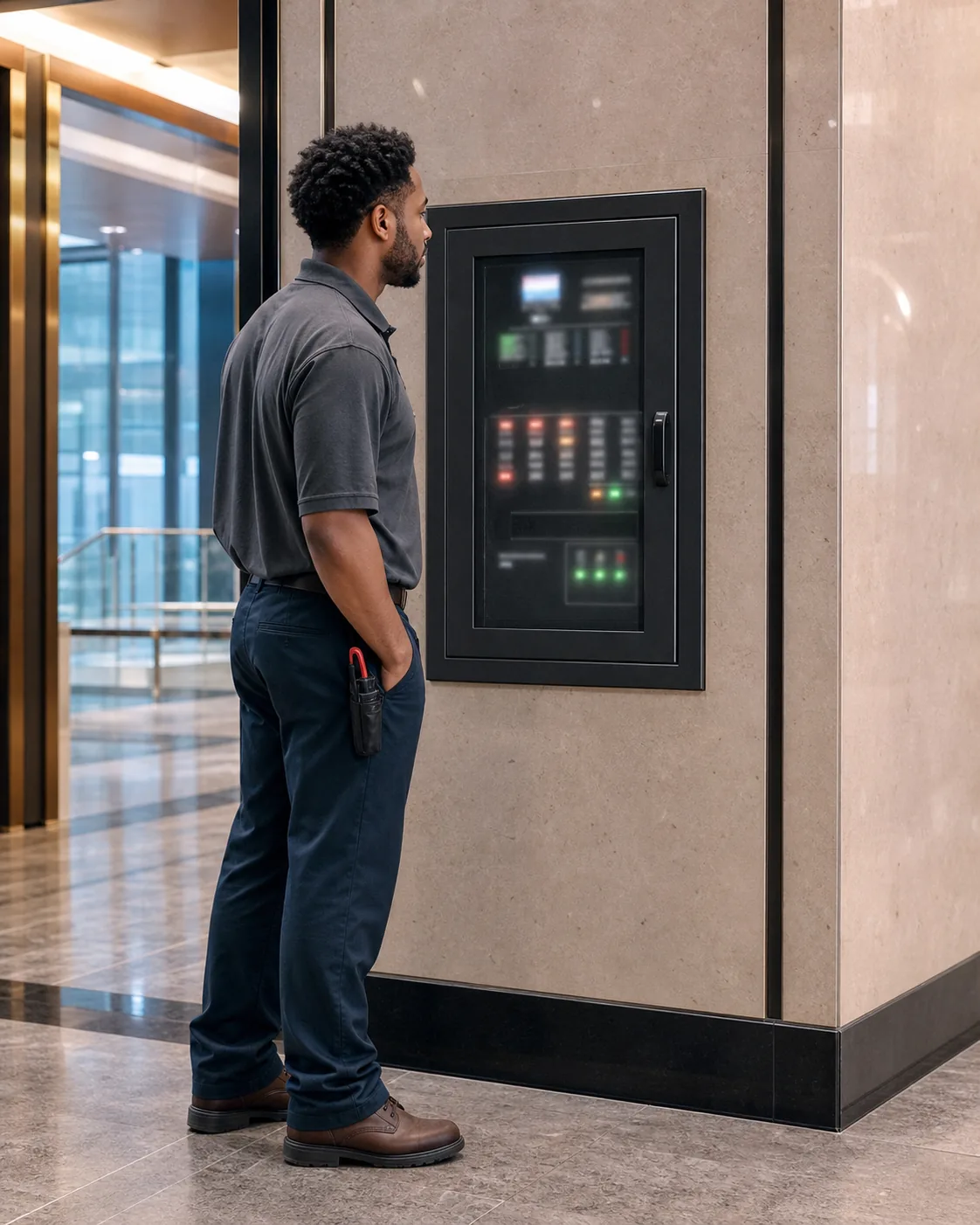
Some violations concern paperwork or maintenance deficiencies. Others indicate a condition that could affect occupants immediately. Management should promptly assess whether the cited issue involves fire protection, means of egress, emergency communications, unsafe access, or another active hazard.
Questions to ask include:
- Is a required life-safety system out of service or partially impaired?
- Are exits, stairs, corridors, or fire doors affected?
- Does the condition change how occupants should be protected or directed?
- Has an agency, engineer, alarm company, or other qualified party specified an interim measure?
- Is trained on-site coverage required while repairs are underway?
Depending on the circumstances and applicable direction, interim measures may include restricting access, relocating materials, increasing patrols, communicating with occupants, or assigning qualified personnel. For qualifying situations, Guardian can help arrange fire guard services or emergency coverage. The required response should always be based on the specific condition and applicable agency requirements—not a generic checklist.
Build a written cure plan with clear ownership
Once the notice and immediate risks have been reviewed, convert the response into a written plan. Every task should have a responsible party, deadline, dependency, and required proof of completion.
A useful cure tracker may contain the following columns:
| Task | Responsible party | Due date | Status | Required evidence |
|---|---|---|---|---|
| Verify cited condition | Property manager | Date | Open | Site photographs and notes |
| Determine required professional | Management or ownership | Date | Open | Written scope or proposal |
| Establish interim controls | Site operations | Date | Open | Post orders, logs, staffing records |
| Complete repair or correction | Licensed vendor | Date | Open | Invoice, report, test results, photographs |
| Submit certification or filing | Authorized party | Date | Open | Submission receipt or confirmation |
| Verify final status | Management | Date | Open | Agency record or professional confirmation |
This format prevents a common failure: assuming that another participant is handling a critical step. A contractor may believe its responsibility ends when the repair is complete, while management assumes the contractor will also submit required documents. Written ownership removes that ambiguity.
Coordinate the right specialists
Violation cure work is rarely a one-vendor project. Depending on the condition, management may need a licensed electrician, plumber, fire alarm contractor, sprinkler contractor, locksmith, engineer, architect, attorney, expeditor, or qualified safety provider.
The consultant’s role is to help create a coordinated response rather than stretch beyond professional boundaries. Guardian can assist management with:
- Site assessments focused on security and fire-life-safety operations
- Temporary staffing and post planning
- Fire guard coordination when appropriate
- Review of patrol, incident, and impairment logs
- Communication among management, ownership, site teams, and vendors
- Identification of operational gaps that could delay correction
- Follow-up visits to confirm that assigned operational tasks were completed
Where required, technical determinations and certifications should come from licensed or otherwise authorized professionals. Agency acceptance—not a consultant’s opinion—determines whether the official cure process is complete.
Maintain defensible documentation
A well-organized file is essential. It demonstrates what management knew, what it did, and when each action occurred. It also helps new employees or vendors understand the history if the process extends over several weeks.
A complete file may include:
- The original notice and envelope or delivery record
- Site photographs before and after correction
- Inspection, testing, and service reports
- Vendor proposals, contracts, invoices, and licenses when relevant
- Emails documenting instructions and access attempts
- Daily fire guard, patrol, or incident logs
- Tenant or occupant communications
- Filed certifications and submission receipts
- Hearing documents or agency correspondence
- Confirmation of the current agency status
Photographs should be dated, clearly labeled, and wide enough to establish location. Close-up images can document a repair, but they may not show where the corrected condition exists. Keep original files rather than relying only on compressed images embedded in an email.
If interim personnel are assigned, management should also retain schedules, time records, post orders, and activity logs. Guardian’s fire-life-safety director services can help properties address ongoing staffing needs where appropriately required for the building and position.
Keep temporary measures active until properly released
One of the most avoidable mistakes is ending an interim measure as soon as a technician says the repair is finished. The system may still require testing, acceptance, restoration confirmation, or another step before temporary coverage can safely end.
Management should obtain clear confirmation from the party authorized to determine restoration or release. The file should show:
- Who authorized the change
- The date and time of restoration
- Testing or inspection performed
- Any remaining limitations
- Who notified on-site personnel
- When temporary logs or staffing ended
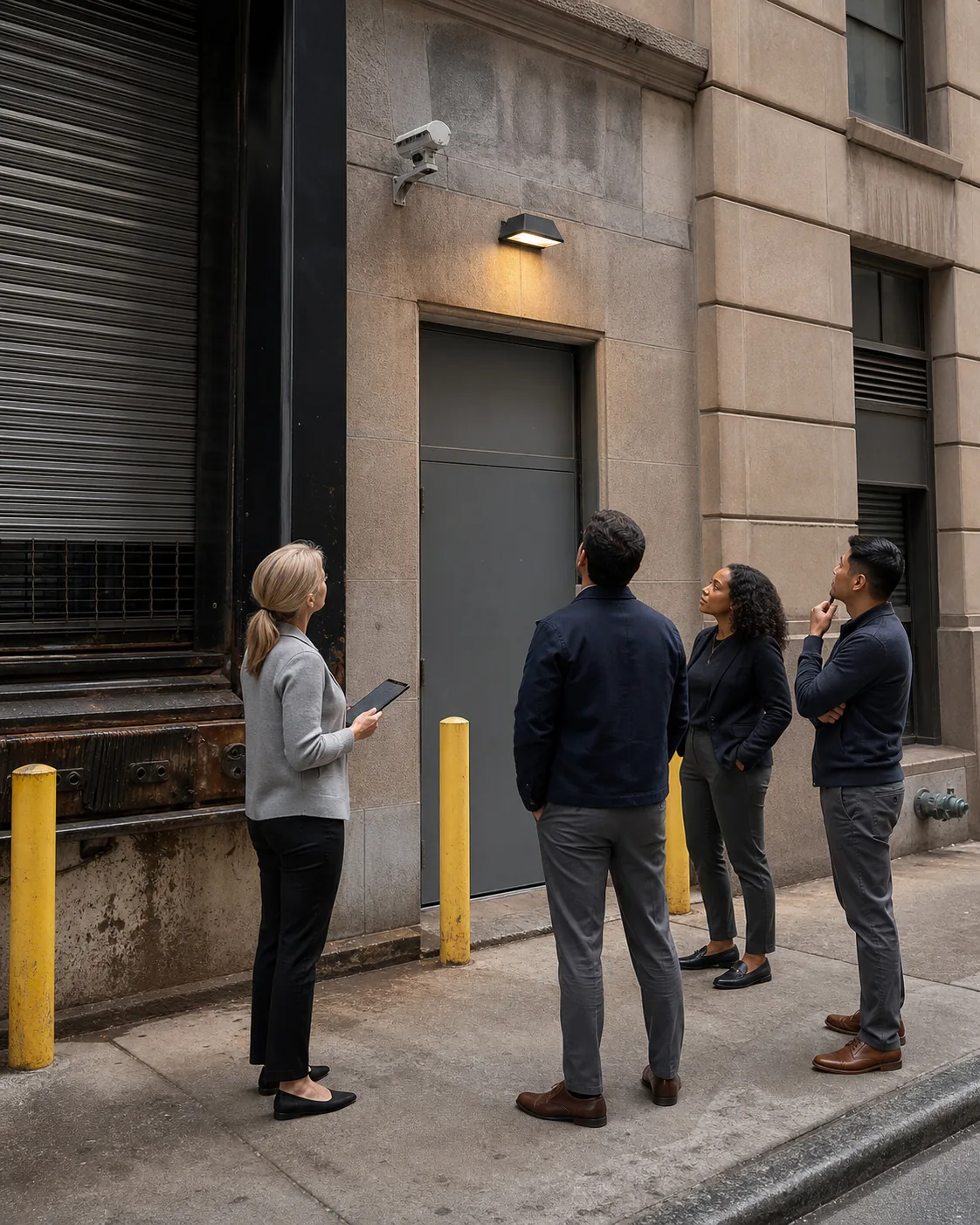
This is particularly important when a fire alarm, sprinkler, standpipe, emergency communication system, or other life-safety feature has been impaired.
Verify closure instead of assuming it
A paid invoice proves that a vendor billed for work. It does not necessarily prove that an agency accepted a certification or changed the public status of a violation.
The assigned manager should follow the procedure stated by the issuing authority and retain evidence of submission. If an online agency record is available, check it after processing time has elapsed. Where the process is unclear, contact the agency or use a qualified professional who regularly handles that type of filing.
Management should separately track:
- Physical correction completed
- Required evidence collected
- Certification or filing submitted
- Hearing or penalty issue addressed, if applicable
- Agency status verified
Keeping these milestones separate provides ownership with a more accurate report than simply labeling the matter “closed.”
Use each violation to improve the entire portfolio
The strongest management companies treat a violation as a source of operational intelligence. Once the immediate matter is controlled, review whether the same condition could exist at other buildings.
For example, a blocked egress condition may indicate weak storage enforcement across several properties. Missing inspection records may reveal inconsistent vendor oversight. An uncovered safety post may point to scheduling and call-out problems rather than a one-time staffing issue.
A portfolio review can examine:
- Recurring violation categories
- Buildings with repeated system impairments
- Vendor response and documentation quality
- Expiring permits, certificates, or qualifications
- Open work orders connected to life-safety systems
- Staffing vacancies and relief coverage
- Quality of daily logs and incident escalation
- Completion rates for monthly or quarterly inspections
For occupied Manhattan properties, operational planning should also account for tenant schedules, loading areas, contractors, deliveries, public access, and after-hours work. Relevant support may include commercial office security or construction security when corrective projects change normal building access and risk conditions.
How Guardian works with management companies
Guardian begins by discussing the notice, current building conditions, existing vendors, deadlines, and any interim measures already in place. We then identify where our security or fire-life-safety capabilities fit within the broader response.
Our goal is practical coordination: helping management protect the property, establish accountable site procedures, and maintain useful records while qualified contractors and professionals perform their portions of the cure.
Guardian does not promise that a violation will be dismissed, certify technical work outside our authority, or provide legal advice. Final requirements and acceptance remain with the relevant agency and authorized professionals. This clear division of responsibility protects the integrity of the process.
Request help with a violation response
If your management company is coordinating a fire-life-safety or security-related violation response in New York City, Guardian can help assess operational needs, arrange appropriate personnel, and support documentation and follow-up.
Call or text 212-602-1695, or request coverage online. For urgent needs, share the property address, issuing agency, cited condition, deadline, current system status, and any instructions already received from an agency or licensed professional.
Official references
Frequently asked questions
Can a consultant guarantee that an NYC violation will be removed?
No. The issuing agency determines whether its requirements have been satisfied. A consultant can coordinate operational work and documentation but should not guarantee dismissal or acceptance.
Does completing the repair automatically close the violation?
Not always. Some matters also require certification, filing, a hearing response, payment, inspection, or another administrative step. Follow the instructions for the specific notice.
When might temporary fire guard coverage be needed?
Coverage may be required or directed when a fire protection system is impaired or under other specified conditions. The appropriate response depends on the building, system status, and applicable agency or professional direction.
What should management provide during an initial consultation?
Provide the complete notice, property address, photographs, deadlines, vendor reports, current system status, relevant agency correspondence, and details of temporary measures already in place.
Can Guardian handle the technical repair or legal filing?
Guardian focuses on security, staffing, fire-life-safety operations, and coordination. Technical repairs, professional certifications, legal representation, and certain filings should be handled by properly licensed or authorized parties.