

A security risk assessment is a structured review of a property’s threats, vulnerabilities, existing safeguards, and operational priorities. For an NYC property manager, it provides a practical basis for deciding where to deploy personnel, improve procedures, adjust access controls, or coordinate with building stakeholders.
The goal is not to predict every possible incident or recommend expensive technology by default. A useful assessment identifies realistic risks, explains why they matter, and prioritizes reasonable steps based on the property’s operations.
What does a security risk assessment cover?
A security risk assessment examines how people, procedures, physical conditions, and security systems work together. The scope should reflect the property type, hours, tenants, public access, staffing model, and recent incident history.
Common areas of review include:
- Building entrances, loading docks, service corridors, and emergency exits
- Lobby operations and visitor management
- Employee, tenant, vendor, and contractor access
- Guard posts, patrol routes, incident reporting, and escalation procedures
- Door hardware, locks, alarms, intercoms, cameras, and lighting
- Package, delivery, and messenger handling
- Key, credential, and access-card management
- After-hours operations and lone-worker concerns
- Construction, renovation, or vacant-area exposure
- Coordination among management, ownership, tenants, security personnel, and emergency responders
Fire and life-safety conditions may also affect the review, but a general security assessment is not automatically a code inspection or substitute for an evaluation by the appropriate licensed or qualified professional.
Threat, vulnerability, and risk are different
These terms are often used interchangeably, but they answer different questions.
Threat
A threat is an event or actor that could cause harm or disruption. Examples include unauthorized entry, theft, workplace conflict, vandalism, trespassing, package theft, or activity associated with a public demonstration near the property.
Vulnerability
A vulnerability is a weakness that could make an incident more likely or increase its impact. An unsecured service entrance, inconsistent visitor screening, poor lighting, or an unclear after-hours escalation process could each be a vulnerability.
Risk
Risk considers the likelihood and potential consequences of a threat exploiting a vulnerability. The assessment process helps management compare risks instead of treating every concern as equally urgent.
Why NYC properties benefit from site-specific assessments
Manhattan buildings often have dense pedestrian traffic, frequent deliveries, multiple tenants, limited back-of-house space, and a close relationship with neighboring properties and public sidewalks. A procedure that works in a suburban office park may not fit a Midtown tower, SoHo retail location, Upper East Side residential building, or Financial District construction site.
A site-specific assessment can account for:
- Mixed public and private areas
- High visitor and delivery volume
- Shared lobbies or interconnected spaces
- Multiple contractors and service providers
- Street-level retail beneath offices or residences
- Special events, executive visits, or tenant terminations
- Overnight work and changing occupancy patterns
- Scaffolding, sidewalk sheds, and active construction zones
- Temporary changes to entrances or elevator access
The assessment should consider normal operations as well as foreseeable exceptions. A building may be well controlled during weekday business hours but have gaps during weekends, shift changes, special events, or overnight construction.
What happens during a security risk assessment?
The exact process varies by property, but a useful assessment generally includes the following stages.
1. Define the scope
Management and the assessor establish which spaces, operations, and concerns will be reviewed. The scope might cover the entire building or focus on a lobby, loading dock, construction area, retail floor, executive suite, or after-hours operation.
Before the walkthrough, management should identify the reason for the assessment. A recent incident, tenant concern, change in occupancy, renovation, insurance recommendation, or annual planning process may shape the review.
2. Review available information
Relevant information may include:
- Recent incident and activity reports
- Guard post orders and patrol procedures
- Visitor and vendor policies
- Floor plans or site diagrams
- Access schedules and delivery rules
- Camera and alarm coverage information
- Prior assessment findings
- Records of recurring doors, locks, or lighting issues
The purpose is to understand patterns and procedures—not simply to collect paperwork.
3. Conduct a site walkthrough
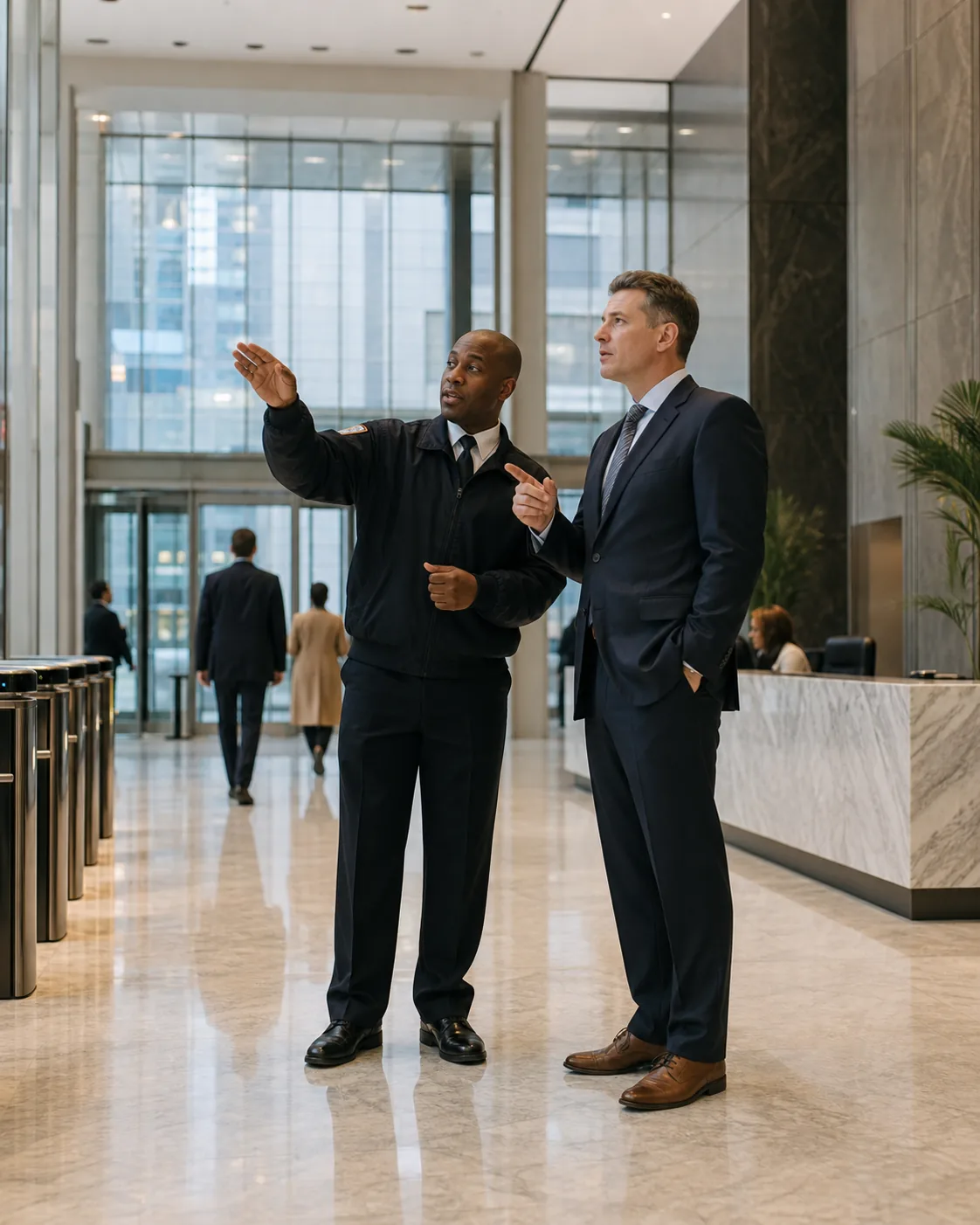
The assessor observes how the property operates in practice. This may include tracing the visitor journey, checking whether doors secure properly, reviewing sight lines, identifying possible unauthorized routes, and observing interactions at security posts.
Whenever possible, the walkthrough should reflect the periods that matter most. Conditions during a quiet midmorning visit may differ significantly from the morning rush, lunch period, loading hours, or overnight shift.
4. Speak with key stakeholders
Property managers, engineers, front-desk teams, guards, tenant representatives, and other personnel often notice recurring issues that are not visible during a single walkthrough. Interviews can reveal unclear responsibilities, workarounds, inconsistent enforcement, and communication gaps.
5. Evaluate and prioritize findings
A strong report distinguishes urgent vulnerabilities from longer-term opportunities. Findings may be ranked based on factors such as likelihood, potential impact, ease of exploitation, existing controls, and the operational effort required to address them.
The result should be an actionable plan rather than a generic list of products.
What should the final report include?
A useful security risk assessment report should be clear enough for management to act on and specific enough to support budgeting or vendor discussions. It may include:
- An executive summary of key concerns
- The property areas and operations reviewed
- Observed strengths and existing safeguards
- Identified threats and vulnerabilities
- Prioritized recommendations
- Suggested responsibility for each action
- Short-, medium-, and long-term improvements
- Items requiring review by a specialist, vendor, or qualified professional
Recommendations should fit the building. For example, a procedural change at a loading dock may reduce risk more effectively than adding another camera. In another location, adjusting a guard post, improving lighting, or tightening credential management may be the appropriate next step.
Common recommendations for Manhattan properties
Every building is different, but assessments often identify opportunities in several broad categories.
Access and visitor management
Potential improvements include clarifying visitor approval, separating tenant and delivery traffic, controlling secondary entrances, auditing active credentials, and establishing a process for lost cards or terminated personnel.
Guard force deployment
An assessment may reveal that coverage hours, patrol timing, post locations, or post orders no longer match current operations. Management might need ongoing security guard services, specialized commercial office security, or temporary support during a higher-risk period.
Policies and communication
Even strong equipment can be undermined by unclear procedures. Recommendations may address incident escalation, emergency contacts, suspicious-activity reporting, shift handoffs, contractor access, or coordination between management and tenants.
Physical and electronic safeguards
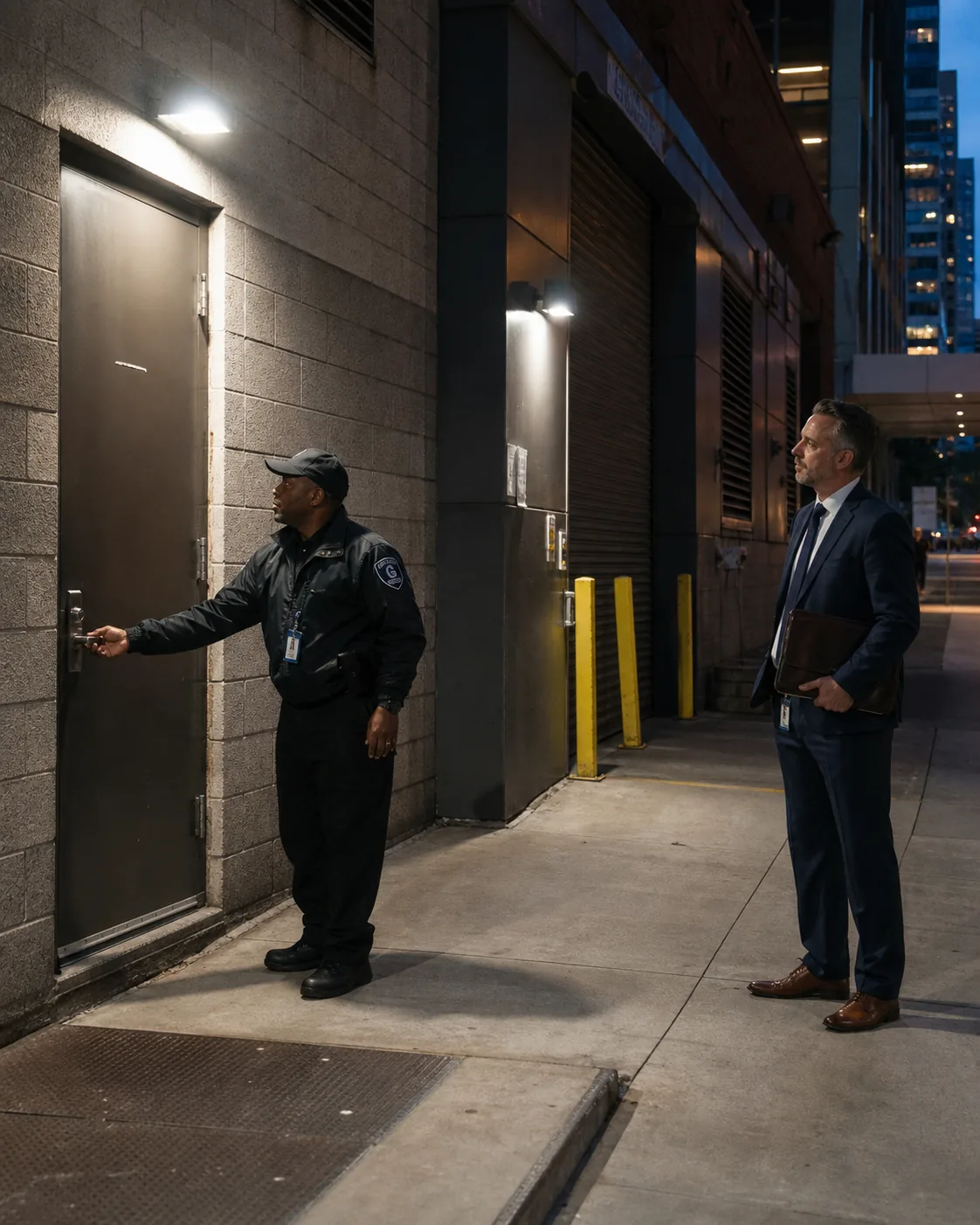
The assessment may identify door, lock, lighting, camera, alarm, intercom, or barrier issues. Any proposed system change should consider ownership responsibilities, building operations, privacy concerns, maintenance, and compatibility with existing infrastructure.
Temporary or changing conditions
Renovations, tenant move-outs, vacant floors, scaffolding, and altered egress routes can create short-term exposure. Active projects may benefit from dedicated construction security and regular reassessment as conditions change.
How should property managers prepare?
Preparation helps the assessor focus on real operational issues. Before the visit:
- Define the property areas and operating periods to be reviewed.
- Gather recent incident reports and existing security procedures.
- List recurring concerns raised by tenants, staff, or vendors.
- Identify planned construction, events, move-ins, or terminations.
- Invite representatives who understand lobby, loading, engineering, and after-hours operations.
- Be candid about workarounds and procedures that are not consistently followed.
Avoid staging an idealized version of the building. The assessment is most valuable when it reflects normal conditions.
When should an assessment be updated?
A security assessment is a snapshot, not a permanent answer. Consider a new review when:
- The property changes ownership, management, or major tenancy
- An incident exposes a possible weakness
- Construction changes circulation or access points
- Visitor, delivery, or occupancy volume changes materially
- Security technology or staffing is being redesigned
- Tenant concerns or recurring reports indicate a pattern
- A special event or high-profile visit changes the risk environment
Management should also track whether recommendations were implemented and whether they produced the intended result.
A practical next step for NYC property managers
The best assessment connects observed conditions to realistic corrective actions. It should help you decide what needs immediate attention, what can be handled through better procedures, and where personnel or technical specialists may be appropriate.
Guardian ISI supports Manhattan properties with security planning and coverage tailored to the site and assignment. To discuss your building’s needs, call or text (212) 602-1695 or request coverage online. If an unexpected gap has already developed, ask about emergency security coverage.
Frequently asked questions
Is a security risk assessment the same as a security audit?
Not always. The terms are sometimes used interchangeably, but an audit often measures compliance with defined policies or standards. A risk assessment focuses on threats, vulnerabilities, potential consequences, and prioritized improvements.
How long does an NYC property security assessment take?
Timing depends on the property’s size, operating hours, number of access points, and scope. A focused assessment may require one site visit, while a complex multi-tenant building may need document review, stakeholder interviews, and observations at different times.
Does every assessment recommend hiring more guards?
No. Recommendations may involve procedures, access management, lighting, hardware, training, technology, staffing, or a combination of controls. Any guard recommendation should be tied to a documented operational need.
Who should participate in the assessment?
Useful participants may include property management, building engineering, security supervisors, front-desk personnel, ownership, and tenant representatives. The right group depends on the assessment scope.
Should we conduct an assessment after a security incident?
Yes, a post-incident review can help identify contributing conditions and corrective actions. Preserve relevant records and avoid assuming that one visible weakness was the incident’s only cause.
Is a security assessment a substitute for a fire or building-code inspection?
No. A general security risk assessment does not replace required inspections or advice from the authorities and qualified professionals responsible for fire, building, life-safety, legal, or insurance matters.